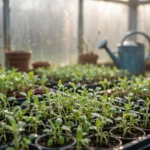
Last winter I nearly killed half my greenhouse by watering it the way I water in July. Same routine, same generous glug from the can — and within three weeks my lettuce was rotting at the base, my parsley had gone yellow, and a fine white fuzz was creeping across the soil of my seed trays. I hadn’t changed anything except the season, and that was exactly the problem.
If you’re wondering how often to water greenhouse plants in winter, here’s the uncomfortable truth most guides skip: there is no single answer. Winter watering depends on your temperature, your humidity, what you’re growing, and how much light is getting through that glass. But there IS a simple system for figuring it out, and once you learn to read your plants and your soil, you’ll water with confidence all season long. This guide gives you that system — the schedule, the tests, and the mistakes to avoid.
Table of Contents
Why Winter Watering Is Completely Different in a Greenhouse
In summer, everything in a greenhouse is working in your favor when it comes to watering. Long days, warm air, and strong sun mean plants are transpiring hard and soil dries out fast. You can water deeply and often, and the excess evaporates away before it causes trouble.
Winter flips all of that. Days are short and light is weak, so photosynthesis slows to a crawl. Most plants enter a kind of slow-motion mode — they’re alive, they’re even still growing if they’re winter crops, but they’re drinking a fraction of what they took in summer. Meanwhile the greenhouse itself works against you: cold air holds less moisture, yet the enclosed space traps humidity, so the soil surface can look dry while the root zone is still sopping wet.
Here’s the number that changed how I water: in my own 6×8 greenhouse, kept frost-free (around 5–7°C at night), I water roughly one-tenth as often in January as I do in July. Summer means daily watering; deep winter means once every 10–14 days for most established plants. That gap surprises almost every beginner I’ve talked to, and it’s why overwatering — not underwatering — is the number one killer of greenhouse plants in winter.
Cold, wet soil is also where the real winter diseases live. Root rot, grey mould (botrytis), and damping-off in seedlings all thrive when roots sit in waterlogged compost with poor air circulation. Get the watering right and you prevent half your winter problems before they start.
How Often to Water Greenhouse Plants in Winter: The Short Answer
I know you came here for a schedule, so here it is. These are starting points, not commandments — always check your soil before you water (more on that below):
- Leafy winter crops (lettuce, spinach, chard, rocket): every 7–10 days. These are actively growing and need steady moisture, but far less than in summer.
- Herbs (parsley, chives, mint, thyme): every 10–14 days. Mediterranean herbs like thyme and rosemary prefer to stay on the dry side — I’d rather see them slightly thirsty than soggy.
- Overwintering tender plants (pelargoniums, fuchsias, chillies): every 2–3 weeks, just enough to stop the compost drying out completely. These plants are basically napping.
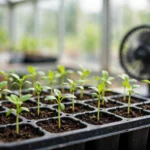
- Seedlings under cover: check every 2–3 days and water lightly from below when the surface starts to dry. Seedlings are the exception to every “water less” rule — small root systems in small cells dry out and die fast.
- Dormant or barely-growing plants: once a month or less. Some truly dormant plants need almost nothing.
Now, those frequencies assume a cool greenhouse around 5–10°C. If you’re heating your house to 15°C+ and growing tomatoes or cucumbers through winter, you’re closer to a summer schedule — maybe every 3–5 days. Temperature is the master dial, which is why the next sections matter.
The Finger Test: The Only Watering Tool You Truly Need
Forget fixed schedules for a moment, because the single most reliable way to know when to water is embarrassingly low-tech: stick your finger into the compost up to your second knuckle — about 5 cm deep.
- Dry and crumbly at depth: water now.
- Slightly damp: wait a day or two and check again.
- Wet and cold: walk away. Check again in a few days.
The surface lies to you in winter. Greenhouse humidity keeps the top of the compost looking moist (or even growing a little green algae) while the root zone below is fine — or vice versa. Always test below the surface.
If you want to be more precise, a cheap moisture meter (the probe kind, a few pounds) takes the guesswork out entirely. I keep one hanging by the door of my greenhouse and check the thirstiest-looking pots before I even pick up the watering can. It’s the best few pounds I’ve spent on greenhouse kit.
One more check that costs nothing: lift the pot. After a while you’ll learn the weight difference between a freshly watered pot and a dry one. Dry pots feel surprisingly light. This trick is especially handy for overwintering plants in larger pots where the finger test can’t reach the root zone.
How Temperature Changes Your Watering Schedule
Temperature and watering are locked together. Warm air makes plants drink; cold air makes them sip. Here’s a rough guide for an unheated or lightly heated greenhouse:
- Below 5°C (41°F): almost everything slows to a stop. Most established plants need water only every 2–3 weeks. Water sparingly, in the morning, and never leave pots sitting in saucers of water.
- 5–10°C (41–50°F): the classic cool-greenhouse winter range. Leafy crops every 7–10 days; herbs and overwintering plants every 10–14 days.
- 10–15°C (50–59°F): things start moving again. Check twice a week and water when the top few centimetres dry out.
- Above 15°C (59°F): you’re effectively growing in spring conditions. Water as the plants demand — often every 2–4 days for actively growing crops.
A max-min thermometer in the greenhouse is worth its weight in gold here. I check mine every morning with my coffee; it tells me not just how cold the night was but whether the house is warming up enough during the day for the plants to actually use the water I’d give them. If night temperatures are hovering near freezing, I skip watering entirely that day — cold water on cold roots is a shock the plants don’t need.
Humidity, Ventilation, and Why They Change Everything
Here’s the factor most winter-watering guides forget: humidity. A sealed-up winter greenhouse can sit at 90%+ relative humidity for days. In that soupy air, almost no moisture evaporates from the compost surface, so soil stays wet far longer than you’d expect. Watering on your normal schedule in those conditions is a fast track to rot.
The fix is ventilation — yes, even in winter. I crack my roof vent for a couple of hours on any day when the outside temperature climbs above about 7°C, and I run a small circulation fan on low all winter. Moving air does two jobs at once: it dries the leaf surfaces (which discourages mould) and it evens out the moisture in the compost so you don’t get wet pockets.
If you’re dealing with the passive-ventilation side of things, I wrote a full guide on how to keep air moving without any electricity — it pairs naturally with everything in this article, because watering and airflow are really two halves of the same winter-care job.
A quick rule of thumb: if condensation is running down the inside of your glass every morning, your humidity is too high and you should water even less than the schedule above suggests — and vent more. Condensation dripping onto leaves is one of the fastest ways to spread botrytis in winter.
Which Plants Need the Least Water in Winter (and Which Still Drink)
Not all greenhouse residents are equal in winter. Knowing who’s who saves you from the one-schedule-fits-all trap:
Barely drink at all: overwintering pelargoniums, fuchsias, dormant citrus, cacti and succulents, stored dahlia tubers and bulbs. These want to be kept just barely alive — cool, dry, and left alone. Water only when the compost is thoroughly dry, and then only a little.
Sip slowly: rosemary, thyme, sage, bay, and most Mediterranean herbs. They evolved for dry winters and hate wet feet. Let them dry out between waterings.
Drink steadily: winter salads (lettuce, mizuna, rocket, spinach, chard), spring onions, and overwintering onions. These are actively photosynthesizing and need consistent moisture — but “consistent” in winter still means the compost should dry slightly between waterings, never stay soggy.
Drink the most: seedlings, cuttings trying to root, and anything you’re growing warm (15°C+) for winter harvests. Check these every couple of days.
When in doubt, underwater rather than overwater. A thirsty plant perks up within hours of a drink. A rotted plant doesn’t come back.
The 5 Winter Watering Mistakes That Kill Greenhouse Plants
I’ve made every one of these. Learn from my soggy compost:
1. Watering on a summer schedule. The classic. Just because you watered daily in August doesn’t mean January wants the same. Cut back hard and let the plants tell you when they’re thirsty.
2. Watering late in the day. In winter the sun sets early and temperatures plummet fast. Water sitting on leaves and soil surfaces overnight in a cold greenhouse is an open invitation to fungal disease. Always water in the morning — ideally before 10 am — so foliage and surfaces dry before nightfall.
3. Leaving pots standing in water. Saucers and trays that are helpful in summer become death traps in winter. Empty them 30 minutes after watering, every time. Roots sitting in cold water suffocate and rot.
4. Watering everything the same amount. Your dormant pelargonium and your actively growing spinach do not want the same drink. Group plants with similar needs together if you can — it makes the whole routine simpler.
5. Using ice-cold water. Water from an outdoor butt in January can be near freezing, and pouring it onto roots shocks the plant. I keep a watering can inside the greenhouse so the water warms to house temperature, or I fill it the night before. Tepid water, happy roots.
Morning vs. Evening: When to Water in Winter
This deserves its own section because timing matters more in winter than at any other time of year. The rule is simple: water in the morning, never in the evening.
Morning watering gives the plants the whole (short) day to take up moisture and lets the compost surface and foliage dry before the cold night. Evening watering leaves everything damp going into the coldest, stillest hours — exactly when botrytis and other fungi are most active.
If you can only visit your greenhouse in the evening after work (I know plenty of people in this boat), water the soil directly at the base of the plants with a narrow-spout can, keep every drop off the leaves, and water a little less than you think you need. And on freezing nights, skip watering entirely — wait for a milder morning.
What to Do If You’ve Already Overwatered
Don’t panic — most overwatered plants can be saved if you catch it early. Here’s the rescue routine:
- Stop watering immediately. Obvious, but say it anyway.
- Empty every saucer and tray. Get standing water away from the pots.
- Improve drainage now. Tilt pots at an angle so excess water runs out, or slip the root ball out of its pot and wrap it in newspaper for a few hours to wick moisture away.
- Get air moving. Open the vent, run the fan. Airflow is the fastest way to dry out soggy compost.
- Move the plant somewhere slightly warmer if you can. A few degrees makes a big difference to how fast compost dries.
- Check the roots. If they’re white and firm, the plant will recover. If they’re brown, mushy, and smell bad, trim away the rotted parts with clean scissors, repot into fresh compost, and water very sparingly until new growth appears.
Yellow leaves after overwatering won’t turn green again — but new growth will be healthy if the roots survive. Give it time.
A Simple Weekly Winter Watering Routine You Can Follow
Here’s the routine I actually use from December through February. Steal it:
- Monday morning: walk through with the finger test (or moisture meter). Water only what needs it, from below where possible. Empty all saucers after 30 minutes.
- Wednesday: quick visual check — 2 minutes. Look for condensation on the glass (vent if it’s heavy) and check seedlings, which may need a light drink.
- Friday or Saturday morning: full check again. Water as needed. Wipe up any spills, and make sure no pot is sitting in water going into the weekend.
- Daily (10 seconds): glance at the max-min thermometer. If nights are near freezing, skip any watering that day.
That’s it. Three short visits a week, and your greenhouse will be drier, healthier, and far less diseased than the average winter greenhouse. For a deeper dive into the science of greenhouse watering across all seasons, the team at Growing Spaces has an excellent best-practices guide on greenhouse watering that’s well worth a read.
Frequently Asked Questions
Should I water greenhouse plants in winter at all?
Yes — but far less than in summer. Even dormant plants need occasional water to keep their roots alive. The danger in winter is almost always overwatering, not underwatering. Check the soil before every watering and you’ll be fine.
How do I know if I’m overwatering my greenhouse plants in winter?
The classic signs: yellowing lower leaves, a musty or sour smell from the compost, green algae or white mould on the soil surface, and stems that feel soft at the base. If you see these, stop watering, empty all saucers, and let the compost dry out before watering again.
Is it better to water greenhouse plants from above or below in winter?
From below is better in winter. Bottom-watering (standing pots in a shallow tray of water for 15–20 minutes, then draining) wets the root zone while keeping the compost surface and foliage dry, which reduces fungal disease. Just remember to empty the tray afterwards — never leave pots sitting in water.
Can I use rainwater from my water butt in winter?
Yes, rainwater is ideal — plants prefer it to hard tap water. Just don’t use it ice-cold straight from an outdoor butt on a frosty morning. Fill your watering can and let it warm up inside the greenhouse first, or water on a milder day.
Do seedlings in a greenhouse need more water in winter?
Yes. Seedlings are the big exception to winter’s “water less” rule. Their tiny root systems in small cells dry out quickly, and a dried-out seedling dies fast. Check seed trays every 2–3 days and water lightly from below when the surface starts to dry — but keep the air moving and never let them sit in water.
What temperature is too cold to water greenhouse plants?
Avoid watering when the greenhouse is at or near freezing (below about 2–3°C), especially with cold water — it shocks the roots and the water won’t be taken up anyway. Wait for a milder morning, and use water that’s been stored inside the greenhouse so it’s at house temperature.
Conclusion
How often to water greenhouse plants in winter comes down to one habit: check before you water. The finger test, a glance at the thermometer, and a look at the condensation on your glass will tell you more than any fixed schedule ever could. Water in the morning, water from below when you can, empty your saucers, and keep the air moving — and your greenhouse will sail through winter with far fewer losses than mine suffered that first soggy January.
Start this week: do one walk-through with the finger test, note which pots are actually dry, and water only those. I think you’ll be surprised how many of your plants were perfectly happy without a drink. Your winter crops will thank you with cleaner leaves, stronger roots, and — come spring — a head start you can taste.