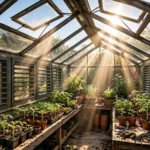
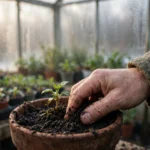
If you want to start seeds in unheated greenhouse space, here is the short answer: sow hardy seeds like broad beans, peas, onions and brassicas from late February or March once nights stay above roughly 5°C (41°F); wait until April for tender crops like tomatoes, or start those indoors and move them out later; and with no heat mat, fake bottom heat using a manure hotbed or black water barrels, and protect trays at night with fleece or cloches. An unheated greenhouse will not pamper seedlings like a heated propagator, but it will raise tough, healthy plants if you work with its rhythm.
My first spring, I sowed tomatoes in February and watched one hard frost turn them to mush overnight. The next year I sowed by the thermometer instead of the calendar, and everything changed. Now I raise hundreds of seedlings each spring with zero electricity, and they are sturdier than anything I used to buy.
This guide covers everything I wish I had known: when to sow, which seeds suit the cold, how to build warmth without power, and how to protect trays on cold nights.
Table of Contents
When to Start Seeds in Unheated Greenhouse: Timing Is Everything
The biggest mistake beginners make when they start seeds in unheated greenhouse setups is sowing by the calendar instead of the temperature. Seed packets say “sow February–April”, but that advice assumes a heated propagator or warm windowsill. In an unheated greenhouse, tray compost can hover only a few degrees above freezing on a February night.
My rule of thumb: sow hardy seeds — broad beans, peas, onions, leeks, spinach and brassicas — from late February into March, once greenhouse days regularly reach 10–12°C and nights stay above about 5°C. These germinate happily in cool soil and sulk if kept too warm. Wait until mid to late April for half-hardy seeds like courgettes, pumpkins and French beans. For tender seeds — tomatoes, peppers, aubergines — do not sow in the unheated greenhouse before late April; start them indoors and move them out once they have true leaves.
Keep a cheap min/max thermometer in the greenhouse and check it every morning. Night temperatures can drop surprisingly close to outside temperatures on clear, still nights — the thermometer tells the truth while the calendar guesses. If a cold snap is forecast, just wait a week.
Which Seeds Suit an Unheated Greenhouse
When you start seeds in unheated greenhouse conditions, seed choice matters more than anything else. Broad beans are practically bulletproof — I sow them in 9cm pots in March and they shrug off frost. Peas, onions, leeks, spinach, chard, spring onions, parsley and coriander all germinate steadily in a cool greenhouse. Brassicas are brilliant too: cabbage, kale and broccoli seedlings actually benefit from cool conditions, which keep them stocky instead of leggy.
Half-hardy annual flowers do well if timed right: sweet peas in deep root trainers in March, cosmos, calendula and nasturtiums in April. But tender summer crops need real warmth — tomato seed wants soil around 18–20°C, and a March greenhouse gives patchy germination at best, rotten seed at worst.
For your first year, fill the greenhouse with hardy crops and flowers, and keep tender crops on a warm windowsill indoors until late April. You will get more success and more plants in the ground than by gambling on February tomatoes.
My Seed-Starting Setup: Trays, Compost and Containers
Before you start seeds in unheated greenhouse benches, get the kit right — it does not need to be expensive. I use standard seed trays for small seeds, 40-cell modular trays for seedlings I want to plant out without pricking out, and deep pots or root trainers for broad beans and sweet peas so their taproots run straight down.
Use peat-free seed compost, which is finer and lower in nutrients than multi-purpose compost — rich compost can damage delicate seedling roots. Fill trays to just below the rim, level the surface, and water before sowing, not after, so you do not wash tiny seeds into clumps. Cover seeds no deeper than the seed’s own width; lettuce needs light and should barely be covered.
Label every tray with the variety and sowing date. By May, forty unlabelled trays all look identical. For a clear step-by-step on sowing technique, the RHS guide to sowing seeds indoors (https://www.rhs.org.uk/propagation/how-to-sow-seeds-indoors) is the best free reference I have found — its advice on covering trays to retain moisture works just as well in a greenhouse.
DIY Bottom Heat Without Power: Hotbeds, Water Barrels and Compost
If you want to start seeds in unheated greenhouse space a few weeks earlier than the weather allows, steal heat from somewhere. The classic method is the hotbed: a box filled with fresh horse manure mixed with straw, topped with 15–20cm of compost. As the manure decomposes it releases steady heat for weeks, warming the bed from below like an electric heat mat. I built mine from pallet wood in an afternoon, and it kept March sowings 5–8°C warmer than the surrounding air.
No manure? Use black water barrels. Fill a few black barrels or jerry cans and stand them along the north wall. By day they absorb solar heat; by night they release it slowly, buffering the temperature swings that stress seedlings. Two or three extra degrees on a cold night is often the difference between life and death for young seedlings.
On a smaller scale, even sitting seed trays inside a larger tray of damp sand holds warmth better than pots on a cold metal bench.
Protecting Seedlings on Cold Nights: Fleece, Cloches and Bubble Wrap
Even after you start seeds in unheated greenhouse trays, the nights are the danger zone. A clear April night can still bring a killing frost. My spring routine takes five minutes each evening: drape horticultural fleece over the benches, doubled up when frost is forecast. Fleece is cheap, breathable, and buys roughly 2–4°C of protection — the single best investment for an unheated greenhouse.
For individual trays, plastic cloches or cut-down plastic bottles work as mini greenhouses inside your greenhouse; the double layer of still air is remarkably effective. I also line the glazing with large-bubble bubble wrap in early spring — the night-time insulation is worth the slight light reduction.
On nights when a hard frost is forecast and seedlings are small and precious, bring the most tender trays indoors. A tomato seedling you carried inside for one night is a tomato seedling; one you left out is compost.
Light and Legginess: Keeping Seedlings Stocky
Leggy, pale, floppy seedlings mean too little light. Seedlings stretch toward weak light, and those weak stems never fully recover. In February and March, daylight hours are short and the sun is low, so this is a real risk in an unheated greenhouse.
Put trays on the sunniest bench, right against the south-facing glazing, and keep the glass clean — a winter of grime blocks a shocking amount of light. Do not overcrowd: seedlings packed shoulder to shoulder shade each other and stretch. The simplest cure for legginess is patience — sow a week or two later when light is stronger, and seedlings will be shorter and sturdier than early ones that struggled.
If seedlings do go leggy, pot tomatoes up deeper, burying the stem to the first true leaves — they root along the buried stem. Prick out other seedlings into individual pots, give them maximum light, and brush your hand over them a few times a day; the mild stress encourages sturdier stems.
Watering Young Seedlings the Right Way
Damping off — when healthy-looking seedlings keel over at soil level — kills more young plants in cool greenhouses than frost does. It is fungal, and it thrives in cold, wet, still air. When you start seeds in unheated greenhouse conditions, cool temperatures plus overwatering is the perfect recipe for it.
Water in the morning so the compost surface dries during the day, and water from below where you can: stand trays in a shallow bath for ten minutes, let the compost wick it up, then drain fully. This keeps stems and leaves dry. Scrub trays with hot soapy water between uses, because old compost residue harbours the fungi that cause damping off.
Airflow is the half most beginners forget. Stagnant, humid air invites disease, so on mild days open the door or a vent for a few hours — even in early spring, that makes a huge difference. I explain the whole no-power approach in my guide to ventilating a greenhouse without electricity — good airflow matters as much as warmth for seedling health.
Hardening Off Before Planting Out
When you start seeds in unheated greenhouse in early spring, do not assume your seedlings are already tough. A greenhouse is still a sheltered world: no wind, no rain, no temperature shocks. Plants moved straight outside sulk badly, and tender ones can die.
Hardening off takes ten to fourteen days. Start by opening the door and vents wide during the day so seedlings feel moving air. After a few days, move trays outside to a sheltered spot by day and bring them back in at night. Then leave them out overnight, first under fleece, then fully exposed. I do this in batches on a wheeled trolley to avoid carrying forty trays back and forth.
Do not skip this for anything raised under cover, however hardy the variety. The week it costs is nothing compared to losing a whole tray to transplant shock.
7 Common Mistakes I Made (So You Don’t Have To)
1. Sowing tender seeds too early. February tomatoes in an unheated greenhouse — I lost that gamble three years running before admitting defeat. Wait, or start indoors.
2. Using garden soil instead of seed compost. It is full of weed seeds, compacts in trays and stays too wet. Seed compost exists for a reason.
3. Sowing too thickly. A pinch of seed over a whole tray looks efficient until you are pricking out hundreds of tangled onion seedlings. Sow thinly.
4. Forgetting to ventilate. I once cooked a tray of brassicas on a sunny March day in a sealed greenhouse — it can hit 30°C by midday.
5. Watering on autopilot. In cool, cloudy weeks compost stays damp for days. Push a finger in: if the top centimetre is moist, leave it alone.
6. No labels. By May, mystery seedlings are inevitable without labels. Variety and date, every tray, every time.
7. Giving up after one bad year. My first spring was a disaster and my second merely mediocre. By year three I raised nearly all my own plants.
Conclusion
Learning to start seeds in unheated greenhouse space changed how I garden. It takes a little more attention than a heated propagator — you watch the thermometer, throw fleece over the benches at dusk, learn which seeds love the cool. But the payoff is real: tougher plants, earlier crops, and a bench full of green life in March while the garden outside still sleeps.
Start with the hardy stuff, respect the night-time temperatures, steal free heat with barrels or a hotbed, and protect your trays when frost threatens. Do that, and your unheated greenhouse will raise seedlings as good as any heated setup — arguably better, since they arrive half-hardened to real-world conditions already.
Frequently Asked Questions
What is the minimum night temperature for starting seeds in an unheated greenhouse?
Most hardy seeds germinate once soil reaches about 7–10°C, which usually means nights above 5°C. Tender seeds like tomatoes need nights consistently above 10°C and soil near 18°C, so keep them indoors until late spring.
Can I start tomato seeds in an unheated greenhouse?
Yes, but only from late April in most climates, when nights are reliably mild. Sown earlier, tomato seed germinates patchily in cold compost and seedlings stall or rot. For an earlier start, sow indoors in March and move plants out once they have true leaves.
Do I need a heated propagator to start seeds in an unheated greenhouse?
No, it is convenient but optional. A manure hotbed, black water barrels, and fleece or cloches at night achieve much the same effect for free. Many experienced growers prefer low-tech methods because the seedlings come out stockier and hardier.
How early can I sow seeds in an unheated greenhouse?
Hardy crops like broad beans, peas, onions and brassicas can be sown from late February in mild areas, or March further north. Let temperature, not the calendar, decide: wait until greenhouse days regularly reach 10–12°C and nights stay above 5°C.
What should I do if my seedlings go leggy?
Give them maximum light immediately — sunniest spot, clean glass. Pot tomatoes up deeper so the buried stem roots, prick out other seedlings into individual pots, and brush your hand over them daily for sturdier growth. Next time, sow a week or two later when daylight is stronger.
Is bubble wrap on the greenhouse worth it for seed starting?
Yes — in early spring it is one of the cheapest upgrades available. Large-bubble wrap clipped inside the glazing adds real insulation on cold nights, and the slight light reduction in March and April rarely matters.