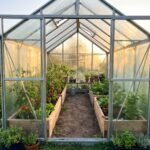
A greenhouse is one of the most useful structures for gardeners who want greater control over growing conditions. It can protect plants from cold temperatures, strong winds, excessive rain, pests, and sudden weather changes while creating a warmer and more stable environment for healthy growth. But before choosing or building one, many people ask an important question: what is a green house made of?
The simple answer is that a greenhouse is generally made from a strong frame combined with transparent or translucent covering materials. However, the exact materials can vary significantly depending on the greenhouse design, budget, climate, size, and purpose. Some greenhouses use traditional glass, while others use polycarbonate, acrylic, polyethylene film, or other modern materials. Frames may be built from aluminum, galvanized steel, wood, or composite materials.
Table of Contents
Understanding these materials can make it much easier to choose the right greenhouse for your garden. A good structure does more than simply look attractive. It needs to allow enough light inside, remain stable in changing weather, provide suitable ventilation, and maintain the conditions your plants need throughout the year.
In this guide, you will learn what is a green house made of, how each material works, what its advantages and disadvantages are, how greenhouse construction has evolved, and what to consider before buying or building your own. Whether you are a beginner gardener, a serious hobby grower, or someone planning a larger growing space, understanding the materials is the first step toward making a smart decision.
What Is a Green House Made Of? The Main Materials Explained
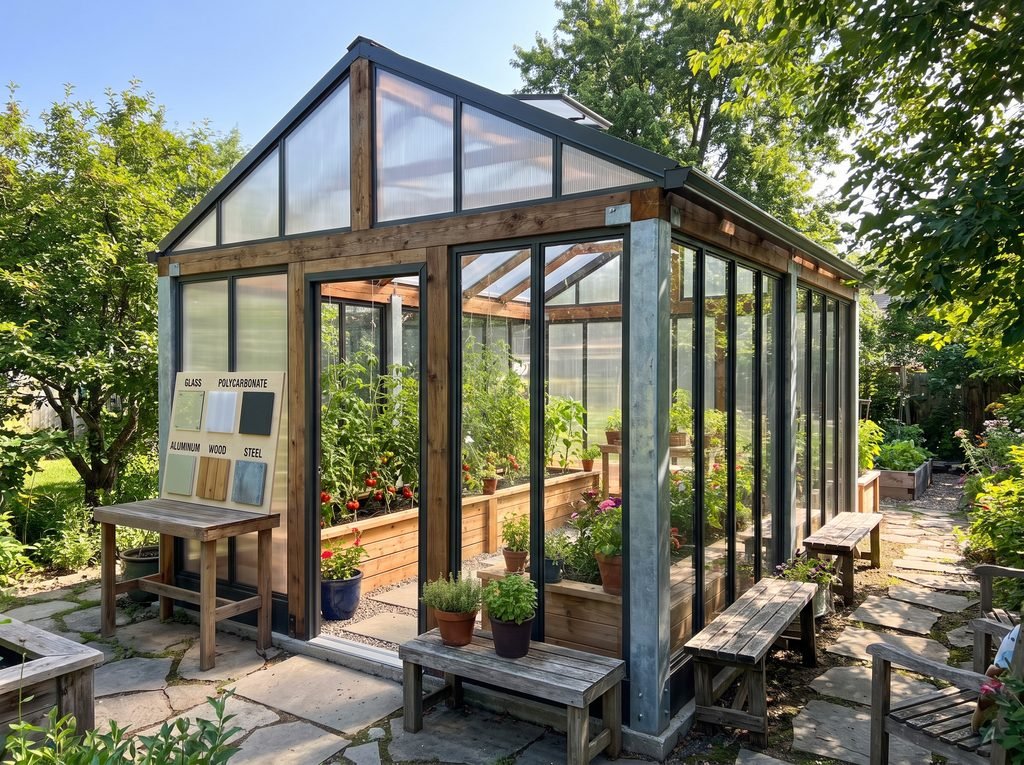
When people search for what is a green house made of, they are usually thinking about the glass or plastic panels they can see from the outside. Although the covering is one of the most visible parts, a greenhouse is actually made up of several important components.
A typical greenhouse includes a structural frame, a covering material, doors, ventilation systems, supports, a base or foundation, and sometimes additional equipment such as heating, shading, irrigation, shelving, and automatic controls. Every part has a specific role, and the materials need to work together.
The frame gives the structure strength. The covering controls how sunlight enters the building and how heat is retained. Ventilation helps regulate temperature and humidity. The foundation provides stability, particularly in windy or wet conditions.
This is why understanding what is a green house made of involves more than choosing between glass and plastic. A well-designed greenhouse is a complete growing system, and the quality of its individual components can directly affect plant health and long-term maintenance.
What Is a Greenhouse Frame Made Of?
The frame is the skeleton of the greenhouse. It supports the covering and determines how strong, stable, and durable the overall structure will be.
Aluminum Greenhouse Frames
Aluminum is one of the most popular frame materials because it is lightweight, resistant to corrosion, and relatively easy to maintain. It is commonly used in home greenhouses and commercial greenhouse kits.
One advantage of aluminum is that it does not easily rot or rust in the same way some untreated materials can. This makes it particularly practical for humid environments where the frame may regularly be exposed to moisture.
Aluminum frames are also available in a wide range of shapes and finishes. They can support glass panels, polycarbonate sheets, or other greenhouse coverings. Because aluminum is lightweight, installation can often be easier than working with heavier structural materials.
However, aluminum is not the strongest option for every climate. In areas exposed to heavy snow, powerful winds, or severe weather, the frame needs to be properly engineered and securely anchored.
Steel Greenhouse Frames
Steel provides greater strength than many lightweight framing materials and is often used where structural durability is a priority. Galvanized steel is especially popular because a protective zinc coating helps reduce corrosion.
Steel structures can support larger greenhouse designs and heavier coverings. They are commonly seen in commercial growing facilities and larger backyard greenhouses.
The main drawback is weight. Steel is significantly heavier than aluminum and may require a stronger foundation. If the protective coating is damaged, exposed steel can also become vulnerable to rust over time.
Wooden Greenhouse Frames
Wood gives a greenhouse a natural and traditional appearance. Cedar, redwood, and other naturally durable timber species are often selected because they handle moisture better than many inexpensive softwoods.
Wood can blend beautifully with gardens and landscaping, which makes it particularly appealing for homeowners who care about appearance as much as growing performance.
However, wood needs more care than aluminum or galvanized steel. Moisture, insects, fungal growth, and weathering can gradually affect the material. Proper treatment, painting, staining, and regular inspection may be necessary.
For anyone researching what is a green house made of, wood is an important option because it can provide both structural support and a classic visual style.
Composite and Other Modern Frames
Some modern greenhouse designs use composite materials or combinations of materials. These may offer specific benefits such as resistance to moisture, lower maintenance, or improved insulation.
Composite structures are not as common as aluminum, steel, or wood in ordinary home greenhouses, but they can be useful where specialized performance is required.
What Is Greenhouse Covering Made Of?
The covering is arguably the most important material in a greenhouse because it determines how much sunlight enters and how effectively the structure retains heat.
When asking what is a green house made of, this is often the part people mean. There are several common choices, and each has its own characteristics.
Glass Greenhouse Covering
Glass has been used for greenhouse construction for generations. Traditional glass greenhouses remain popular because they provide excellent clarity and allow abundant natural light to reach plants.
Clear glass is especially attractive for gardeners who want a classic greenhouse appearance. It can also remain visually appealing for many years when properly maintained.
One of the biggest disadvantages is that glass is heavier and more fragile than many modern alternatives. A strong impact can crack or break it, and installation may require more careful handling.
Glass also generally provides less impact resistance than polycarbonate. For households with children, pets, or gardens in exposed locations, this factor may influence the final material choice.
Even so, when homeowners ask what is a green house made of, traditional glass is often the first answer because it remains one of the most recognizable greenhouse materials.
Polycarbonate Greenhouse Covering
Polycarbonate has become one of the most popular alternatives to glass. It is a strong, lightweight plastic that can be manufactured in solid sheets or multiwall panels.
Multiwall polycarbonate is especially useful because the internal air spaces can improve insulation. Rather than having a single flat layer, these panels often contain multiple layers that help reduce heat loss.
Polycarbonate is also much more resistant to impact than glass. This can be a major advantage in regions that experience hail, storms, or accidental impacts.
Another benefit is its relatively light weight. This makes transportation and installation easier, particularly for home gardeners.
One potential disadvantage is that some polycarbonate products can become scratched, cloudy, or discolored over many years, especially when lower-quality materials are used or the panels are not UV-protected.
For gardeners who want a balance between durability, insulation, and light transmission, polycarbonate is often an excellent solution.
Acrylic Greenhouse Panels
Acrylic is another transparent plastic material used in some greenhouse applications. It can provide high light transmission and a clear appearance similar to glass while weighing less.
Acrylic can also be more resistant to shattering than traditional glass, although its performance depends on the specific product and construction.
It is not as commonly used in basic greenhouse kits as polycarbonate, but it can be useful in specialized structures where clarity and appearance are important.
Polyethylene Film
Polyethylene film is widely used in hoop houses, tunnels, temporary structures, and commercial growing environments.
It is much lighter and less expensive than rigid panels, making it attractive to growers who need a large covered area without the cost of a permanent glass or polycarbonate structure.
Some greenhouse films are manufactured with UV stabilizers to improve longevity. Specialized films can also be designed to diffuse light, reduce condensation, or improve heat retention.
The main weakness is durability. Plastic film generally does not last as long as high-quality rigid panels and may need periodic replacement.
For short-term or budget-focused growing, however, polyethylene can be highly practical.
Why Transparency Matters in Greenhouse Construction
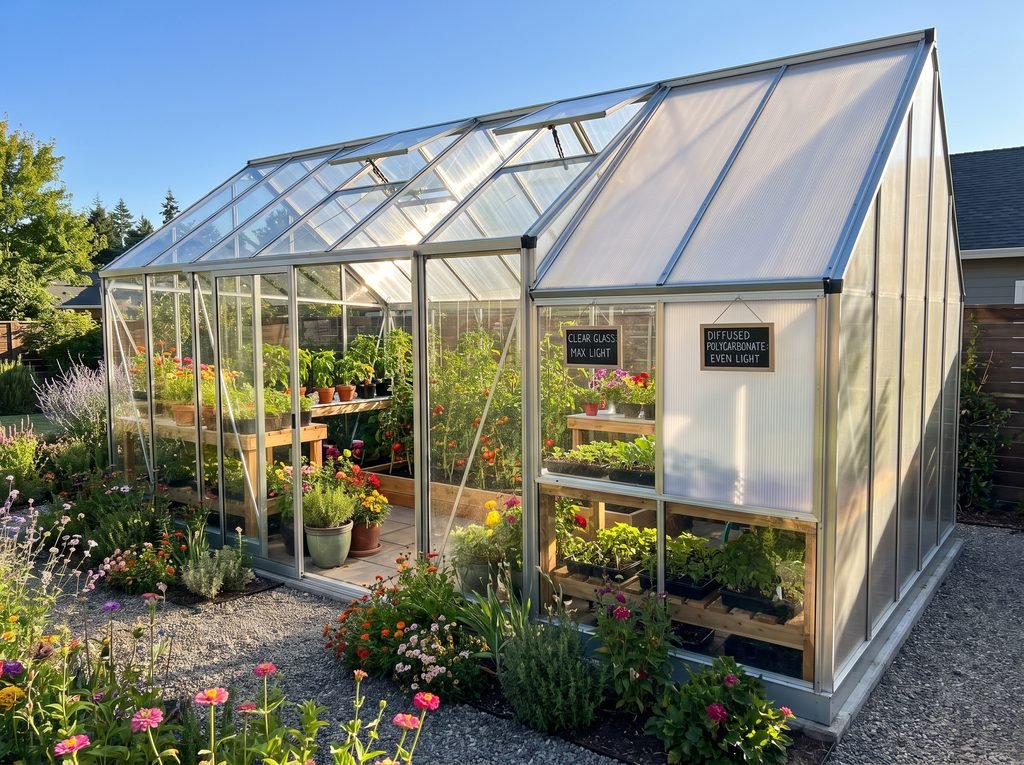
One of the defining characteristics of a greenhouse is its ability to allow sunlight inside. Plants use light for photosynthesis, so the covering material can have a major influence on plant growth.
However, the clearest material is not necessarily the best choice for every situation.
A greenhouse covering should ideally provide enough usable light while also helping control temperature. In some circumstances, light diffusion can be beneficial because it spreads sunlight more evenly across leaves and reduces intense hot spots.
Different plants have different light requirements, and greenhouse design should take local weather into account. A greenhouse built in a cool, cloudy region may prioritize maximum light transmission, while one in a very hot climate may need shading and stronger temperature control.
This is another reason the question what is a green house made of should always be considered alongside the question of where the greenhouse will be located.
What Is a Greenhouse Base Made Of?
A greenhouse needs more than walls and a roof. The base helps keep the structure stable and properly positioned.
Depending on the size and design, a greenhouse may sit on soil, paving slabs, concrete, timber foundations, masonry, or a dedicated base frame.
Small hobby greenhouses can sometimes be installed directly on suitable ground with secure anchors. Larger structures often benefit from a more permanent foundation.
A solid base can help reduce movement caused by strong winds. It can also make the greenhouse easier to level and improve the overall lifespan of doors, panels, and frame connections.
Before installing a greenhouse, it is important to assess the ground conditions. Poor drainage, soft soil, and uneven surfaces can cause problems later.
What Is a Greenhouse Roof Made Of?
The roof is often constructed from the same material as the greenhouse walls, but its shape plays an important role in performance.
Traditional greenhouses commonly feature sloped roofs because the angle helps shed rain and snow while maximizing available sunlight.
A pitched roof can also create more internal headroom and improve air circulation. In some designs, roof vents are incorporated directly into the structure to release hot air.
The roofing material may be glass, polycarbonate, acrylic, or greenhouse film, depending on the design.
When evaluating what is a green house made of, it is useful to think about the roof separately because this part of the structure experiences direct exposure to rain, wind, hail, snow, and sunlight.
What Is a Greenhouse Door Made Of?
Greenhouse doors are commonly made from aluminum, wood, steel, glass, polycarbonate, or a combination of these materials.
The door frame needs to be strong enough for repeated use while fitting securely into the greenhouse structure. A poorly sealed door can allow drafts and pests into the growing area.
Sliding doors are often selected because they save space, while hinged doors can provide a more traditional appearance.
Some modern greenhouses include automatic door systems or sensors that can be connected to climate control equipment. These features are especially helpful for gardeners who want to automate certain tasks.
A well-designed entrance should also be wide enough to move pots, trays, soil bags, tools, and other supplies inside comfortably.
Why Greenhouse Ventilation Materials Matter
A greenhouse can become surprisingly hot even when outdoor temperatures feel comfortable. Sunlight enters through the covering, warming the interior surfaces and air.
Without adequate ventilation, temperatures can rise quickly and create stressful conditions for plants.
Ventilation systems may include roof vents, side vents, louvered windows, fans, automatic vent openers, or exhaust systems. These components can be made from metals, plastics, glass, or combinations of materials depending on their design.
Automatic vent openers are especially useful because they can respond to temperature changes without requiring constant manual attention.
When considering what is a green house made of, it is therefore important to include ventilation hardware as part of the overall system rather than thinking only about the frame and covering.
What Is a Greenhouse Made Of for Better Insulation?
Insulation is another key consideration, especially for gardeners who want to grow during colder months.
Glass provides strong light transmission but can have significant heat loss depending on the type and design. Polycarbonate multiwall panels can offer better insulation because the internal air spaces reduce heat transfer.
Double glazing or other layered systems can further improve insulation in some greenhouse designs.
Sealing gaps around doors, vents, and frame connections also matters. A greenhouse with excellent panels but poor seals can still lose a substantial amount of heat.
Gardeners in colder climates may combine insulated greenhouse coverings with heating systems, thermal screens, or other energy-saving methods.
How Greenhouse Materials Affect Temperature
The materials used in a greenhouse influence how quickly it warms up, how long it retains heat, and how easily it cools down.
Dark structural components can absorb solar energy, while transparent coverings allow sunlight to enter. The internal materials, soil, benches, containers, and plants can then absorb and release heat at different rates.
This creates a complex microclimate inside the structure.
Material selection should therefore be based on the climate and intended use rather than appearance alone.
A greenhouse designed for winter crops may need more insulation and heating support. A structure intended for summer propagation may need stronger ventilation and shading.
What Is a Green House Made Of in Traditional Designs?
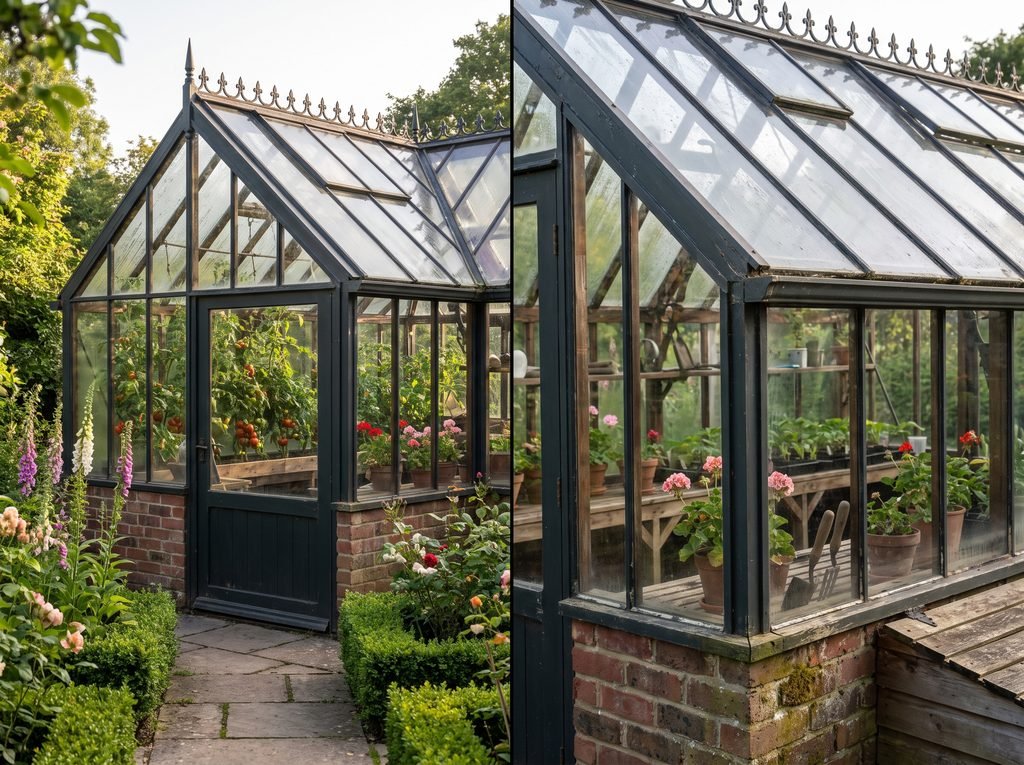
Traditional greenhouses are often associated with wood or metal frames and glass panels.
These designs became popular because glass offered good light transmission and a long-lasting transparent surface. Historic botanical gardens and estate gardens often feature ornate glasshouses that combine horticultural function with architectural beauty.
Traditional greenhouses may also include decorative ridge details, timber bases, brick walls, or masonry foundations.
The materials can be more expensive than those used in modern budget greenhouses, but the resulting structure can provide a timeless appearance.
For homeowners interested in classic garden design, traditional materials remain highly attractive.
What Is a Green House Made Of in Modern Designs?
Modern greenhouses often prioritize efficiency, durability, lightweight construction, and climate control.
Instead of relying exclusively on glass, manufacturers may use polycarbonate panels or advanced greenhouse films. Aluminum and galvanized steel are frequently chosen for frames because they require relatively little maintenance.
Modern greenhouses can also incorporate automated irrigation, temperature sensors, humidity monitors, smart controllers, LED grow lights, and motorized vents.
This means a modern greenhouse is no longer simply a transparent building. It can function as a carefully controlled growing environment.
How Climate Should Influence Greenhouse Materials
Your local climate should be one of the most important factors when choosing greenhouse materials.
In regions with strong winds, structural strength becomes a priority. A lightweight greenhouse needs proper anchoring and a frame designed to resist movement.
In areas with heavy snowfall, the roof must be able to withstand the additional load. A strong frame and suitable roof pitch become particularly important.
In hot climates, excessive solar heating can be a serious concern. Gardeners may need shade cloth, roof vents, reflective coverings, or enhanced airflow.
In colder environments, insulation becomes more important. Multiwall polycarbonate, thermal screens, heating systems, and tight seals may provide better results than a basic single-glazed structure.
Understanding what is a green house made of in relation to your local climate can prevent expensive mistakes and improve growing performance.
Glass vs. Polycarbonate: Which Greenhouse Material Is Better?
There is no universal winner between glass and polycarbonate because the right choice depends on your priorities.
Glass is attractive, highly transparent, and traditional. It can create a beautiful greenhouse that becomes a permanent feature of a garden.
Polycarbonate is lighter, more impact-resistant, and often provides better insulation, especially when using multiwall panels.
For a homeowner prioritizing traditional aesthetics, glass may be the preferred option. For someone looking for easier installation, stronger impact resistance, and improved insulation, polycarbonate can be more practical.
Budget also matters. The initial cost is only one part of the equation. Installation, maintenance, heating needs, replacement costs, and expected lifespan should all be considered.
How Long Do Greenhouse Materials Last?
The lifespan of a greenhouse depends on the material, product quality, installation, maintenance, and environmental conditions.
Well-maintained glass can remain functional for many years. Aluminum frames can also provide long service with relatively low maintenance.
Polycarbonate panels may last for many years when they are properly UV-protected and cared for. Greenhouse film generally has a shorter lifespan and may need periodic replacement.
Wood can last a long time when the correct species and protective treatments are used, but it usually requires more ongoing care.
Instead of choosing materials based solely on expected lifespan, consider the maintenance effort you are comfortable with. The most durable option is not always the most convenient for every gardener.
Are Greenhouse Materials Environmentally Friendly?
Environmental impact is becoming an increasingly important consideration for gardeners.
Greenhouse materials have different manufacturing processes, lifespans, recycling possibilities, and energy requirements.
Glass can be recycled in many situations, while aluminum is also widely recyclable. Polycarbonate and other plastics require more careful consideration regarding production and end-of-life disposal.
A durable greenhouse can reduce the need for frequent replacement, which is one important aspect of sustainability.
Using a greenhouse to extend growing seasons can also reduce dependence on heated indoor environments for some crops, although the environmental benefits depend heavily on heating methods, energy sources, and overall greenhouse management.
Choosing long-lasting, repairable materials can often be a sensible sustainability strategy.
What Materials Are Best for a Small Home Greenhouse?
For a small backyard greenhouse, many gardeners prefer aluminum frames combined with polycarbonate panels.
This combination offers a practical balance of weight, durability, light transmission, and insulation. It can also be relatively easy to assemble compared with a large glass structure.
However, a small greenhouse does not automatically require plastic. A compact glasshouse can be an excellent choice when appearance and traditional design are important.
The best material depends on your budget, growing goals, location, and willingness to maintain the structure.
Before buying, measure the available space carefully and consider access for doors, ventilation, watering, shelving, and maintenance.
What Materials Are Best for a Large Greenhouse?
Larger greenhouses place greater demands on structural stability and climate management.
Commercial-style structures may use galvanized steel frames, aluminum components, rigid polycarbonate, specialized glass, or reinforced greenhouse film.
The larger the greenhouse, the more important engineering becomes. Wind loads, snow loads, drainage, ventilation, irrigation, heating, and cooling need to be considered as part of a complete system.
At this scale, choosing materials based on price alone can create expensive problems later.
Professional planning can be especially valuable for very large structures.
Common Mistakes When Choosing Greenhouse Materials
One of the biggest mistakes is choosing a greenhouse based only on appearance.
A beautiful structure may not perform well in your climate. Likewise, the cheapest greenhouse may require more replacements or upgrades over time.
Another common mistake is ignoring ventilation. Even the best greenhouse covering cannot compensate for poor temperature management.
Some gardeners also overlook the importance of anchoring. A lightweight greenhouse can be vulnerable to strong winds if the base is not properly secured.
Choosing poor-quality panels can also create problems with durability, insulation, and light transmission.
It is worth taking time to research the frame, panels, seals, vents, base, and accessories as one integrated system.
How to Maintain Greenhouse Materials
Regular maintenance can significantly extend the useful life of a greenhouse.
Glass panels should be cleaned periodically so that dirt does not reduce available light. Polycarbonate should be cleaned using methods recommended by the manufacturer to avoid scratching or damaging protective coatings.
Frames should be inspected for loose connections, corrosion, cracks, or movement. Wooden structures should be checked for moisture damage, rot, and insect activity.
Doors and vents should open and close smoothly. Seals and joints should also be inspected for gaps.
A few minutes of preventive maintenance can often prevent much larger repair costs later.
What Is a Green House Made Of for Year-Round Growing?
A greenhouse designed for year-round use usually requires more than a simple frame and transparent covering.
Winter growing can involve heating systems, insulated panels, thermal curtains, supplemental lighting, automatic ventilation, temperature sensors, and improved sealing.
The structure itself may use double or multiwall coverings to reduce heat loss. The frame may also need to be stronger to handle harsher seasonal conditions.
For year-round production, energy efficiency becomes especially important because heating a poorly insulated greenhouse can become expensive.
When planning a four-season greenhouse, think of the structure as a complete climate-controlled environment rather than simply a shelter for plants.
How Much Does the Material Choice Matter?
Material choice can affect almost every part of greenhouse ownership, from installation to ongoing operating costs.
A lightweight aluminum-and-polycarbonate greenhouse might be easy to install and maintain, while a large glasshouse could provide a more traditional and permanent solution.
There is no single material that is best for everyone.
The best choice is the one that fits your climate, growing goals, space, budget, and maintenance expectations.
This is why understanding what is a green house made of is so useful before making a purchase. Once you know how the components work together, comparing different greenhouse models becomes much easier.
How to Choose the Right Greenhouse Materials for Your Garden
Start by considering your main purpose. Do you want to start seeds in spring, grow vegetables throughout winter, protect delicate plants, or create a dedicated space for specialist crops?
Next, consider your climate. Look at average temperatures, rainfall, snow, wind, and sunlight levels.
Then think about maintenance. A low-maintenance aluminum and polycarbonate greenhouse may suit one homeowner better than a traditional timber-and-glass structure.
Your budget should include not only the greenhouse itself but also the foundation, installation, ventilation, heating, shelving, irrigation, and future maintenance.
Finally, consider quality. A slightly more expensive structure with durable materials, strong joints, effective seals, and good ventilation may provide significantly better value over time.
The Future of Greenhouse Materials
Greenhouse design continues to evolve as growers look for stronger, lighter, more efficient, and more sustainable materials.
New materials and manufacturing methods are being used to improve insulation, light diffusion, durability, and energy efficiency.
Modern greenhouse technology can also integrate sensors and automation with the physical structure. This allows growers to measure temperature, humidity, light levels, and soil moisture and make adjustments more precisely.
As technology develops, the future greenhouse may increasingly combine advanced materials with smart climate systems to create more efficient growing environments.
Final Thoughts on What Is a Green House Made Of
So, what is a green house made of? At its most basic level, a greenhouse is made from a structural frame and a transparent or translucent covering. However, a complete greenhouse also includes a base, doors, ventilation components, seals, supports, and potentially heating, shading, irrigation, and automated controls.
The frame may be made from aluminum, steel, wood, or composite materials. The covering may use glass, polycarbonate, acrylic, or polyethylene film. Each option offers different levels of strength, insulation, cost, maintenance, appearance, and durability.
The most important lesson is that there is no universal material combination that works perfectly for every garden. The best greenhouse is one designed around your environment and growing goals.
If you are planning to buy or build a greenhouse, do not rush into the first attractive option you find. Compare frame materials, covering types, insulation, ventilation, foundations, maintenance requirements, and expected lifespan. A little research today can help you avoid costly changes later.
A well-chosen greenhouse can become one of the most valuable additions to a garden. It can give you greater control over growing conditions, extend your growing season, protect plants from unpredictable weather, and create a dedicated space where your gardening skills can develop.
Now that you understand what is a green house made of, you are in a much better position to choose a structure that fits your needs. Take time to evaluate your climate, space, plants, and budget, and then invest in materials that offer the right balance of durability and performance.
Your ideal greenhouse does not have to be the biggest or most expensive one. It simply needs to be built from the right materials for your gardening goals. Start with the basics, choose quality where it matters most, and create a growing environment that you can enjoy for years to come.