A greenhouse can transform the way you garden. Instead of depending entirely on unpredictable British weather, you can create a sheltered growing environment where seedlings, vegetables, flowers, herbs, and tender plants have a better chance to thrive. However, choosing the right greenhouse is a major decision because the structure needs to work with your garden, your growing ambitions, your budget, and the weather conditions where you live.
For gardeners who prioritise strength and long-term durability, a Rhino greenhouse is an option worth investigating. Rhino Greenhouses produces aluminium greenhouse structures in the UK and offers several ranges designed around durability, safety, ventilation, rainwater collection, and practical growing space. The manufacturer says its greenhouses are made at its Norfolk factory and come with a 25-year guarantee.
Table of Contents
But buying a premium greenhouse should never be based on the name alone. You need to understand what makes the design different, what you actually receive for the price, which size suits your garden, how installation works, and whether the additional strength and features justify the investment.
This comprehensive guide looks closely at the Rhino greenhouse range, its main advantages and potential drawbacks, how to choose the right size, how to prepare a suitable base, what accessories can improve the growing experience, and how to decide whether this style of greenhouse is right for your garden.
What Is a Rhino Greenhouse and Why Is It Different?
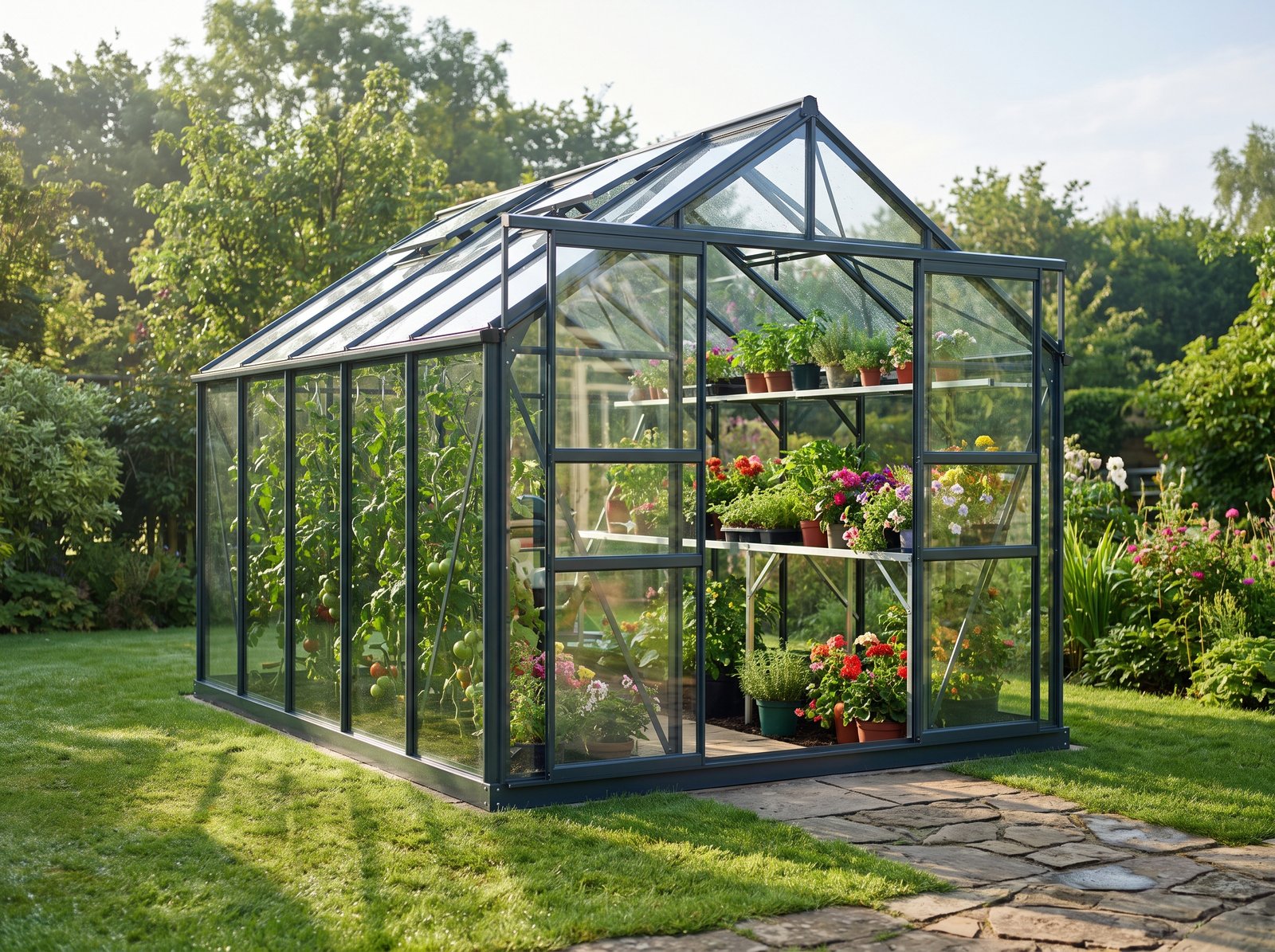
A Rhino greenhouse is a range of aluminium-framed glass greenhouses designed and manufactured in Britain. Rather than focusing only on providing a basic enclosure for plants, Rhino positions its products around structural strength, robust construction, safety glass, integrated ventilation, rainwater collection, and long-term use.
The manufacturer’s current range includes the Classic, Premium, and Ultimate collections, alongside smaller products such as the Patio greenhouse and Rhino Cold Frame. Exact configurations, colours, dimensions, specifications, and prices vary by model and size.
One of the biggest differences is the emphasis on aluminium content and reinforcement. Rhino states that its frames use around 60% more aluminium than similarly priced greenhouse models, while Premium models add heavy-duty T-section cantilever bracing throughout parts of the frame.
That matters because a greenhouse is exposed to wind, rain, temperature changes, and seasonal weather throughout the year. A lightweight structure may be perfectly adequate in a sheltered garden, but gardeners in exposed areas may place more value on rigidity and secure glazing.
The glazing system is another important part of the design. Rhino says its glazing system uses long rubber beads to lock each pane along its length, helping prevent the glass from being pushed or blown out of the frame.
The manufacturer also supplies Grade A 4mm toughened safety glass as standard across the Rhino range described on its product pages. Toughened glass is designed to break into smaller pieces rather than large sharp shards if it is damaged.
These features help explain why the Rhino greenhouse is positioned as a premium greenhouse rather than a basic budget structure.
Why Choose a Rhino Greenhouse for Your Garden?
The strongest reason to consider a Rhino greenhouse is that it is designed for gardeners who want a permanent growing structure rather than something they expect to replace after several years.
A cheap greenhouse can appear attractive when you first compare prices, but the purchase price is only one part of the equation. Frame rigidity, glazing quality, ventilation, foundation requirements, replacement components, accessories, installation, and expected lifespan all matter. When a greenhouse becomes a long-term part of your garden, buying a stronger structure can make more sense than repeatedly replacing a cheaper one.
Rhino’s own specification places considerable emphasis on strength. The company says its frames contain around 60% more aluminium than similarly priced models, while Premium designs add heavy-duty bracing.
That doesn’t mean a Rhino greenhouse is completely immune to extreme weather. No greenhouse should be treated as indestructible, and installation quality, anchoring, site exposure, surrounding structures, and maintenance all influence performance. However, a well-engineered frame gives gardeners a stronger starting point.
Another reason people consider Rhino is the safety of the glazing. Four-millimetre toughened glass provides a more reassuring choice for gardens where children, pets, or frequent foot traffic are present. The rounded edges described by Rhino on its Classic product page also make individual panes easier to handle during installation.
The long guarantee is another consideration. Rhino states that its greenhouses come with a 25-year guarantee, which indicates that the company intends the structures to be used as long-term garden investments.
Rhino Greenhouse Construction and Frame Strength
The frame is arguably the most important part of any greenhouse because it supports the glazing and has to cope with wind loading, changing temperatures, and the weight of accessories.
A Rhino greenhouse uses aluminium for the main structure. Aluminium is particularly popular for greenhouse frames because it is relatively lightweight, naturally resistant to corrosion, and suitable for long-term outdoor use.
Rhino takes this basic material and focuses on creating a heavier-duty structure. According to the manufacturer, its frames use significantly more aluminium than similarly priced alternatives. Premium models also feature T-section cantilever bracing designed to strengthen the structure.
This additional material does not mean strength should be considered in isolation. The quality of connections, glazing retention, anchoring, foundations, bracing, doors, vents, and installation all contribute to the final performance of the greenhouse.
A beautifully engineered frame installed on a poor base can still create problems. The greenhouse needs to sit level and be properly secured, especially in locations exposed to strong winds.
This is why the structural design and site preparation should be viewed as one complete system rather than separate decisions.
Rhino Greenhouse Toughened Glass: Is 4mm Glass Worth It?
Glazing affects light transmission, appearance, safety, maintenance, and the overall feel of a greenhouse.
The Rhino greenhouse range is supplied with Grade A 4mm toughened safety glass according to the manufacturer’s product information. Rhino highlights the safety benefits of toughened glazing, noting that it is designed to break into smaller pieces rather than large jagged fragments.
For a family garden, that is a useful feature. Greenhouses often become part of an active garden environment where people walk around the structure, children play nearby, and pets move around the property.
Toughened glass also gives a greenhouse a premium appearance. Clear glass provides excellent visibility and allows you to see your plants, shelves, pots, and growing areas from outside.
There is still a practical responsibility involved. Even toughened glass can break under sufficient impact, so gardeners should avoid striking panes, placing heavy objects against them, or allowing branches and other objects to fall onto the structure.
The glazing system is especially important in windy locations. Rhino states that its rubber-bead system holds panes along their full length and is intended to resist panes being pushed or blown out of the frame.
Rhino Greenhouse Ventilation and Temperature Control
Ventilation is essential for successful greenhouse growing. On a sunny day, internal temperatures can rise surprisingly quickly even when the outside air feels comfortable.
A Rhino greenhouse addresses this with roof ventilation. The manufacturer says every Rhino is fitted with solar-powered roof vents designed to open and close according to temperature inside the greenhouse.
Automatic ventilation can be especially useful for gardeners who are away from home during the day. Instead of relying on someone to open and close vents manually, the venting mechanism provides a degree of automated temperature management.
However, ventilation remains part of a wider greenhouse-management system. Automatic roof vents are valuable, but gardeners should still monitor temperatures during particularly hot periods. Doors, side vents, shading, blinds, and airflow all have roles to play depending on the season.
During summer, excessive heat can stress plants even when there is plenty of light. During winter, ventilation helps manage condensation and humidity, reducing the likelihood of creating an environment where fungal problems thrive.
The best approach is to treat ventilation as a daily growing tool rather than something that only matters during heatwaves.
Rhino Greenhouse and Rainwater Collection
Water management is another area where a premium greenhouse can offer useful practical features.
Rhino says its greenhouses include integral gutters as well as downpipes and bends, allowing gardeners to collect rainwater from the roof.
This can be valuable because rainwater is naturally soft and can be collected for watering plants. It also reduces unnecessary reliance on mains water during periods of dry weather.
For environmentally conscious gardeners, rainwater collection can become an important part of the greenhouse system. Water collected from the roof can be directed into a suitable water butt, where it can later be used for containers, raised beds, seedlings, and established plants.
However, the guttering still needs maintenance. Leaves, moss, debris, and bird activity can obstruct water flow over time. Cleaning gutters and checking downpipes should therefore become part of your normal seasonal maintenance routine.
The ability to integrate rainwater harvesting directly into the greenhouse design makes the Rhino greenhouse particularly appealing to gardeners who want a practical growing environment rather than simply an attractive glass structure.
The Rhino Classic Greenhouse Explained
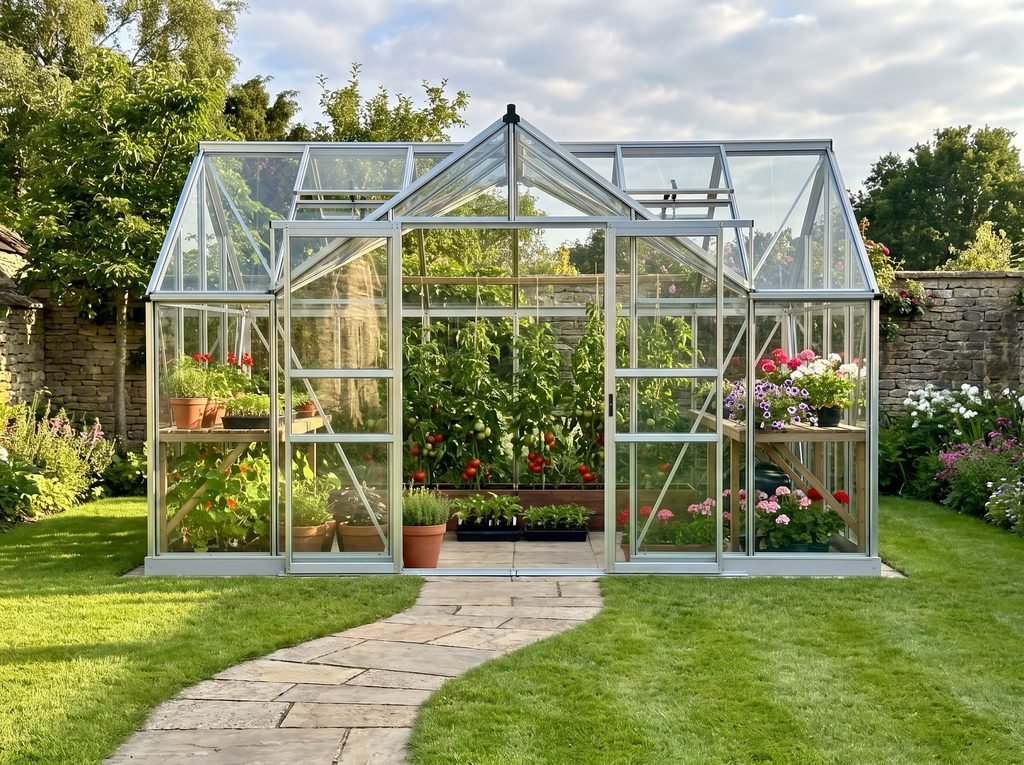
The Rhino Classic is intended to provide the core Rhino construction and feature set in a relatively straightforward configuration.
A current Rhino Classic 8×10 model is listed with a plain aluminium finish and a 25-year guarantee. The manufacturer highlights its increased aluminium content, unique glazing system, toughened glass, integrated base, solar roof vents, hanging basket rails, and rainwater collection features.
For many home gardeners, the Classic range can provide the right balance between premium construction and practical simplicity.
It is particularly suitable for someone who wants a serious greenhouse but does not necessarily need every premium aesthetic option available in higher-end configurations.
Colour is also a consideration. Depending on the specific Classic model, options can include plain aluminium and coloured finishes such as Tuscan Olive. Availability can vary by size and current product configuration, so it is sensible to check the exact specification before ordering.
The Rhino Premium Greenhouse Explained
The Premium range is aimed at gardeners who want additional structural reinforcement, more size choices, and more finishing and accessory options.
Rhino’s Premium product information highlights heavy-duty T-section cantilever bracing, the company’s glazing system, hanging basket rails, integral bases, automatic roof ventilation, and several colour choices.
Premium models are available in substantially larger configurations, including examples such as 10×16, 10×18, 10×20 and 12×20 sizes. Exact measurements are not necessarily identical to the headline size. Rhino explicitly warns customers that the actual footprint can differ from the nominal size and says a relevant base plan is provided once an order is confirmed.
That is an important detail for anyone planning foundations.
Do not simply assume that a greenhouse advertised as 10ft by 20ft occupies exactly 10ft by 20ft. Before constructing a permanent base, use the manufacturer’s confirmed dimensions.
The Rhino Ultimate Greenhouse Explained
The Ultimate range is positioned at the top end of the Rhino collection.
Its appeal is likely to be strongest among serious gardeners who want a larger, highly featured greenhouse that can also become an enjoyable garden room.
A current Rhino Ultimate 9×10 product is shown with a coloured finish and a premium glasshouse design that offers generous headroom and a more substantial appearance.
The Ultimate collection includes distinctive colour options and premium configurations, though exact choices vary by model. Rhino’s range information identifies Tuscan Olive, Blue Grass, and Midnight Slate among Ultimate colour finishes.
For gardeners who plan to spend significant time inside the greenhouse, these aesthetic details can matter. A greenhouse does not have to be viewed simply as a utility building. With comfortable staging, seating, good lighting, ventilation, and carefully selected plants, it can become a genuinely enjoyable space.
What Size Rhino Greenhouse Should You Buy?
Choosing the right size is one of the most important decisions you will make.
Many first-time greenhouse buyers underestimate how quickly space disappears. A greenhouse that looks large when empty can become surprisingly crowded once you add shelves, seed trays, pots, grow bags, tools, watering equipment, compost, and mature plants.
For that reason, buying slightly larger can often be more practical than choosing the smallest structure that technically fits your garden.
A smaller Rhino greenhouse can work well for seedlings, herbs, propagation, tomatoes, chillies, and a limited number of containers. Larger models become more useful if you want separate zones for propagation, growing, storage, and seating.
Think about how you garden rather than simply how many plants you currently own.
If you plan to expand your collection over the next five years, account for that growth now.
A 6×8 greenhouse might be sufficient for a beginner with limited space, while 8×10 or 10×12 can provide more flexibility. Gardeners with larger properties may prefer 10×16, 10×18, 10×20 or even 12×20 configurations, depending on their available space and growing ambitions. Rhino’s current catalogue includes sizes across this broad range.
The key is not to choose a size based only on your current plant collection. Consider your future gardening plans.
How to Measure Your Garden Before Ordering
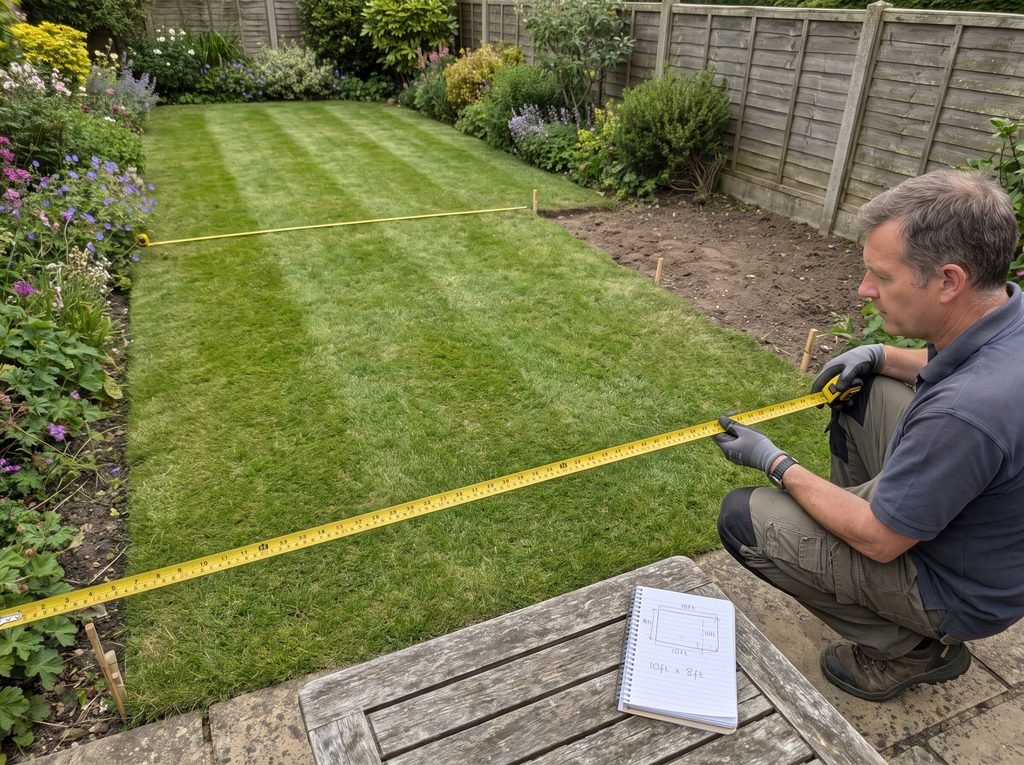
Before purchasing a Rhino greenhouse, measure the available area carefully.
Start by measuring the full width and length of the space. Then check how much room remains around the greenhouse for access, cleaning, maintenance, guttering, doors, and safe movement.
Do not place a greenhouse so close to a fence that the roof overhang or guttering becomes difficult to access. Similarly, leave enough space around doors so they can open comfortably.
You should also check whether nearby trees could create problems. Tree branches can fall onto glazing, while roots may interfere with foundations.
Sunlight is equally important. A greenhouse generally performs best when it receives plenty of sunlight, although some afternoon shading can be helpful during very hot weather.
Before ordering, check the manufacturer’s current technical drawings because nominal product sizes may differ from actual measurements. Rhino specifically notes this on its product pages.
Choosing the Best Location for a Rhino Greenhouse
The ideal greenhouse location combines sunlight, accessibility, drainage, shelter, and practicality.
A sunny position is generally desirable because greenhouse plants depend on natural light. However, the brightest position is not automatically the best if it exposes the structure to extreme wind or makes summer heat difficult to manage.
A Rhino greenhouse is engineered with strength in mind, but site selection remains important.
Avoid placing the greenhouse in a low area where water naturally collects. Standing water around the foundation can cause drainage problems and make access unpleasant during wet weather.
Try to position the greenhouse where you can easily reach it from the house. A greenhouse that requires a long walk across muddy lawn can become less enjoyable to use during winter.
Think about utilities as well. If you expect to install irrigation equipment, greenhouse heaters, lighting, or electrical accessories, a practical location can make future upgrades easier.
Preparing the Base for a Rhino Greenhouse
A stable base is essential.
Rhino states that its greenhouses are designed to work with soil or concrete bases as well as paving slabs and brick or block perimeter plinths, depending on the model and installation arrangement.
The most important consideration is that the base must be accurately prepared and level.
An uneven foundation can make doors difficult to operate, create alignment issues, complicate glazing, and affect the appearance of the completed structure.
The safest approach is to obtain the manufacturer’s confirmed base plan for the exact model you purchase and use those dimensions rather than relying only on the advertised headline size.
The base also needs to account for access and drainage. A well-prepared foundation can make the installation process much smoother and provide better long-term stability.
Can You Build a Rhino Greenhouse Yourself?
DIY installation is possible for capable gardeners, but the difficulty increases as the greenhouse gets larger.
Rhino says its greenhouses are supplied with comprehensive instructions. For certain large models, the company states that a competent DIY enthusiast may be able to erect the structure over a weekend with help at key moments.
That does not mean installation is a one-person afternoon project.
Large glass panels, long aluminium sections, doors, roof components, bracing, and glazing systems are much easier to handle with two or more people.
You should also be comfortable reading technical instructions and working carefully. Precision matters.
Another option is professional installation. Rhino provides installer information for various models, with charges depending on size, specification, and location.
For a premium greenhouse, professional installation may be worthwhile because it reduces the risk of expensive installation mistakes and saves substantial time.
Rhino Greenhouse Accessories That Can Improve Your Growing Space
A greenhouse becomes much more useful when its interior is planned properly.
Rhino offers accessories including integral staging, roof blinds, side blinds, louvrematic openers, seed racks, shelves, raised beds, watering systems, heaters, rainwater equipment, and various tools.
Staging is particularly useful because it creates working surfaces at comfortable heights. Instead of keeping everything on the floor, you can organise seedlings, trays, pots, and gardening tools more efficiently.
Roof blinds can help manage intense summer sunlight, while heaters can extend the growing season and protect sensitive plants during cold periods.
Watering systems are useful when a greenhouse becomes larger. Manually watering every pot is manageable in a small structure but becomes more time-consuming as your collection grows.
The right accessories should be added based on how you intend to use the greenhouse. Do not fill every available space with accessories immediately. Leave room for plants to develop and for you to work comfortably.
Is a Rhino Greenhouse Good for Year-Round Growing?
A properly managed Rhino greenhouse can support year-round gardening, but it does not automatically create a warm, frost-free environment during winter.
During spring and summer, the greenhouse can provide an excellent environment for propagation, vegetables, flowers, and tender crops. During autumn and winter, it can protect plants from wind, heavy rain, frost, and severe weather.
However, maintaining suitable temperatures during cold weather may require additional heating and insulation strategies.
The structure alone does not replace an active climate-control system.
Gardeners interested in year-round production should consider thermal management, ventilation, heating costs, lighting, humidity, frost protection, and plant selection.
Hardy crops can often be grown through winter without intensive heating, while tropical plants may require considerably more energy.
Growing Vegetables in a Rhino Greenhouse
One of the biggest benefits of owning a Rhino greenhouse is the ability to extend the growing season.
Tomatoes, peppers, chillies, cucumbers, aubergines, salad crops, herbs, and other vegetables can benefit from the sheltered environment.
You can start seeds earlier in the year, protect young plants from cold weather, and continue harvesting some crops later into autumn.
Tomatoes are especially well suited to greenhouse cultivation because the sheltered structure helps provide warmer conditions and protects plants from heavy rain.
However, greenhouse success still depends on good plant management. Overcrowding can increase humidity and restrict airflow, so plants should be spaced according to their mature size.
Regular ventilation and careful watering are essential.
Growing Flowers and Tender Plants in a Rhino Greenhouse
A Rhino greenhouse is not just for vegetables.
Flower gardeners can use it for raising annuals, overwintering tender perennials, propagating cuttings, protecting young plants, and starting seasonal displays.
Tender plants that struggle during cold UK winters can be moved into the greenhouse for additional protection.
A greenhouse can also provide an excellent environment for propagation. Seed trays and cuttings benefit from controlled conditions, while gardeners can observe growth closely and respond quickly to problems.
With suitable staging, you can create separate areas for seeds, young plants, established containers, and overwintering specimens.
Rhino Greenhouse for Small Gardens
Not every gardener needs a huge structure.
For a smaller garden, a compact Rhino model can still provide the benefits of stronger construction and quality glazing while fitting into a limited footprint.
A 6×8 or 6×10 configuration, for example, can provide useful space without dominating the entire garden. Rhino offers models in these kinds of dimensions, although exact configurations and availability should be checked at the time of purchase.
In a small garden, organisation becomes particularly important.
Use staging vertically, make use of hanging basket rails, keep pathways clear, and avoid filling the greenhouse with unnecessary equipment.
A smaller greenhouse that is intelligently organised can be more enjoyable than a larger greenhouse that is cluttered and difficult to use.
Rhino Greenhouse for Large Gardens and Serious Gardeners
Large gardens create very different possibilities.
A larger Rhino greenhouse can support multiple growing zones, including seed propagation, vegetable production, flower growing, overwintering, storage, and relaxation.
Models such as the 10×18, 10×20 and 12×20 provide considerable growing space for gardeners with sufficient land.
At this scale, interior planning becomes just as important as the greenhouse itself.
Create logical pathways so you can move around without damaging plants. Position taller crops where they will not shade smaller plants excessively. Keep watering equipment easy to reach, and reserve work areas for potting and maintenance.
A larger structure also gives you the opportunity to make the greenhouse an enjoyable space rather than purely a production area.
Does a Rhino Greenhouse Look Good in a Modern Garden?
The appearance of a greenhouse matters more than some buyers realise.
A greenhouse can occupy a prominent position in a garden for decades, so it should complement the surrounding landscape.
The natural aluminium finish provides a clean, traditional glasshouse appearance, while coloured powder-coated finishes can create a more contemporary look. Rhino offers multiple colour options across its ranges, although the choices depend on the particular model.
The straight aluminium framework and transparent glazing can work well with both traditional and modern landscaping.
You can also soften the structure with surrounding planting. Climbing plants, ornamental borders, gravel paths, raised beds, and carefully positioned containers can make the greenhouse feel integrated into the garden.
How Much Does a Rhino Greenhouse Cost?
Price is one of the biggest considerations.
A Rhino greenhouse is positioned in the premium end of the market, so it generally costs substantially more than basic aluminium greenhouse kits.
Current examples on Rhino’s website illustrate how costs vary considerably by model, size, colour, and specification. For example, a Classic 8×10 plain aluminium model was listed at £2,999 at the time of checking, while a Premium 10×18 plain aluminium model was listed at £5,949.
These figures should not be treated as permanent prices because manufacturers can change pricing, promotions, delivery terms, and configurations.
The real cost also includes the foundation, installation if required, staging, blinds, heating, irrigation, water storage, and other accessories.
That is why the smartest way to compare prices is to calculate the complete installed project cost rather than comparing greenhouse kit prices alone.
Is a Rhino Greenhouse Worth the Investment?
Whether a Rhino greenhouse is worth the money depends on what you value.
For someone who only wants occasional access to a sheltered area for a few tomato plants, a premium greenhouse may be unnecessary.
For a dedicated gardener who expects to use a greenhouse for many years, structural strength, safer glazing, integrated features, a long guarantee, and British manufacturing may justify the higher purchase price.
Customer feedback is mixed, which is worth considering rather than ignoring. Trustpilot currently shows a 4.1 score from 172 reviews on the Rhino Greenhouses profile, with both highly positive experiences and complaints about issues such as delivery, installation, component replacement, and customer service.
Some customers report being very satisfied with construction quality and weather performance, while others have reported frustrations. This is a useful reminder that even premium products can have differences in individual ownership experiences.
For a major purchase, read recent reviews, understand the warranty terms, clarify installation arrangements, and make sure you know exactly what is included before ordering.
What Are the Main Advantages of a Rhino Greenhouse?
The greatest advantage is the combination of strength and practicality.
The frame is designed with substantial aluminium content, the glazing uses toughened safety glass, the glazing retention system is intended to improve security in strong winds, the greenhouses include ventilation features, and rainwater collection is built into the design described by the manufacturer.
The British manufacturing aspect may also appeal to buyers who prefer products made domestically.
The 25-year guarantee is another important advantage because it signals a long-term approach to the product range.
The availability of accessories is useful as well. Instead of sourcing every component from different suppliers, gardeners can build an integrated setup around the greenhouse.
What Are the Possible Disadvantages?
The biggest disadvantage is likely to be price.
Premium construction costs more, and a fully equipped greenhouse can become a significant investment.
Installation can also increase the overall price. Large greenhouses are not always easy DIY projects, particularly when heavy glazing and large frames are involved.
A second consideration is that a strong greenhouse still needs proper site preparation. You cannot expect the frame alone to compensate for a poorly levelled or poorly anchored base.
There is also the possibility of customer-service or delivery frustrations, as indicated by some recent independent reviews.
This does not mean the product is inherently unreliable. It means buyers should treat after-sales support as part of the purchasing decision.
How to Maintain a Rhino Greenhouse for Many Years
Maintenance is relatively straightforward, but consistency matters.
Keep the glass clean so plants receive maximum available sunlight. Wash away dirt, algae, and accumulated debris carefully.
Check the gutters regularly, especially in autumn when leaves can accumulate quickly.
Inspect door runners, vents, glazing beads, fixings, and other moving components periodically.
During winter storms, look around the structure for signs of movement, damage, or blocked drainage.
Do not wait until a small problem becomes a major repair.
Cleaning also improves the appearance of the greenhouse. A premium structure deserves regular care, particularly when it occupies a central position in your garden.
How to Make the Most of the Interior Space
The internal layout should be planned around movement.
Start by identifying where you want your main pathway. Then decide where staging, shelving, raised beds, and tall plants will go.
Use vertical space whenever possible. Rhino supplies hanging basket rails on its greenhouse models described on its product pages, allowing gardeners to use some of the available upper space for baskets and other plants.
Avoid turning the central path into storage.
A greenhouse should remain a workspace. You need room to carry pots, water plants, inspect leaves, prune crops, and clean surfaces.
Good organisation can make a medium-sized structure feel considerably larger.
How to Use a Rhino Greenhouse in Winter
Winter changes greenhouse priorities.
Instead of focusing primarily on production, you may use the structure for protecting tender plants, growing winter salads, starting early seedlings, storing dormant plants, or maintaining hardy crops.
Ventilation remains important because cold weather does not eliminate humidity.
Watering should be adjusted according to plant growth and temperature. Plants generally need less water during cold, low-light periods.
If using heating equipment, monitor energy consumption carefully. Heating a greenhouse continuously can become expensive, so choose plants that are appropriate for your available temperature range.
Is a Rhino Greenhouse Suitable for Beginners?
Yes, but the buyer should understand that it is a serious investment.
A beginner does not need to become an expert gardener before purchasing a premium greenhouse. In fact, having a high-quality growing space can make learning more enjoyable.
The key is to start with manageable crops.
Grow a few tomatoes, herbs, salad leaves, chillies, peppers, and easy flowers before attempting complicated year-round cultivation.
The mistake beginners sometimes make is buying a large greenhouse and then immediately filling it with dozens of plants.
Start slowly, learn how temperature, watering, humidity, ventilation, and light interact, and expand over time.
Rhino Greenhouse Versus a Budget Greenhouse
Budget greenhouses have their place.
They can be perfectly suitable for gardeners who have limited budgets, live in sheltered locations, or simply want seasonal growing space.
The argument for choosing a Rhino greenhouse is not that cheaper greenhouses cannot grow plants. They certainly can.
The difference is more about construction philosophy.
A premium greenhouse aims to provide stronger structural components, better glazing, more integrated features, and a longer-term ownership proposition.
For someone who expects the greenhouse to become a permanent feature of the garden, those differences can be meaningful.
For someone who expects to move house soon or is unsure whether greenhouse gardening is right for them, a lower-cost option may make more financial sense.
Rhino Greenhouse vs Traditional Victorian-Style Greenhouses
Traditional greenhouses can offer beautiful architectural styling and may appeal to gardeners who want an ornamental feature.
A modern aluminium greenhouse generally focuses more heavily on practicality, efficiency, and structural simplicity.
The best choice depends on your priorities.
A traditional design may be chosen because of appearance, while a Rhino greenhouse can be appealing when structural performance, safety glass, modern features, and long-term gardening use are high priorities.
Neither approach is automatically right for every garden.
How to Decide Which Rhino Greenhouse Range Is Right for You
The Classic range is a sensible starting point for gardeners who want robust construction and the core Rhino features without necessarily moving into the largest or most elaborate configurations.
The Premium range makes more sense when you want greater structural reinforcement, more sizing options, and more design flexibility.
The Ultimate range is better suited to gardeners who want a high-end greenhouse that can become a major feature of the garden.
Your decision should ultimately be based on space, budget, growing goals, desired appearance, installation requirements, and how much you expect to use the structure.
Common Mistakes to Avoid When Buying a Rhino Greenhouse
One common mistake is buying the greenhouse before planning the base.
Because Rhino notes that actual dimensions can differ from headline product sizes, this can create unnecessary problems if you prepare a foundation using assumptions rather than the official base plan.
Another mistake is underestimating internal space.
A greenhouse quickly becomes crowded when staging, pots, tools, hanging baskets, and mature plants are added.
Some buyers also overlook installation. If you are not confident with DIY assembly, include professional installation in your initial budget rather than treating it as an unexpected extra.
Finally, do not forget ventilation and shading. Even the strongest greenhouse needs sensible environmental management.
Frequently Asked Questions About Rhino Greenhouse
Is a Rhino greenhouse made in the UK?
Yes. Rhino states that its greenhouses are made at its Norfolk factory in the UK.
How long is the Rhino greenhouse guarantee?
Rhino states that its greenhouses come with a 25-year guarantee. The exact terms and exclusions should always be checked in the current warranty documentation before purchase.
Does a Rhino greenhouse use toughened glass?
Yes. Rhino’s product pages state that its greenhouses are supplied with Grade A 4mm toughened safety glass.
Are Rhino greenhouses suitable for windy gardens?
The design places significant emphasis on structural strength and glazing security, including additional aluminium and reinforced components on some models. However, performance depends on the complete installation, site conditions, anchoring, and local weather.
Can I install a Rhino greenhouse myself?
Yes, Rhino provides installation instructions, and the company says competent DIY enthusiasts can erect some models with assistance. Larger installations can benefit significantly from professional installers.
Does a Rhino greenhouse collect rainwater?
The manufacturer says its greenhouses feature integral gutters, downpipes, and bends for collecting rainwater.
Is a Rhino greenhouse good for beginners?
It can be, especially for beginners who want a long-term greenhouse and are prepared for the higher initial investment. The main consideration is choosing a manageable size and learning how to control temperature, watering, ventilation, and humidity.
Can you heat a Rhino greenhouse?
Yes. Greenhouse heating equipment can be incorporated depending on your setup, plant selection, electrical access, and winter growing goals. Rhino’s current accessory listings include several greenhouse heater options.
Are Rhino greenhouses expensive?
They sit in the premium segment, so they cost more than many basic greenhouse kits. Current prices vary substantially by model and size, with examples on the manufacturer’s website ranging from several thousand pounds upward.
Final Verdict: Should You Buy a Rhino Greenhouse?
A Rhino greenhouse is best viewed as a long-term gardening investment rather than simply another garden accessory.
Its strongest selling points are its aluminium construction, emphasis on structural strength, toughened safety glass, glazing system, integrated ventilation, rainwater collection, British manufacturing, and 25-year guarantee.
The trade-off is straightforward: you pay more for the construction and features.
For a casual gardener who only wants a small seasonal growing space, that premium may not be necessary. But for someone who wants a substantial greenhouse that can support serious gardening for many years, the investment can be much easier to justify.
The best model will depend on your available garden space, budget, growing ambitions, and willingness to invest in installation and accessories. Most importantly, do not choose the greenhouse size before measuring the actual site and checking the confirmed technical dimensions.
A well-positioned, properly installed and carefully maintained greenhouse can become one of the most valuable spaces in a garden. It can help you start plants earlier, extend harvesting later, protect tender varieties, experiment with new crops, and enjoy gardening in conditions that would otherwise be too cold, wet, or windy.
Ready to Create a Better Growing Space?
Choosing the right greenhouse is about more than finding the largest or most expensive model. It is about selecting a structure that fits your garden and supports the way you actually grow plants. Review the available Rhino greenhouse sizes, compare Classic, Premium, and Ultimate configurations, calculate the complete installation cost, and plan your foundation before placing an order.
When you choose the right size and prepare the site properly, your greenhouse can become a productive, organised, and enjoyable part of your garden for many years. Take the time to compare the specifications, think about your future growing plans, and invest in features that genuinely improve the way you garden.
Your ideal growing season does not have to end when the weather changes. With the right greenhouse, careful planning, and consistent maintenance, you can make your garden far more productive throughout the year.