Introduction: Are Polycarbonate Greenhouses Any Good?
When choosing a greenhouse, one of the first decisions is usually the glazing material. Traditional glass has long been the classic option, but polycarbonate has become a popular alternative for gardeners who want something lightweight, durable and better able to tolerate everyday knocks. That naturally leads to an important question: are polycarbonate greenhouses any good?
For most home gardeners, the answer is yes. A well-designed polycarbonate greenhouse can be an excellent place to raise seedlings, grow tomatoes and peppers, protect tender plants, extend the growing season and keep plants sheltered from difficult weather. Polycarbonate glazing is particularly attractive because it is resistant to breakage, relatively lightweight and capable of retaining heat well. The Royal Horticultural Society also identifies polycarbonate glazing as durable and good at holding heat.
Table of Contents
However, polycarbonate is not automatically better than glass. Every glazing material involves compromises. Clear polycarbonate typically allows less light through than standard horticultural glass, and that can matter when growing seedlings, cuttings or plants with high light requirements. The RHS notes that clear polycarbonate transmits around 83% of incoming light compared with approximately 90% for glass.
That means the right question is not simply whether polycarbonate is good or bad. The better question is whether it is good for your garden, your crops, your climate and the way you plan to use your greenhouse.
This detailed guide examines the advantages, disadvantages, insulation performance, durability, light transmission, maintenance requirements and running costs of polycarbonate greenhouses. By the end, you should have a much clearer idea of whether this type of greenhouse is worth buying.
What Is a Polycarbonate Greenhouse?
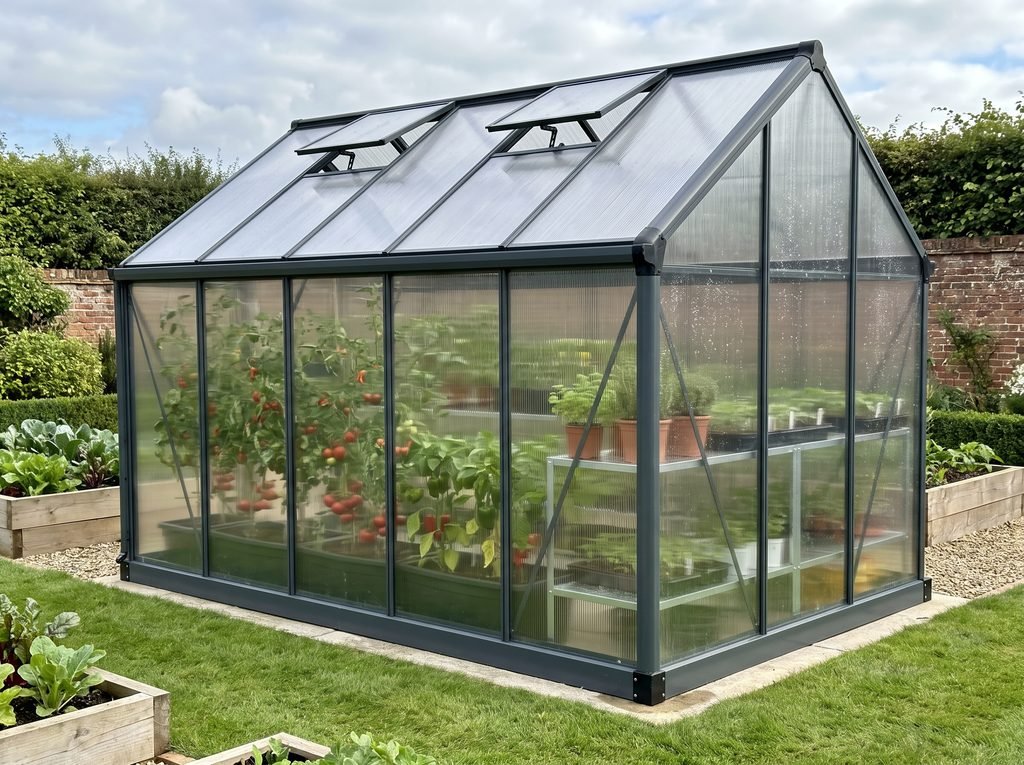
Before deciding are polycarbonate greenhouses any good, it helps to understand what polycarbonate actually is.
Polycarbonate is a strong thermoplastic commonly used for greenhouse glazing. Rather than being one solid sheet of glass, many greenhouse panels use a multiwall construction. A twin-wall panel typically consists of two outer layers connected by internal ribs. Those internal air spaces help create insulation between the inside and outside of the greenhouse.
This construction explains why polycarbonate feels different from glass. It is lighter, more flexible and much less likely to shatter when hit. Polycarbonate panels can also be manufactured in different thicknesses and structures, so performance varies between products.
A basic clear twin-wall sheet can be suitable for general gardening, while thicker multiwall panels may provide improved insulation and strength. Some horticultural polycarbonate products are specifically designed to manage condensation, improve durability and provide thermal insulation.
The frame is another important part of the equation. A greenhouse with excellent panels can still perform poorly if the frame is weak, poorly anchored or badly sealed.
Therefore, the quality of the whole greenhouse matters rather than the glazing material alone.
Why Has Polycarbonate Become So Popular?
One reason gardeners ask are polycarbonate greenhouses any good is that the material has become increasingly common in modern domestic greenhouse designs.
Glass looks attractive and offers excellent light transmission, but it can be heavy and vulnerable to breakage. Polycarbonate solves several of those practical problems.
A polycarbonate greenhouse is generally easier to handle during assembly because the panels weigh much less than comparable glass. That can be particularly useful for home gardeners who are constructing the greenhouse themselves.
The material also offers a degree of impact resistance that makes it suitable for gardens where footballs, tools, branches or accidental knocks could pose a risk to glass.
Another reason for its popularity is thermal performance. Multiwall polycarbonate creates internal air spaces that help slow heat transfer. This does not mean a polycarbonate greenhouse becomes warm without sunlight or heating, but it can reduce heat loss compared with a single-glazed structure.
For gardeners growing plants in changeable weather, that balance between strength and insulation can be a major advantage.
Are Polycarbonate Greenhouses Any Good for Home Gardeners?
For many households, are polycarbonate greenhouses any good has a straightforward answer: they can be very good, provided you choose the right model.
The greatest strength of this type of greenhouse is versatility.
A gardener can use one for starting seeds in spring, raising young plants, growing summer crops and protecting plants during colder months. Greenhouses in general allow gardeners to start plants earlier and extend the growing season, while also providing shelter for tender crops and overwintering plants.
Polycarbonate can be particularly useful when durability is high on your list.
Imagine a greenhouse used in a busy family garden. A glass pane can break if something hits it. A quality polycarbonate panel is much more forgiving. That does not make it indestructible, but it can reduce one of the practical worries associated with conventional glass.
It also tends to be a sensible option for gardeners who prioritise function over the traditional appearance of a glasshouse.
However, gardeners growing plants that need maximum light should pay closer attention to the specification. The lower light transmission of clear polycarbonate compared with glass can make a difference in situations where every bit of winter sunlight matters.
So, for general vegetables, herbs, seedlings and ornamentals, polycarbonate can be an excellent choice. For specialist high-light crops, glass may still have an advantage.
The Biggest Advantages of Polycarbonate Greenhouses
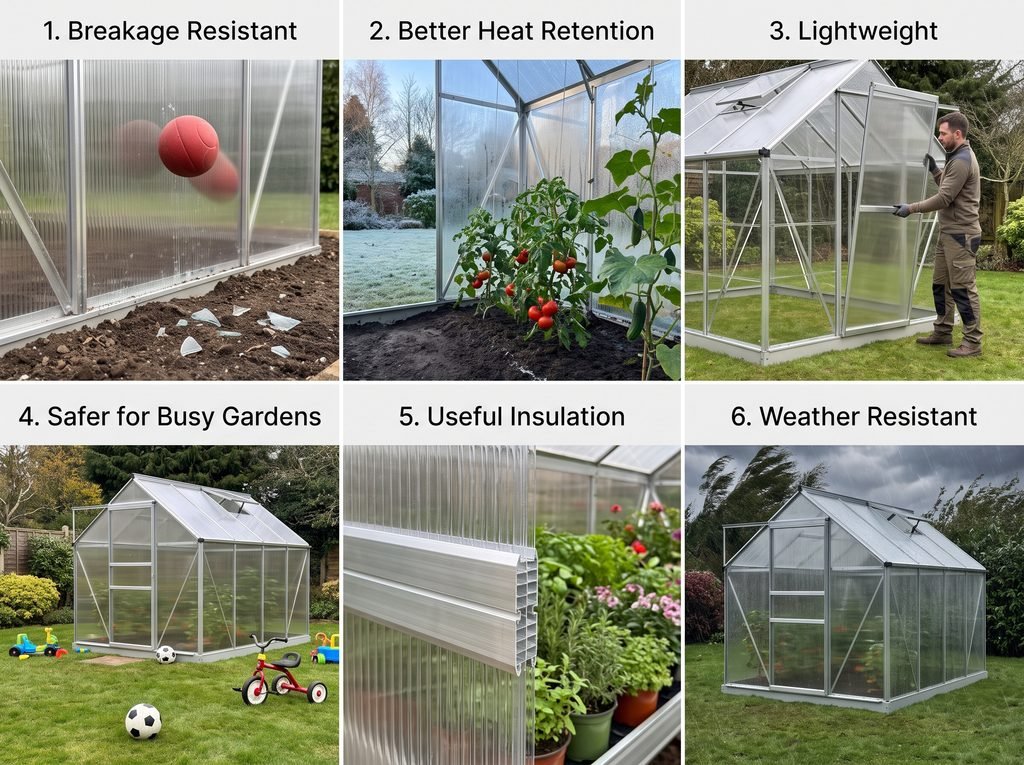
1. Polycarbonate Is Highly Resistant to Breakage
One of the strongest arguments when asking are polycarbonate greenhouses any good is durability.
Glass is rigid and can break when exposed to impact. Polycarbonate is designed to be much more impact resistant.
That characteristic is valuable in real gardens. Strong winds can move objects, children may accidentally kick balls and gardening equipment can be knocked against walls. A greenhouse made from robust polycarbonate panels offers more peace of mind in those situations.
This does not mean every polycarbonate panel has the same strength. Thickness, panel construction, frame design and fixing methods all influence overall durability.
Still, the material’s resistance to breakage is one of its clearest benefits.
2. It Retains Heat Better Than Single Glass in Many Designs
Another important reason are polycarbonate greenhouses any good is a useful question is insulation.
Multiwall polycarbonate contains air pockets that reduce the speed at which heat passes through the glazing. The result can be a greenhouse that holds onto warmth better than a basic single-glazed structure.
This is particularly useful during spring and autumn when the greenhouse is exposed to cool nights.
The RHS specifically describes polycarbonate glazing as good at retaining heat.
Better heat retention does not mean you can ignore heating. A greenhouse still loses heat through glazing, doors, vents, gaps and the surrounding structure. The RHS notes that draughts and the structure itself are major contributors to heat loss and recommends sealing gaps and ensuring doors and vents fit properly.
3. Polycarbonate Is Lightweight
Another practical benefit is weight.
A lighter glazing system can make transportation and installation easier. This can matter when a greenhouse has to be carried through a garden, moved around a difficult access route or assembled by one or two people.
The lighter material can also place less weight on the frame.
For DIY gardeners, that can be a significant advantage.
4. It Can Be Safer Around Busy Gardens
Safety is another reason people consider polycarbonate when asking are polycarbonate greenhouses any good.
There is no completely risk-free greenhouse, but reducing the chance of shattered glazing can be valuable.
A garden may contain pets, children, sports equipment, lawn tools and heavy pots. Polycarbonate glazing provides a more forgiving surface than conventional glass when accidental impacts occur.
That can make it especially appealing for family gardens.
5. It Can Provide Useful Insulation Without Double Glazing
The internal structure of multiwall panels provides an insulating effect without using traditional double-glazed glass.
This does not make the greenhouse equivalent to an insulated home extension. It simply means the glazing can slow heat transfer.
For gardeners trying to maintain a more stable growing environment, that characteristic can be helpful.
Temperature stability is important because plants are affected not only by the absolute temperature but also by rapid changes in their environment.
6. It Handles Outdoor Weather Well
Quality polycarbonate is intended for outdoor applications and can be manufactured with UV protection and weather-resistant characteristics.
Horticultural multiwall products can include weather and UV protection as part of their design.
The important word here is quality.
Cheap panels may not offer the same long-term performance as products designed specifically for greenhouse use. When comparing models, look at the manufacturer’s warranty, UV protection, panel thickness and fixing system instead of choosing solely on price.
The Disadvantages You Should Know Before Buying
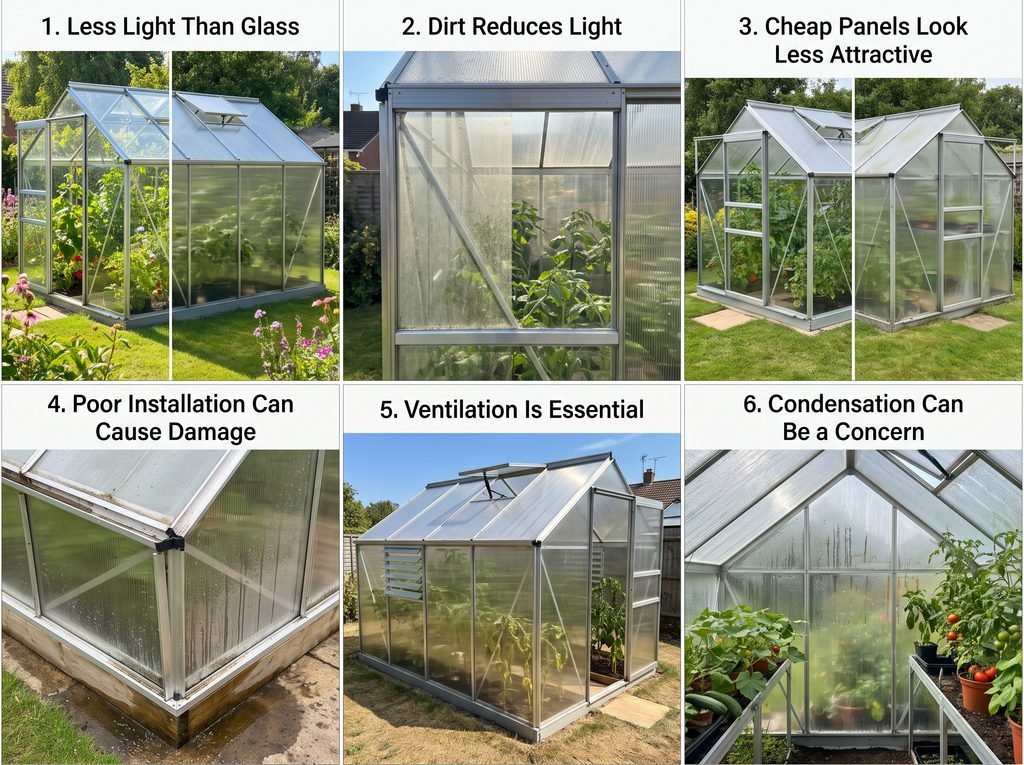
A good buying guide should not pretend polycarbonate is perfect.
When exploring are polycarbonate greenhouses any good, it is just as important to understand the limitations.
1. Polycarbonate Usually Transmits Less Light Than Glass
This is probably the biggest disadvantage.
The RHS reports that clear polycarbonate transmits about 83% of the light that hits it, while conventional glass can transmit around 90%.
That difference may sound small, but plants depend on light for photosynthesis.
For tomatoes, cucumbers, peppers and many common garden plants, a good polycarbonate greenhouse can still provide plenty of useful growing conditions. But gardeners raising light-hungry seedlings or specialised plants should consider whether maximum light transmission is more important than improved impact resistance and insulation.
The answer depends heavily on what you grow.
2. Panels Can Become Dirty and Reduce Light Further
Any greenhouse glazing can become dirty, but dirt can be especially noticeable when you are already starting with lower light transmission than clear glass.
Dust, algae, moss, condensation deposits and general grime can reduce the amount of light reaching plants.
The RHS recommends keeping algae, liverwort and moss under control because growth on glass or polycarbonate glazing can reduce available light, particularly during winter when natural sunlight is already limited.
Regular cleaning therefore becomes part of good greenhouse management.
3. Some Cheap Panels Can Look Less Attractive
Not all polycarbonate has the crystal-clear appearance of glass.
Some panels can have a slightly cloudy or textured appearance because of their internal structure. For many gardeners, this is not a problem. In fact, diffused light can sometimes be useful, but the visual experience is different from looking through traditional clear glass.
Gardeners who want a classic Victorian or heritage greenhouse appearance may prefer glass for aesthetic reasons.
4. Polycarbonate Can Be Damaged by Poor Installation
Although polycarbonate is tough, installation still matters.
Panels need to be cut, aligned, fixed and sealed correctly. Incorrect installation can allow water or contaminants into the panel structure or cause movement and premature damage.
The supporting frame also needs to be properly anchored.
This is one reason it is worth reading the manufacturer’s assembly instructions carefully rather than treating a greenhouse installation as a simple weekend project.
5. Ventilation Is Still Essential
A common misunderstanding is that better insulation means less need for ventilation.
That is not true.
A well-insulated greenhouse can still become extremely hot in sunny weather. In fact, effective ventilation is essential in any greenhouse because temperature can rise rapidly when sunlight enters the structure.
The RHS warns that greenhouses can overheat from spring through autumn and recommends adequate ventilation and shading. It also identifies roof vents as especially important.
A greenhouse without adequate ventilation can create problems even if the glazing itself is excellent.
6. Condensation Can Be a Concern
Humidity and condensation are normal greenhouse issues.
Warm, moist air can meet cooler surfaces and create condensation. Persistent moisture can encourage fungal problems and make the environment uncomfortable for plants.
Some specialised polycarbonate products incorporate condensation-control features designed to reduce droplets and improve light transmission.
However, good ventilation remains one of the most important ways to manage moisture.
Are Polycarbonate Greenhouses Any Good in Winter?
For gardeners interested in year-round growing, are polycarbonate greenhouses any good becomes an especially important question.
Polycarbonate can perform well in winter because multiwall construction provides useful insulation.
However, insulation is not the same as heating.
A greenhouse exposed to freezing outdoor temperatures will still become cold. If you need frost-sensitive plants to survive the winter, you may need additional heating and insulation.
The benefit of polycarbonate is that it can reduce the rate of heat loss, helping a heating system work more effectively than it might in a poorly sealed structure.
The RHS recommends dealing with draughts, repairing damaged glazing and improving seals when trying to make greenhouse heating more efficient.
The greenhouse’s location also matters.
A sheltered position with good sunlight and protection from severe winds can perform very differently from an exposed garden.
For winter growing, think about the entire system rather than relying on the panels alone.
That means considering:
- greenhouse orientation
- roof ventilation
- door seals
- panel thickness
- heating
- insulation
- plant selection
- frost protection
- weather exposure
A good polycarbonate greenhouse can support winter gardening, but it is not automatically a heated conservatory.
Can Polycarbonate Greenhouses Get Too Hot?
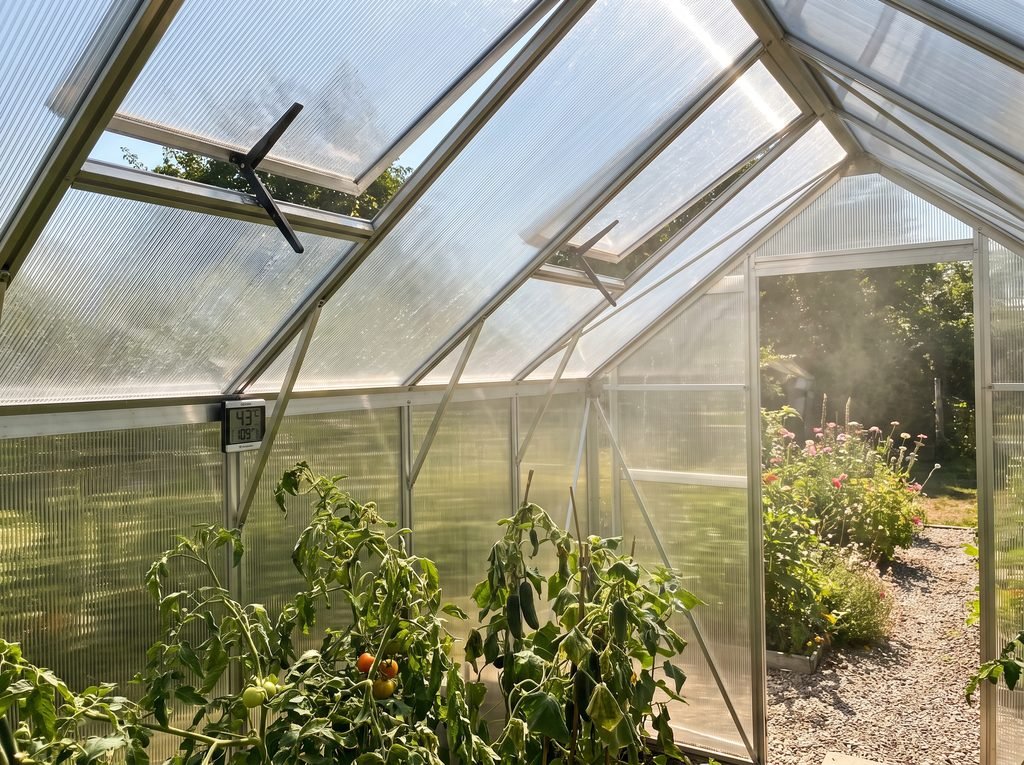
Yes. This is an important point that is sometimes overlooked.
When sunlight enters a greenhouse, the interior can become much warmer than the air outside. Better insulation does not eliminate this effect.
According to the RHS, greenhouse temperatures can rise enough to damage plants, and ventilation and shading are important from spring through autumn.
That means your answer to are polycarbonate greenhouses any good should include another question: does the greenhouse have adequate ventilation?
Look for roof vents rather than relying only on the door.
The RHS says roof vents are the most useful form of ventilation and notes that side ventilation is not a substitute for roof ventilation.
Automatic vent openers are also useful because they can respond to rising temperatures when you are away from home.
This is especially important for gardeners who work during the day and cannot manually open the greenhouse whenever temperatures rise.
Polycarbonate vs Glass: Which Is Better?
The debate between polycarbonate and glass is often presented as if one material must win.
In reality, both have legitimate advantages.
Glass provides higher light transmission and has the traditional appearance that many gardeners love. The RHS identifies glass as the best glazing material in terms of transmitting light, with around 90% transmission under the conditions described in its guidance.
Polycarbonate, by contrast, offers impact resistance, lower weight and good heat retention.
A glass greenhouse may therefore be better for someone who values maximum light, longevity of clear glazing and classic appearance.
A polycarbonate greenhouse may be better for someone who values safety, durability, lighter construction and thermal performance.
The most sensible choice depends on your priorities.
When Glass May Be the Better Choice
Glass deserves serious consideration when:
- you want maximum light transmission
- you grow plants requiring very high light levels
- you prefer a traditional greenhouse appearance
- aesthetics are important
- you want a classic long-term garden feature
Glass does not degrade in sunlight in the same way as many plastics, according to RHS guidance.
When Polycarbonate May Be Better
Polycarbonate makes more sense when:
- breakage is a major concern
- the greenhouse will be used by a family
- you live in an exposed location
- you want better thermal retention
- you need lightweight panels
- you are comfortable sacrificing some light transmission for durability
This is why there is no universal answer to whether polycarbonate is better.
Does Polycarbonate Make Sense for a Small Greenhouse?
Small greenhouses can be particularly challenging because they heat and cool quickly.
A compact greenhouse has less internal air volume to buffer temperature swings. This means ventilation becomes extremely important.
For a small structure, polycarbonate can still be a good choice because its durability and insulation benefits remain valuable.
However, buyers should avoid choosing a greenhouse simply because it is described as insulated.
Look carefully at the ventilation system.
A small greenhouse with excellent polycarbonate panels but poor ventilation can still become dangerously hot.
The RHS notes that smaller greenhouses can be particularly vulnerable to overheating and may require a higher proportion of effective ventilation.
Therefore, when comparing compact models, consider roof vents, door size, automatic vent openers and the location of the greenhouse as carefully as you consider the glazing.
How Long Do Polycarbonate Greenhouses Last?
The lifespan of a polycarbonate greenhouse depends on several factors.
Panel quality is one of the most important.
A cheap greenhouse with thin panels and a weak frame should not be expected to perform like a professional-grade horticultural structure.
The local weather also matters. Strong winds, intense sun, falling branches and repeated temperature changes can all affect outdoor materials.
Installation is another major factor.
A greenhouse that is correctly anchored and assembled can withstand normal outdoor conditions more effectively than one that is poorly installed.
Maintenance also matters.
Replacing damaged panels, checking fasteners, cleaning glazing and maintaining seals can all help preserve performance.
When researching are polycarbonate greenhouses any good, do not look only at the purchase price. Look at the manufacturer’s warranty and replacement-panel availability as well.
A supplier that can provide individual replacement panels years after purchase may be a much better long-term choice than a seller that treats the entire greenhouse as disposable.
Are Polycarbonate Greenhouses Easy to Maintain?
Generally, yes.
The material itself does not require complicated maintenance.
The main tasks are cleaning, inspection and occasional repair.
You should periodically inspect the greenhouse for:
- loose panels
- damaged connectors
- blocked ventilation
- dirty glazing
- algae growth
- failed seals
- frame movement
- water ingress
Cleaning is particularly important because even small amounts of dirt can reduce available light.
The RHS specifically notes that algae and similar growths on polycarbonate can reduce light levels reaching plants.
A gentle cleaning routine can therefore improve both appearance and growing performance.
Avoid aggressive cleaning methods that could scratch or damage the glazing or protective coatings.
How Much Does a Polycarbonate Greenhouse Cost?
Prices vary substantially depending on size, brand, frame material, panel thickness, ventilation, foundations, doors and optional accessories.
A small basic greenhouse can be relatively affordable, while a large premium structure with thick multiwall glazing, automated ventilation and a strong aluminium frame can cost considerably more.
The cheapest option is not always the best value.
When comparing prices, calculate the total cost rather than looking only at the headline figure.
You may also need to budget for:
- base or foundation
- shelving
- staging
- automatic vent openers
- greenhouse heater
- shading
- irrigation
- anchoring
- replacement parts
A greenhouse that costs slightly more initially may deliver better value if its frame and panels are stronger and replacement components are readily available.
Are Polycarbonate Greenhouses Any Good for Tomatoes?
Yes. Polycarbonate greenhouses can be very useful for tomatoes.
Tomatoes benefit from the warmer, protected environment of a greenhouse, especially in cooler or unpredictable climates.
The main challenge is controlling heat and humidity.
Tomatoes need ventilation, and greenhouse temperatures can rise quickly in sunny conditions. This makes roof vents particularly valuable.
During hot weather, opening doors and vents helps move warm air out of the greenhouse.
Good watering habits are also important. Avoid creating unnecessary humidity and keep an eye on signs of plant stress.
The greenhouse should be viewed as a controlled growing environment rather than simply a warm box.
Are Polycarbonate Greenhouses Any Good for Seedlings?
They can be, but light transmission deserves attention.
Seedlings need suitable light, warmth, moisture and airflow.
The RHS specifically warns that the lower light transmission of clear polycarbonate compared with glass may limit its suitability for seedlings and cuttings that require high light levels.
That does not mean seedlings cannot be successfully raised in polycarbonate greenhouses.
It simply means you need to consider where the greenhouse is positioned and how much natural light reaches it.
A south-facing or otherwise well-lit location, appropriate ventilation and careful watering can help create good conditions.
For extremely light-demanding propagation, supplemental lighting may also be worth considering.
How Important Is the Greenhouse Location?
Location can make or break greenhouse performance.
Even the best polycarbonate greenhouse cannot compensate for an unsuitable site.
Choose a location with strong natural light and good access.
Avoid placing it somewhere where buildings, tall fences or dense trees shade it for most of the day.
At the same time, excessive exposure to strong winds can place unnecessary stress on the structure.
Think about access to water and electricity if you plan to install irrigation or heating.
The RHS also recommends considering orientation, access to services and maintenance requirements when planning protected structures.
A convenient location will also make you more likely to use the greenhouse regularly.
What Should You Look for When Buying a Polycarbonate Greenhouse?
Now that we have explored are polycarbonate greenhouses any good, it is time to focus on what actually separates a good greenhouse from a disappointing one.
Check the Panel Thickness
Do not compare greenhouses simply by the word “polycarbonate.”
Look at the thickness and construction of the panels.
Thicker multiwall panels generally provide more structure and insulation than very thin sheets, although the exact performance depends on design and manufacturer specifications.
Check the UV Protection
Outdoor polycarbonate needs appropriate UV protection to maintain long-term performance.
Look for clear information from the manufacturer about UV-resistant treatment or co-extruded UV protection.
Avoid buying a greenhouse where the glazing specification is vague.
Inspect the Frame
The frame is just as important as the glazing.
A strong panel in a weak frame does not make a high-quality greenhouse.
Look for:
- sturdy profiles
- reliable panel retainers
- strong corners
- secure doors
- adequate anchoring
- good-quality fixings
Count the Vents
Ventilation should be high on your checklist.
Do not assume that a greenhouse has adequate airflow simply because it has a large door.
Roof ventilation is particularly valuable. The RHS recommends substantial roof ventilation, with its guidance suggesting around 15–20% of floor area as an ideal benchmark for many greenhouse situations.
Check Replacement Parts
This is one of the most overlooked buying considerations.
Ask whether you can buy replacement panels, hinges, handles, seals and fixings separately.
A greenhouse that remains repairable is usually a better long-term investment.
Are Polycarbonate Greenhouses Any Good in Strong Winds?
They can be, but the installation matters enormously.
Polycarbonate panels are impact resistant, but the complete greenhouse still has to deal with wind pressure.
Strong winds can stress frames, doors, fixings and foundations.
The greenhouse should be securely anchored according to the manufacturer’s instructions and appropriate for the local conditions.
Never assume that a lightweight greenhouse can simply be placed on the ground.
A good foundation or anchoring system provides stability and helps prevent movement.
Before buying, check the manufacturer’s wind-resistance information when available.
How Do You Clean Polycarbonate Greenhouse Panels?
Cleaning is straightforward, but care is required.
Start by removing loose dirt with clean water.
Use a gentle cleaning method rather than abrasive tools that could scratch the surface.
Pay particular attention to corners and areas where algae can develop.
Clean glazing allows more light into the structure and improves the overall appearance.
The RHS recommends removing algae and similar growths because they can reduce light reaching plants through both glass and polycarbonate glazing.
Cleaning also gives you an opportunity to inspect panels for cracks, movement or other damage.
Do Polycarbonate Greenhouses Need Shading?
Sometimes.
Polycarbonate reduces some heat transfer, but the greenhouse can still overheat in bright sunlight.
The RHS recommends shading and ventilation during periods of intense warmth, noting that prolonged excessive heat can damage plants.
Whether you need shading depends on the greenhouse’s location and what you grow.
In a sunny garden, temporary shading may be useful during heatwaves.
However, permanent excessive shading can reduce useful sunlight.
The goal is balance: enough light for strong growth without allowing temperatures to rise beyond what your plants can tolerate.
Can You Heat a Polycarbonate Greenhouse?
Yes.
A polycarbonate greenhouse can be heated with suitable greenhouse heating equipment.
One advantage is that its insulating structure can help reduce heat loss compared with a poorly insulated single-glazed structure.
Nevertheless, heating efficiency depends on much more than glazing.
Before adding a heater, improve the building envelope.
Check for gaps around doors, damaged seals, poorly fitted vents and other draughts.
The RHS advises that fixing gaps and ensuring vents and doors fit properly can improve heating efficiency and reduce unnecessary heat loss.
Remember that heating a greenhouse continuously through winter can become expensive.
If your goal is simply frost protection, you may need far less heat than someone attempting to maintain warm growing conditions for tropical plants.
Is Polycarbonate Better for the Environment?
This is a more complicated question.
Polycarbonate is a plastic material, so environmental performance depends on its production, durability, lifespan and end-of-life management.
A product that lasts for many years can reduce the need for frequent replacement.
On the other hand, plastics remain a sustainability concern, and responsible disposal or recycling should be considered where facilities are available.
Rather than choosing a greenhouse solely because it uses less material at purchase, think about its expected service life and whether individual parts can be repaired or replaced.
A durable greenhouse that remains in use for many years may be a more practical purchase than a very cheap structure that needs replacing repeatedly.
Common Myths About Polycarbonate Greenhouses
Myth 1: Polycarbonate Greenhouses Do Not Get Cold
They do.
Polycarbonate can retain heat well, but outside temperatures still influence the inside environment.
Myth 2: Polycarbonate Never Breaks
It is highly impact resistant, but it is not indestructible.
Strong impacts, incorrect installation or severe weather can still cause damage.
Myth 3: You Do Not Need Ventilation
You absolutely do.
Greenhouses can overheat even when made from insulating materials.
Myth 4: All Polycarbonate Panels Are the Same
They are not.
Panel thickness, construction, coatings, light transmission and manufacturer quality vary.
Myth 5: Polycarbonate Is Always Better Than Glass
Neither material wins in every situation.
Glass has superior light transmission, while polycarbonate has advantages in impact resistance, weight and heat retention.
Who Should Buy a Polycarbonate Greenhouse?
A polycarbonate greenhouse is particularly attractive to gardeners who want a practical, durable structure.
It can be a strong choice for beginners because it offers useful protection without the fragility associated with ordinary glass.
It can also work well for families, vegetable growers and gardeners who live in areas where accidental impact or harsh weather is a concern.
Gardeners who want to extend the growing season may also appreciate its ability to retain heat.
For people focused heavily on aesthetics, maximum light transmission or traditional greenhouse design, glass may still be preferable.
Who Might Prefer a Glass Greenhouse?
Glass can make more sense when appearance and light transmission take priority.
Gardeners who grow plants that need very high light levels may appreciate the additional light available through clear horticultural glass.
Glass can also provide a traditional garden appearance that works particularly well in formal landscapes.
A well-built glass greenhouse can become a permanent visual feature rather than simply a growing structure.
The downside is that glass can be heavier and more vulnerable to breakage.
That is why the decision should be based on your actual gardening needs rather than on a general claim that one material is universally superior.
Are Polycarbonate Greenhouses Any Good for Beginners?
Yes, and this is one of the strongest use cases.
A beginner often needs a greenhouse that is forgiving, practical and easy to manage.
Polycarbonate offers a combination of durability and useful insulation that can make it an approachable option.
However, beginners should not underestimate ventilation.
The most common greenhouse management mistakes are often related to excessive heat, excessive humidity or poor watering rather than the glazing material itself.
A simple temperature thermometer, regular ventilation and sensible watering can make a major difference.
Start with easy crops such as tomatoes, salad leaves, herbs, peppers and seedlings before moving on to more demanding plants.
10 Practical Tips for Getting Better Results From a Polycarbonate Greenhouse
Choose the Sunniest Practical Location
Give your greenhouse as much useful natural light as possible while avoiding unnecessary shade.
Prioritise Roof Ventilation
Roof vents help release rising warm air and are a major part of greenhouse temperature control.
Keep Panels Clean
Dirty glazing reduces light. Cleaning should therefore be part of your seasonal routine.
Buy the Best Frame You Can Afford
Do not spend your entire budget on panels and then compromise on the supporting structure.
Secure the Greenhouse Properly
Good anchoring reduces the risk of wind-related movement or damage.
Check Doors and Seals
Gaps make temperature management harder, particularly during winter.
Use Automatic Vent Openers
Automatic ventilation can help prevent temperatures from rising excessively when you are away.
Monitor Temperature
A simple thermometer gives you information that can prevent avoidable plant damage.
Avoid Overcrowding
Plants need air movement. An overcrowded greenhouse can become humid and difficult to ventilate.
Plan Your Crops Before You Buy
The greenhouse should match the plants you want to grow, rather than choosing a greenhouse first and figuring out its purpose later.
Are Polycarbonate Greenhouses Any Good for Year-Round Gardening?
For many gardeners, yes.
But successful year-round gardening depends on management rather than glazing alone.
In spring, the greenhouse can provide a protected place to start seeds and young plants.
During summer, it can support warm-season crops while ventilation and shading prevent excessive heat.
In autumn, it can extend harvesting and protect vulnerable plants.
During winter, it can provide shelter and, with suitable heating, allow selected crops and tender plants to be maintained.
This is one of the biggest reasons are polycarbonate greenhouses any good is such a useful search question. The material can support multiple gardening goals throughout the year, but its performance depends on how effectively the gardener manages temperature, light, moisture and ventilation.
How to Decide Whether Polycarbonate Is Right for You
Instead of asking only are polycarbonate greenhouses any good, make a personal checklist.
Ask yourself what you are growing.
If you mainly want tomatoes, cucumbers, peppers, herbs, salads and general seedlings, polycarbonate is likely to be a very practical choice.
Ask yourself how exposed your garden is.
If accidental impacts and harsh weather concern you, polycarbonate’s resistance to breakage becomes more attractive.
Ask yourself how important appearance is.
If you love traditional glasshouses, glass may win aesthetically.
Ask yourself whether maximum light is critical.
For high-light plants, glass may have an advantage.
Finally, consider how much maintenance and heating you expect to do.
A greenhouse is an ecosystem that needs regular management regardless of the glazing material.
Are Polycarbonate Greenhouses Any Good? The Final Verdict
So, are polycarbonate greenhouses any good? In most domestic gardening situations, yes—they can be an excellent choice.
The strongest advantages are clear: polycarbonate is durable, lightweight, resistant to breakage and capable of retaining heat well. These qualities make it practical for beginners, families, vegetable growers and gardeners who want a greenhouse that can handle everyday outdoor life. The RHS confirms that polycarbonate glazing is durable and good at holding heat.
The main compromise is light transmission. Clear polycarbonate generally allows less light through than conventional glass, which can matter for seedlings, cuttings and crops that require particularly high light levels.
There are also other considerations, including ventilation, condensation, cleaning, panel quality, frame strength and installation.
That means the best polycarbonate greenhouse is not necessarily the cheapest one. Look for strong construction, appropriate panel thickness, UV protection, effective roof ventilation, secure anchoring and access to replacement parts.
For most gardeners, the combination of durability and insulation makes polycarbonate a very sensible investment.
The key is to choose the right specification rather than assuming every polycarbonate greenhouse will provide the same performance.
Frequently Asked Questions About Polycarbonate Greenhouses
Are polycarbonate greenhouses better than glass?
Neither is automatically better. Glass generally provides higher light transmission, while polycarbonate offers advantages such as impact resistance, lighter weight and good heat retention.
Are polycarbonate greenhouses good in cold weather?
Yes, especially multiwall designs, because the construction can help retain heat. However, additional heating may still be required for frost-sensitive plants.
Do polycarbonate greenhouses get too hot?
They can. Like any greenhouse, they need adequate ventilation and sometimes shading during hot, sunny weather.
Does polycarbonate reduce light?
Yes. Clear polycarbonate generally transmits less light than clear horticultural glass. The RHS gives approximately 83% for clear polycarbonate compared with around 90% for glass in its guidance.
Do polycarbonate greenhouses need ventilation?
Absolutely. Good ventilation is essential for controlling temperature, humidity and air movement. Roof ventilation is particularly useful.
Can you grow tomatoes in a polycarbonate greenhouse?
Yes. Tomatoes are commonly grown under greenhouse protection, provided the structure has sufficient ventilation and suitable growing conditions.
Are polycarbonate panels easy to clean?
Yes. Regular gentle cleaning can remove dirt and biological growth that otherwise reduce available light.
Is a polycarbonate greenhouse suitable for beginners?
Yes. Its durability and practical characteristics make it a useful option for beginners, provided they learn basic ventilation, watering and temperature management.
Does thicker polycarbonate always mean a better greenhouse?
Not necessarily. Thickness is important, but frame quality, panel construction, UV protection, ventilation, sealing and installation also affect the overall performance.
Is a polycarbonate greenhouse worth the money?
For many gardeners, yes. It can offer a strong balance of durability, insulation and practicality. The value becomes much better when the greenhouse is properly installed and maintained.
Final Thoughts: Should You Buy One?
The answer ultimately comes down to your priorities.
A polycarbonate greenhouse is not perfect, and glass retains an important advantage when maximum light transmission and traditional appearance are your main goals.
But for everyday gardening, the benefits are compelling.
Polycarbonate can provide a durable growing environment that handles impacts better than glass, retains heat effectively and is relatively easy to handle. That makes it a particularly practical option for gardeners who want to extend the growing season without constantly worrying about fragile glazing.
The most important thing is to avoid buying based on appearance or price alone.
Look at the panel specification. Examine the frame. Check the ventilation. Consider the foundation. Think about winter use. Research replacement parts. And match the greenhouse to the plants you actually want to grow.
Once you approach the purchase this way, the question are polycarbonate greenhouses any good becomes much easier to answer.
For the majority of home gardeners looking for a strong, practical and versatile growing space, a good-quality polycarbonate greenhouse is certainly worth considering.
Ready to choose your greenhouse? Start by measuring your available garden space, deciding what you want to grow and comparing polycarbonate thickness, ventilation, frame strength and warranty before making your final purchase. The right greenhouse can turn an ordinary garden into a productive growing space for much more of the year.