Gardening can be deeply rewarding, but unpredictable weather can make it difficult to protect plants and maintain healthy growth throughout the year. Sudden temperature changes, strong winds, heavy rain, frost, pests, and short growing seasons can all create problems for gardeners. That is where portable greenhouses can make a noticeable difference. They provide a practical growing environment that gives plants additional protection while allowing gardeners to move, adjust, or relocate the structure when conditions change.
Table of Contents
Unlike a permanent greenhouse, a portable option does not require the same level of commitment to one location. This makes it particularly attractive for renters, beginners, gardeners with limited outdoor space, and anyone who wants greater flexibility. A high-quality portable greenhouse can be used on a patio, balcony, terrace, backyard, allotment, or other suitable outdoor area, depending on local conditions and the structure’s design.
The popularity of portable greenhouses continues to grow because modern designs are available in many different sizes, materials, and configurations. Some models are compact enough for a small collection of seedlings, while larger versions can accommodate mature plants, shelving, propagation trays, containers, and gardening equipment. Choosing the right greenhouse, however, involves more than simply selecting the cheapest option available.
A well-designed structure should provide sufficient space, adequate ventilation, durable roofing materials, a stable frame, easy access, and good resistance to typical outdoor conditions. The right choice can extend your growing season, improve plant protection, and make everyday gardening more convenient.
This comprehensive guide explains what to look for when shopping for high-quality portable greenhouses, how to choose the right size and material, where to place one, which plants benefit most, and how to get the best results from your protected growing space.
Why Portable Greenhouses Are Becoming So Popular
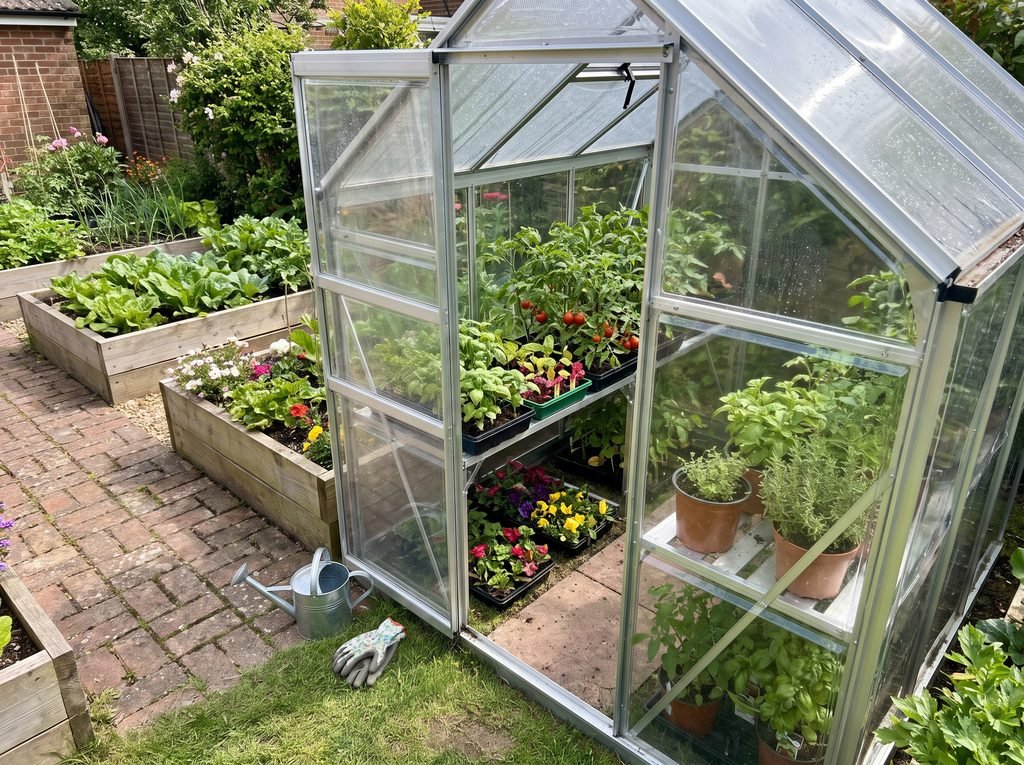
One of the biggest advantages of portable greenhouses is flexibility. Traditional greenhouses are usually installed as semi-permanent or permanent structures. Once they are built, moving them can be difficult, expensive, or impractical. Portable designs are intended to be easier to assemble, reposition, and store, making them useful for gardeners who do not want their outdoor space permanently occupied.
Flexibility also matters when sunlight changes throughout the year. A location that receives excellent light in spring may become shaded by nearby trees or buildings later in the season. With a portable structure, gardeners can sometimes move it to a better location, provided the greenhouse is light enough and designed for relocation.
Another reason people choose portable greenhouses is their lower barrier to entry. A large permanent greenhouse may require a significant investment in materials, preparation, and installation. A portable structure can provide many of the practical benefits of protected growing at a lower initial cost and with less complicated setup.
They can also be useful for gardeners who are experimenting with different crops. Instead of dedicating an entire garden area to one permanent greenhouse, you can create a protected growing zone where it is most useful at a particular time.
For new gardeners, portable greenhouses can make controlled growing feel more approachable. Beginners can start with a compact structure, learn how temperature, watering, humidity, and ventilation affect plants, and eventually upgrade to a larger model as their experience grows.
How Portable Greenhouses Create a Better Growing Environment
A greenhouse works by allowing sunlight to enter through its covering while reducing heat loss compared with an exposed growing area. The exact temperature inside depends on the covering material, ventilation, sunlight, outside weather, internal humidity, and greenhouse size.
During cool periods, a greenhouse can protect plants from direct exposure to frost and cold winds. During warmer weather, opening doors or vents helps release excess heat and moisture. The structure essentially creates a more manageable microclimate where plants can have more consistent conditions than they might experience outdoors.
This does not mean a greenhouse automatically provides perfect growing conditions. A poorly ventilated structure can become excessively hot, and a badly positioned greenhouse may receive too little light. However, a well-planned setup gives the gardener greater control.
High-quality portable greenhouses can be especially useful during transitional seasons. Spring temperatures may be too unpredictable for young plants, while autumn nights may become cold before the outdoor growing season is completely finished. Protected growing can provide a valuable buffer during these periods.
The structure can also help reduce exposure to heavy rainfall and strong weather events. While no lightweight greenhouse should be considered invulnerable to storms, a suitable design and secure anchoring can offer considerably more protection than leaving delicate seedlings completely exposed.
What Makes High-Quality Portable Greenhouses Different?
Not every greenhouse sold as portable offers the same level of quality. Some low-cost models are designed mainly for temporary or light-duty use. Others are built with stronger frames, better coverings, more useful ventilation, and more reliable connections.
When comparing portable greenhouses, the first thing to consider is the frame. Common frame materials include steel, aluminium, and various plastic components. Steel can provide strength and rigidity, although it may be heavier and should be protected against corrosion. Aluminium is lightweight and naturally resistant to rust, making it attractive for structures that may need to be moved.
The covering material is equally important. Polyethylene film is common in lightweight greenhouse designs because it is affordable, flexible, and relatively easy to replace. Polycarbonate panels offer greater rigidity and can provide a more durable enclosure, although they generally increase the price and weight of the structure.
A strong connection system also matters. A greenhouse can have a good frame and still perform poorly if the joints are weak. Look for designs with secure fittings, reinforced corners, reliable zips or door systems, and proper attachment points for the cover.
Ventilation should never be treated as an optional feature. Doors, vents, mesh openings, or roll-up sides allow air to move through the growing area. Without adequate ventilation, temperatures may rise too quickly during sunny periods, creating stress for plants.
The best portable greenhouses balance portability with stability. Extremely lightweight designs may be easy to move but can require additional anchoring. A slightly heavier and better-reinforced model may be more suitable for exposed gardens.
Choosing the Right Size for Your Gardening Needs
Size is one of the most important decisions when purchasing portable greenhouses. The correct size depends on the number of plants you want to grow, the type of gardening you enjoy, and the space available in your garden.
A small greenhouse can be excellent for seedlings, herbs, cuttings, young vegetable plants, and a limited number of containers. It may fit neatly against a wall, on a patio, or in a compact garden.
Medium-sized structures offer more versatility. They can accommodate shelves, trays, taller plants, and several containers while still being manageable for many home gardeners. This is often a good compromise between growing capacity and portability.
Larger portable greenhouses can be useful for gardeners who want to grow tomatoes, peppers, cucumbers, ornamental plants, seedlings, and other crops under protection. However, larger structures require more careful planning because they need sufficient clearance, stronger anchoring, and a suitable location.
When evaluating size, do not look only at the external measurements. Internal growing space can be reduced by frame sections, shelves, doors, and sloping walls. Consider how much usable floor area remains and whether there is enough vertical room for the crops you intend to grow.
It is also smart to think about future needs. Gardeners often underestimate how quickly a small greenhouse fills up. Seed trays, pots, compost, watering equipment, plant supports, and mature plants can take more space than expected.
A little extra room can make gardening more enjoyable and reduce the need to constantly rearrange plants. However, buying a structure that is too large for the available space can make ventilation, maintenance, and anchoring more difficult.
The Best Materials for Portable Greenhouses
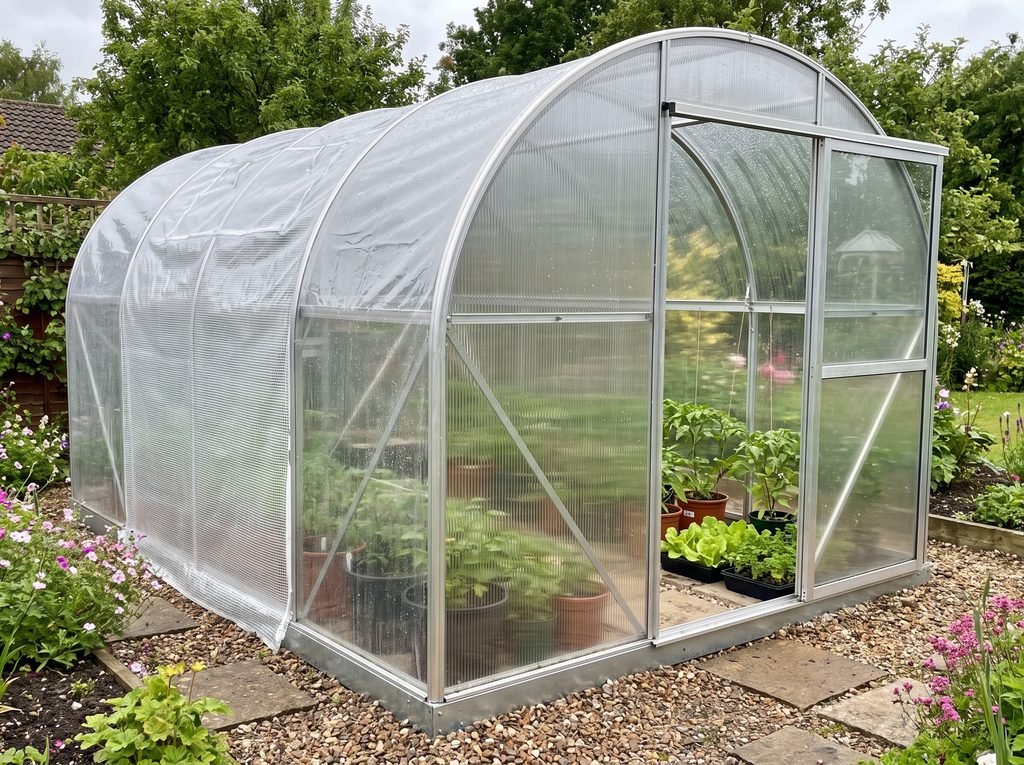
Material selection has a major influence on durability, insulation, weight, appearance, and maintenance. Understanding the basic options can help you choose a structure that fits your gardening goals.
Polyethylene Covers
Many lightweight portable greenhouses use polyethylene covers. This material is popular because it is inexpensive and relatively easy to handle. A quality reinforced cover can provide good weather protection and can often be replaced without replacing the entire frame.
The downside is that flexible covers can eventually wear from sunlight, wind, and repeated handling. Their lifespan depends heavily on thickness, UV resistance, manufacturing quality, and local weather conditions.
Polycarbonate Panels
Polycarbonate is a more rigid material that can provide a sturdier enclosure. It is commonly used where durability and light transmission are priorities. Twin-wall or multi-wall versions can also provide improved insulation compared with a single sheet.
For gardeners who want a more structured setup, polycarbonate portable greenhouses can offer a useful combination of durability and practical performance. They can be heavier, however, which may reduce how easily the structure can be moved.
Glass
Glass has excellent light-transmitting properties and can provide a traditional greenhouse appearance. However, glass structures are generally heavier and more fragile. They are therefore less convenient when true portability is a priority.
For this reason, lightweight materials are often more appropriate when the main goal is flexibility.
Aluminium and Steel Frames
The frame is the backbone of a greenhouse. Aluminium is popular because it is lightweight and resistant to rust. Steel can offer excellent strength, especially when used with a suitable protective finish.
For portable greenhouses, the best choice depends on how often you expect to move the structure. If relocation is a major priority, weight becomes more important. If the greenhouse will usually remain in one place, a sturdier frame may provide greater stability.
Where Should You Place a Portable Greenhouse?
Location can influence greenhouse performance almost as much as the structure itself. Before setting up portable greenhouses, observe your garden at different times of day and identify areas with strong, consistent sunlight.
Most plants need adequate sunlight for healthy growth, so an area with good exposure is usually preferable. At the same time, placing a greenhouse in a completely exposed position can increase the risk of wind damage.
Protection from harsh winds can be particularly valuable for lightweight structures. A location near a suitable wall, fence, hedge, or other windbreak may help, provided the greenhouse still receives enough sunlight and airflow.
The ground should be reasonably level. Uneven surfaces can place stress on the frame and make doors difficult to operate. Waterlogging should also be avoided because constant moisture around the base can create practical and structural problems.
For portable greenhouses placed on lawns, patios, soil, or other surfaces, the anchoring method should match the ground conditions. A lightweight structure may need stronger securing in an exposed location.
Think about accessibility as well. A greenhouse that is difficult to reach every day can become inconvenient. Place it somewhere you can easily check plants, water crops, remove damaged leaves, ventilate the space, and monitor temperatures.
How to Secure Portable Greenhouses Safely
Portability should never mean instability. One of the biggest mistakes gardeners make is assuming that a light greenhouse can simply be placed on the ground without additional support.
Wind can lift or shift lightweight structures. The risk increases in open gardens, exposed allotments, coastal locations, and areas affected by strong gusts.
The anchoring method should depend on the greenhouse design and the ground beneath it. Some models include ground pegs, while others may be secured using stronger anchors, weights, or foundation systems.
Before installing portable greenhouses, inspect the manufacturer’s anchoring recommendations and consider the conditions in your own location. Additional support may be appropriate where wind exposure is high.
It is also important to regularly inspect the frame and connections. Screws, clips, ties, and other fittings can loosen over time due to movement, weather, and repeated use.
A stable greenhouse is not only safer; it is also more effective. When the frame stays secure, the covering is less likely to flap excessively, doors remain aligned, and plants are less exposed to sudden movement.
Which Plants Grow Well in Portable Greenhouses?
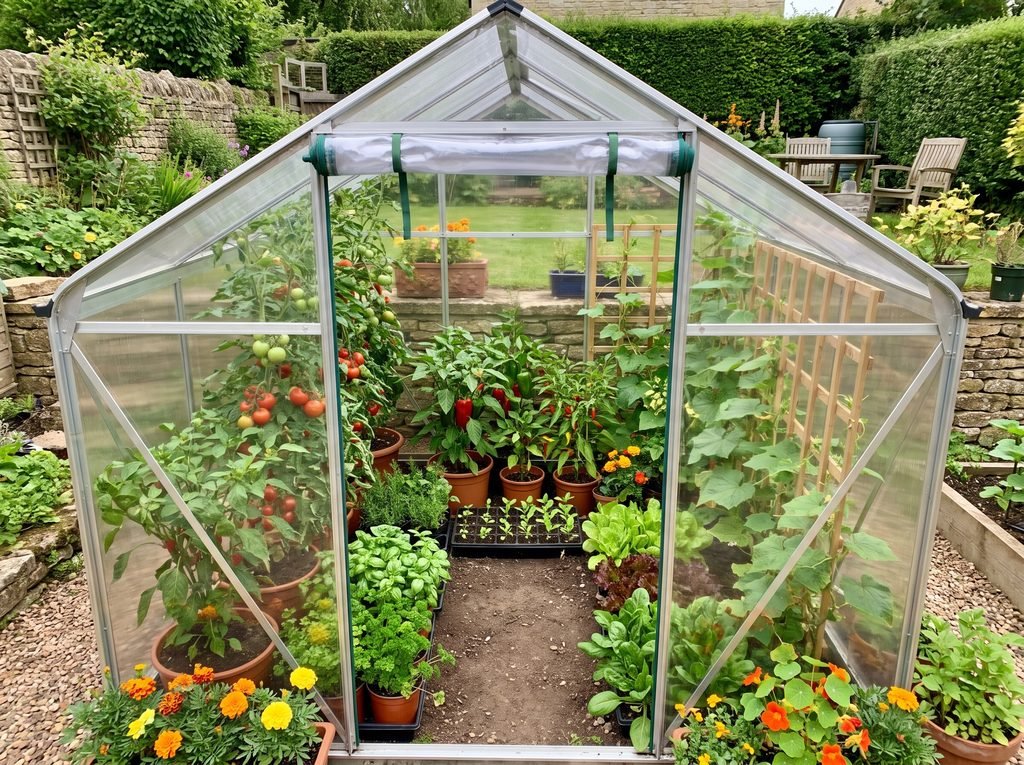
One of the most exciting benefits of portable greenhouses is the ability to experiment with a wide range of plants. The exact choices will depend on temperature, ventilation, available light, and the season, but many common garden crops can benefit from protected growing.
Tomatoes are a popular greenhouse crop because they appreciate warmth and protection. Peppers and chillies can also perform well in a sheltered environment where temperatures are easier to manage.
Cucumbers are another option, particularly when there is sufficient vertical space and adequate ventilation. Herbs such as basil, parsley, coriander, thyme, and mint can be grown in containers, although individual requirements vary.
Seedlings are especially well suited to greenhouse growing. A protected environment can help young plants establish before they are moved into outdoor beds.
Flowers and ornamental plants can also benefit. Gardeners can use portable greenhouses for propagation, overwintering tender plants, growing cuttings, or protecting young ornamental specimens during colder weather.
The structure can also be useful for leafy greens such as lettuce, spinach, and various salad crops. Depending on climate and seasonal conditions, protected growing may help extend their productive period.
The key is to match plant selection with the environment rather than assuming every plant will thrive inside a greenhouse.
Using Portable Greenhouses for Seed Starting
Starting seeds in a greenhouse can be an excellent way to organize the early stages of a growing season. Seeds often require stable moisture, suitable temperature, and consistent care, and a greenhouse can make these conditions easier to manage.
When using portable greenhouses for seed starting, avoid overcrowding trays. Good spacing improves airflow and makes it easier to inspect seedlings.
Use clean trays and appropriate growing media, and monitor watering carefully. Excess moisture combined with poor ventilation can encourage fungal problems.
Light is another critical factor. A greenhouse cover does not guarantee that every seedling will receive enough light. Position trays where they can access suitable natural light, and avoid creating unnecessary shade with large containers or shelves.
As seedlings grow, gradually prepare them for outdoor conditions when appropriate. Moving a young plant directly from a sheltered environment into cold wind or intense outdoor conditions can cause stress.
Portable structures can therefore function as useful transition spaces between indoor propagation and the open garden.
Extending the Growing Season With Portable Greenhouses
One of the strongest reasons gardeners invest in portable greenhouses is to make better use of the shoulder seasons.
In spring, greenhouse protection can help gardeners begin sowing or raising plants before outdoor conditions become consistently suitable. The structure can provide shelter from cold nights, wind, and heavy rainfall.
In autumn, it can help protect productive plants from declining temperatures and unpleasant weather. This can be especially useful for crops that remain productive later in the season.
The actual degree of season extension varies widely depending on the greenhouse, climate, crop, and weather. A simple lightweight structure cannot provide the same protection as a fully insulated greenhouse with heating.
Nevertheless, even modest protection can be useful. Reducing exposure to cold winds and rain may create a more favourable environment for certain crops.
The most effective approach is to use portable greenhouses as part of an overall growing strategy. Match sowing dates, plant varieties, ventilation, watering, and protection methods to the season rather than relying on the greenhouse alone.
Managing Temperature and Ventilation
Temperature management is essential for successful greenhouse gardening. A greenhouse can warm rapidly under strong sunlight, even when the outside air feels relatively cool.
This is why ventilation is so important. Doors and vents should be opened when necessary to prevent excessive heat buildup. Roll-up sides can also improve airflow in some lightweight structures.
In portable greenhouses, ventilation becomes even more important because compact structures may have limited internal air volume. A small space can change temperature quickly.
Morning checks are useful, particularly during periods of rapidly changing weather. A greenhouse that felt cool the previous evening may become surprisingly warm after direct sunlight reaches the cover.
A simple thermometer can help you understand what is happening inside. More advanced gardeners may also choose a digital thermometer and humidity monitor.
Humidity deserves attention as well. High humidity can create conditions that encourage certain plant diseases. Good airflow, appropriate plant spacing, and careful watering can help reduce unnecessary moisture buildup.
The goal is not to keep the greenhouse hot at all times. Instead, aim for conditions appropriate to the plants being grown.
Watering Plants Inside Portable Greenhouses
Plants inside portable greenhouses may need a different watering routine from plants growing outdoors. Because the structure limits direct rainfall, gardeners usually have to provide more consistent manual watering.
At the same time, greenhouse plants can sometimes lose water quickly when temperatures rise. Container-grown plants are particularly vulnerable to drying because their root systems have less available soil.
The best approach is to check the growing media regularly rather than relying on a fixed watering schedule. Insert a finger into the soil, observe the plant leaves, and consider the current temperature and humidity.
Water at the base of plants when possible and avoid unnecessarily wetting foliage. Morning watering can be useful because plants then have time to use moisture during the day.
Overwatering is just as problematic as underwatering. Constantly saturated soil can reduce oxygen around roots and create conditions that encourage root-related problems.
A well-managed greenhouse combines appropriate watering with good drainage and ventilation. These three factors work together to create a healthier growing environment.
Common Mistakes to Avoid
Even high-quality portable greenhouses cannot compensate for poor setup or inconsistent care. One common mistake is placing the greenhouse where it receives insufficient sunlight. Gardeners may focus heavily on convenience and overlook how nearby buildings, trees, and fences affect light throughout the day.
Another common problem is inadequate anchoring. A structure that feels secure on a calm afternoon may become unstable during strong winds.
Overcrowding is another issue. Filling every available space with plants can reduce airflow and make daily maintenance more difficult. It can also increase humidity and make it easier for pests or diseases to spread between plants.
Ignoring ventilation is perhaps one of the most damaging mistakes. Closing every opening because the weather feels cool can cause temperatures inside to rise dramatically once sunlight returns.
Poor cleaning habits can also create unnecessary problems. Old leaves, dead plant material, algae, and spilled growing media should not be allowed to accumulate.
Finally, some gardeners purchase portable greenhouses without considering how they will use the structure throughout the year. Before buying, think about which plants you want to grow, where the greenhouse will go, how often you will move it, and what level of maintenance you are willing to provide.
Maintaining Portable Greenhouses for Long-Term Use
Regular maintenance can significantly improve the usefulness and lifespan of portable greenhouses. Fortunately, maintenance is usually straightforward when performed consistently.
Inspect the covering for tears, gaps, and signs of wear. Flexible plastic covers should be checked especially carefully because small damaged areas can expand under wind and repeated movement.
Examine the frame and connectors. Tighten loose fittings and replace damaged parts when necessary. If the structure has metal components, check for corrosion or damage to protective finishes.
Clean the covering periodically to remove dust and algae that may reduce light transmission. Follow the manufacturer’s recommendations for suitable cleaning methods.
Keep doors and vents clear so they can open and close properly. A blocked opening can reduce ventilation exactly when it is needed most.
At the end of a growing season, remove old plant material and clean the internal area. If you plan to store the greenhouse, make sure components are clean and completely dry before packing them away.
Good care can make portable greenhouses more reliable and can help preserve their performance over multiple growing seasons.
Portable Greenhouses for Small Gardens, Patios, and Balconies
Not every gardener has a large backyard. Urban gardeners, renters, and people living in apartments may have only a balcony, terrace, or compact patio.
This is where portable greenhouses can become especially useful. A compact structure can turn a small outdoor space into a productive growing zone without requiring major construction.
Before placing a greenhouse on a balcony, always consider weight, wind exposure, available space, and any building-specific restrictions. The structure should never obstruct safe access or create avoidable hazards.
Shelving can dramatically increase usable space. Instead of spreading plants across the floor, gardeners can use vertical tiers for seedlings, herbs, and smaller containers.
However, more plants do not always mean better results. Good airflow and access are essential. Choose a setup that allows you to inspect and care for every plant without constantly moving containers.
Compact portable greenhouses can also be ideal for people who want to bring gardening into a smaller living environment without giving up flexibility.
Are Portable Greenhouses Worth the Investment?
For many gardeners, the answer is yes, particularly when the structure solves a specific growing challenge.
A greenhouse may be worth the investment if you want to start seeds earlier, protect plants from harsh weather, grow heat-loving crops, protect tender plants, extend the season, or make better use of a small garden.
The value depends not only on the initial price but also on durability and usability. A very cheap greenhouse that needs frequent replacement may cost more over time than a better-built structure that remains useful for years.
When comparing portable greenhouses, think about total ownership value. Consider the frame quality, cover replacement costs, anchoring requirements, ventilation features, available accessories, and ease of assembly.
A good greenhouse should make gardening easier rather than creating another complicated task. Its design should match the way you actually garden.
How to Choose the Best Portable Greenhouses for Your Garden
Choosing the right greenhouse begins with your personal growing goals. Start by deciding what you want to grow and when you want to grow it.
If you mainly need a protected space for seedlings, a compact model may be enough. If you want to grow tomatoes, cucumbers, peppers, and multiple container plants, a larger design will probably be more practical.
Think about portability as well. Some gardeners may move the greenhouse several times a year, while others may only relocate it occasionally. The more often you plan to move it, the more important weight and simple assembly become.
Next, evaluate ventilation. Look for doors, vents, mesh openings, or roll-up features that can help control internal conditions.
Check the frame and cover quality carefully. A strong frame paired with a flimsy cover may not provide the durability you expect.
Finally, consider the environment where the greenhouse will be placed. Wind, sunlight, rain, snow, temperature swings, and available space should all influence your choice.
The best portable greenhouses are not necessarily the biggest or most expensive. They are the ones that provide the right combination of strength, space, ventilation, portability, and practical features for your individual gardening needs.
Getting More From Your Portable Greenhouse
Once your greenhouse is installed, you can improve its usefulness by treating it as a managed growing environment rather than simply a shelter.
Create a simple routine for checking plants each morning. Look for signs of overheating, moisture stress, pests, and disease. Open ventilation points when appropriate and close them when conditions change.
Use shelves efficiently but avoid blocking doors and airflow. Group plants according to their light and temperature preferences where possible.
You can also divide the space into sections. Seedlings might occupy one shelf while larger container crops take up the floor area. This helps you make better use of vertical and horizontal space.
Inside portable greenhouses, organization matters because small spaces can become crowded quickly. Keep tools in a convenient place, label seedlings, and avoid unnecessary clutter.
Keeping a small gardening journal can also be helpful. Record sowing dates, watering routines, plant varieties, and observations about temperature. Over time, this information can help you understand which techniques work best in your own greenhouse.
The Environmental Benefits of Growing More Efficiently
Greenhouse gardening can support more efficient use of outdoor space. By protecting plants and improving growing conditions, gardeners may be able to produce useful crops in a relatively small area.
Portable greenhouses can also be reused in different parts of a garden as needs change. Instead of permanently dedicating one location to protected growing, the structure can adapt to different crops or seasonal priorities.
Growing from seed may also reduce reliance on buying mature plants every season. Propagating from cuttings or raising seedlings yourself can become an important part of a sustainable gardening routine.
However, sustainability also depends on product quality and lifespan. Choosing a durable greenhouse that remains usable for multiple seasons can be preferable to repeatedly replacing poor-quality structures.
Caring for the cover, frame, and accessories properly can help reduce unnecessary waste and maximize the value of the materials you already own.
When Should You Use a Portable Greenhouse?
There is no single perfect time because greenhouse use depends on climate, crop selection, and local weather conditions.
In many gardens, spring is one of the most valuable periods because young plants benefit from protection while outdoor temperatures remain unpredictable.
Summer can also be useful, especially for heat-loving plants, but ventilation becomes a major priority. During very hot conditions, plants may require shading, increased airflow, and careful watering.
Autumn is another excellent time to use protected growing. The greenhouse can help gardeners continue harvesting certain crops after outdoor conditions begin to deteriorate.
During winter, unheated portable greenhouses can provide some protection against frost and wind, but they should not be assumed to maintain warm temperatures during prolonged freezing conditions.
The most successful gardeners use the greenhouse according to seasonal needs rather than expecting it to perform the same way every month.
Frequently Asked Questions About Portable Greenhouses
Are portable greenhouses suitable for beginners?
Yes. Many portable greenhouses are straightforward to assemble and can provide an accessible introduction to protected growing. Beginners can start with a smaller model and expand their setup as their gardening skills improve.
Can portable greenhouses be used all year?
They can be used throughout the year, but their performance depends on the structure and local climate. Lightweight models may offer useful protection but do not necessarily provide enough insulation for severe winter conditions.
Do portable greenhouses need to be anchored?
In most outdoor situations, proper anchoring is strongly recommended. Lightweight structures can be affected by wind, so securing the frame and cover should be treated as an important part of installation.
Can tomatoes grow in portable greenhouses?
Yes. Tomatoes are among the crops commonly grown under protection. They need sufficient light, suitable temperatures, good airflow, regular watering, and appropriate support as they grow.
How often should a portable greenhouse be ventilated?
There is no universal schedule because ventilation needs change with weather and temperature. Monitor conditions regularly and open doors, vents, or side panels when the greenhouse becomes too warm or humid.
Are portable greenhouses good for small gardens?
Yes. Compact structures can be particularly useful in patios, terraces, small yards, and other areas where a permanent greenhouse may not be practical.
How long do portable greenhouses last?
Lifespan varies considerably depending on materials, manufacturing quality, weather exposure, maintenance, and how frequently the greenhouse is assembled or moved. Stronger frames and better-quality covers generally offer better long-term value.
Final Thoughts: Make Every Growing Season More Productive
A good greenhouse can transform the way you garden by providing a practical layer of protection between your plants and unpredictable outdoor conditions. The appeal of portable greenhouses is that they combine many of the advantages of protected growing with a level of flexibility that permanent structures cannot easily match.
Whether you have a spacious garden or a small patio, the right greenhouse can help you start plants earlier, protect valuable crops, extend the growing season, and experiment with varieties that might otherwise struggle outdoors.
The most important step is choosing a greenhouse that fits your actual needs. Pay attention to size, frame construction, covering materials, ventilation, anchoring, placement, and maintenance requirements. Do not choose based on appearance or price alone.
High-quality portable greenhouses are an investment in your gardening routine. When correctly selected, installed, and maintained, they can become one of the most useful tools in your garden, giving you greater control and more opportunities to grow throughout the year.
Ready to make your garden more productive? Start by identifying the crops you want to grow, the space you have available, and the type of protection your local weather requires. Then choose a well-built greenhouse that fits those needs. With thoughtful planning and consistent care, your protected growing space can help you get more from every season and enjoy a more rewarding gardening experience.
Grow Smarter With the Right Portable Greenhouse
Your garden does not have to be limited by unpredictable weather, restricted space, or a short growing season. A thoughtfully selected greenhouse can give you more control over when and how you grow.
Explore your options, compare frame and covering materials, check ventilation features, and choose a size that leaves enough room for your plants to thrive. Most importantly, invest in quality rather than choosing solely on the lowest price.
The right portable greenhouses setup can become a productive extension of your garden, helping you protect seedlings, support warm-season crops, preserve tender plants, and make better use of your outdoor space.
Start planning your protected growing area today, choose a dependable structure, and turn more of your gardening ideas into healthy, thriving plants.