Learning how to make a green house can be one of the most rewarding projects for a gardener. A homemade greenhouse gives you a protected growing space where you can start seeds earlier, extend the growing season, protect delicate plants, and experiment with crops that may struggle in your local weather. The best part is that you do not necessarily need a huge budget, advanced construction skills, or a large garden to get started.
A greenhouse works by creating a more controlled environment than the outdoor garden. Sunlight enters through transparent or translucent covering materials, while the structure helps reduce the effects of wind, cold temperatures, heavy rain, and sudden weather changes. With the right design, ventilation, watering, insulation, and plant selection, even a small homemade greenhouse can become a productive growing space.
Table of Contents
This guide explains how to make a green house from the planning stage through construction and planting. Whether you want a compact structure for seedlings, a simple cold frame, or a larger backyard greenhouse, the basic principles remain similar. You need a suitable location, a strong frame, an appropriate covering, good airflow, a reliable way to manage temperature, and enough space for your plants to grow comfortably.
The goal is not simply to build a structure that looks like a greenhouse. The goal is to create a growing environment that performs well throughout the seasons. By understanding the important decisions before you begin, you can avoid common mistakes, save money, and build a greenhouse that serves your garden for years.
How to Make a Green House: A Simple Step-by-Step Method That Works
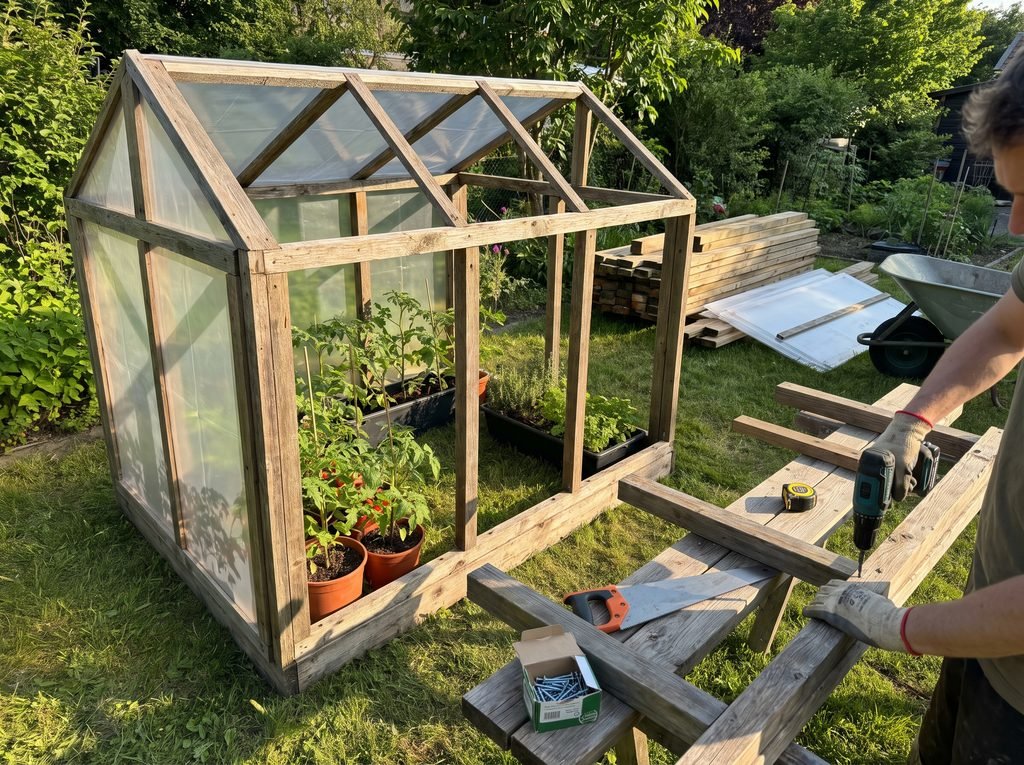
The easiest way to understand how to make a green house is to divide the project into a series of manageable stages. Instead of buying materials immediately and starting construction without a plan, first decide what you want to grow, how much space you need, where the greenhouse will stand, and how much maintenance you are willing to provide.
A basic greenhouse can be built from materials such as treated timber, PVC pipes, metal tubing, reclaimed wood, polycarbonate panels, or greenhouse film. The choice depends on your budget, local climate, appearance preferences, and how permanent you want the structure to be.
For many beginners, a simple rectangular greenhouse is the most practical option. It is easy to lay out, easy to cover, and provides useful floor and wall space. A small greenhouse might be only a few feet wide and several feet long, while a larger backyard structure can accommodate benches, shelving, containers, and walking paths.
Before construction starts, picture how you will actually use the space. Think about where plants will sit, where you will walk, where watering equipment will go, and how you will open doors and vents. A greenhouse that looks attractive but is difficult to access will quickly become frustrating.
Decide What You Want to Grow
Your plant choices should influence the size and design of the greenhouse. Seedlings, herbs, lettuce, and small vegetables require less space than tomatoes, cucumbers, climbing plants, or large containers.
If your primary purpose is seed starting, a compact greenhouse may be enough. If you want to grow tall plants throughout the year, you will need greater height and better ventilation.
Think about your growing goals before learning how to make a green house in detail. Ask yourself whether you want to:
Grow vegetables for a longer season
Start seeds before outdoor planting
Protect tropical or tender plants
Grow herbs during cold weather
Experiment with unusual crops
Maintain plants during rainy periods
Create a dedicated gardening workspace
Your answers will determine almost every later decision.
Choose the Right Greenhouse Size
A common mistake is building a greenhouse that is too small. Once gardeners begin using one, they often discover that they need room for additional plants, shelves, tools, and containers.
Try to choose a size that gives you some growing flexibility. At the same time, avoid building a structure so large that heating, cooling, watering, or maintenance becomes unnecessarily expensive.
Measure your available garden space carefully. Include room around the greenhouse for cleaning, repairs, opening doors, carrying soil, and moving supplies.
Choose the Best Location for Your Greenhouse
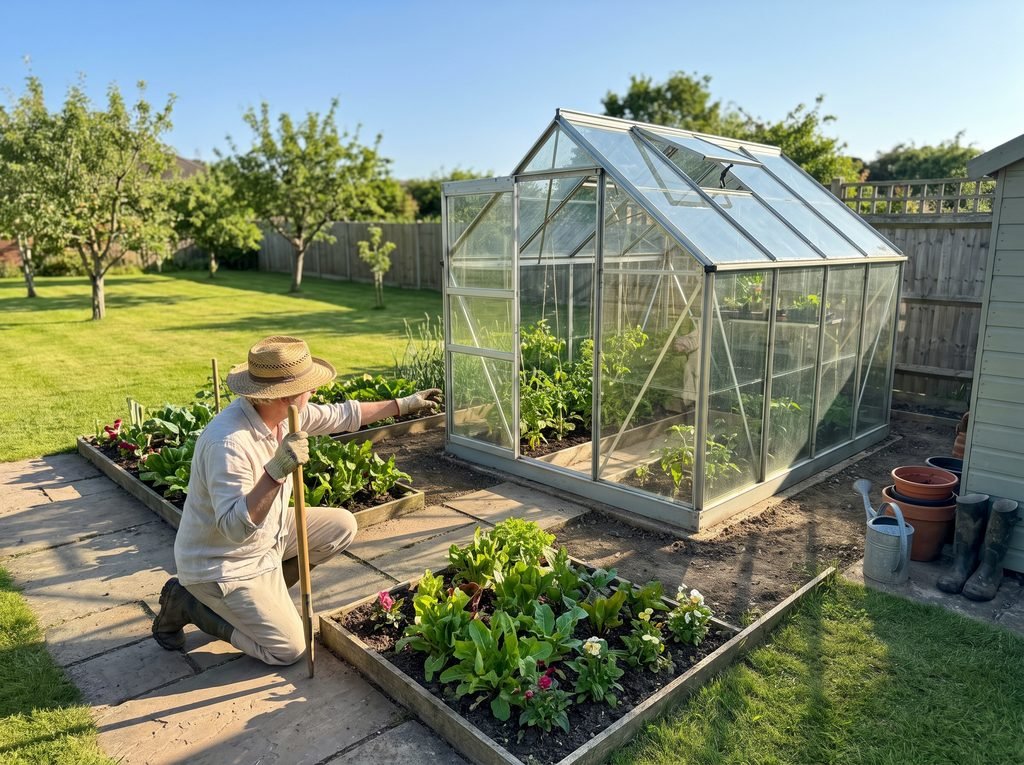
Location is one of the most important parts of how to make a green house successfully. A well-built greenhouse can still perform poorly if it is placed where sunlight is blocked or drainage is inadequate.
Look for a location that receives plenty of sunlight during the day. In many situations, a position with strong morning and midday light is particularly useful because it allows the greenhouse to warm naturally after cooler overnight temperatures.
Avoid placing your greenhouse directly beneath large trees when possible. Trees can block sunlight, drop leaves onto the structure, create excessive shade, and potentially damage the greenhouse during storms.
You should also think carefully about wind exposure. Strong winds can put significant pressure on greenhouse coverings and frames. A sheltered location can make the structure more comfortable and reduce the risk of damage.
Check Drainage Before Building
Water management matters just as much as sunlight. Do not place the greenhouse in a low area where rainwater collects.
Poor drainage can result in muddy paths, saturated soil, standing water around foundations, plant disease, and structural problems. Ideally, the site should be relatively level while still allowing water to drain away efficiently.
If your chosen area is slightly uneven, you may be able to level it before construction. For larger structures, consider installing a drainage solution around the perimeter.
Think About Accessibility
The greenhouse should be easy to reach from the house or garden.
You will visit it frequently to water plants, inspect leaves, open vents, harvest vegetables, remove damaged foliage, and adjust growing conditions. A greenhouse hidden at the far end of the property may be less convenient than one located closer to your normal gardening area.
Also consider where you will store soil, pots, fertilizers, watering cans, and tools.
Decide Which Greenhouse Style You Want
There is no single correct design when learning how to make a green house. Different styles suit different gardens and budgets.
A lean-to greenhouse can be attached to an existing wall and may save space. A freestanding greenhouse gives you greater flexibility and can be positioned wherever sunlight is best. A hoop house uses curved supports and is often relatively inexpensive. A traditional framed greenhouse can provide a more permanent appearance and stronger structure.
A small wooden-frame greenhouse can be attractive in a residential garden, while a PVC or metal hoop structure may prioritize affordability and simplicity.
Lean-To Greenhouse
A lean-to greenhouse is constructed against an existing wall. The wall can provide support and may help stabilize temperature because masonry materials absorb and release heat.
This design is useful where garden space is limited. However, the wall can also create shade, so you need to select its position carefully.
Freestanding Greenhouse
A freestanding greenhouse has open space around all sides. It usually provides greater flexibility for orientation, ventilation, and access.
This is one of the easiest designs for many homeowners because it does not depend on an existing building.
Hoop Greenhouse
A hoop greenhouse uses curved supports to create an arch-shaped structure. The supports are often made from PVC, galvanized metal, or similar materials.
This style can be economical and relatively quick to assemble. Plastic greenhouse film is commonly used as the covering.
Traditional Rectangular Greenhouse
A rectangular structure with straight walls is especially useful when you want shelves and benches. Vertical walls provide more usable growing space, and the roof can be designed to encourage light penetration and rain runoff.
Gather the Materials You Need
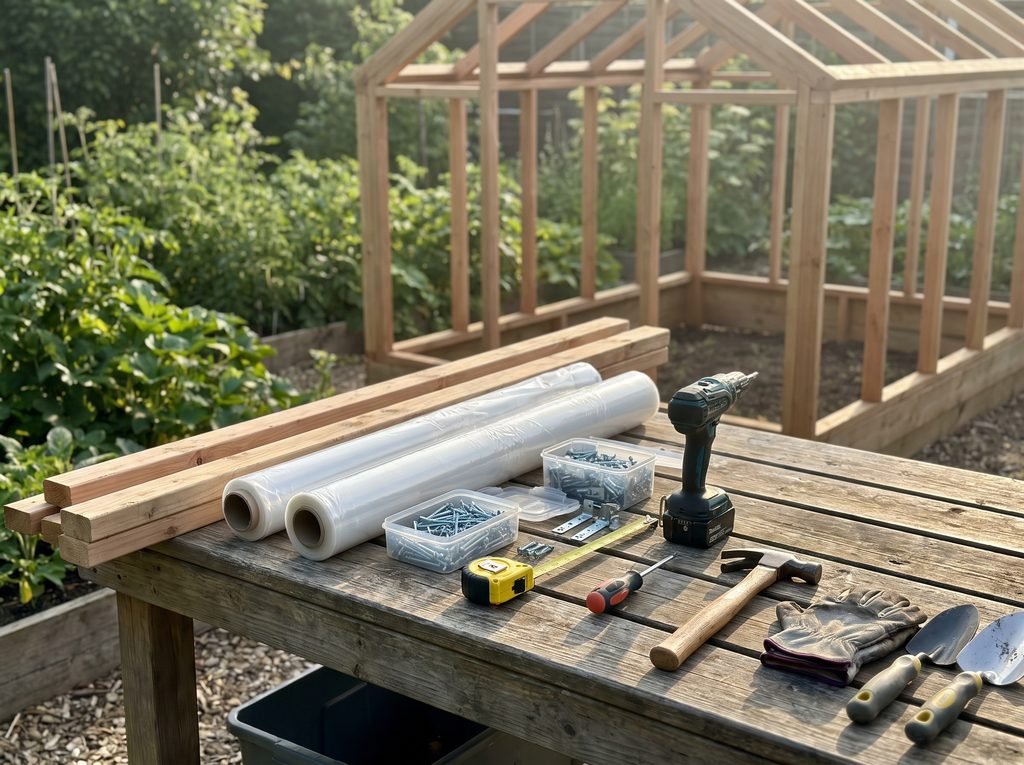
Materials depend on your chosen design, but understanding your options is an important part of how to make a green house economically.
The frame must be strong enough to support the covering and resist local weather. Possible frame materials include timber, aluminum, galvanized steel, PVC, or combinations of these.
The covering material could be greenhouse plastic film, polycarbonate sheets, acrylic, fiberglass panels, or glass. Each option has advantages and disadvantages.
Glass creates a classic greenhouse appearance and can transmit plenty of light, but it is heavier, more fragile, and often more expensive.
Polycarbonate is lightweight and durable. Multi-wall polycarbonate can also provide useful insulation compared with single-layer transparent materials.
Greenhouse film is usually one of the more affordable choices and works particularly well for temporary or budget structures. However, film may eventually require replacement and must be secured properly to prevent wind damage.
In addition to the main frame and covering, you may need hinges, screws, brackets, anchors, door hardware, ventilation windows, shelving materials, sealants, fasteners, and foundation components.
Build a Strong Foundation
A solid foundation provides stability. It can also help keep the structure square and reduce movement caused by wind.
For a small greenhouse, you may be able to use a simple timber base anchored securely to the ground. Larger structures may require concrete footings, pavers, or another permanent foundation system.
The specific foundation method depends on the greenhouse size, soil conditions, local climate, and building requirements.
Before fixing the frame, check that the base is level and square. Measure diagonal distances between corners. If the two diagonal measurements match, your rectangular base is properly squared.
Taking time at this stage makes later construction much easier.
Construct the Greenhouse Frame
Once the foundation is ready, you can begin assembling the frame.
Start with the base, then install the vertical supports. After that, add the upper frame members and roof supports. Keep checking alignment as you work.
A frame that is slightly crooked at the beginning can become significantly harder to cover later.
For a timber greenhouse, use suitable outdoor-rated wood and appropriate fasteners. Wood should be protected against moisture and rot, particularly near the ground.
For metal structures, use connectors and fasteners designed for the type of tubing or profile you are using.
Make the Structure Strong Enough for Your Weather
One of the most important lessons in how to make a green house is to build for your local conditions instead of copying a design from another climate.
Areas with strong winds require secure anchoring and well-fastened coverings. Regions that receive heavy snowfall may require stronger roof framing. Hot areas need generous ventilation and shading options.
Think about your worst normal weather conditions rather than only the average day.
It is much better to spend a little more on reinforcement during construction than to rebuild the greenhouse after a storm.
Install the Door
A greenhouse door should be wide enough for people, trays, carts, and gardening supplies.
A simple hinged door can work well for a small greenhouse. Sliding doors can also be useful because they require less clearance.
Make sure the door opens easily and closes securely. Gaps are not automatically bad because some airflow can be beneficial, but uncontrolled gaps can make temperature management more difficult and allow pests to enter.
For greenhouses in areas where insects or animals are a major concern, screened openings can be useful.
Add the Greenhouse Covering
Installing the covering is a major stage in how to make a green house because the covering controls how sunlight enters while helping create the protected environment.
For plastic film, pull the material firmly across the frame and secure it using appropriate clips, battens, channels, or specialized greenhouse fasteners. Avoid leaving loose sections that can flap in the wind.
Polycarbonate panels should be installed according to the manufacturer’s instructions. Pay attention to panel orientation, sealing, expansion allowances, and condensation management.
Glass requires careful handling and proper framing because it is heavy and breakable.
Avoid Covering Mistakes
A common mistake is choosing a material solely because it is inexpensive.
The cheapest covering may not provide the durability, insulation, light transmission, or weather resistance needed for your garden.
Also avoid leaving sharp frame edges exposed. They can tear plastic film, damage hands, or become dangerous during maintenance.
After installation, inspect the entire greenhouse from inside and outside. Look for loose fasteners, gaps, sharp points, and weak sections.
Install Ventilation
Ventilation is essential to how to make a green house that remains healthy during warm weather.
A greenhouse can become extremely hot when sunlight enters faster than heat escapes. High temperatures can stress plants, reduce pollination, dry out containers, and create poor growing conditions.
The simplest ventilation method is to install openings at different heights. Roof vents are particularly useful because warm air rises. Side vents and doors can improve cross-ventilation.
Automatic vent openers can make ventilation easier because some models respond to temperature changes without requiring electricity.
Why Air Movement Matters
Ventilation is not only about cooling.
Moving air helps reduce excessive humidity and can improve the greenhouse environment for many plants. Persistent moisture and stagnant air can encourage fungal problems.
A small circulating fan can help move air through enclosed spaces, especially during hot or humid periods.
However, fans do not replace fresh-air ventilation. Ideally, both should work together.
Install a Watering System
Plants in a greenhouse do not always receive natural rainfall, so watering becomes your responsibility.
For a small greenhouse, a watering can may be sufficient. For larger structures, drip irrigation or micro-irrigation can save time and deliver water more efficiently.
Drip systems place water close to the plant root zone. This can reduce unnecessary wetting of foliage and help maintain more consistent moisture.
A simple timer can automate irrigation, but automated watering should still be checked regularly. A blocked line, empty reservoir, leaking connection, or failed timer can quickly affect plants.
Plan Greenhouse Benches and Shelves
Interior organization is another major part of how to make a green house effectively.
Benches can keep plants at a comfortable working height and make watering and maintenance easier. Shelves are excellent for seed trays and smaller pots.
Leave enough space for movement. Overcrowding the interior can reduce airflow and make plant care difficult.
You should also consider vertical growing. Hanging baskets, trellises, and tall shelving can make better use of available space.
However, do not allow climbing plants to completely block sunlight from shorter crops.
Prepare the Growing Environment
Once the structure is finished, it is time to prepare the growing area.
You can grow directly in greenhouse beds, use containers, or combine several methods.
Container growing is flexible because you can move plants, control individual soil mixtures, and reorganize your space.
Raised beds can provide a highly productive growing environment while making planting and harvesting comfortable.
Choose a quality growing medium appropriate for your crops. Good drainage is important, but the soil should still hold enough moisture for healthy roots.
Avoid using compacted garden soil in containers because it may drain poorly and become difficult for roots to penetrate.
Understand Temperature Management
Temperature is one of the biggest considerations in how to make a green house useful throughout the year.
During the day, sunlight can increase temperatures quickly. During the night, temperatures may fall considerably, particularly during cold seasons.
Your greenhouse should therefore be designed to both gain and lose heat as needed.
In warm conditions, open doors and vents. Use shade cloth when sunlight becomes excessive. In colder periods, close ventilation openings when appropriate and consider insulation.
For year-round growing in cold climates, supplemental heating may be necessary. The appropriate heater depends on greenhouse size, insulation, local temperatures, and available energy sources.
Never choose a heating system based only on greenhouse size. Air leakage, covering material, wind exposure, and desired indoor temperature can significantly affect heating requirements.
Add Insulation Where Necessary
Insulation becomes particularly valuable when you want to maintain warmer temperatures during cold weather.
Bubble-style greenhouse insulation and multi-wall polycarbonate can reduce heat loss compared with very thin single-layer coverings.
You can also reduce drafts by improving door seals and covering unnecessary gaps.
However, avoid sealing the greenhouse so tightly that ventilation becomes impossible. Good greenhouse design is about balance.
Choose the Right Plants
The plants you choose can determine whether your greenhouse is productive or frustrating.
Leafy greens, herbs, seedlings, tomatoes, peppers, cucumbers, strawberries, and many ornamentals can perform well under suitable conditions.
Different crops have different temperature, light, humidity, and spacing requirements.
Tall crops should be positioned so they do not cast excessive shade over smaller plants.
Grouping plants with similar needs can make irrigation and climate management easier.
Grow According to the Season
One of the major benefits of understanding how to make a green house is that you can extend your growing calendar.
In cooler months, you might grow hardy greens, herbs, or seedlings.
During warmer months, heat-loving crops can take advantage of the protected environment.
The greenhouse does not automatically eliminate seasonal limitations. Instead, it gives you greater control over the conditions around your plants.
Keep Humidity Under Control
Humidity management is often overlooked by beginners.
A greenhouse naturally tends to hold more moisture than an open garden because evaporation occurs inside an enclosed space.
Water plants according to their actual needs rather than following a fixed schedule without checking the soil.
Ventilate after watering when practical. Avoid leaving wet foliage unnecessarily overnight.
Good spacing also improves airflow around leaves.
If condensation constantly collects on surfaces, take it as a signal to evaluate ventilation, watering practices, and plant density.
Protect Your Greenhouse From Pests
A greenhouse can reduce some outdoor pest pressure, but it does not make plants pest-proof.
Aphids, whiteflies, mites, fungus gnats, caterpillars, and other pests can still enter.
Inspect plants frequently. Pay special attention to the underside of leaves and new growth.
Quarantine new plants when practical. A single infested plant can introduce a pest problem to an otherwise healthy greenhouse.
Keeping the growing area clean can also reduce opportunities for pests to thrive.
Remove dead leaves and diseased plant material promptly.
Keep the Greenhouse Clean
Cleanliness is a simple but powerful part of how to make a green house work well over time.
Remove old plant debris after each growing cycle. Clean tools, trays, pots, and work surfaces.
Wash algae or dirt from transparent panels when necessary because a dirty covering can reduce the amount of light reaching plants.
Inspect corners, joints, gutters, and shelves for accumulated debris.
A few minutes of routine cleaning can prevent small problems from becoming expensive repairs.
Create a Comfortable Working Space
A greenhouse does not have to be purely functional.
You can make it a pleasant place to garden by adding a small workbench, organized tool storage, plant labels, shelves, and a comfortable path.
Use vertical storage whenever possible. Hanging hooks and shelves can keep frequently used tools within reach without consuming valuable floor space.
Good organization also reduces accidental damage to plants.
When everything has a place, daily greenhouse maintenance becomes faster and more enjoyable.
How Much Does It Cost to Make a Greenhouse?
The cost of how to make a green house depends heavily on the size, design, materials, and equipment you select.
A very small DIY greenhouse made from basic materials can be relatively inexpensive. A larger permanent structure with polycarbonate panels, automated ventilation, irrigation, heating, and professional foundations will cost significantly more.
Your budget should account for more than the frame and covering.
Remember to consider:
Foundation materials
Frame components
Covering
Doors and hinges
Ventilation
Fans
Shelving
Irrigation
Growing containers
Electrical equipment
Heating or cooling
Anchoring hardware
Replacement materials
It is often better to build a smaller but well-designed greenhouse than a larger structure made with weak materials.
Common Mistakes to Avoid
Knowing how to make a green house also means knowing what not to do.
One common mistake is ignoring ventilation. Beginners may focus heavily on keeping warmth inside without realizing that excessive heat can damage plants.
Another mistake is placing the greenhouse where it receives too much shade.
Poor drainage is another problem. Water collecting beneath or around the structure can create long-term issues.
Some people also build without leaving enough room for access. A greenhouse packed from wall to wall may look productive at first but can become difficult to maintain.
Using weak anchors is another avoidable mistake. Wind can quickly turn a greenhouse covering into a sail.
It is also important not to ignore future maintenance. Every greenhouse covering eventually needs cleaning, adjustment, repair, or replacement.
How to Make a Green House on a Small Budget
You do not need a large budget to begin greenhouse gardening.
One practical approach is to start small and improve the structure over time.
You could use reclaimed timber that is still structurally sound, affordable greenhouse film, recycled containers, and simple shelving.
However, never compromise on structural safety. Reusing materials is useful only when those materials remain strong and suitable for outdoor exposure.
Another money-saving strategy is to prioritize the systems that matter most.
For example, a basic greenhouse with excellent ventilation can be more productive than an expensive greenhouse with poor airflow.
Start with a good location, reliable frame, effective covering, ventilation, and appropriate irrigation. Add automation and upgraded equipment later.
How to Make a Green House for Seedlings
If your main objective is starting seeds, you can make a much smaller greenhouse.
Seedlings need sufficient light, moisture control, airflow, and protection from harsh weather.
A compact shelving greenhouse can provide several levels for trays. Transparent covering can protect seedlings from cold and wind while allowing light to enter.
However, watch temperatures carefully. Small enclosed spaces can heat rapidly in direct sunlight.
Seed trays should also have drainage holes. Overwatering is one of the easiest ways to damage young plants.
Good airflow is especially useful once seedlings become established.
How to Make a Green House for Year-Round Growing
Building a greenhouse for year-round production requires more planning than building one for seasonal use.
In addition to sunlight and ventilation, you need a strategy for winter temperature management and summer cooling.
Insulation becomes more valuable. A stronger covering may be justified. Heating may be necessary in cold locations.
You may also need supplemental lighting during periods when natural daylight is insufficient for the plants you are growing.
Watering requirements will change throughout the year.
The greenhouse should therefore be viewed as a complete growing system, not simply a transparent building.
How to Make a Green House More Energy Efficient
Energy efficiency can reduce ongoing running costs.
Start with the structure itself. A well-fitted covering, properly sealed doors, and suitable insulation can reduce unnecessary heat loss.
During hot periods, natural ventilation should do as much cooling work as possible before mechanical cooling is considered.
Shade cloth can reduce heat buildup caused by intense sunlight.
Efficient irrigation can reduce water waste, while timers can help maintain consistency.
A greenhouse designed for efficiency from the beginning will generally be easier and cheaper to operate.
How to Make a Green House Safer
Safety should always be part of the construction process.
Keep electrical components away from uncontrolled water sources. Use equipment designed for damp environments where appropriate.
Make walkways stable and free of unnecessary obstacles.
Ensure doors and vents operate correctly.
Inspect glass regularly for cracks if glass is used.
Avoid placing heavy shelves where they could tip.
For permanent structures, check local requirements regarding planning, construction, electrical systems, foundations, and property boundaries.
A greenhouse may be a gardening project, but it is still a physical structure that should be built responsibly.
How to Maintain Your Greenhouse Throughout the Year
Maintenance is much easier when performed regularly.
Check the frame for movement, rust, rot, cracks, and loose connections.
Inspect the covering after periods of strong wind.
Clean transparent surfaces when needed.
Check irrigation lines and water connections.
Examine plants for pests and disease.
Open vents when temperatures rise and close them when conditions require protection.
At the end of each growing season, remove plants that have finished producing and clean the greenhouse before starting the next cycle.
A simple maintenance routine can dramatically increase the useful life of your greenhouse.
How to Make a Green House That Lasts for Years
Long-term performance starts with construction quality.
Do not rush the foundation. Use appropriate fasteners. Choose covering materials suited to your climate. Secure the structure against wind. Provide adequate ventilation.
Think about replacement parts when designing the greenhouse.
For example, plastic film may eventually need replacing, so make sure you can access the covering easily.
Likewise, doors, hinges, vents, fans, and irrigation parts may require maintenance.
A practical design is one that can be repaired without rebuilding the entire structure.
DIY Greenhouse vs. Buying a Greenhouse Kit
Many gardeners compare DIY construction with ready-made kits.
A kit can save time because many components are already designed to fit together. It can also provide a cleaner appearance and predictable dimensions.
Building from scratch offers more customization.
You can choose your own size, shape, materials, shelves, doors, ventilation, and irrigation layout.
The best choice depends on your priorities.
If customization matters most, DIY may be appealing. If convenience and speed are more important, a greenhouse kit may make more sense.
Either way, understanding how to make a green house helps you evaluate whether a particular kit or design is actually suitable for your needs.
Frequently Asked Questions About Making a Greenhouse
What is the easiest greenhouse to build?
A small hoop greenhouse or simple rectangular timber greenhouse is generally among the easier designs for beginners. The best choice depends on your available materials, space, and local weather.
What is the cheapest material for a greenhouse frame?
PVC and basic timber can be economical for small projects, while galvanized metal may offer greater durability. The cheapest option is not always the best long-term option, so consider strength and weather resistance.
Can I make a greenhouse without concrete?
Yes, small greenhouse structures can sometimes be mounted on timber bases, ground anchors, pavers, or other suitable foundations. Larger permanent structures may need more substantial foundations depending on local conditions.
Does a homemade greenhouse really work?
Yes. A well-designed homemade greenhouse can provide meaningful protection and extend the growing season. Its performance depends on sunlight, ventilation, temperature control, materials, and plant selection.
Can a greenhouse be too hot?
Absolutely. Greenhouses can become excessively hot, particularly during sunny weather. Ventilation, shade, and air circulation are important tools for controlling temperature.
Can I use ordinary plastic instead of greenhouse plastic?
Ordinary plastic may not provide the durability or light characteristics needed for long-term greenhouse use. Greenhouse-specific film is generally designed for outdoor exposure and horticultural applications.
How often should I water greenhouse plants?
There is no universal schedule. Watering depends on the crop, container size, growing medium, weather, ventilation, and greenhouse temperature. Check soil moisture and plant condition rather than relying only on a fixed calendar.
Can I grow vegetables all year in a greenhouse?
In many climates, a greenhouse can significantly extend the growing season, but year-round production may require heating, insulation, lighting, or crop selection suited to the season.
Final Thoughts: Start Building the Greenhouse Your Garden Needs
Learning how to make a green house does not have to feel complicated. The process becomes much easier when you treat it as a series of practical decisions rather than one giant construction project.
First, determine what you want to grow. Then choose the right location and greenhouse size. Build a stable foundation, construct a strong frame, install a suitable covering, and make ventilation a priority. After that, add watering, shelves, growing beds, and climate-control equipment according to your needs.
The biggest lesson is that a successful greenhouse is not defined by how expensive or impressive it looks. It is defined by how well it provides the conditions your plants need.
A simple greenhouse with good sunlight, reliable airflow, proper drainage, and thoughtful plant placement can outperform a much more expensive structure that was poorly planned.
You can also start small. There is no requirement to build the largest greenhouse immediately. A compact structure can teach you how temperature, humidity, watering, ventilation, and plant growth interact. Once you understand your garden’s needs, expanding becomes much easier.
The best time to start is when you have a clear plan. Measure your space, choose the crops you want to grow, prepare your materials, and build with your local weather in mind.
A greenhouse can become much more than a covered growing area. It can give you additional control over your growing season, create a productive gardening workspace, and open the door to new plants and gardening techniques.
Start with the essentials, build carefully, and improve the setup as you gain experience. Your first greenhouse does not need to be perfect. It simply needs to be strong, practical, and designed around the plants you want to grow.
Ready to build your own growing space? Start by choosing the ideal location today, sketching your greenhouse dimensions, and making a simple materials list. With the right preparation, your DIY greenhouse can soon become one of the most productive parts of your garden.