How to get rid of ants in the house is one of the most common questions homeowners search for when tiny ants suddenly appear in kitchens, bathrooms, pantries, or gardens. Whether you’re dealing with a few scout ants or a large infestation, taking the right approach early can save time, money, and frustration. Instead of simply killing the ants you can see, successful ant control focuses on eliminating the entire colony while preventing future invasions.
Ants play an important role in nature by improving soil and breaking down organic matter, but they quickly become unwanted pests once they enter your home. They are constantly searching for food, water, and shelter. Even a few crumbs on the floor, a leaking pipe, or an unsealed crack around a window can attract an entire colony.
Fortunately, there are proven ways to eliminate ants naturally and with commercial products. Recent pest control experts recommend combining proper sanitation, sealing entry points, moisture control, and slow-acting ant baits that worker ants carry back to the colony. This strategy targets the queen and provides much longer-lasting results than relying only on sprays.
In this comprehensive guide, you’ll discover how to identify common household ants, remove them from your home and garden, choose the best natural and chemical treatments, and prevent future infestations using expert-backed methods.
Why Are Ants Invading Your Home?
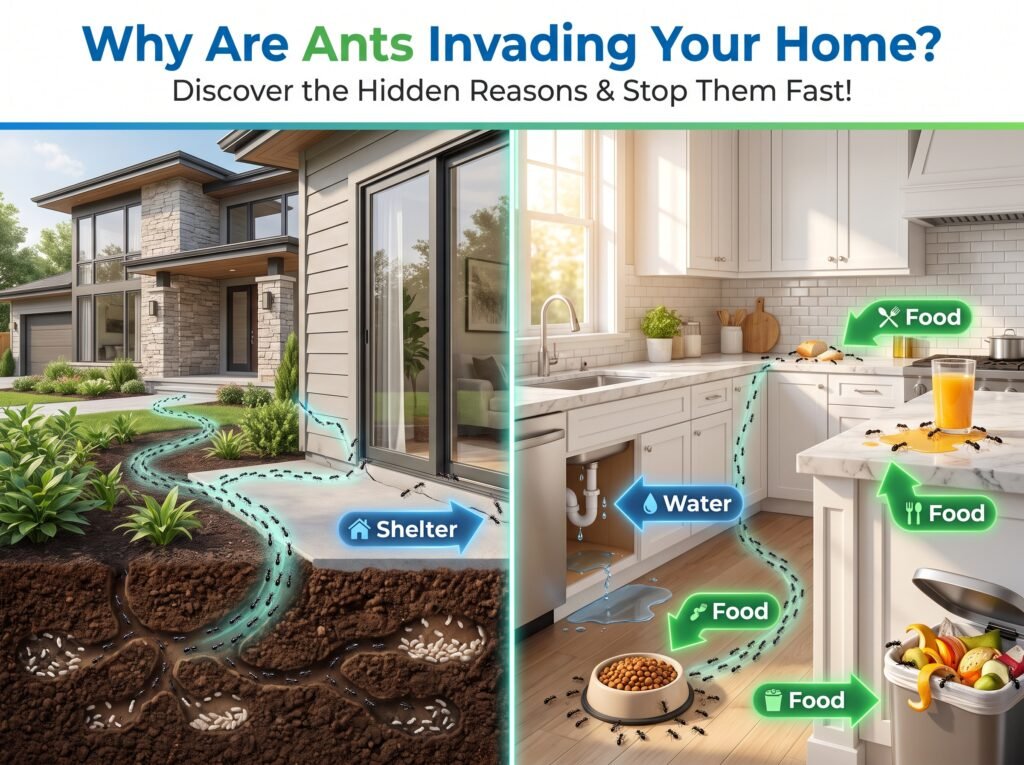
Before learning how to eliminate ants, it’s important to understand why they entered your house in the first place.
Ants constantly search for three basic necessities:
- Food
- Water
- Shelter
Even the cleanest homes can attract ants if they provide easy access to these essentials.
Tiny crumbs beneath appliances, sugary spills on countertops, pet food left overnight, overflowing trash bins, leaking pipes, damp basements, and cracks around windows or doors all create ideal conditions for an ant invasion. Once scout ants locate these resources, they leave a chemical trail that guides the rest of the colony directly to the source.
Outdoor colonies can also migrate indoors during hot summers, heavy rain, drought, or seasonal weather changes, making prevention just as important as treatment.
How to Get Rid of Ants in the House: 7 Proven Methods That Actually Work
If you’ve been searching for how to get rid of ants in the house, you’re not alone. The key is to combine several strategies instead of relying on a single product. This integrated approach is much more effective than simply spraying the ants you see.
1. Find the Ant Trail First
Never begin treatment until you’ve watched where the ants are traveling.
Most indoor ants follow a consistent route between their colony and a food source. Spend a few minutes observing the trail to identify where they’re entering your home. Common entry points include:
- Window frames
- Door gaps
- Utility pipes
- Foundation cracks
- Electrical outlets
- Baseboards
Locating these access points helps you place bait where it will be most effective and allows you to seal the openings after the infestation has been reduced.
2. Remove Every Food Source
Food is the number one reason ants invade homes.
Start with a deep cleaning of your kitchen and dining areas. Wipe countertops, vacuum floors, clean beneath appliances, and remove sticky residues from cabinets. Store cereal, sugar, flour, snacks, and pet food in airtight containers instead of leaving them in opened packaging.
Don’t forget about hidden food sources such as:
- Crumbs under the refrigerator
- Grease behind the stove
- Dirty dishes in the sink
- Fruit left on countertops
- Recycling bins containing sugary drink containers
Even a few forgotten crumbs can support an entire trail of ants.
3. Eliminate Moisture Problems
Many homeowners focus only on food while ignoring water.
Ants are highly attracted to moisture, especially during dry weather.
Inspect your home for:
- Leaking faucets
- Dripping pipes
- Wet basements
- Damp crawl spaces
- Standing water beneath sinks
Repairing these problems makes your home significantly less attractive to ant colonies.
4. Seal Every Entry Point
After ant activity begins decreasing, seal the openings they’re using to enter your house.
Use quality silicone caulk around:
- Window frames
- Door frames
- Utility pipe openings
- Foundation cracks
- Exterior siding gaps
Adding weather stripping and door sweeps also reduces future invasions by blocking tiny gaps that ants can easily exploit.
5. Use Slow-Acting Ant Baits
One of the biggest mistakes homeowners make is spraying ants immediately.
Although sprays kill visible ants, they often prevent workers from carrying poisoned food back to the colony.
Professional pest control experts generally recommend slow-acting bait stations or gel baits because worker ants transport the bait to the nest, feeding other ants and, ultimately, the queen. This approach targets the colony rather than just the foraging ants. It’s also normal to see increased ant activity around the bait at first—that usually means it’s working.
6. Clean Pheromone Trails
After removing visible ants, clean every trail they followed.
Mix warm water with a small amount of dish soap and wipe:
- Countertops
- Floors
- Baseboards
- Window sills
- Cabinets
This removes the pheromone trails that other ants use to find food, helping to stop new ants from following the same route.
7. Vacuum Regularly
Vacuuming is one of the easiest yet most effective methods for reducing indoor ant populations.
Regular vacuuming removes:
- Food crumbs
- Scout ants
- Dead insects
- Ant trails
- Eggs that may be hidden in carpets or corners
Pay special attention to kitchens, dining rooms, and pantry areas where food particles tend to accumulate.
Understanding Different Types of Household Ants
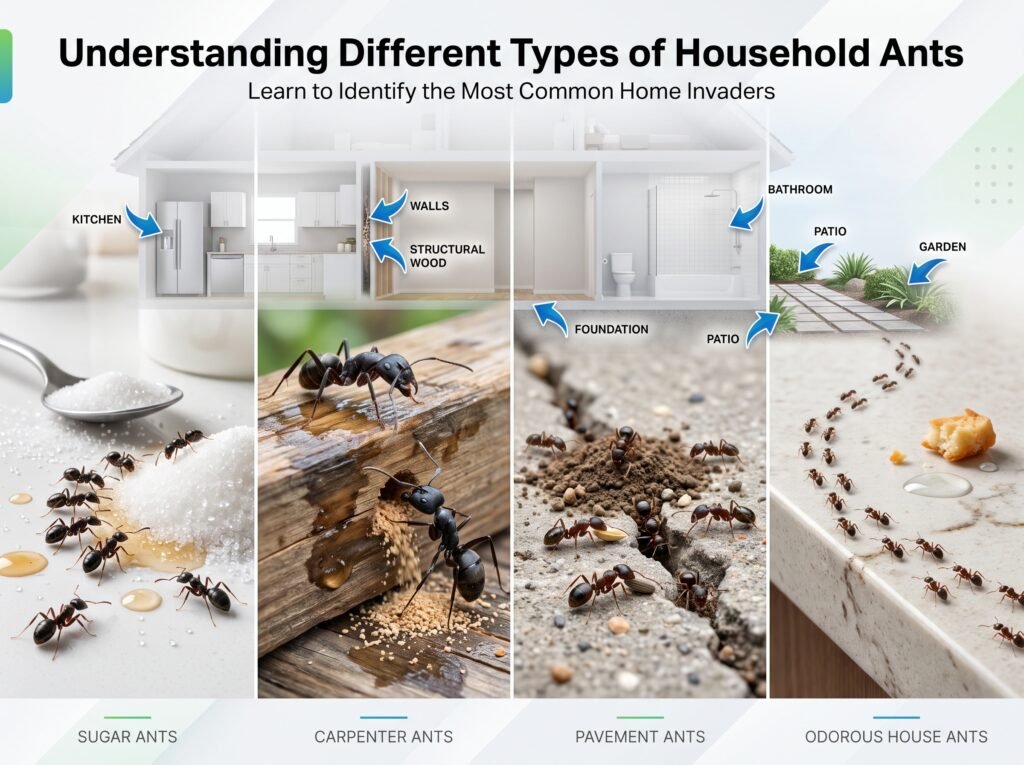
Not every ant species behaves the same way. Correct identification can help you choose the most effective treatment.
Sugar ants are attracted to sweet foods, syrups, fruit, and sugary drinks. They are commonly found in kitchens and pantries.
Carpenter ants are much larger and can excavate damp or decaying wood to create nests. While they do not eat wood like termites, they can still cause structural damage if left untreated.
Pavement ants usually nest beneath sidewalks, driveways, patios, and foundations. They often enter homes in search of food during warmer months.
Odorous house ants release a distinctive unpleasant smell when crushed and are among the most common indoor invaders. They readily follow scent trails and can establish multiple nesting sites, making bait-based control especially useful.
Identifying the species isn’t always necessary for small infestations, but if ants persist despite treatment—or if you suspect carpenter ants—professional identification may be worthwhile.
Natural Remedies That Help Get Rid of Ants Naturally
Many homeowners prefer to begin with natural methods before using commercial pest control products. While natural remedies may not eliminate a large colony on their own, they can reduce ant activity, disrupt scent trails, and work well for small infestations when combined with good sanitation and prevention.
White Vinegar Solution
White vinegar is one of the easiest home remedies because it destroys the pheromone trails ants use to navigate. Mix equal parts white vinegar and water in a spray bottle and apply it to countertops, floors, windowsills, door frames, and any area where ants frequently travel. Although vinegar does not kill the entire colony, it makes it much harder for ants to relocate food sources.
Lemon Juice
Fresh lemon juice works similarly by masking scent trails. Wipe kitchen counters, sinks, and food preparation areas with diluted lemon juice to discourage scout ants from returning.
Cinnamon
Ground cinnamon or cinnamon essential oil can act as a natural repellent. Sprinkle it around entry points, windows, and cracks where ants are entering. Many homeowners use cinnamon as part of an integrated pest management plan because of its strong aroma.
Food-Grade Diatomaceous Earth
Food-grade diatomaceous earth is made from fossilized algae. When ants crawl across it, the fine powder damages their protective outer layer, causing them to dehydrate. Apply a thin layer around entry points, along baseboards, or around outdoor nests. Reapply after rain or if the powder becomes damp.
Baking Soda and Powdered Sugar
A popular DIY method combines equal parts baking soda and powdered sugar. The sugar attracts ants, while the baking soda can kill those that consume it. This approach may reduce small populations, although commercial baits are generally more reliable for eliminating an entire colony.
When Should You Use Chemical Ant Treatments?
If ants continue returning despite cleaning and natural remedies, it may be time to use a commercial ant control product. Choosing the right product is more important than choosing the strongest one.
Ant Bait Stations
Professional pest control companies often recommend bait stations as the first choice for indoor infestations. Worker ants carry the bait back to the colony, feeding it to other workers, larvae, and the queen. Because the poison acts slowly, the entire colony has time to consume it before the workers die, making bait much more effective than instant-kill sprays.
When placing bait:
- Position it close to active ant trails.
- Avoid spraying insecticides nearby, as they can prevent ants from taking the bait.
- Be patient; increased activity around the bait during the first few days is usually a sign that the ants are transporting it back to the nest.
Ant Gel Baits
Gel baits are ideal for cracks, crevices, cabinets, and other difficult-to-reach locations. A small amount placed along an active trail can be highly effective because it remains attractive to foraging ants.
Residual Insecticide Sprays
Residual sprays may help create a protective barrier around doors, windows, and foundations, but they work best after the colony has already been reduced with bait. Spraying visible ants alone rarely solves the underlying problem because the nest remains active.
How to Get Rid of Ants in Your Garden Without Damaging Plants
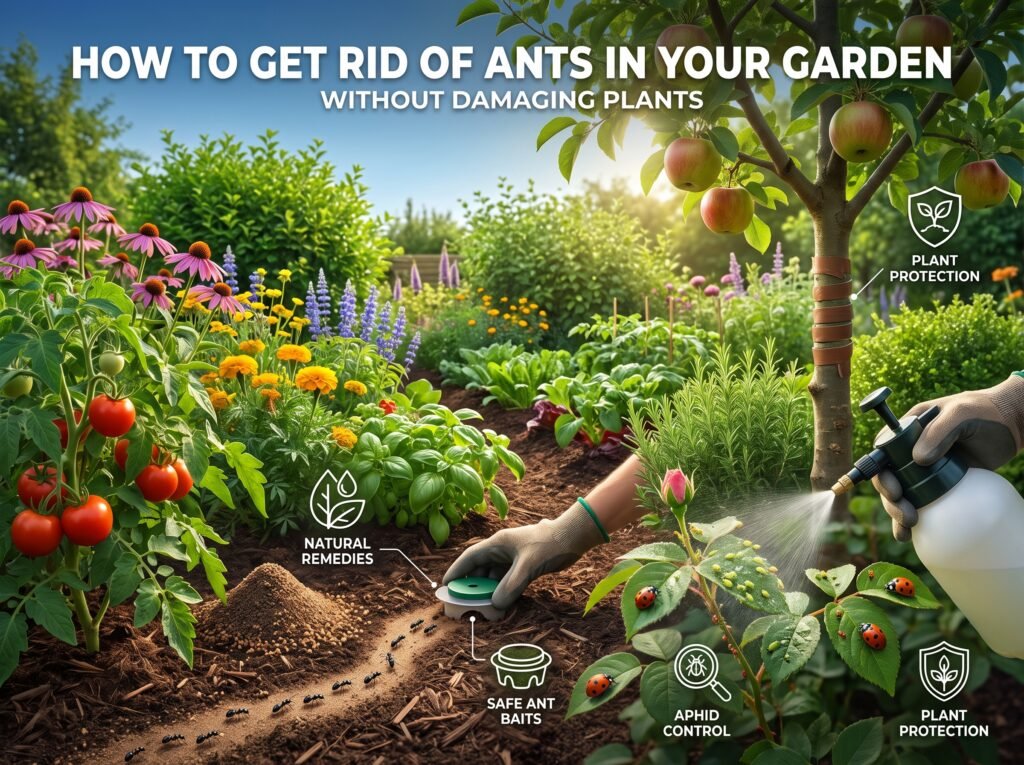
Outdoor ant control requires a different approach from indoor treatment. Ants are often beneficial to soil, but large colonies can protect aphids and other sap-feeding insects that damage flowers, vegetables, and ornamental plants.
Remove Aphids First
One of the most effective ways to reduce ants in the garden is to eliminate aphids, scale insects, and mealybugs. These pests produce a sweet substance called honeydew that ants actively collect for food. As long as honeydew is available, ants are likely to remain nearby. Experts recommend controlling aphids with a strong stream of water, insecticidal soap, or beneficial insects such as ladybugs.
Keep Garden Beds Clean
Remove fallen fruit, dead leaves, weeds, and excess mulch where ants may establish nests. Regular maintenance makes the area less attractive and reduces potential nesting sites.
Water Dry Soil
Many ant species prefer dry, undisturbed soil. Watering garden beds consistently can discourage colonies from settling in these locations.
Protect Individual Plants
Sticky barriers around tree trunks or plant stems can stop ants from climbing plants and protecting aphids. This method interrupts the relationship between ants and honeydew-producing insects without harming the plants themselves.
Use Outdoor Ant Baits
If natural methods are not enough, use outdoor bait products specifically labeled for garden use. Place them near nests or active trails rather than scattering pesticides across the entire garden. Targeted baiting reduces unnecessary exposure for beneficial insects.
Common Mistakes That Make Ant Problems Worse
Many infestations persist because homeowners unknowingly make treatment mistakes.
One of the biggest errors is spraying every ant on sight. Although this provides immediate satisfaction, it usually kills only the workers you can see while leaving the queen and the rest of the colony untouched. Without addressing the colony, new workers continue to appear.
Another common mistake is leaving food accessible. Even tiny crumbs beneath appliances or pet food left out overnight can sustain an entire trail of ants.
People also frequently seal entry points before reducing the colony. While sealing is an important prevention step, doing it too early may simply force ants to find different routes into the home instead of eliminating the infestation. Using bait first and sealing gaps after activity decreases is generally more effective.
Finally, many homeowners stop treatment as soon as they stop seeing ants. In reality, the colony may still be active. Continue monitoring bait stations and maintaining good sanitation for several weeks to ensure the infestation has been fully controlled.
Seasonal Ant Prevention Tips
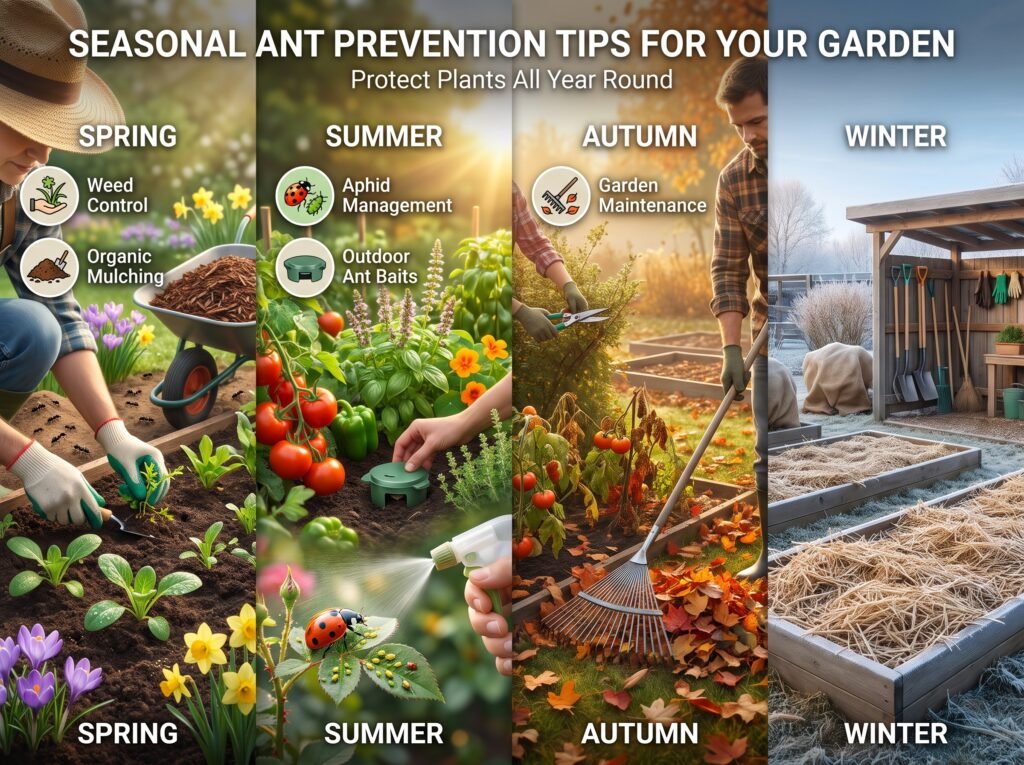
Keeping ants away is much easier than dealing with a full infestation. By following a few simple habits throughout the year, you can greatly reduce the chances of ants returning to your home or garden.
Spring
Spring is when ant colonies become active again after winter. Inspect your home’s exterior for cracks around windows, doors, utility lines, and the foundation. Seal any openings with silicone caulk before scout ants discover them.
Trim tree branches and shrubs that touch your house, as these can act as bridges for ants to enter your home.
Summer
Warm weather increases ant activity. Keep kitchen counters clean, store food in airtight containers, empty trash regularly, and avoid leaving pet food out overnight. Outdoors, remove fallen fruit and keep compost bins covered.
During dry periods, ants often search for water indoors, so repair leaking faucets and eliminate standing water around your property.
Autumn
As temperatures begin to drop, ants may move indoors looking for warmth. Inspect weather stripping around doors and windows, clean gutters, remove leaf piles, and keep firewood stacked away from your home’s foundation.
Winter
Although ant activity slows during winter, indoor infestations can continue if colonies are nesting inside walls or beneath floors. Continue monitoring bait stations if you’ve recently treated an infestation, and maintain good housekeeping throughout the colder months.
When Should You Call a Professional Pest Control Service?
Many ant problems can be solved with DIY methods, but some situations require professional assistance.
Consider contacting a licensed pest control company if:
- Ants continue returning after several weeks of baiting and cleaning.
- You suspect carpenter ants, especially if you notice sawdust-like material (frass) or damaged wood.
- Multiple colonies are appearing throughout your home.
- You cannot locate where the ants are entering.
- The infestation is very large or spreading quickly.
Professionals can correctly identify the ant species, locate hidden nests, and apply targeted treatments that are often unavailable to homeowners. Experts also recommend seeking professional help rather than repeatedly applying different sprays if DIY methods have failed.
Frequently Asked Questions (FAQs)
How long does it take to get rid of ants?
Small infestations may disappear within a few days after using bait and removing food sources. Larger colonies can take several weeks because worker ants need time to carry the bait back to the nest and eliminate the queen.
Why do ants keep coming back?
Ants usually return because food, water, or entry points remain available. If scent trails are not removed or the colony itself is not eliminated, new worker ants will continue following the same paths.
Are natural remedies enough?
Natural remedies such as vinegar, cinnamon, or food-grade diatomaceous earth can help repel ants and disrupt trails, but they may not eliminate large colonies. Combining sanitation, exclusion, and properly placed bait generally provides the most reliable long-term results.
What is the fastest way to get rid of ants?
Sprays kill visible ants quickly, but they rarely eliminate the colony. Slow-acting bait is often more effective because it reaches the queen and other ants inside the nest, leading to longer-lasting control.
Are ants harmful?
Most household ants are more of a nuisance than a danger. However, carpenter ants can damage damp wood over time, and fire ants can deliver painful stings. Correct identification is important if you suspect either species.
How can I keep ants out of my garden?
Remove aphids and other honeydew-producing insects, keep the garden tidy, avoid excessive mulch against structures, water dry soil when appropriate, and use targeted outdoor bait if needed. Blanket pesticide spraying is generally discouraged because it can affect beneficial insects.
Final Thoughts
Learning how to get rid of ants in the house is about more than killing the ants you can see. Lasting success comes from understanding why ants are invading in the first place and addressing the root causes. Removing food and moisture sources, sealing entry points, cleaning pheromone trails, and using slow-acting bait to eliminate the colony are the foundations of an effective ant control strategy.
For your garden, maintaining healthy plants, controlling aphids, and keeping the landscape clean will make the environment less attractive to ants while protecting beneficial insects and the overall health of your outdoor space.
By combining prevention with targeted treatment, you can enjoy a cleaner, safer, and more comfortable home throughout the year.
Conclusion
Ant infestations can be frustrating, but they don’t have to become a permanent problem. Whether you’re dealing with a few ants in your kitchen or persistent colonies in your garden, the right combination of sanitation, exclusion, and colony-targeting treatments can provide long-lasting results. Instead of relying on temporary fixes, focus on eliminating the conditions that attract ants in the first place.
Remember that consistency is the key to success. Regular cleaning, routine home maintenance, and early intervention will help ensure ants never have the opportunity to establish themselves again.
Call to Action
If you found this guide on how to get rid of ants in the house helpful, don’t stop here. Explore our other expert home and garden articles for more practical tips on pest prevention, home maintenance, and outdoor care. Share this guide with friends and family who are struggling with ant problems, and bookmark it for future reference. With the right knowledge and a proactive approach, you can keep your home and garden ant-free all year long.