Introduction
A small greenhouse may have limited square footage, but it can produce an impressive harvest when every inch is planned wisely. Whether you dream of growing fresh vegetables, colorful flowers, fragrant herbs, or exotic tropical plants, the way you organize your greenhouse interior has a direct impact on plant health, maintenance, and productivity.
Many beginners assume that buying a greenhouse is enough to create a thriving garden. In reality, the interior layout determines how efficiently you use available space. Poor organization often leads to overcrowded plants, limited airflow, pest problems, difficult watering, and wasted storage areas. On the other hand, a thoughtfully designed greenhouse interior creates a healthier growing environment while making gardening easier and more enjoyable.
Today, homeowners increasingly choose compact greenhouses because they fit smaller backyards, patios, balconies, and urban gardens. Since space is limited, every shelf, bench, walkway, and storage solution matters. Clever design allows gardeners to grow significantly more plants than they initially thought possible.
This comprehensive guide explores the best small greenhouse interior layout ideas to help you maximize every square foot. You’ll learn how to organize plants according to sunlight requirements, improve airflow, create efficient workspaces, utilize vertical growing systems, install smart shelving, and design a greenhouse that remains organized throughout every season.
Whether you’re setting up your very first greenhouse or redesigning an existing one, these practical ideas will help you build a beautiful, functional, and productive growing space that works year-round.
Why Interior Layout Matters More Than Greenhouse Size
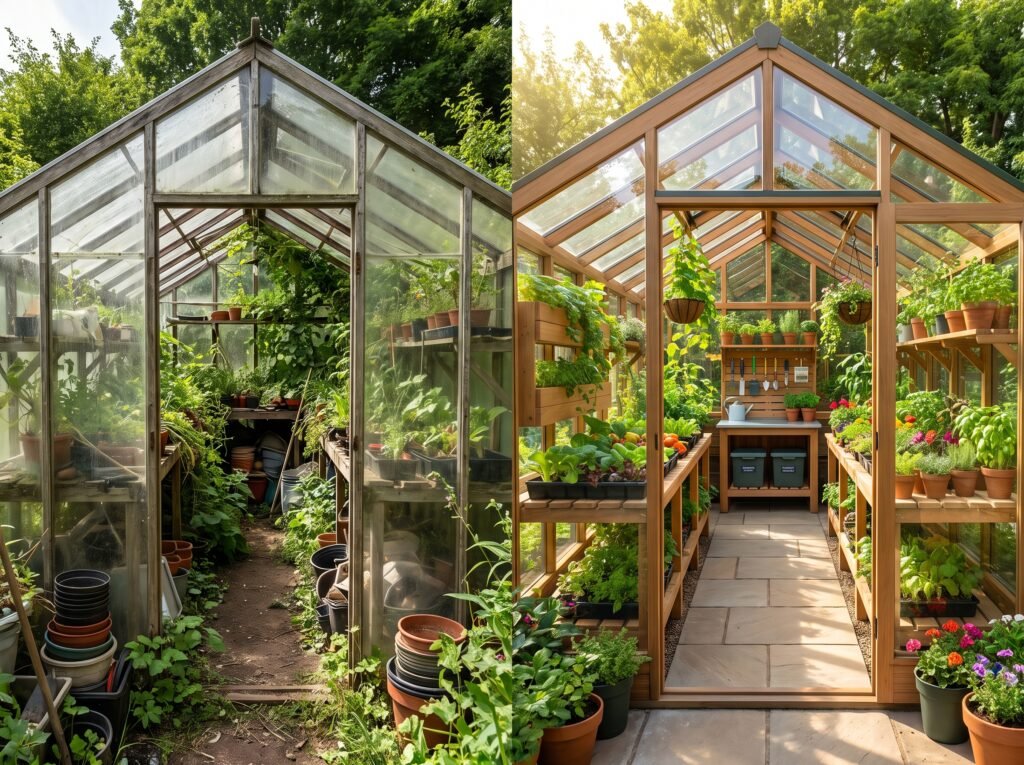
Many gardeners focus entirely on greenhouse size before purchasing one. Surprisingly, interior organization often has a much greater impact than overall dimensions.
A well-designed 6×8 greenhouse can outperform a poorly organized 10×12 greenhouse because every available inch is used efficiently.
Proper planning improves nearly every aspect of gardening, including:
- Plant growth
- Air circulation
- Light distribution
- Water management
- Harvest efficiency
- Pest prevention
- Disease control
- Daily maintenance
Instead of squeezing plants wherever space is available, successful greenhouse gardeners create designated growing zones that keep everything organized and accessible.
Good layouts also reduce physical effort. You spend less time searching for tools, untangling plants, moving pots, and correcting overcrowding issues.
In short, a thoughtful layout transforms a small greenhouse into a highly productive gardening workspace rather than simply a storage area filled with random pots.
Benefits of Smart Small Greenhouse Interior Layout Ideas
Planning your greenhouse interior before moving plants inside offers numerous long-term advantages.
Better Air Circulation
Airflow is one of the most overlooked factors in greenhouse gardening.
When plants sit too close together, humidity builds between leaves. Moisture becomes trapped, creating ideal conditions for fungal diseases like powdery mildew and botrytis.
Keeping adequate spacing between shelves and allowing fresh air to circulate naturally helps maintain healthier plants throughout the growing season.
More Growing Space
Vertical gardening techniques dramatically increase planting capacity.
Instead of relying only on floor space, gardeners use:
- Wall shelving
- Hanging baskets
- Vertical racks
- Tiered benches
- Stackable planters
These solutions often double or even triple growing capacity without expanding the greenhouse footprint.
Easier Watering
A logical layout allows every plant to remain easily accessible.
Instead of stepping around pots or moving heavy containers, you can water efficiently while reducing accidental damage to stems and leaves.
Accessible watering also helps maintain a consistent schedule, which is essential for healthy plant growth.
Improved Sunlight Distribution
Plants require different light levels.
Leafy greens generally tolerate partial shade, while tomatoes, peppers, cucumbers, and citrus trees require full sunlight.
Strategic placement ensures every plant receives the appropriate amount of light instead of competing with neighboring plants.
Cleaner Organization
Designated storage keeps gardening supplies from cluttering valuable growing space.
Items such as:
- Gloves
- Fertilizer
- Pots
- Labels
- Seed trays
- Watering cans
- Hand tools
can all be stored neatly while remaining within easy reach.
Small Greenhouse Interior Layout Ideas That Maximize Every Inch
The following layout concepts work exceptionally well for compact greenhouses ranging from 4×6 feet to 8×12 feet.
Use the Center Walkway Design
One of the simplest and most effective layouts places a walkway directly through the center.
Growing benches line both sides while leaving enough room for comfortable movement.
This layout provides several advantages.
Every plant remains accessible.
Maintenance becomes easier.
Air circulates more effectively.
Harvesting takes less time.
You can carry soil bags, watering cans, and harvest baskets without bumping into plants.
Experts generally recommend keeping walkways about 18–24 inches wide in compact greenhouses to balance accessibility with growing space.
Install Long Side Benches
Long benches running the full length of each side maximize horizontal growing space.
These benches work perfectly for:
- Herbs
- Vegetable seedlings
- Flower trays
- Houseplants
- Succulents
Wooden benches remain popular because they provide good drainage and airflow beneath containers.
Metal benches offer excellent durability and resist moisture damage.
Many gardeners choose slatted bench tops because excess water drains away instead of pooling beneath pots.
Add Vertical Shelving
One of the biggest mistakes greenhouse owners make is ignoring wall height.
Vertical shelving dramatically expands planting capacity.
Shelves installed at different heights allow gardeners to grow:
- Seedlings
- Herbs
- Flowers
- Small vegetables
- Propagation trays
without occupying valuable floor space.
However, avoid placing tall shelves where they block sunlight from lower plants.
Leaving several inches between shelf levels improves light penetration and airflow.
Create Plant Zones Based on Sunlight
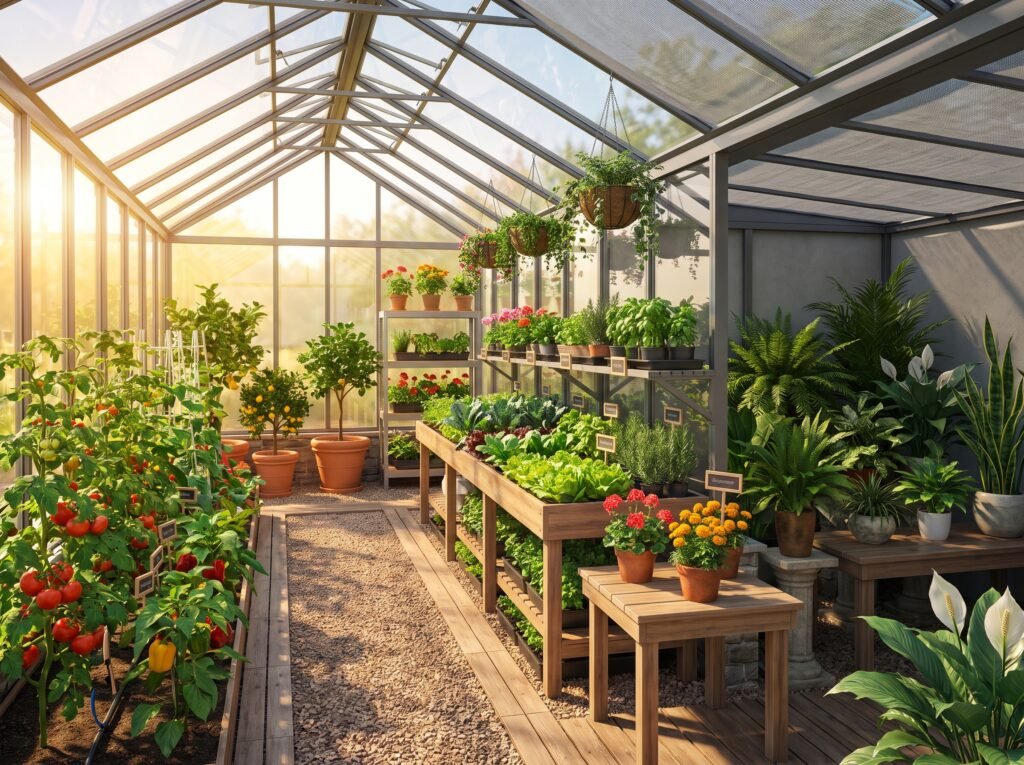
Not every plant enjoys identical growing conditions.
Dividing your greenhouse into lighting zones keeps plants healthier throughout the year.
Sunny Zone
Position full-sun crops near south-facing windows.
Examples include:
- Tomatoes
- Peppers
- Eggplants
- Cucumbers
- Citrus
These plants require the brightest locations.
Partial Shade Zone
Middle shelving often provides moderate lighting.
Suitable plants include:
- Lettuce
- Spinach
- Kale
- Mint
- Parsley
These crops appreciate filtered sunlight during hot afternoons.
Low-Light Zone
Lower shelves or north-facing corners suit plants that tolerate indirect light.
Examples include:
- Ferns
- Snake plants
- Peace lilies
- Mosses
Organizing by sunlight requirements eliminates unnecessary plant stress.
Build a Dedicated Potting Station
Even in a compact greenhouse, a small work area saves significant time.
A potting station may include:
- Soil storage
- Hand tools
- Seed packets
- Labels
- Plant food
- Spray bottles
Many gardeners dedicate one corner specifically for transplanting seedlings and mixing potting soil.
Foldable worktables work exceptionally well because they save space when not in use.
Incorporate Hanging Baskets
The greenhouse ceiling often remains unused.
Hanging baskets utilize overhead space without reducing walkway width.
Excellent hanging plants include:
- Strawberries
- Herbs
- Spider plants
- Petunias
- Ivy
- Trailing flowers
Ensure baskets do not block sunlight reaching lower crops.
Maintaining balanced spacing keeps the greenhouse bright and airy.
Small Greenhouse Interior Layout Ideas for Vertical Gardening Success
Vertical gardening is one of the smartest strategies for maximizing production in a compact greenhouse. Rather than expanding outward, you grow upward by making use of walls, posts, and overhead areas. This method not only saves valuable floor space but also improves organization and makes routine maintenance easier.
One effective approach is installing wall-mounted trellises for climbing vegetables such as cucumbers, pole beans, peas, and small melons. As these plants grow vertically, they free up the ground below for herbs, lettuce, or companion flowers. Vertical growth also improves air circulation around leaves, reducing the likelihood of fungal diseases.
Another excellent solution is to use modular shelving systems with adjustable heights. As seedlings mature into larger plants, shelves can be repositioned to accommodate different pot sizes while ensuring each level receives adequate light. Combining vertical shelves with hanging baskets creates multiple growing layers without overcrowding the greenhouse.
When planning vertical gardening, always leave enough space between shelves and walls for airflow. Plants packed too tightly may trap humidity, leading to mildew and poor growth. A balanced arrangement allows every plant to receive sufficient light while maintaining a comfortable environment for daily care.
Choose Multi-Purpose Furniture to Save Space
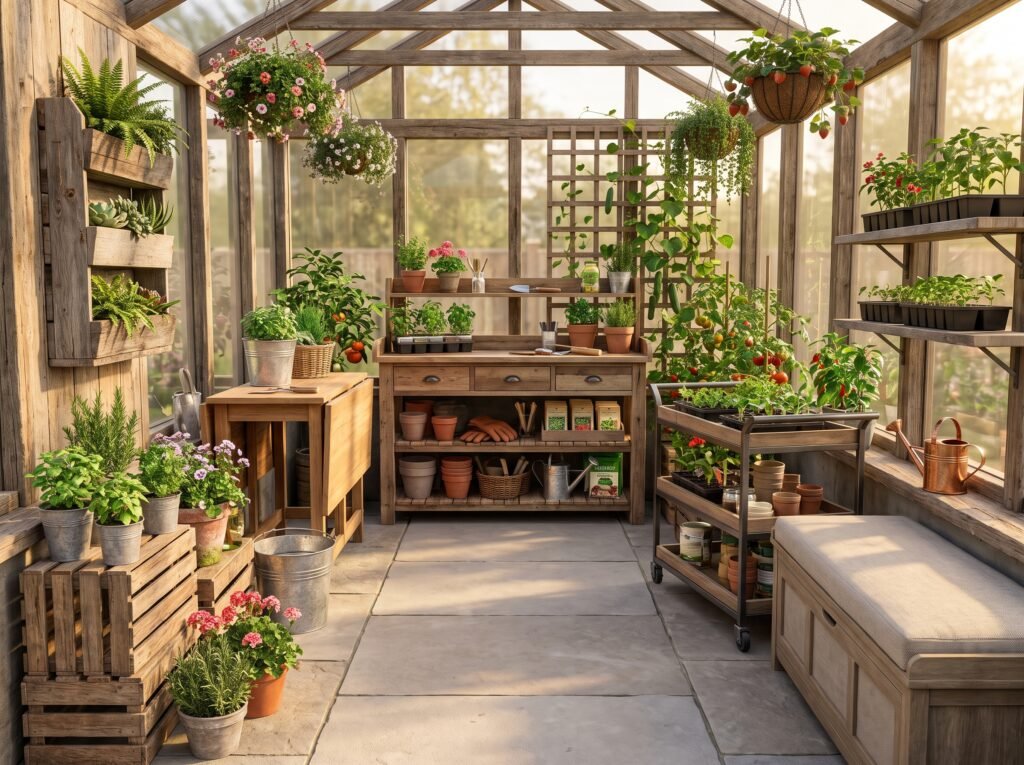
Every item inside a small greenhouse should ideally serve more than one purpose. Multi-functional furniture helps maximize efficiency without making the greenhouse feel cramped.
For example, storage benches provide seating while also holding gardening gloves, hand tools, seed packets, and fertilizers underneath. Folding potting tables can be opened when transplanting seedlings and folded away afterward to create extra walking space. Stackable crates work as temporary plant stands during busy growing seasons and later become storage for empty pots.
Rolling carts are another practical addition. They allow you to move plants, soil, and tools wherever they’re needed, reducing heavy lifting and keeping your workspace flexible. During seasonal changes, a mobile cart can quickly be rearranged to accommodate new crops or larger containers.
Choosing versatile furniture reduces clutter and keeps frequently used supplies within easy reach, making everyday greenhouse tasks faster and more enjoyable.
Keep Walkways Clear and Comfortable
One of the easiest mistakes to make in a compact greenhouse is sacrificing walkway space for additional plants. While it may seem tempting to fill every available inch with pots, overcrowded paths make watering, pruning, harvesting, and cleaning much more difficult.
A comfortable walkway encourages regular maintenance because every plant is easy to access. It also minimizes the risk of accidentally damaging stems or knocking over containers while carrying watering cans or harvest baskets.
If your greenhouse is especially narrow, consider using slim benches along one side and vertical shelving on the other. This arrangement maintains a functional pathway while still providing generous growing space.
Keeping pathways clean and unobstructed also improves airflow near the ground, reducing excess moisture that can encourage pests and diseases.
Small Greenhouse Interior Layout Ideas for Every Season
A greenhouse is a living environment that changes throughout the year. The layout that works perfectly in spring may not be ideal during the heat of summer or the colder months of winter. Designing your greenhouse with seasonal flexibility allows you to make the most of your growing space regardless of the weather.
During spring, dedicate most of your shelving to seed starting. Seed trays, propagation domes, and young seedlings require bright light and easy access for watering. Adjustable shelving makes it simple to create extra growing levels while plants are still small.
As summer arrives, larger crops such as tomatoes, cucumbers, peppers, and climbing beans need more room. Rearranging benches and removing unnecessary shelves creates the vertical space these plants require. Good airflow becomes especially important during warm weather, so avoid packing plants too closely together.
Autumn is an excellent time to transition to leafy greens, herbs, and cool-season vegetables. Since these crops are generally smaller, you can increase planting density while maintaining good airflow. Winter layouts often prioritize frost protection, with tender plants grouped together near the warmest part of the greenhouse and thermal mass, such as water barrels, helping stabilize temperatures.
Planning for seasonal adjustments ensures your greenhouse remains productive all year rather than only during one growing season.
Organize Plants by Height
One of the easiest ways to improve both appearance and productivity is arranging plants according to their mature height.
Tall plants should be positioned where they will not cast excessive shade over smaller crops. In many small greenhouses, this means placing them toward the back or along one side, depending on the direction of sunlight.
Medium-height vegetables, flowering plants, and shrubs fit well on benches, while compact herbs, seedlings, and propagation trays belong on lower shelves or near the front where they remain easy to reach.
This layered arrangement allows sunlight to reach every level while creating a visually balanced greenhouse that feels more spacious.
Make Storage Part of the Layout
Storage is often overlooked when planning a greenhouse interior, yet it plays a major role in keeping the space organized.
Instead of leaving tools scattered across benches, dedicate a specific area for storage. Wall-mounted pegboards are ideal for hanging hand trowels, pruners, gloves, scissors, and watering nozzles. Small shelves can hold fertilizers, labels, plant ties, and seed packets, while sealed containers protect potting mixes and compost from moisture and pests.
Keeping supplies organized reduces clutter and saves time because everything has a designated place.
Install Efficient Greenhouse Lighting
Natural sunlight is essential, but supplemental lighting can significantly extend your growing season.
LED grow lights have become the preferred choice for small greenhouses because they are energy-efficient, produce very little heat, and provide the light spectrum plants need for healthy growth.
Position lights so they evenly cover growing benches without creating dark corners. Adjustable hanging systems make it easy to raise the lights as plants grow taller.
Using timers ensures consistent light exposure, especially during short winter days when natural daylight is limited.
Improve Ventilation Without Wasting Space
Fresh air is one of the most valuable resources inside any greenhouse.
Proper ventilation controls humidity, reduces disease pressure, and helps plants regulate temperature. Roof vents, side vents, and small circulating fans all contribute to healthier growing conditions.
Avoid blocking vents with shelves or tall plants. Air should flow freely from one end of the greenhouse to the other.
If your greenhouse lacks built-in ventilation, a compact oscillating fan can dramatically improve airflow while taking up very little room.
Design an Efficient Watering System
Watering should be simple, not a daily obstacle.
When planning your greenhouse layout, think about how water will reach every plant. Place thirsty crops together so they can be watered on a similar schedule, while drought-tolerant plants occupy a separate section.
Drip irrigation systems are particularly useful in small greenhouses because they deliver water directly to the root zone while reducing waste. Self-watering containers are another practical option for busy gardeners.
Keeping hoses neatly coiled on wall-mounted holders prevents tripping hazards and preserves valuable floor space.
Add Decorative Elements Without Sacrificing Function
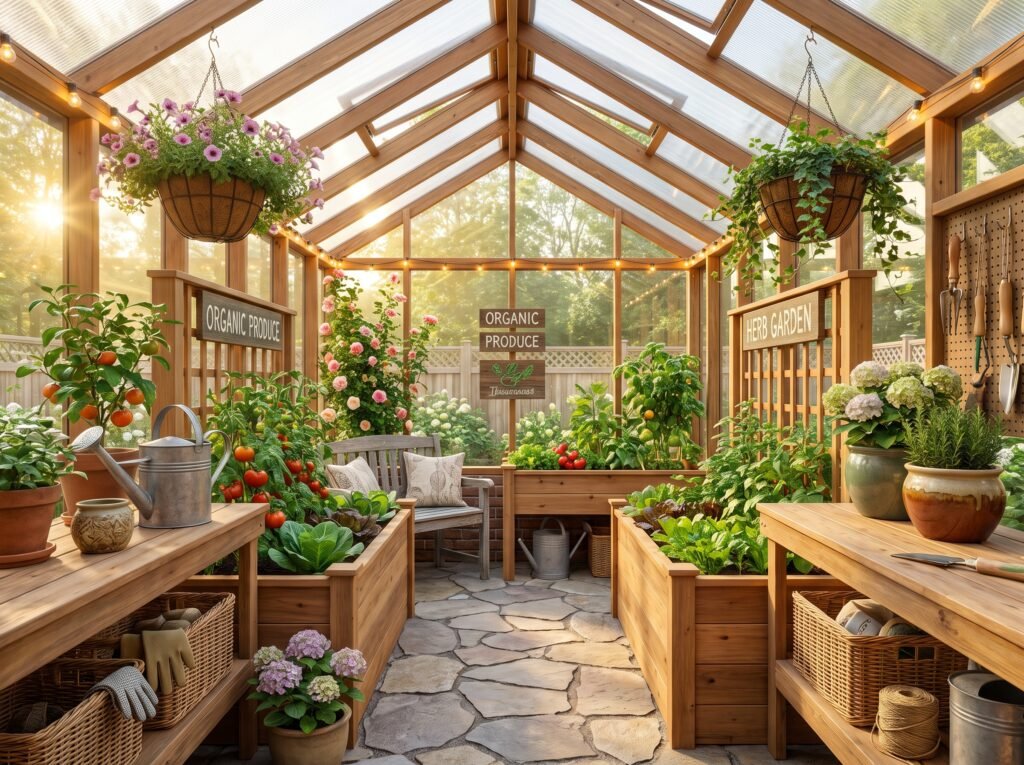
A greenhouse should be productive, but it can also be an inviting place to spend time.
Simple decorative touches make the space feel more personal without interfering with plant growth. Wooden signs, small pathways made from stone or brick, attractive pots, and neatly labeled plant collections create a welcoming atmosphere.
Color-coordinated containers and matching storage bins contribute to a tidy appearance while making it easier to locate supplies.
The goal is to strike a balance between beauty and practicality so that every decorative feature also serves a purpose.
Budget-Friendly Small Greenhouse Interior Layout Ideas
Creating an efficient greenhouse doesn’t require an expensive renovation.
Many useful features can be made from affordable or recycled materials. Wooden pallets can become sturdy shelving, old ladders can serve as vertical plant stands, and plastic crates can be stacked to create temporary benches.
Repurposed kitchen racks, wire shelving, and recycled buckets often work just as well as specialized greenhouse furniture. By combining creativity with careful planning, gardeners can build an attractive and functional greenhouse while staying within budget.
Common Mistakes to Avoid
Even the best greenhouse can become difficult to manage if the interior layout isn’t planned carefully.
One of the most common mistakes is overcrowding. While it may be tempting to fill every available space with plants, overcrowding reduces airflow, increases humidity, and encourages pests and diseases.
Ignoring vertical space is another missed opportunity. Walls and overhead areas offer valuable growing space that many gardeners never use.
Poor organization is also a frequent problem. Without designated storage areas, tools quickly take over benches and pathways, making routine tasks frustrating.
Blocking ventilation with tall shelves or large containers limits air circulation and can lead to unhealthy growing conditions.
Finally, failing to plan for plant growth often results in constant rearranging. Always consider the mature size of each crop rather than its size when planted.
Expert Tips for a More Productive Greenhouse
Experienced greenhouse gardeners often follow a few simple habits that make a big difference over time.
Rotate crops each season to reduce soil-borne diseases and nutrient depletion. Label every tray and container clearly, especially when starting seeds. Clean benches and shelves regularly to discourage pests, algae, and mold.
Use reflective surfaces on darker walls to distribute sunlight more evenly throughout the greenhouse. Inspect plants frequently so problems can be addressed before they spread.
Most importantly, leave a little open space. A greenhouse that feels slightly underfilled is usually easier to maintain and often produces healthier plants than one packed to capacity.
Why Smart Interior Design Improves Plant Health
An organized greenhouse does more than look attractive—it directly supports healthier plants.
Good spacing allows air to circulate freely, reducing the risk of fungal infections. Proper zoning ensures each plant receives the light and moisture it needs, while efficient watering systems prevent both drought stress and overwatering.
When tools are organized and plants are easy to access, routine maintenance becomes faster and more consistent. This means pruning, fertilizing, pest inspections, and harvesting happen on schedule, leading to stronger growth and higher yields.
A thoughtful layout also reduces gardener fatigue. Less bending, fewer obstacles, and shorter watering routes make greenhouse work more enjoyable, encouraging regular care throughout the year.
Frequently Asked Questions
What is the best layout for a small greenhouse?
A center walkway with benches on both sides is one of the most practical layouts. It provides easy access to every plant while maximizing growing space and maintaining good airflow.
How can I fit more plants into a small greenhouse?
Use vertical shelving, hanging baskets, wall-mounted planters, and trellises for climbing crops. Growing upward is often the most effective way to increase capacity without expanding the greenhouse footprint.
Should tall plants be placed at the back?
Yes. Positioning taller plants where they won’t block sunlight from shorter crops helps maintain even light distribution throughout the greenhouse.
What type of shelving works best?
Metal shelving is durable and moisture-resistant, while wooden slatted benches provide excellent drainage and natural airflow. The best choice depends on your budget, climate, and gardening style.
How wide should greenhouse walkways be?
A walkway between 18 and 24 inches is generally comfortable for most compact greenhouses. Wider paths may be helpful if you frequently move large containers or use carts.
How do I keep a small greenhouse organized?
Assign every tool and supply a permanent storage location, label plants clearly, group crops with similar care needs, and avoid overcrowding. Regular cleaning also helps maintain an organized space.
Conclusion
A compact greenhouse doesn’t have to limit your gardening ambitions. With the right small greenhouse interior layout ideas, you can transform even the smallest structure into a productive, organized, and beautiful growing environment.
By combining efficient walkways, vertical shelving, smart plant zoning, flexible furniture, dedicated storage, proper ventilation, and seasonal planning, you can maximize every square foot while creating healthier conditions for your plants. Small improvements in layout often lead to significant gains in productivity, making gardening easier and more enjoyable throughout the year.
Remember that the best greenhouse layout is one that evolves with your needs. As your experience grows, continue experimenting with different arrangements until you find the system that works best for your favorite plants and gardening routine.
Start Designing Your Dream Greenhouse Today
Don’t let limited space hold back your gardening goals. Begin applying these small greenhouse interior layout ideas today and transform your greenhouse into a thriving oasis of vegetables, herbs, flowers, and year-round harvests.
Whether you’re setting up your first compact greenhouse or upgrading an existing one, thoughtful planning will reward you with healthier plants, easier maintenance, and greater harvests for years to come.
Ready to create the perfect greenhouse? Start by sketching your ideal layout, measuring your available space, and implementing one improvement at a time. Every smart design choice brings you closer to a more productive and enjoyable gardening experience.