Winter can turn a productive greenhouse into a cold, uncomfortable space for plants if heat is allowed to escape faster than it can be replaced. A greenhouse may look protected from the weather, but glass or polycarbonate alone does not guarantee warm growing conditions when freezing temperatures arrive. The good news is that you do not always need an expensive heating system to improve winter performance. Good insulation, smart ventilation, sunlight management, thermal mass, careful plant placement, and the right heating method can work together to create a much more stable environment.
Understanding how do greenhouses stay warm begins with one simple idea: a greenhouse collects energy from sunlight and then tries to prevent that energy from escaping. During the day, sunlight passes through the transparent covering and warms the air, soil, benches, containers, and other surfaces inside. At night, the greenhouse loses heat through the covering, gaps, doors, ventilation openings, and the ground. The goal of winter greenhouse management is therefore not simply to “make more heat.” It is to capture available heat efficiently and reduce unnecessary heat loss.
Table of Contents
That distinction matters because heating an inefficient greenhouse can become expensive very quickly. Penn State Extension notes that energy is one of the major operating expenses in greenhouse production and recommends improving efficiency by reducing air leakage, adding thermal screens, insulating the perimeter, and improving control systems.
This guide explains practical and effective ways to keep a greenhouse warmer in winter, from simple low-cost improvements to more advanced heating strategies. Whether you have a compact backyard greenhouse, a small hobby structure, or a larger growing space, these techniques can help you protect plants from winter cold while making better use of the energy already available.
How Do Greenhouses Stay Warm During Cold Winter Nights?
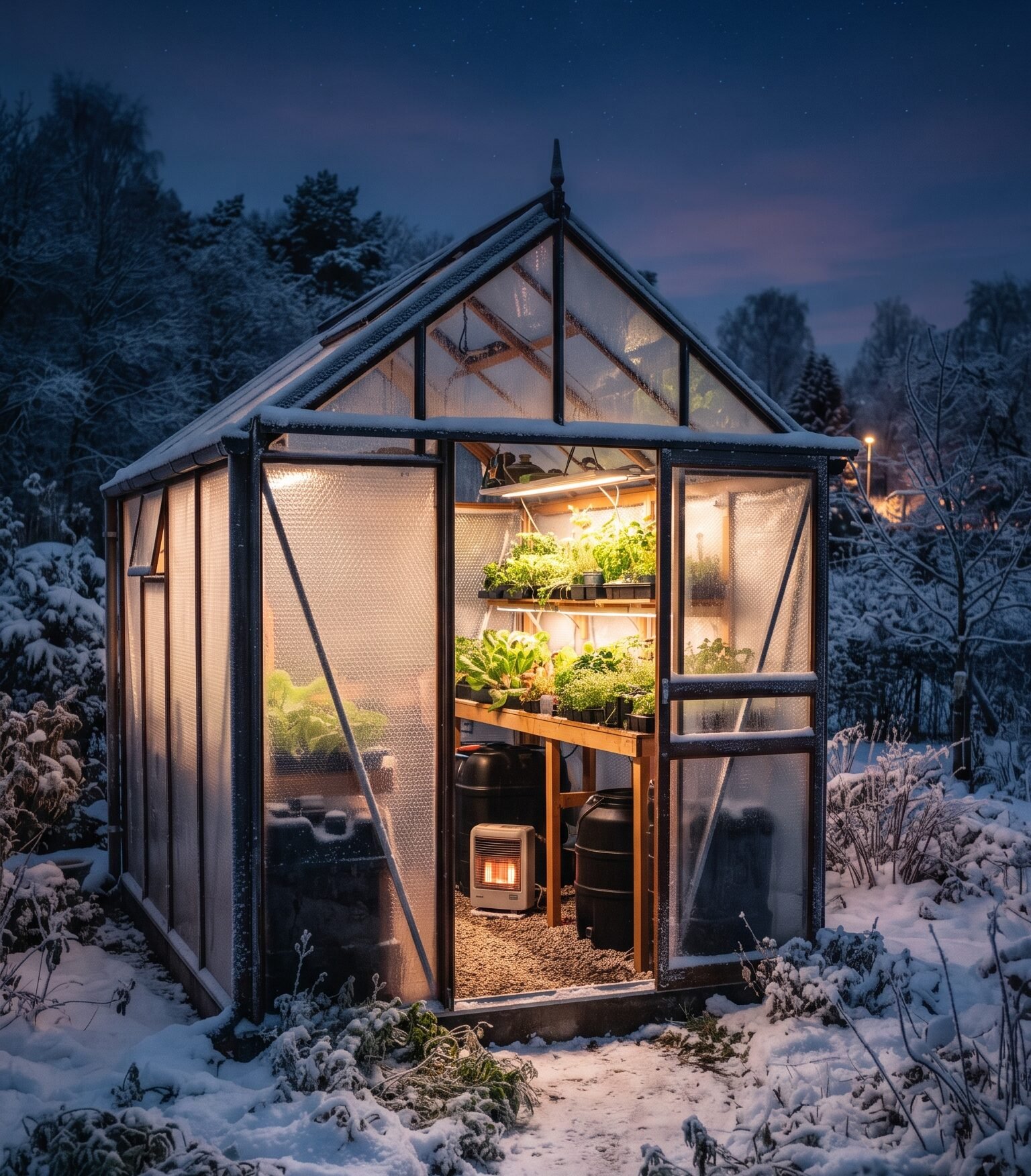
The basic answer to how do greenhouses stay warm is through a combination of solar gain, heat retention, insulation, thermal storage, and sometimes supplemental heating. During daylight hours, the greenhouse covering allows solar radiation to enter. That sunlight heats objects inside the structure, including growing media, flooring, shelves, pots, raised beds, and water containers.
Those warmed surfaces then release heat gradually. The greenhouse also traps warmer air compared with the outdoor environment. However, the difference between indoor and outdoor temperatures can disappear quickly after sunset if the structure has poor insulation or significant air leakage.
This is why winter greenhouse management is really a battle against heat loss. A greenhouse that captures plenty of daytime heat but loses most of it overnight will still leave plants exposed to damaging temperatures.
The type of plants being grown also matters. Some cool-season crops can tolerate considerably lower temperatures than tropical or warm-season plants. OSU Extension notes that even an unheated greenhouse can support cold-hardy crops such as kale, lettuce, spinach, radishes, carrots, turnips, and leeks during winter, depending on the local climate and conditions.
A successful winter setup therefore begins by deciding what temperature range your plants actually need. There is little value in heating a greenhouse to tropical conditions if your crops are naturally cold tolerant.
Why Greenhouses Can Still Get Very Cold in Winter
Many gardeners assume that once sunlight enters the greenhouse, the structure will remain warm all night. Unfortunately, that is not how greenhouse heat works.
The transparent covering that makes sunlight available during the day also allows heat to escape at night. Single-pane glass and thin plastic coverings provide relatively little insulation. Cold air can also enter through gaps around doors, vents, panels, roof openings, and damaged seals.
Another challenge is the ground around the greenhouse. If the floor and perimeter are cold, they can contribute to heat loss. Wind can make the situation even worse because strong air movement increases the rate at which heat is removed from the structure.
Cloudy winter days create another problem. When sunlight is weak, the greenhouse receives less solar energy during the day and has less stored heat available after sunset.
That is why how do greenhouses stay warm cannot be answered with one piece of equipment. A reliable winter greenhouse uses several layers of protection.
Start With Better Insulation Before Buying a Heater
One of the most effective ways to improve winter greenhouse temperatures is to reduce heat loss first. Heating a poorly sealed structure is similar to trying to heat a room with an open window. You may produce more warmth, but much of that energy will disappear.
Inspect the greenhouse carefully before winter arrives. Look around doors, corners, roof panels, vents, frame joints, and base sections. Look for visible cracks, loose components, gaps, and worn seals.
A door that does not close tightly can create a surprisingly large source of heat loss. Weatherstripping around doors can help create a tighter seal. Damaged glazing should also be repaired where practical.
Penn State Extension specifically recommends tightening greenhouse structures to prevent cold air leakage as part of an energy-efficiency strategy.
Insulation should never be treated as an afterthought. When the structure retains more of the heat it already has, every heating method becomes more effective.
Use Bubble Insulation or Horticultural Bubble Wrap
Horticultural bubble wrap is one of the most popular winter insulation materials for small greenhouses. It creates additional air pockets between the greenhouse interior and exterior, reducing the amount of heat that escapes through the covering.
Large bubbles are commonly preferred because they provide useful insulation while allowing substantial light to pass through. The material should be fitted carefully so that it does not block essential vents or create unsafe conditions around electrical equipment.
The objective is not to turn the greenhouse into a completely sealed plastic box. Plants still need fresh air and humidity management. Insulation should therefore be combined with controlled ventilation.
Insulate the Greenhouse Base and Perimeter
Heat can also escape through the lower part of the greenhouse. In cold regions, insulating the perimeter can reduce the impact of frozen soil around the structure.
A properly insulated base can help prevent cold air from entering and can reduce unwanted heat transfer around the edges. This is especially useful for smaller structures that sit directly on cold ground.
A thicker floor surface, insulated edging, or properly designed perimeter insulation can make a noticeable difference depending on the greenhouse design.
Use Sunlight as Your First Winter Heat Source
The most valuable free heat source available to most greenhouses is the sun.
Good winter greenhouse management begins with making the most of available daylight. Avoid shading the structure unnecessarily during cold months. Clean the glazing so that sunlight can pass through efficiently. Dirt, algae, dust, and mineral deposits can reduce light transmission.
The position of the greenhouse also matters. A location that receives strong winter sunlight can perform much better than a shaded location, even if both greenhouses use identical materials.
University of Minnesota Extension describes deep winter greenhouses that are designed specifically around solar energy collection. These structures use a south-facing glazed wall, solar heat capture, and thermal storage to move heat into the night period.
For a backyard greenhouse, you may not need such a sophisticated design. The principle is still useful: collect as much winter sunlight as possible and store or retain the resulting heat.
Add Thermal Mass to Store Heat During the Day
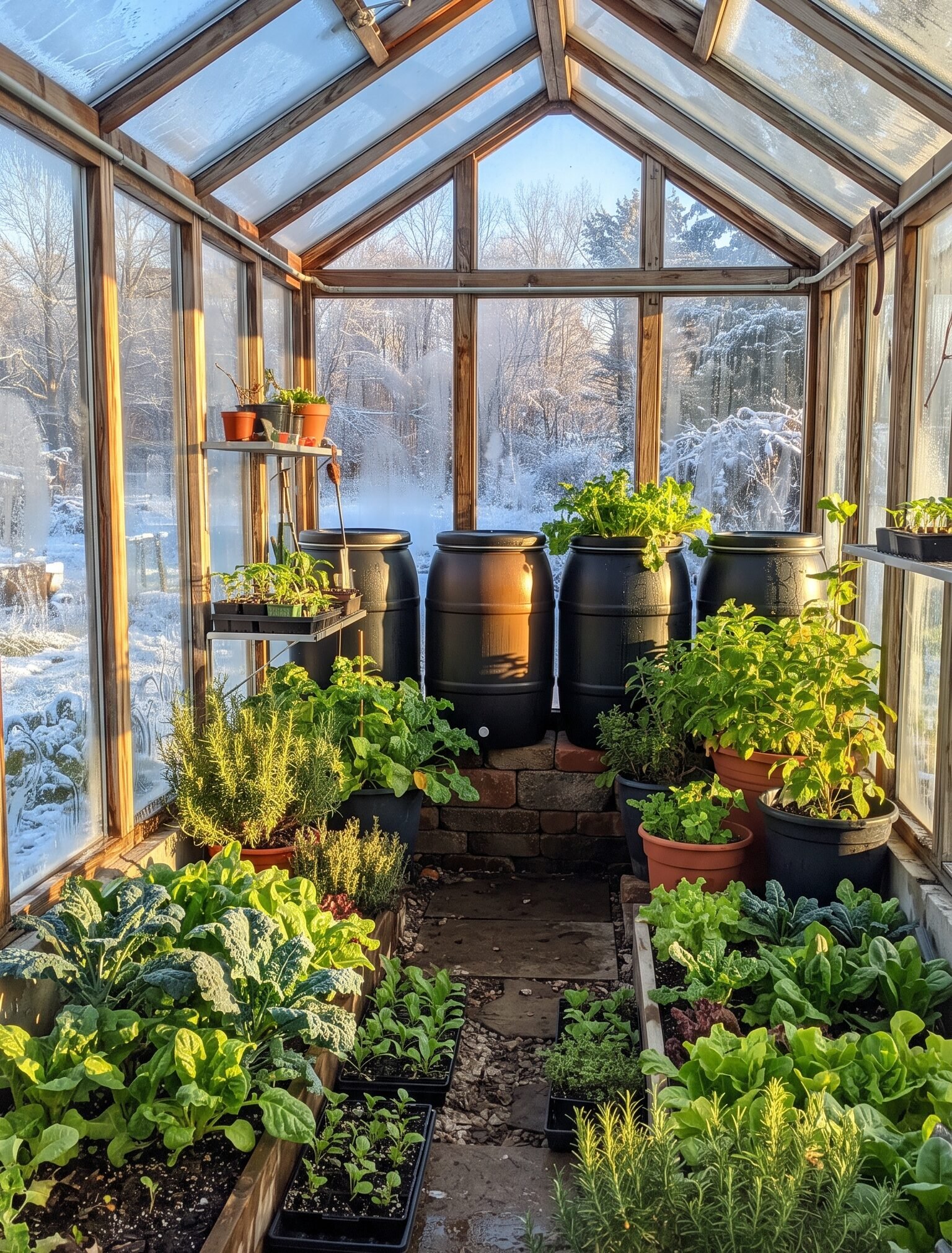
Thermal mass is one of the simplest concepts behind how do greenhouses stay warm after sunset. A thermal mass material absorbs heat when temperatures rise and releases some of that heat later as temperatures fall.
Water is particularly useful because it can store a meaningful amount of heat. Large dark-colored water containers, barrels, or sealed water tanks can be positioned where they receive sunlight.
During sunny winter afternoons, the containers warm up. After sunset, they gradually release some of their stored heat into the surrounding environment.
Stone, brick, concrete, soil, and other dense materials can also provide thermal mass. Their effectiveness depends on their amount, location, exposure to sunlight, and the greenhouse design.
The purpose is not to expect water barrels to replace a heater in severe weather. Instead, they reduce rapid temperature swings and help bridge the gap between daytime solar gain and nighttime cold.
Install an Appropriate Greenhouse Heater
When winter temperatures regularly fall below the minimum needed by your plants, supplemental heating may be necessary.
Penn State Extension states that winter greenhouse production requires a heat source and emphasizes the importance of heating systems alongside ventilation.
There are several types of greenhouse heaters, including electric fan heaters, gas-powered systems, hot-water systems, and other specialized heating equipment. The best option depends on greenhouse size, local climate, available energy sources, insulation, crop requirements, and operating cost.
A small hobby greenhouse may only need a compact thermostatically controlled electric heater during freezing nights. A larger structure may require a more carefully engineered system.
The critical point is to select equipment designed for the environment in which it will operate and follow the manufacturer’s installation and safety requirements. Indoor heating equipment should not automatically be assumed safe for greenhouse use.
Use a Thermostat Instead of Constant Heating
A thermostat can make winter heating much more efficient.
Instead of operating a heater continuously, a thermostat allows the system to respond when the greenhouse reaches a predetermined temperature. The heater switches on when the temperature falls and switches off when the desired level is restored.
This approach prevents unnecessary heating and helps stabilize the environment.
A thermostat is especially useful when winter temperatures fluctuate significantly between day and night. It can also help prevent accidental overheating when sunlight raises temperatures naturally.
Use a Thermal Screen at Night
Thermal screens can reduce heat loss by creating an additional insulating layer inside the greenhouse.
Commercial greenhouses often use thermal curtains or screens that can be deployed during periods of low sunlight or at night. For small greenhouses, gardeners may use specialized insulating covers or carefully installed temporary materials.
The principle is straightforward: create another barrier between the warm interior and the cold exterior.
Penn State Extension includes adding a thermal screen among practical greenhouse energy-efficiency measures.
However, the screen should not interfere with ventilation, lighting, irrigation, or the plants themselves. It should also be used in a way that avoids creating excessive moisture problems.
Protect the Plants With an Inner Layer
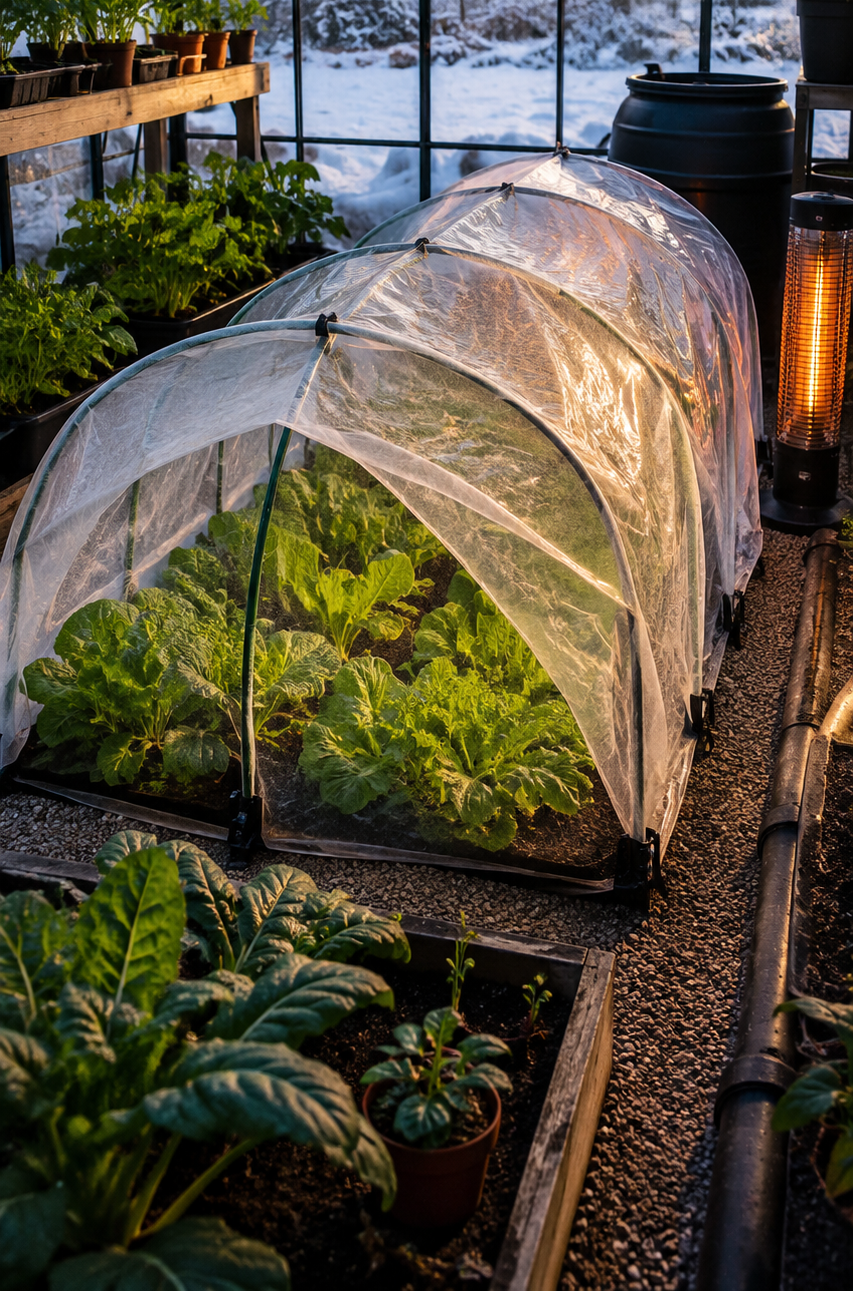
One of the most effective tricks for winter gardening is to protect individual plants rather than heating the entire greenhouse to a high temperature.
Plants can be grouped together in strategic areas. Tender plants can be placed farther from cold exterior walls and closer to areas receiving retained warmth.
You can also use plant covers, horticultural fleece, or small internal tunnels within the main greenhouse. These create a smaller protected microclimate around vulnerable crops.
University of Minnesota Extension explains that protective covers can extend growing seasons, although covers must be managed carefully because they can retain excessive heat during sunny periods.
The same principle applies inside a greenhouse. More layers of protection around sensitive plants mean less demand on the main heating system.
Keep the Coldest Air Away From Sensitive Plants
Cold air naturally settles in lower areas. Shelving and raised benches can therefore provide useful protection for some plants.
Tender plants do not necessarily need to sit directly on the greenhouse floor. Raising containers can place plants farther away from the coldest surfaces and give air circulation systems a better opportunity to distribute warmer air evenly.
Avoid placing sensitive plants directly beside exterior glazing, especially if the glazing becomes extremely cold at night.
Arranging plants according to their temperature requirements can make your greenhouse more efficient without spending additional money.
Improve Air Circulation Without Losing Heat
It may seem strange to run a fan while trying to keep a greenhouse warm, but air circulation is extremely important.
Warm air naturally rises, while cooler air can settle near the floor. Without circulation, a greenhouse may have warm areas near the roof and much colder conditions around the plants.
A small circulation fan can help distribute warmth more evenly. The fan does not need to blast plants with strong airflow. Gentle circulation is often enough to reduce temperature differences.
Air movement also helps prevent stagnant humid conditions that can contribute to fungal problems.
However, circulation fans should not be confused with ventilation that intentionally exchanges indoor and outdoor air. During very cold periods, excessive ventilation can remove valuable heat.
Ventilate Carefully on Sunny Winter Days
Understanding how do greenhouses stay warm also requires understanding how they avoid getting too warm.
A sunny winter day can raise greenhouse temperatures significantly even when outdoor temperatures remain low. If vents stay closed all day, the greenhouse may overheat, creating stress for plants and increasing humidity.
Controlled ventilation allows excess heat and moisture to escape.
The challenge is timing. On a freezing morning, you may want to retain every degree of warmth. Later in the afternoon, ventilation may become necessary.
Automatic vent openers can help by responding to temperature changes without requiring constant attention. Manual ventilation can also work well when gardeners are available to monitor conditions.
The objective is to prevent large temperature swings rather than maintaining an identical temperature all day.
Manage Humidity Alongside Heat
Keeping a greenhouse warm does not mean keeping it constantly humid.
Warm, damp conditions can encourage condensation and disease problems, especially when air circulation is poor. Watering plants late in the day can also leave excessive moisture in the greenhouse overnight.
Try to water when plants can dry gradually, rather than leaving foliage and surfaces wet during the coldest part of the night.
Adequate ventilation and gentle air movement are important parts of winter greenhouse management. OSU Extension identifies heating, cooling, and good ventilation as key concerns for greenhouse systems.
A stable environment is generally more useful than simply chasing the highest temperature possible.
Water Plants Carefully in Winter
Winter watering needs are different from summer watering needs.
Cold conditions usually slow plant growth and reduce water use. Overwatering can leave growing media excessively wet, particularly when evaporation is limited.
At the same time, plants should not be allowed to become severely dehydrated.
Check the growing medium before watering instead of following a rigid schedule. Water according to the plant’s needs, the temperature, humidity, crop stage, and growing medium.
Avoid watering when conditions are near freezing if the water can contribute to damaging temperature drops or prolonged wetness.
OSU Extension advises against watering plants when temperatures are at or below freezing in freezing-weather situations.
Choose Winter-Friendly Plants
One of the easiest answers to how do greenhouses stay warm is to stop demanding tropical temperatures from crops that do not require them.
Plant selection can dramatically reduce heating requirements.
Cold-tolerant greens, herbs, and hardy vegetables are often much easier to grow through winter than tropical crops. Lettuce, kale, spinach, radishes, and other cool-season crops can perform well under protected conditions.
If your greenhouse is unheated or only lightly heated, focus on plants suited to those conditions.
This can save energy, reduce stress, and make winter greenhouse gardening more rewarding.
Use a Soil-Warming Method for Seedlings
Sometimes the air inside the greenhouse is not the biggest concern. The growing medium may be too cold for successful germination or root growth.
Seedling heat mats can provide bottom heat to individual trays or propagation areas without requiring the entire greenhouse to be heated to a high temperature.
This creates an efficient microclimate. Instead of using a large amount of energy to warm the entire building, you provide additional heat exactly where developing plants need it most.
This approach can be especially helpful for seeds that require warmer germination conditions than mature winter crops.
Create a Smaller Protected Growing Area
A large greenhouse is harder to heat than a small enclosed growing area because the total volume of air is greater.
One strategy is to create an inner growing zone using a small frame covered with horticultural material. This creates a protected chamber within the greenhouse.
You can then concentrate heating on this smaller area.
This method is particularly useful for starting seedlings or protecting a few high-value plants. It also means you do not need to maintain warm temperatures throughout the entire structure.
The more efficiently you control the volume of space that requires heat, the easier winter management becomes.
Keep the Greenhouse Floor Dry and Organized
A messy greenhouse can also become an inefficient greenhouse.
Wet surfaces increase humidity, while clutter can interfere with air movement and access to vents.
Keep pathways clear. Remove dead leaves and plant debris. Make sure drainage is functioning properly.
If water collects around the base of the structure, the combination of low temperatures and poor airflow can create a cold and damp environment.
Good housekeeping does not directly create heat, but it supports the stable conditions needed for successful winter growing.
Monitor Temperatures Instead of Guessing
One of the biggest improvements you can make is using a reliable thermometer.
Even better, use a minimum-and-maximum thermometer or digital temperature monitor that records changes over time.
This allows you to learn what happens inside the greenhouse overnight rather than guessing based on daytime conditions.
A greenhouse that feels warm at 2 p.m. may become surprisingly cold at 4 a.m.
Record the temperature during different weather conditions. Compare cloudy days with sunny days. Watch how quickly the temperature falls after sunset.
Once you understand your greenhouse’s behavior, you can make better decisions about insulation, heating, ventilation, and plant selection.
Reduce Drafts Without Blocking Essential Ventilation
The question of how do greenhouses stay warm often leads gardeners to seal every possible opening. That is understandable during freezing weather, but it can create another problem.
A greenhouse needs controlled ventilation.
The goal is not to eliminate air exchange entirely. The goal is to eliminate uncontrolled drafts while retaining the ability to ventilate intentionally.
Seal structural gaps, repair damaged glazing, and improve door seals. Then use designated vents or controlled openings for planned ventilation.
This is much more effective than allowing cold air to enter randomly through cracks.
Use Renewable and Passive Heat Strategies
Passive solar design can significantly reduce the need for conventional heating when the greenhouse is designed around solar collection and heat storage.
University of Minnesota Extension’s deep winter greenhouse approach demonstrates how solar energy can be collected during the day and stored in thermal mass for later use.
For ordinary home gardeners, the approach can be simplified. Maximize winter sunlight, place thermal mass in the greenhouse, reduce heat loss, and avoid unnecessary shading.
Large-scale passive systems require careful design, but the underlying principles can be applied at many scales.
Prepare for Power Failures
Winter weather can cause power interruptions, which may become a serious concern if your plants depend on electric heating.
Penn State Extension notes that uninterrupted electricity can be critical for greenhouse production and recommends considering backup power where appropriate.
For a small greenhouse, a backup plan might involve additional insulation, emergency plant covers, thermal mass, and a reliable alternative heating arrangement suitable for the structure.
The important point is to think about failure before it happens.
A heater that works perfectly during normal conditions is not enough if a severe cold snap arrives during a power outage.
Avoid Unsafe Homemade Heating Methods
Keeping a greenhouse warm should never come at the expense of fire or carbon-monoxide safety.
Do not use improvised fuel-burning devices inside an enclosed greenhouse unless the equipment is specifically designed, installed, and approved for that application.
Do not place flammable materials close to heaters.
Keep electrical equipment protected from water and moisture. Follow manufacturer instructions for extension cords, thermostats, heating units, fans, and other equipment.
A greenhouse is a challenging environment because heat, water, humidity, electricity, and combustible materials can exist in close proximity. Safety should always be part of the heating strategy.
Use the Right Temperature for Your Crops
There is no universal “perfect greenhouse temperature.”
Different plants have different requirements. A cool-season vegetable greenhouse should not necessarily be operated like a tropical plant house.
Some crops mainly need protection from freezing, while others require much warmer nighttime conditions.
Research the temperature range appropriate for each crop and prioritize minimum nighttime temperatures where cold damage is the main concern.
OSU’s greenhouse guidance notes that plant groups can have different temperature requirements and that winter greenhouse heating needs depend on the plants being grown.
Knowing your crop’s needs prevents both underheating and unnecessary energy use.
A Practical Winter Routine That Works
A good winter greenhouse routine starts before temperatures become severe.
Inspect the structure before the first major freeze. Repair damaged panels and seal obvious gaps. Clean the glazing. Test heaters and thermostats. Check fans, vents, and electrical connections.
During the day, make the most of sunlight. Keep the glazing clear and avoid unnecessary shade. Watch the temperature so that the greenhouse does not overheat.
As evening approaches, close appropriate vents and deploy insulation or thermal screens. Check that heaters are operating correctly if heating is required.
Overnight, use temperature monitoring to confirm that the greenhouse remains within the acceptable range for your crops.
In the morning, inspect for condensation, frost, equipment problems, and abnormal temperature swings.
This routine may seem simple, but consistency is one of the most effective greenhouse skills you can develop.
Common Mistakes That Make a Greenhouse Colder
One common mistake is assuming the greenhouse is warm simply because it is sunny outside. Winter sunlight is valuable, but nighttime heat loss can be rapid.
Another mistake is buying a powerful heater before improving insulation. A heater may compensate temporarily, but it can increase energy costs significantly.
Overwatering is another frequent problem. Wet media and high humidity can create unfavorable winter conditions.
Some gardeners also keep the greenhouse completely sealed for days because they fear losing heat. That can increase humidity and condensation.
Poor plant placement can make conditions worse as well. Sensitive plants placed against cold glazing may suffer even when the average greenhouse temperature seems acceptable.
Finally, relying on a single thermometer in one location can hide temperature differences throughout the greenhouse. Monitoring multiple areas is useful in larger structures.
How Do Greenhouses Stay Warm Without Constant Heating?
The practical answer to how do greenhouses stay warm without continuously running a heater is through efficiency.
They retain solar energy. They reduce drafts. They use insulation. They store heat in thermal mass. They manage ventilation. They protect sensitive plants with internal covers and place plants strategically.
In a mild climate, these strategies may be enough for certain winter crops.
In a colder climate, supplemental heating may still be required, but insulation and heat retention reduce how hard the heater must work.
The best winter greenhouse is therefore not necessarily the one with the biggest heater. It is often the one that wastes the least heat.
How Do Greenhouses Stay Warm on Extremely Cold Nights?
During a severe freeze, how do greenhouses stay warm becomes a more demanding question because passive solar gain may no longer provide enough heat.
This is when multiple protection layers become valuable.
First, reduce heat loss with insulation, sealed gaps, and thermal coverings. Second, use thermal mass that has absorbed daytime heat. Third, protect vulnerable plants with internal covers or a smaller growing enclosure. Fourth, operate a suitable thermostat-controlled heater where necessary.
It is also important to understand that the greenhouse itself may not need to reach the same temperature everywhere. Protecting the plants is the actual goal.
A small heated zone can sometimes be much more efficient than heating the entire greenhouse.
How Do Greenhouses Stay Warm When There Is Little Sunlight?
On cloudy winter days, how do greenhouses stay warm depends more heavily on insulation, stored heat, and supplemental heating.
When sunlight is limited, thermal mass may have less energy to absorb. Temperatures can therefore drop faster after sunset.
This is why winter preparation should happen before severe weather rather than after the temperature has already fallen.
A greenhouse with better insulation starts the night from a stronger position because it loses heat more slowly.
In regions where cloudy weather persists for long periods, a reliable heating system and good environmental controls become increasingly important.
How Do Greenhouses Stay Warm Overnight?
At night, how do greenhouses stay warm is mainly a question of controlling heat loss.
The greenhouse no longer receives meaningful solar energy, so the heat stored in the structure and its contents becomes important.
Thermal screens, insulation, sealed doors, thermal mass, and appropriate heating can all help keep nighttime temperatures more stable.
This is also the period when poor construction becomes most obvious.
A greenhouse that feels comfortably warm at sunset can become dramatically colder before dawn if it lacks insulation or heating.
That is why the overnight minimum temperature is one of the most useful measurements for winter growers.
How Do Greenhouses Stay Warm in Snowy Weather?
When asking how do greenhouses stay warm during snow or icy weather, the answer depends on design, snow accumulation, sunlight, wind, insulation, and heating.
Snow can reduce available sunlight by covering the roof, although its insulating properties can influence the ground around structures. Snow itself can act as an insulator because it contains trapped air.
However, heavy snow loads can place significant pressure on greenhouse structures. Snow should be managed according to the greenhouse manufacturer’s instructions and the structural capacity of the building.
During prolonged snowy weather, gardeners should monitor temperatures closely and be prepared for reduced solar gain.
Build a Winter Greenhouse Strategy Instead of Relying on One Trick
The most effective winter setup combines several moderate improvements rather than depending on one dramatic solution.
For example, bubble insulation can reduce heat loss. Water containers can store daytime heat. A thermostat can control supplemental heating. A circulation fan can distribute warmth. Plant covers can protect sensitive crops. Careful ventilation can control humidity.
Each improvement supports the others.
This layered approach is useful because winter weather is unpredictable. A sunny afternoon may be followed by a freezing night. A week of mild temperatures may suddenly turn into a severe cold spell.
A flexible system gives your plants a much better chance of staying healthy.
Final Thoughts: Create a Warmer, More Efficient Greenhouse This Winter
Knowing how do greenhouses stay warm is not about finding one magical heating method. It is about understanding how heat enters, moves through, and leaves the greenhouse.
Sunlight provides free energy during the day. Good insulation slows heat loss. Thermal mass stores some daytime warmth. Proper ventilation controls temperature and humidity. Heating equipment provides additional protection when natural heat is not enough. Plant covers and careful placement create extra protection for vulnerable crops.
The best approach is to start with the basics. Seal unwanted drafts, improve insulation, clean the glazing, monitor temperatures, and select plants that suit your winter conditions. Then add thermal mass or supplemental heating according to your specific climate and crop requirements.
Remember that a greenhouse does not always need to be warm like a home. It needs to be appropriate for the plants you are growing.
By combining passive solar heat with smart insulation and controlled supplemental heating, you can make your greenhouse more stable, more efficient, and far more useful throughout the coldest months of the year.
So, how do greenhouses stay warm when winter temperatures fall sharply? They stay warm by working as a system: capturing available solar energy, reducing heat loss, storing warmth, circulating air, and adding controlled heat when natural energy is not enough.
If you are preparing your greenhouse for winter, do not wait for the first hard frost. Start with the structure, then improve insulation, add temperature monitoring, protect your most sensitive plants, and test your heating equipment before you actually need it. A little preparation now can prevent major plant losses later.
Your greenhouse can become a productive winter growing space rather than a cold shelter that sits unused until spring. Start with the improvements that cost the least and have the greatest impact, monitor the results, and gradually build a system that fits your climate, greenhouse size, and plants. With the right strategy, winter does not have to end your growing season—it can become another opportunity to grow successfully.