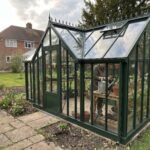
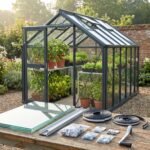
A greenhouse can transform the way you garden. It provides a protected environment for raising seedlings, growing tender plants, extending the growing season, and protecting valuable crops from unpredictable British weather. However, once temperatures fall, keeping that protected environment warm becomes a major challenge. A greenhouse may feel comfortable during a sunny afternoon, yet the temperature can drop dramatically after sunset, especially during the colder months.
Table of Contents
This is where greenhouse heating systems become important. The right heater can help maintain a more stable temperature, protect plants from cold snaps, and give you greater control over when and how you grow. The wrong heater, however, can waste energy, create excessive humidity, damage plants, or introduce avoidable safety concerns.
For UK gardeners, there are three traditional heating choices worth understanding: electric heaters, gas heaters and paraffin heaters. Each has advantages and disadvantages, and the best option depends on the size of your greenhouse, the plants you are growing, whether electricity is available, your budget and how closely you want to control temperature.
Electric greenhouse heaters are generally attractive because they are easy to control and can be paired with thermostats. The Royal Horticultural Society notes that electric heating may appear costly but is convenient to control, while gas and paraffin heating can be useful where an electrical supply is unavailable. The RHS also warns that burning fuels produces water, ethylene and carbon monoxide, making ventilation essential.
This complete guide explores the different greenhouse heating systems available in the UK, explains how they work, compares their running considerations, looks at important safety issues and shows how to choose a heating setup that suits your greenhouse rather than simply buying the biggest heater available.
Why Do You Need Greenhouse Heating Systems in the UK?
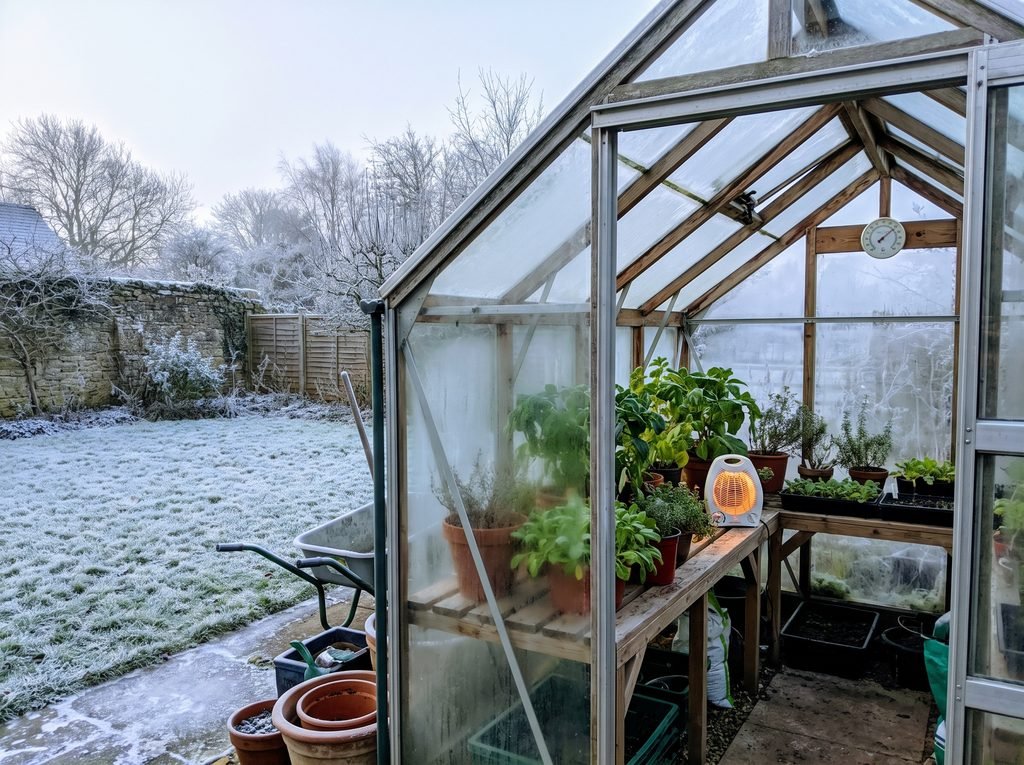
British weather can change quickly. Even when the daytime temperature looks reasonable, nights can become cold enough to slow plant growth or damage sensitive varieties. This is particularly important from autumn through early spring, when low night-time temperatures can become one of the biggest obstacles to productive greenhouse growing.
A greenhouse naturally traps solar energy during daylight hours, but it does not store enough heat indefinitely. Once the sun disappears, the temperature inside can fall. Glass greenhouses are especially vulnerable because glass does not provide the same insulating performance as a well-insulated building envelope.
This does not mean that every greenhouse needs to be kept warm all winter. The temperature requirement depends heavily on what you are growing. Hardy plants may tolerate cool conditions, whereas tropical plants, tender ornamentals, young seedlings and certain fruiting crops may require a more stable environment.
The main purpose of greenhouse heating systems is therefore not necessarily to make your greenhouse feel warm like a house. It is to maintain the temperature range your plants actually need.
That distinction can save money.
A gardener growing hardy winter vegetables may only need frost protection. Someone overwintering tender plants may want a gentle minimum temperature. A grower raising seedlings early in the year could require a more precise temperature-controlled environment.
Heating should therefore begin with the plants, not the heater.
How Greenhouse Heating Systems Work
The basic principle is straightforward. A heater adds thermal energy to the greenhouse, replacing some of the heat lost through glazing, gaps, ventilation and the structure itself.
The difficulty is that greenhouse heat loss is continuous. Outdoor air temperature, wind speed, greenhouse size, glazing material, insulation, door position and ventilation all influence how quickly warmth disappears.
This means two identical heaters can perform very differently in two different greenhouses.
A small greenhouse with insulation and reasonably tight doors may require considerably less heat than a larger, draughty structure exposed to strong winds. Similarly, a greenhouse positioned against a sheltered wall may lose heat more slowly than one standing alone in an exposed garden.
Modern greenhouse heating systems can be as simple as a small thermostatically controlled electric heater or as specialised as a larger heating installation designed for year-round growing. For most domestic gardeners, the important principle is to match output and control to the greenhouse rather than automatically selecting maximum power.
Electric Greenhouse Heaters: The Most Convenient Option for Many UK Gardeners
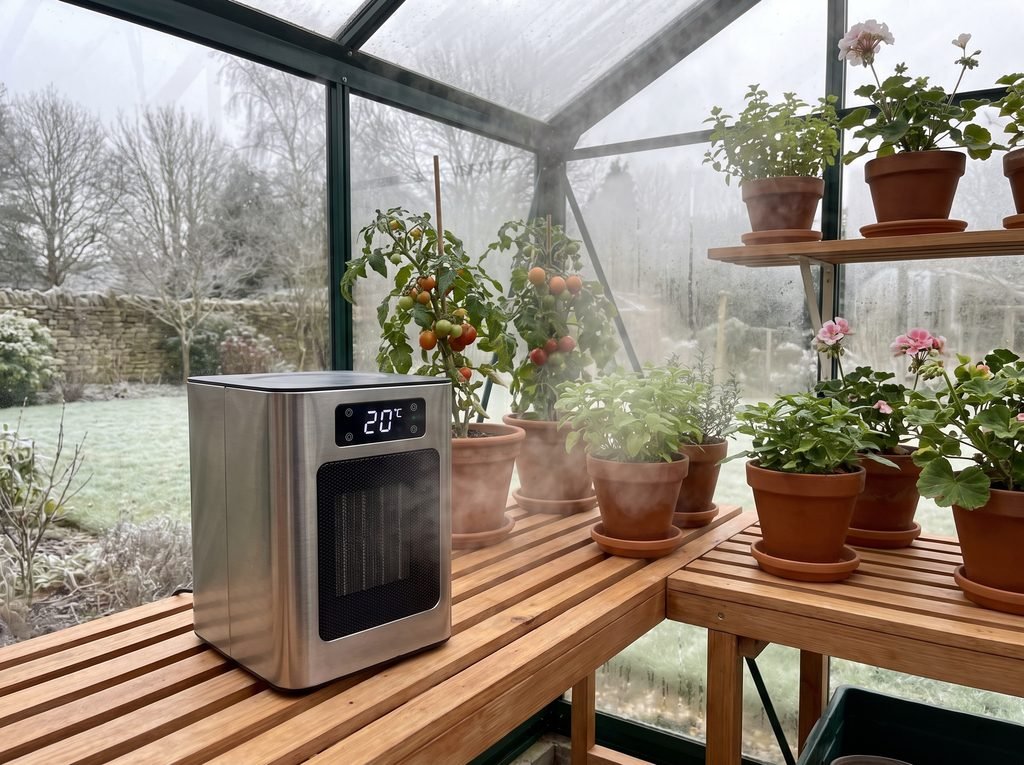
Electric heating is one of the most popular approaches for domestic greenhouse owners because it is straightforward to install, easy to operate, and highly controllable.
An electric heater converts electrical energy into heat. Depending on the model, the heater may use a fan to circulate warm air or use a radiant or convection-based heating element.
The biggest advantage is control.
A thermostat can switch the heater on when the temperature falls below a selected level and switch it off when the desired temperature is reached. This allows the greenhouse to receive heat only when necessary rather than running continuously.
The RHS specifically recommends looking for electric heaters with a thermostat because temperature regulation is important for different plants.
Advantages of Electric Greenhouse Heating
Electric greenhouse heating systems are particularly useful when reliable mains electricity is already available near the greenhouse.
There is no need to store paraffin containers or manage gas cylinders. There is also no combustion occurring inside the greenhouse, so you avoid the combustion by-products associated with fuel-burning heaters.
Electric heating is also convenient for automation. A thermostat can provide basic temperature control, while some modern setups can be combined with timers, environmental controllers, or smart monitoring equipment.
For gardeners who want a relatively simple “set it and monitor it” approach, electricity can be attractive.
Another major benefit is precision. Different plants can require different minimum temperatures, and an electric heater with a suitable thermostat can provide more predictable control than a basic manually operated fuel heater.
Disadvantages of Electric Heating
The main concern is running cost.
Electricity is charged by the kilowatt-hour, so a heater’s power consumption and the number of hours it operates directly influence energy use.
For a simple illustration, a 1,500-watt heater operating continuously for one hour uses 1.5 kWh. If it operates for several hours every cold night, the energy consumption can accumulate quickly.
Your actual electricity tariff will determine the cost. Ofgem’s published rates show that average electricity unit prices can change between price-cap periods, so using your own current tariff is more useful than relying on an old online estimate. For example, Ofgem’s announced average electricity unit rate for standard-variable tariffs under the price cap is 26.32p/kWh for 1 October to 31 December 2026, although actual rates vary by region, tariff and payment method.
The lesson is simple: calculate running costs using your actual electricity price.
What Type of Electric Heater Is Best?
For many small domestic greenhouses, a compact fan-assisted greenhouse heater with a thermostat is a practical choice. The fan helps distribute warmed air, reducing the chance of one area becoming significantly warmer than another.
Some growers also use tubular heaters or other convection-style systems where gentle background heating is preferred.
The ideal choice depends on the greenhouse and the plants rather than the heater’s marketing label.
A small greenhouse used mainly for frost protection may not need a powerful fan heater. A larger greenhouse used for active winter growing could benefit from stronger air circulation and more precise controls.
Gas Greenhouse Heaters: Useful Where Electricity Is Limited
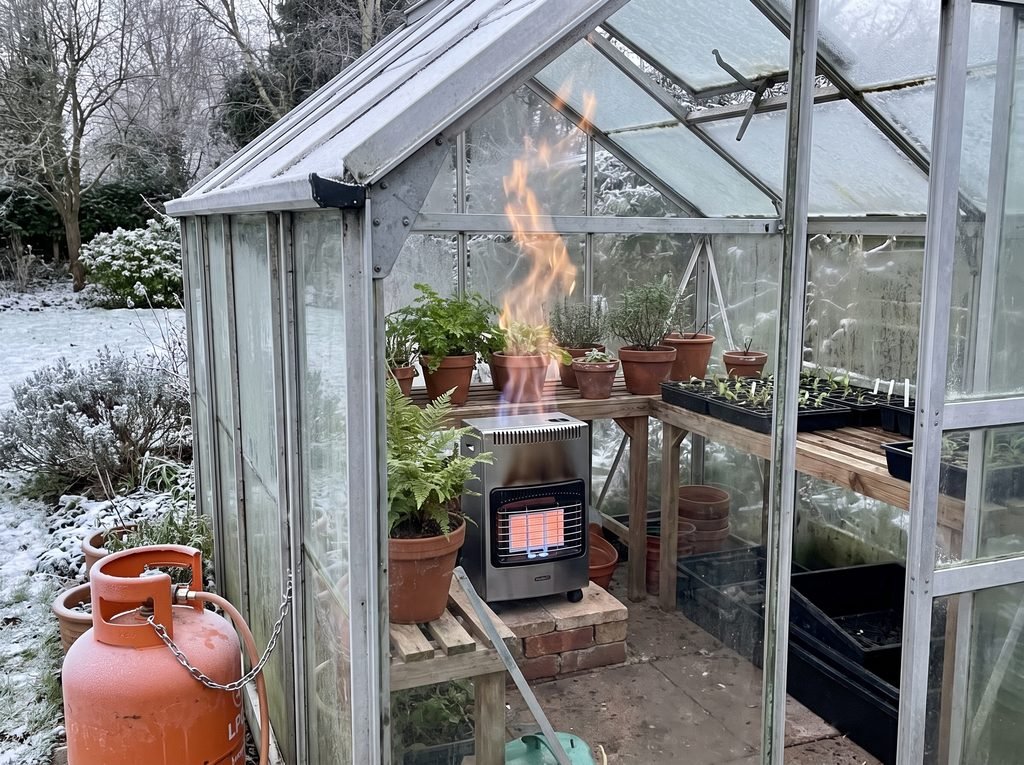
Gas heating remains relevant for some gardeners, particularly where electricity is unavailable or where a larger heating output is needed.
Gas heaters may use bottled LPG rather than mains natural gas, depending on the installation and location. Portable options exist, but gas heating needs more attention to ventilation and safe operation because combustion produces gases and moisture.
The RHS specifically notes that gas and paraffin can be useful where electrical supply is unavailable, such as some allotment situations. It also warns that combustion produces water, ethylene and carbon monoxide, meaning ventilation is necessary.
Advantages of Gas Heating
The primary attraction of gas can be practical rather than purely financial.
If your greenhouse is on an allotment without mains electricity, a gas heater may be easier to use than arranging an electrical connection.
Gas appliances can also provide substantial heat output, making them potentially useful for larger spaces.
However, the appliance must be suitable for greenhouse use and operated according to its manufacturer’s instructions. A heater designed for a different environment should never simply be assumed to be appropriate for greenhouse use.
Disadvantages of Gas Greenhouse Heaters
The biggest issue is combustion.
Fuel-burning heaters consume oxygen and release combustion products. Carbon monoxide is particularly important because it is poisonous and cannot be detected by smell or taste.
The RHS warns specifically about carbon monoxide and other combustion products from gas and paraffin heaters.
For this reason, ventilation is not optional.
It can feel counterproductive to ventilate a greenhouse while trying to heat it, because ventilation allows warm air to escape. Nevertheless, safe operation takes priority. A heater that requires ventilation should never be operated in an inadequately ventilated greenhouse in an attempt to retain maximum heat.
Gas cylinders must also be handled and stored appropriately. HSE guidance stresses the importance of good airflow around LPG storage and warns against conditions where heavier-than-air LPG vapours could accumulate.
Where gas installation work is required, use an appropriately qualified Gas Safe registered engineer. Gas Safe Register states that gas work should be carried out by registered engineers and that installers should have the relevant competence for the appliance and fuel involved.
Portable LPG vs Fixed Gas Heating
Portable LPG heaters can appear convenient because they do not require permanent pipework. However, convenience should not override safety.
A fixed installation may be more appropriate for a larger or permanent greenhouse, but it requires professional planning, appropriate ventilation and suitable installation.
Before choosing gas, consider not just the purchase price of the heater but also cylinder storage, replacement fuel, servicing, ventilation and the installation requirements.
Paraffin Greenhouse Heaters: A Traditional UK Choice
Paraffin heating has a long history in British gardening. Traditional paraffin greenhouse heaters are still known for providing gentle heat and frost protection without requiring electricity.
They can be particularly attractive for gardeners who have a greenhouse away from the home where installing an electrical supply is difficult.
A paraffin heater burns liquid fuel to produce heat. Unlike electric heating, it therefore involves combustion inside the greenhouse.
This creates both benefits and limitations.
Why Gardeners Still Use Paraffin Heating
Paraffin heaters can operate without mains electricity, making them convenient for allotments and detached greenhouse locations.
They are relatively simple in concept and have traditionally been used to protect plants from frost.
They may also produce gentle background warmth rather than the rapid blast of a fan heater, which some growers appreciate.
However, traditional technology has limitations, especially when compared with modern thermostatically controlled electric heating.
The Main Problem With Paraffin Heating
Combustion introduces water vapour and other combustion products.
The RHS explains that burning paraffin and gas produces water, ethylene,e and carbon monoxide and therefore requires ventilation.
This creates an important contradiction: heating the greenhouse can increase humidi,ty while ventilation reduces humidity but also removes some heat.
Excess moisture can contribute to condensation on greenhouse surfaces and can encourage fungal and other plant problems when ventilation and air movement are poor.
Paraffin therefore makes most sense where its practical benefits outweigh its disadvantages, particularly when electricity is unavailable.
Electric vs Gas vs Paraffin: Which Greenhouse Heating Systems Are Best?
There is no universally perfect heater.
Electric heating is generally the easiest choice when reliable electricity is available and temperature control matters. Gas is useful in situations where electricity is unavailable or where a suitable gas installation can provide the required output. Paraffin remains useful for simple frost protection and off-grid greenhouse situations, although combustion and humidity need careful management.
Electric heating tends to win for convenience and precise thermostat control.
Gas can win for off-grid heating and certain larger applications.
Paraffin can win for simplicity where there is no electrical connection.
The best option depends on the greenhouse and growing objective.
A gardener with a small backyard greenhouse may choose a compact thermostatically controlled electric heater. An allotment gardener may prefer paraffin or LPG. A serious year-round grower may use a more comprehensive heating and environmental-control arrangement.
The Most Important Factor: Greenhouse Insulation
Before upgrading greenhouse heating systems, consider whether the greenhouse is losing too much heat.
Heating a poorly insulated greenhouse can become expensive because the heater is effectively fighting continuous heat loss.
Even a very good heater cannot overcome poor thermal efficiency indefinitely.
Bubble insulation is one commonly used greenhouse insulation method. It allows light into the greenhouse while reducing heat loss, although it also affects light transmission.
Closing doors properly is equally important.
A door that remains slightly open can allow a surprising amount of warm air to escape, especially in windy weather.
Roof and wall glazing should also be kept in good condition. Damaged panels, cracked glass and loose seals can increase heat loss and create draughts.
Insulation Should Not Eliminate Ventilation
One common mistake is attempting to seal the greenhouse completely.
Plants still need fresh air, and fuel-burning heaters require adequate ventilation.
The goal is controlled ventilation rather than uncontrolled heat loss.
During cold weather, ventilation should be managed according to plant needs, humid,ity and the heater type.
This balance is one reason thermostatically controlled electric greenhouse heating systems are attractive: they make it easier to separate heating control from ventilation management.
Choosing the Correct Heater Size
Bigger is not always better.
An oversized heater may raise the temperature quickly and then cycle on and off frequently. A heater that is too small may run continuously without maintaining your desired minimum temperature during cold conditions.
The correct heating capacity depends on multiple factors, including greenhouse dimensions, glazing, insulation, outdoor temperatures, wind exposure and desired indoor temperature.
For this reason, manufacturers often provide recommended greenhouse sizes rather than one universal wattage.
Treat those recommendations as a starting point rather than an absolute guarantee.
A greenhouse exposed to strong winter winds may require more heating capacity than a similarly sized sheltered greenhouse.
The plants also matter.
Frost protection is very different from maintaining warm growing conditions for tropical plants.
Heating for Frost Protection
For many UK gardeners, the main purpose of greenhouse heating systems is not to create a warm summer-like environment in winter.
It is simply to stop temperatures from falling below a critical level.
Frost protection may be enough for overwintering sensitive plants, protecting young plants and maintaining a safe minimum temperature.
A thermostat is particularly useful for this purpose. Instead of running the heater continuously, it can activate only when temperatures approach the selected minimum.
This can significantly reduce unnecessary heating compared with manual operation.
Heating for Seed Starting
Seedlings often require more careful temperature management than mature plants.
In early spring, the outdoor temperature may remain too low for rapid germination and healthy early growth.
A heated greenhouse can extend the season, but the entire greenhouse does not necessarily need to be heated to high temperatures.
Some gardeners use localised propagation equipment, such as heated propagators, so that only the seed-starting area receives additional warmth.
This is an excellent example of why the most efficient heating strategy is not always “heat everything”.
Combining targeted propagation heat with modest greenhouse background heating can sometimes deliver a better result than raising the temperature of the entire structure.
Heating Tender Plants Through Winter
Tender plants require more protection than hardy crops.
Plants that are sensitive to cold may suffer if greenhouse temperatures fall too low for extended periods.
In this situation, a thermostatically controlled heater can provide a minimum temperature.
However, gardeners should research individual plant requirements rather than assuming every tender plant wants the same temperature.
Keeping a greenhouse excessively warm in winter can increase energy consumption without necessarily improving plant health.
Temperature should match the crop.
Preventing Cold Spots Inside the Greenhouse
A heater can warm one section more effectively than another.
This is particularly common when air is not circulating.
Fan-assisted greenhouse heating systems can help distribute warmth, but air movement should not be so aggressive that it stresses plants or dries the growing environment excessively.
Place temperature sensors carefully.
A thermostat positioned directly beside the heater may detect warm air before the rest of the greenhouse reaches the desired temperature.
For better control, monitoring temperature closer to plant height and away from the direct heater airflow can give a more useful indication of actual growing conditions.
Thermostats and Temperature Control
A thermostat is one of the most useful features to look for in greenhouse heating.
Without a thermostat, a heater may continue producing heat after the greenhouse has reached the desired temperature.
With thermostat control, the heater can cycle according to temperature.
This does not make heating free, but it can prevent unnecessary operation.
Digital controllers can provide even more precision. Some setups allow gardeners to monitor minimum and maximum temperatures or connect heating with fans and other environmental controls.
For serious growers, environmental monitoring can become the foundation of the entire greenhouse management strategy.
How Much Does It Cost to Run Greenhouse Heating Systems?
Running cost depends on heater type, power or fuel consumption, outdoor temperature, greenhouse size, insulation, thermostat settings and energy prices.
For electric heaters, the basic calculation is:
Power in kW × hours of operation × electricity price per kWh = energy cost.
For example, a 2 kW heater operating for three hours uses 6 kWh.
At an electricity rate of 26.32p per kWh, that would be about £1.58 for those six hours, before considering the fact that a thermostat may cause the heater to cycle rather than operate continuously. The 26.32p figure reflects Ofgem’s announced average electricity unit rate for 1 October to 31 December 2026 under the price cap for relevant standard-variable domestic tariffs; your own tariff may differ.
This is why heater wattage alone does not tell you how much a greenhouse will cost to heat.
An efficient greenhouse may need much less runtime than a draughty one.
How to Reduce Greenhouse Heating Costs
The cheapest heat is often the heat you do not lose.
Start by reducing unnecessary heat loss.
Use greenhouse insulation where practical. Keep doors closed when appropriate. Repair broken glazing. Block avoidable draughts while maintaining necessary ventilation. Group plants according to their temperature requirements. Use localised propagation heat instead of heating the entire greenhouse when possible.
Another important strategy is to avoid maintaining temperatures that plants do not need.
A greenhouse full of hardy crops does not require the same temperature as a greenhouse containing tropical specimens.
This simple change can dramatically alter the heating requirement.
Can Solar Power Run Greenhouse Heating Systems?
Solar power can contribute to greenhouse energy needs, but heating is one of the more demanding uses of electricity.
A small solar installation may operate low-power monitoring equipment, ventilation fans or other greenhouse accessories relatively easily.
Running a powerful electric heater through a cold, dark winter night is much more challenging.
Solar generation also varies with daylight, weather and season. Winter is exactly when heating demand can rise while solar generation tends to be lower.
Battery storage can help bridge the gap, but battery capacity, inverter capability and overall system cost need to be considered.
For many domestic gardeners, mains electricity combined with good insulation and thermostat control remains simpler than attempting to power primary greenhouse heating entirely from solar.
Heat Pumps and More Advanced Greenhouse Heating Systems
Heat pumps are increasingly discussed as a more energy-efficient heating approach for buildings, and specialist greenhouse installations can also use heat-pump technology.
However, the economics and installation complexity are different from purchasing a small domestic greenhouse heater.
Heat pumps move heat rather than directly generating all heat through resistance. Their performance depends on system design, outdoor conditions, heat so,urce and installation.
For a serious greenhouse, the system may be integrated with water-based heating, thermal storage or other environmental controls.
For a small hobby greenhouse, this may be unnecessarily complex.
The RHS also identifies technologies such as ground-source heat pumps and woodchip-fired boilers as potential more sustainable approaches for suitable applications, although these are far beyond what most small domestic greenhouses need.
Why Humidity Matters When Heating a Greenhouse
Temperature is only one part of greenhouse climate control.
Humidity can become a major issue, especially in winter when the greenhouse is closed for long periods.
Paraffin and gas combustion introduce additional water vapour. This can increase condensation and humidity.
That does not mean every fuel-burning heater is automatically unsuitable. It means the greenhouse needs sufficient ventilation and thoughtful management.
Plants also release moisture through transpiration.
When warm humid air reaches colder surfaces, condensation can form.
Persistent condensation may create conditions that favour fungal disease.
Good air circulation and sensible ventilation are therefore essential parts of successful winter greenhouse management.
Carbon Monoxide and Fuel-Burning Greenhouse Heaters
Carbon monoxide deserves special attention whenever fuel is burned.
Carbon monoxide is colourless and odourless and can be dangerous at high concentrations. GOV.UK guidance states that adequate ventilation is important for appliances that can produce carbon monoxide, and recommends suitable audible carbon monoxide alarms that meet the relevant standards where applicable.
Fuel-burning greenhouse heaters should always be installed and operated according to their manufacturer’s instructions.
Do not improvise flues.
Do not obstruct ventilation openings.
Do not use an appliance in a location or enclosure for which it was not designed.
Never assume that opening the greenhouse door occasionally is a substitute for the ventilation arrangement required by the heater.
Where gas work is involved, use an appropriately qualified Gas Safe registered professional. Gas Safe Register guidance specifically warns against DIY gas work and recommends registered engineers for fitting, fixing and servicing gas appliances.
Safe Storage of LPG for Greenhouse Heating
LPG cylinders require careful handling and storage.
HSE guidance emphasises ventilation around LPG storage because LPG vapour is heavier than air and can collect in unsuitable low areas. HSE also recommends that cylinders are stored in appropriate conditions, with attention to ventilation and separation from incompatible materials.
Always follow the cylinder supplier’s instructions and the heater manufacturer’s requirements.
Do not store LPG cylinders casually in enclosed spaces.
Avoid placing them near ignition sources or where they could be knocked over or damaged.
A greenhouse heating plan should consider the fuel supply as carefully as the heater itself.
Electrical Safety for Greenhouse Heating Systems
Electric heaters are generally simpler from a combustion-safety perspective, but they still require electrical safety precautions.
Greenhouses are damp environments.
Water, condensation and electrical equipment are an important combination to manage carefully.
Use equipment that is specifically suitable for the environment and rated for the intended application.
Follow the manufacturer’s instructions regarding placement, cable routing and electrical supply.
Keep electrical connections away from water and areas where they could be splashed.
Do not overload extension leads or improvised connections.
When a permanent electrical installation is required, use a suitably qualified electrician.
Never assume that a household indoor heater is automatically suitable for greenhouse use.
Where Should You Position a Greenhouse Heater?
Heater positioning affects performance and safety.
Avoid placing a heater directly against combustible materials.
Do not position it where plants, pots, curtains, plastic materials or other objects could fall onto it.
Fan heaters need unobstructed airflow.
The heater should also be positioned so that warm air can circulate around the growing area rather than being trapped in one corner.
Avoid placing the thermostat immediately next to the heat source.
A temperature sensor should represent the area you are actually trying to protect.
For larger greenhouses, you may also need to think about air circulation and whether one heater is enough to prevent temperature differences between zones.
Should You Heat the Whole Greenhouse?
Not necessarily.
Targeted heating can be more efficient.
For example, a gardener raising seedlings may create a protected propagation area within the greenhouse rather than heating the entire structure.
Similarly, plants with similar temperature requirements can be grouped together.
A smaller heated area needs less energy than maintaining a high temperature throughout a much larger space.
This approach can make greenhouse heating systems more affordable, particularly during the colder months.
Using Greenhouse Heating Systems With Automatic Ventilation
Heating and ventilation should work together rather than against each other.
A heater can raise the temperature, while ventilation can remove excessive heat and humidity.
Automatic roof vents or temperature-controlled ventilation can help maintain a healthier environment.
However, your heating strategy should account for the fact that ventilation can increase heat loss.
This is another reason temperature control matters.
A greenhouse does not need to be permanently sealed to be efficient. It needs sensible control.
Common Greenhouse Heating Mistakes
One of the most common mistakes is choosing a heater based solely on purchase price.
A cheap heater that runs constantly may cost more over its lifespan than a better-controlled system.
Another mistake is buying a heater that is too large.
Some gardeners also underestimate insulation.
There is little point investing heavily in heating while leaving large heat-loss points unaddressed.
Another frequent mistake is ignoring humidity.
Adding heat without considering moisture and ventilation can create a less healthy growing environment.
Finally, gardeners sometimes assume that a heater made for a home, garage or workshop can automatically be used in a greenhouse. That assumption can create electrical, fire or combustion risks.
Always check the intended use.
How to Choose Greenhouse Heating Systems for a Small Greenhouse
For a small domestic greenhouse, simplicity is usually valuable.
A compact electric heater with a thermostat is often a sensible starting point where mains electricity is available.
The heater should have enough capacity for the structure and your intended minimum temperature without being unnecessarily oversized.
Good insulation can make a small heater more effective.
A basic digital thermometer with minimum and maximum readings can also help you understand what is actually happening inside the greenhouse.
Do not choose a heater solely because the box claims that it can heat a certain greenhouse size. Real performance depends on insulation, glazin,g and weather conditions.
How to Choose Heating for a Large Greenhouse
Larger greenhouses require more careful consideration.
A single small portable heater may not provide even heat.
Larger structures can benefit from multiple heating zones, better air circulation and more advanced thermostatic control.
The intended crops also matter.
A greenhouse growing hardy vegetables may need relatively modest winter temperatures, while one used for exotic plants could have much higher heating requirements.
For a permanent large greenhouse, it can make sense to seek professional advice before investing in a major heating installation.
Best Greenhouse Heating Approach for an Allotment
Allotments create a practical challenge because mains electricity may not be available.
This is where LPG or paraffin heating can still have a role.
Traditional paraffin heaters can provide frost protection without electricity.
LPG can offer stronger heating, but cylinder storage, ventilation and safety become particularly important.
Before buying a fuel-burning heater, check your allotment site’s rules and any local restrictions regarding fuel storage and heater use.
Best Greenhouse Heating Approach for Beginners
For a beginner with a small garden greenhouse and mains electricity, an electric heater with thermostat control is often the easiest starting point.
It reduces the need to manage combustion fuel and offers convenient temperature regulation.
Start with the minimum temperature your plants require.
Monitor actual greenhouse temperatures for several nights.
Then adjust.
This is better than assuming that the greenhouse must stay warm all night simply because it is winter.
When Should You Turn Your Greenhouse Heater On?
There is no single date that works for every UK greenhouse.
Temperature is more useful than the calendar.
Autumn may bring occasional cold nights, while spring can still produce unexpected frosts.
Use a thermometer or thermostat rather than relying entirely on outdoor weather forecasts.
A greenhouse can also become surprisingly cold during clear winter nights due to rapid heat loss.
The heater should be set according to your plants’ minimum requirements.
Are Greenhouse Heating Systems Worth It?
For many growers, yes.
The value of heating is not just measured in degrees Celsius.
A heated greenhouse can extend the growing season, reduce frost risk, help seedlings get established earlier and allow sensitive plants to survive periods that would otherwise be dangerous.
But heating should be used strategically.
The goal should be to provide the temperature plants need with as little unnecessary energy use as practical.
That means insulation, temperature monitoring, and thermostat control are just as important as the heater itself.
Electric, Gas or Paraffin: A Practical Decision Guide
When comparing greenhouse heating systems, start with electricity.
If your greenhouse has a reliable electrical supply and you want straightforward temperature control, an electric heater is usually the easiest option to investigate.
If electricity is unavailable and your greenhouse location permits safe fuel use, LPG may offer an alternative.
If you need simple frost protection without mains electricity, paraffin remains a traditional option.
However, gas and paraffin require careful management of ventilation and combustion products. The RHS highlights these considerations and describes electric heating as easier to control.
Your decision should therefore be based on four questions:
What are you growing?
How cold does the greenhouse need to become before damage occurs?
Is mains electricity available?
How much time and maintenance are you willing to invest in the heating setup?
Answering those questions usually makes the right choice much clearer.
How to Make Greenhouse Heating Systems More Efficient
The most effective strategy is to combine heating with passive heat retention.
Use insulation where appropriate.
Keep doors and vents properly managed.
Repair damaged glazing.
Avoid leaving unnecessary gaps.
Group plants according to their temperature needs.
Use a thermostat.
Monitor temperatures.
Heat propagation areas separately when practical.
Do not maintain higher temperatures than plants require.
These simple measures can make a greater difference than buying a heater with a higher wattage.
Efficiency is not about producing the most heat.
It is about keeping the required heat where it is needed.
Greenhouse Heating Systems and UK Energy Prices
Energy costs should be considered before committing to winter greenhouse growing.
Ofgem reviews and updates the price cap every three months, and the amount a household actually pays depends on factors including tariff, payment method, region and energy usage. The price cap also does not place a limit on the total bill because using more energy results in higher overall costs.
This matters for greenhouse heating because a heater can run for many hours during cold weather.
Instead of estimating from a generic “daily cost” figure found online, look at your current electricity price and calculate the heater’s consumption.
For gas or paraffin, compare fuel usage according to the appliance manufacturer’s specifications and your actual fuel price.
The cheapest heater to purchase is not necessarily the cheapest heater to operate.
A Simple Winter Greenhouse Heating Strategy
A practical winter strategy starts before the first severe frost.
Inspect the greenhouse.
Clean and repair glazing.
Install insulation where useful.
Check the door and ventilation system.
Install a reliable thermometer.
Set the heater to an appropriate minimum temperature.
Test the system before you genuinely need it.
Monitor temperatures over several cold nights.
Then adjust the heating level based on actual results.
This approach is far safer and more economical than waiting for a freezing night and discovering that the heating arrangement cannot maintain the required temperature.
Frequently Asked Questions About Greenhouse Heating Systems
What are the best greenhouse heating systems for the UK?
For many small domestic greenhouses, thermostatically controlled electric heaters are convenient because they are easy to control and do not produce combustion gases inside the greenhouse. Gas and paraffin can be useful where electricity is unavailable, but they require appropriate ventilation and safe fuel management. The RHS supports this general distinction in its greenhouse heating guidance.
Are electric greenhouse heaters expensive to run?
They can be, especially when operating for long periods or heating a poorly insulated greenhouse. Running cost depends on heater power, operating hours and your electricity tariff. Using a thermostat and improving heat retention can significantly reduce unnecessary operation.
Can I use a normal household heater in a greenhouse?
Do not assume that a household heater is suitable. Greenhouses are humid environments and may have different safety requirements. Use equipment appropriate for the environment and follow the manufacturer’s instructions.
Are paraffin heaters safe in a greenhouse?
They can be used when designed for greenhouse applications and operated correctly, but they involve combustion. Ventilation is important because fuel burning produces combustion products, including carbon monoxide and water vapour.
Do gas greenhouse heaters need ventilation?
Fuel-burning gas heaters require appropriate ventilation because combustion produces gases and water vapour. Always follow the manufacturer’s ventilation requirements and never block required vents.
Can greenhouse heaters prevent frost?
Yes, appropriately sized heating can provide frost protection by maintaining the greenhouse above a selected minimum temperature. Thermostatic control is especially useful because the heater can operate only when temperatures approach the set point.
Should I leave my greenhouse heater on all night?
It depends on the plants and temperature requirements. In many cases, a thermostat-controlled heater can be left available to operate automatically while only switching on when the temperature falls below the selected level. This is more controlled than running a heater continuously.
What is the cheapest way to heat a greenhouse?
There is no single cheapest method for every greenhouse. Improving insulation, reducing draughts and heating only to the temperature plants require can reduce overall costs regardless of fuel type.
Are gas heaters better than electric greenhouse heaters?
Not universally. Electric heaters are easier to control and require no combustion ventilation, while gas can be practical in locations without mains electricity. The best option depends on your greenhouse and circumstances.
Can I use solar panels to heat my greenhouse?
Solar power can contribute to greenhouse electricity needs, but directly heating a greenhouse through winter requires substantial energy. Battery storage and system sizing also need consideration. For most small greenhouses, solar is more useful as part of an overall energy system than as the sole source of winter heating.
Final Verdict: Choosing the Right Greenhouse Heating Systems for Your UK Garden
Choosing among greenhouse heating systems does not need to be complicated, but it does require you to look beyond the heater itself.
Electric heating is often the most convenient choice when mains electricity is available. Thermostat control, easy operation and the absence of combustion inside the greenhouse make it attractive for many domestic gardeners.
Gas can be useful for larger or off-grid situations, but safe installation, ventilation, cylinder management and professional gas work need to be taken seriously.
Paraffin remains a practical traditional option for frost protection where electricity is unavailable, but it also produces combustion by-products and moisture, making ventilation important.
Whatever heating method you choose, remember that the heater is only one part of the system.
Insulation reduces heat loss.
Thermostats control temperature.
Ventilation manages humidity and air quality.
Good monitoring tells you what is actually happening.
And choosing plants suited to your greenhouse conditions can reduce the amount of heating required in the first place.
The smartest approach is not to make your greenhouse as warm as possible. It is to create the right temperature environment for the plants you are growing while controlling energy use and maintaining safe conditions.
Before purchasing a heater, measure your greenhouse, understand your plant requirements, check whether electricity is available, consider insulation and calculate potential running costs. Then choose a heater that matches those requirements rather than simply choosing the highest-powered model.
With the right planning, greenhouse heating systems can help you protect plants, extend your growing season and get considerably more value from your greenhouse throughout the unpredictable UK year.
Ready to Improve Your Greenhouse This Winter?
A well-heated greenhouse can make the difference between plants struggling through winter and plants growing confidently into the next season. Do not wait for the first severe frost to discover that your greenhouse loses heat too quickly or your heater is not suitable for the job.
Start by checking your greenhouse insulation, measuring overnight temperatures and identifying the minimum temperature your plants actually need. Then choose the heating method that fits your space, budget and growing goals.
For many home gardeners, a thermostatically controlled electric heater is the simplest starting point. For off-grid gardens and allotments, gas or paraffin may still provide useful alternatives when used correctly and with appropriate ventilation.
The key is to build a complete heating strategy rather than simply buying a heater.
Choose the right temperature. Reduce heat loss. Use reliable temperature control. Monitor your greenhouse. Protect your plants. And make this winter the season when your greenhouse keeps working for you instead of sitting unused in the cold.