Creating a beautiful and functional outdoor space doesn’t always require a large backyard. Even the smallest gardens can become organized, stylish, and highly practical with the right shed design. If you’ve been searching for the best small shed ideas, you’re in the right place. A compact garden shed can provide valuable storage, create a relaxing retreat, or even become a charming focal point that enhances the overall appearance of your landscape.
Whether you own a cozy urban garden, a suburban backyard, or a tiny cottage plot, choosing the right shed can completely transform how you use your outdoor area. Modern small sheds are available in countless styles, materials, and layouts, making it easier than ever to find one that fits both your space and your personal taste.
In this comprehensive guide, you’ll discover creative ways to maximize every square foot, practical design tips, storage solutions, decorating inspiration, and expert advice to help you build or buy the perfect garden shed. By the end, you’ll have plenty of ideas to create a shed that is not only functional but also a beautiful extension of your home.
Why Small Garden Sheds Are More Popular Than Ever
Homeowners today are placing greater value on making every inch of their property useful. Rising property prices and shrinking garden sizes mean outdoor storage has become more important than ever. Instead of allowing gardening tools, bicycles, outdoor furniture cushions, and seasonal decorations to clutter patios or garages, many people are turning to compact garden sheds.
Small sheds have evolved significantly over the years. They are no longer plain wooden boxes tucked away in a corner. Today’s designs combine practicality with attractive architecture, allowing homeowners to improve both organization and curb appeal simultaneously.
Another reason these sheds are growing in popularity is their affordability. Compared to building a garage extension or installing expensive outdoor storage systems, a small shed offers excellent value while requiring far less space.
Many homeowners also use compact sheds for hobbies, DIY projects, gardening, reading, or working from home. A carefully designed shed can serve multiple purposes without overwhelming a small garden.
Benefits of Choosing Small Shed Ideas for Compact Gardens
Before selecting a shed, it’s worth understanding why compact designs work so well.
One of the biggest advantages is efficient use of limited space. Instead of sacrificing large portions of your garden, a compact shed fits neatly into unused corners while leaving plenty of room for flowers, vegetable beds, patios, or children’s play areas.
Small sheds are also much easier to maintain. Cleaning, painting, and repairing them requires less time and fewer materials than larger structures.
Cost is another major benefit. Smaller sheds typically require fewer building materials, making them significantly more affordable whether you’re buying a ready-made model or building one yourself.
Installation is usually quicker as well. Many compact sheds can be assembled in a single weekend, allowing homeowners to start enjoying the extra storage almost immediately.
Energy efficiency is another overlooked advantage. If your shed will be insulated for use as a hobby room or workspace, the smaller interior requires less heating or cooling than larger garden buildings.
Perhaps the greatest benefit is flexibility. Compact sheds can function as storage rooms, mini workshops, potting sheds, bike storage, reading retreats, home offices, or decorative garden features.
## Small Shed Ideas That Instantly Make Your Garden Look Bigger
One of the biggest misconceptions is that adding a shed automatically makes a garden appear smaller. In reality, smart planning can have the opposite effect. The best small shed ideas help create the illusion of more space while improving functionality.
Positioning plays an important role. Placing a shed against a boundary fence frees up central garden space and creates cleaner sightlines. This simple strategy makes the entire garden feel more open.
Choosing lighter paint colors also helps. White, cream, pale gray, sage green, or soft blue sheds reflect more natural light and blend harmoniously into outdoor surroundings.
Windows are another powerful design feature. Natural light entering the shed creates visual openness while preventing the structure from appearing heavy or bulky.
Vertical storage solutions maximize interior organization without increasing the shed’s footprint. Wall-mounted shelves, hanging baskets, magnetic tool holders, and ceiling storage keep floors uncluttered and make small interiors feel surprisingly spacious.
Adding surrounding plants further softens the shed’s appearance. Flower beds, climbing vines, ornamental grasses, and decorative shrubs integrate the building into the landscape instead of making it stand out.
1. Corner Garden Shed Designs That Maximize Every Inch
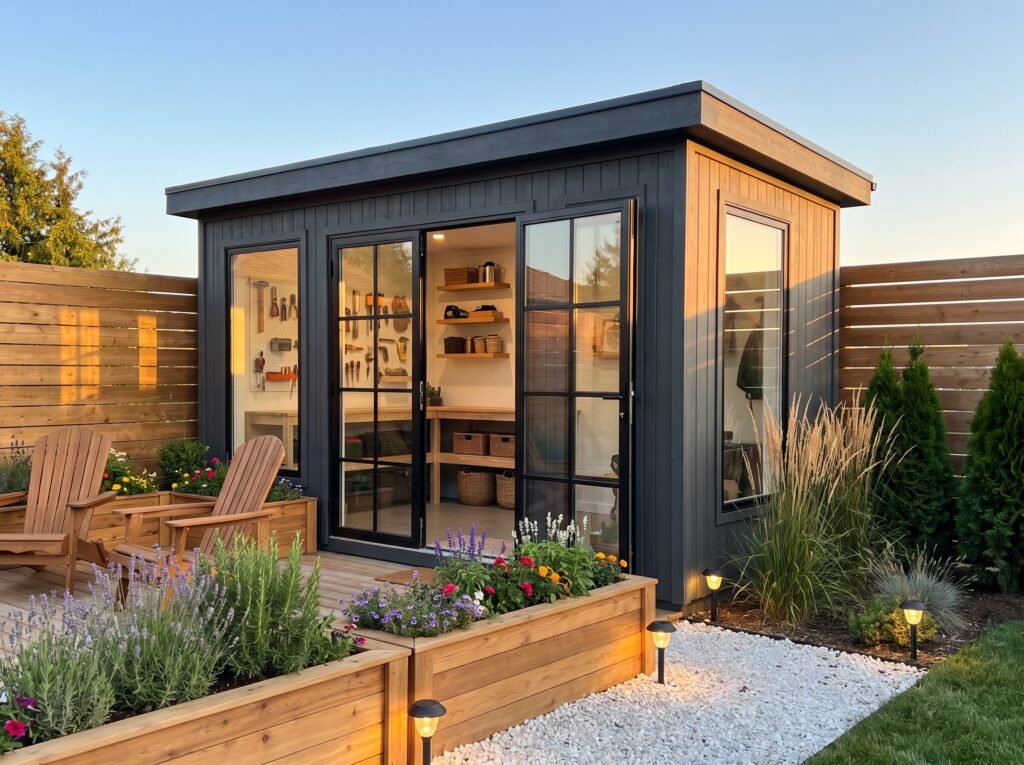
One of the smartest small shed ideas is installing a corner shed. Corners are often underused areas that become ideal locations for compact storage.
Unlike rectangular sheds placed in the center of a garden, corner sheds preserve valuable lawn space while maintaining an organized layout.
Triangular or pentagonal corner sheds are specifically designed to fit neatly into awkward spaces. Their angled fronts create an attractive architectural feature while making excellent use of otherwise wasted areas.
Many homeowners decorate the surrounding space with raised flower beds, gravel paths, solar lighting, and climbing roses to transform a simple storage shed into a charming garden focal point.
Inside, corner shelving systems take advantage of every available wall. Foldable workbenches and hanging storage racks further improve efficiency.
Corner sheds are especially popular in townhouses, small suburban gardens, and urban homes where every square foot matters.
Choosing the Best Material for Your Small Garden Shed
Material selection has a major impact on appearance, durability, maintenance requirements, and overall cost. Understanding the strengths of each option helps you make a smarter investment.
Wooden Sheds
Wood remains one of the most popular choices because of its natural beauty and timeless appeal. Timber blends effortlessly into gardens and can be painted or stained in virtually any color.
Wood also offers excellent insulation, making it comfortable year-round. However, regular maintenance such as staining or sealing is necessary to protect against moisture and insects.
Metal Sheds
Metal sheds are valued for their durability and security. They resist fire, pests, and rot while requiring relatively little maintenance.
Modern galvanized steel sheds are available in attractive finishes that complement contemporary homes.
Their main drawback is condensation, which can occur without proper ventilation.
Plastic or Resin Sheds
Resin sheds have become increasingly popular due to their weather resistance and minimal maintenance.
They never rot, rust, or require painting, making them ideal for busy homeowners.
Many modern resin sheds convincingly imitate real wood while offering superior durability.
Composite Sheds
Composite materials combine wood fibers with recycled plastics, delivering the attractive appearance of timber while reducing maintenance requirements.
Although more expensive initially, composite sheds often last longer with less upkeep.
Designing a Shed That Matches Your Garden Style
A shed shouldn’t feel like an afterthought. Instead, it should complement your home’s architecture and enhance the overall landscape design.
Traditional cottage gardens pair beautifully with painted timber sheds featuring flower boxes, shutters, and climbing roses.
Modern minimalist gardens often benefit from sleek black, charcoal, or gray sheds with clean lines and large windows.
Rustic gardens look wonderful with natural cedar finishes, stone pathways, and surrounding wildflowers.
Mediterranean landscapes pair nicely with cream-colored sheds accented by terracotta pots and lavender plantings.
The goal is visual harmony. When your shed matches your fencing, paving, planting style, and outdoor furniture, it becomes an attractive feature rather than simply a storage building.
Smart Interior Storage Ideas for Small Garden Sheds
The real success of any compact shed depends on how efficiently the interior is organized. Clever storage solutions allow even the smallest shed to hold far more than expected.
Installing adjustable shelving from floor to ceiling creates dedicated spaces for pots, fertilizer, tools, paint cans, and gardening supplies. Pegboards mounted on walls keep hand tools visible and easy to access, eliminating the frustration of searching through crowded shelves.
Hooks are another simple but highly effective addition. Long-handled tools such as rakes, shovels, hoes, and brooms can be hung vertically to free up valuable floor space. Ceiling-mounted racks work well for lightweight seasonal items like folding chairs, watering cans, or empty hanging baskets.
Stackable storage bins with clear labels make it easy to organize seeds, gloves, irrigation equipment, outdoor lighting, and small accessories. Foldable worktables provide a practical workspace when needed and can be tucked away afterward to maximize room.
By combining vertical storage with thoughtful organization, even a compact garden shed can remain neat, functional, and surprisingly spacious.
2. Vertical Storage Small Shed Ideas That Double Your Space
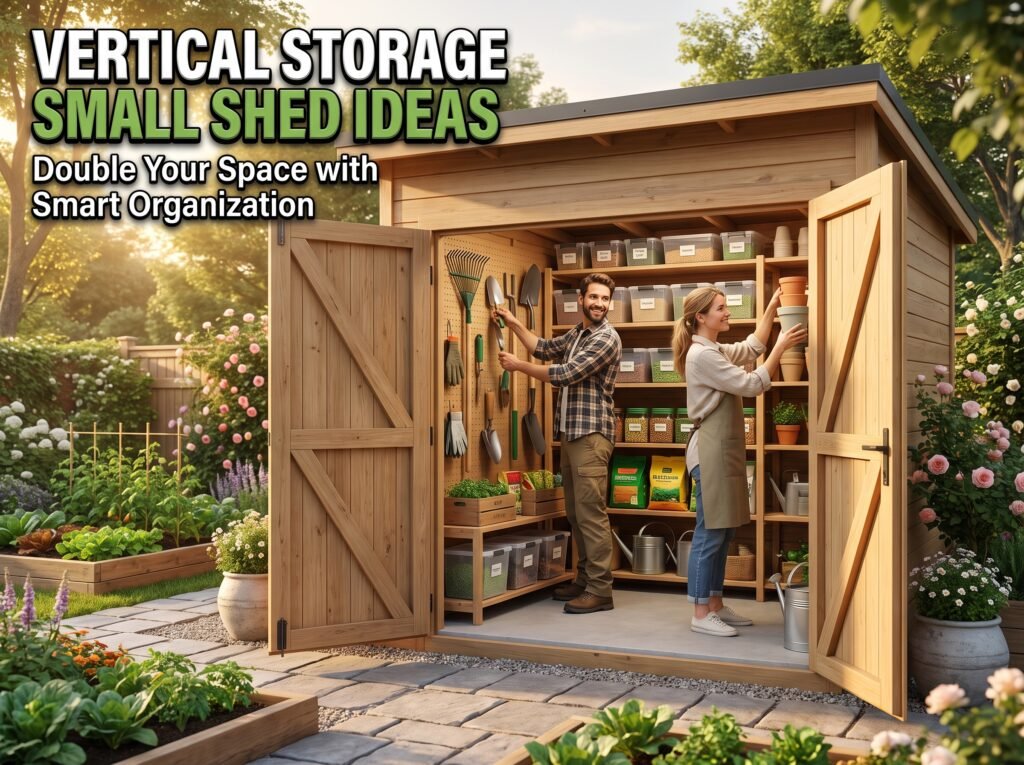
When floor space is limited, the smartest strategy is to build upward instead of outward. One of the most effective small shed ideas is to use vertical storage systems that transform empty wall space into highly organized storage areas. Rather than allowing tools and equipment to pile up on the floor, a vertical layout keeps everything visible, accessible, and neatly arranged.
Wall-mounted shelving is one of the easiest upgrades you can make. Adjustable shelves allow you to store everything from small seed packets and gardening gloves to larger containers of fertilizer or paint. Because the shelves can be repositioned as your storage needs change, they offer long-term flexibility.
Pegboards are another excellent solution. Unlike traditional shelves, pegboards let you customize the arrangement of tools whenever necessary. Hanging trowels, pruning shears, measuring tapes, hammers, and hand saws on hooks keeps them organized while preventing damage caused by stacking them together.
Don’t overlook the back of the shed door. Door-mounted organizers, wire baskets, and hanging racks provide valuable storage for lightweight items such as gloves, spray bottles, twine, and small garden accessories. This often-overlooked area can dramatically increase storage without taking up any additional floor space.
Ceiling storage is equally valuable. Overhead racks are perfect for seasonal decorations, camping equipment, folding chairs, empty plant pots, or rarely used gardening supplies. Keeping these items above head height leaves the main workspace clear and uncluttered.
Magnetic strips mounted along the walls can securely hold metal tools, drill bits, screwdrivers, and scissors. Labeling shelves and storage bins also helps everyone in the household know exactly where items belong, making it much easier to maintain an organized shed over time.
With thoughtful planning, a vertical storage system can make a compact shed feel twice as large without increasing its footprint.
3. Multi-Purpose Small Shed Ideas for More Than Just Storage
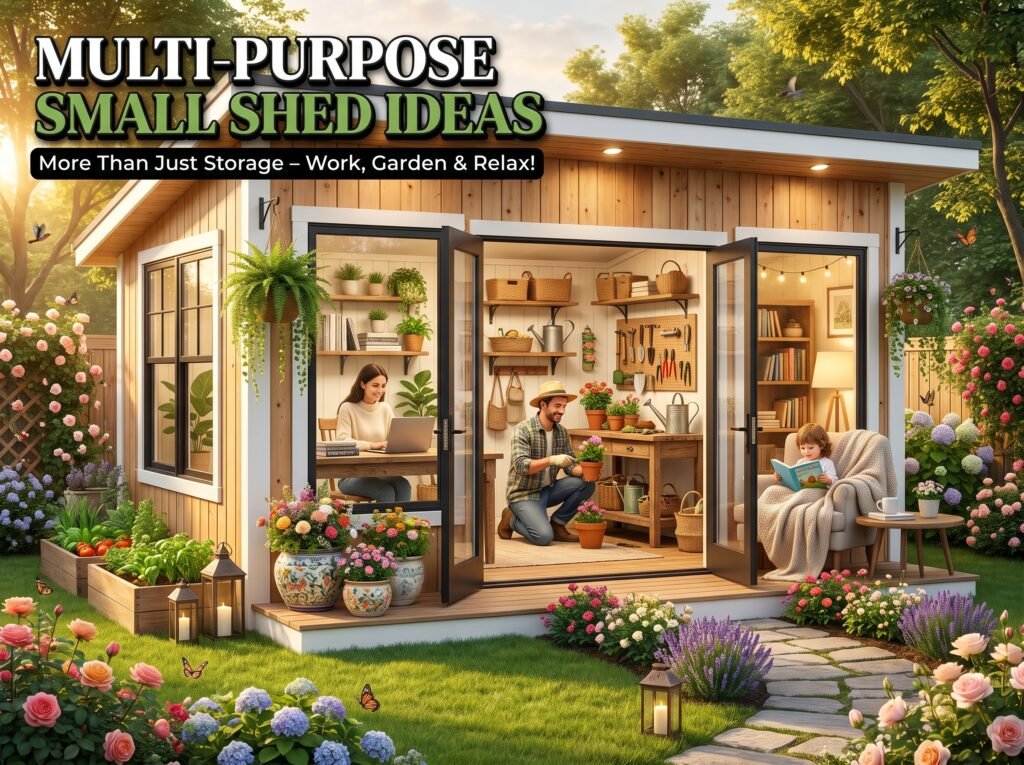
Today’s garden sheds are no longer limited to storing lawnmowers and shovels. Many homeowners are transforming compact sheds into versatile spaces that serve multiple functions throughout the year. One of the most creative small shed ideas is designing a structure that adapts to your lifestyle.
A gardening shed is one of the most popular choices. Installing a potting bench, storage drawers, seed organizers, and a small sink creates an efficient workspace for planting flowers, vegetables, and herbs. Natural light from windows makes gardening tasks more enjoyable while improving plant care.
If you work remotely, a small shed can become a peaceful backyard office. By adding insulation, electricity, comfortable furniture, and reliable internet access, you can create a distraction-free workspace just steps away from your home. This setup offers privacy without requiring a costly home extension.
Creative individuals often convert sheds into art studios, craft rooms, or photography spaces. Large windows provide abundant natural light, while wall-mounted storage keeps supplies organized. Because the shed is separate from the house, it’s easier to leave projects in progress without affecting your living space.
Fitness enthusiasts may choose to build a compact home gym. Basic exercise equipment such as resistance bands, free weights, yoga mats, and stationary bikes fit comfortably in many small sheds. Mirrors and proper ventilation help create a motivating workout environment.
Reading rooms are another increasingly popular option. A comfortable chair, soft lighting, bookshelves, and decorative plants can transform an ordinary shed into a peaceful escape where you can unwind after a busy day.
Families with children may even convert a shed into a playhouse complete with toy storage, colorful décor, and creative learning spaces. This gives children a dedicated area while helping keep the main house organized.
The more purposes your shed serves, the greater value it provides throughout the year.
4. Decorative Small Shed Ideas That Enhance Your Backyard
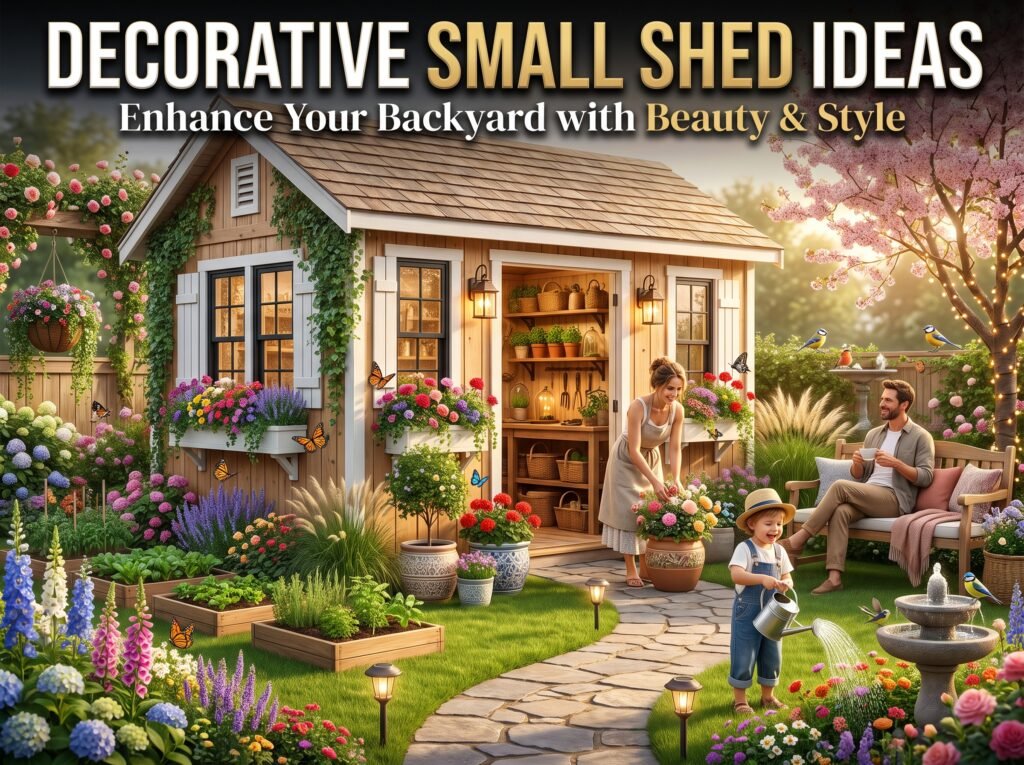
A garden shed doesn’t have to be hidden away. With thoughtful design, it can become one of the most attractive features in your outdoor space. Decorative small shed ideas focus on blending functionality with visual appeal, turning a practical building into a charming centerpiece.
Exterior paint is one of the easiest ways to personalize a shed. Soft whites, sage greens, charcoal grays, navy blues, or warm beige tones can complement your home’s architecture and landscaping. Choosing colors that match fences, planters, or patio furniture creates a cohesive look.
Window boxes overflowing with seasonal flowers instantly make a shed feel more inviting. Petunias, geraniums, lavender, pansies, and trailing ivy add color while softening the structure’s appearance.
Climbing plants such as clematis, jasmine, honeysuckle, and climbing roses can be trained along trellises or lattice panels attached to the shed walls. Over time, these plants create a beautiful cottage-style aesthetic that blends naturally into the garden.
Decorative lighting extends the shed’s usability into the evening. Solar-powered lanterns, string lights, vintage wall sconces, or pathway lighting improve both appearance and safety while creating a warm, welcoming atmosphere.
Replacing standard hardware with decorative door handles, wrought iron hinges, or antique-style latches adds character without significant expense. Small architectural details often have a surprisingly large visual impact.
A charming pathway leading to the shed further enhances its presence. Gravel paths, stepping stones, brick walkways, or natural flagstone create a sense of purpose while making access easier during wet weather.
Adding a bench, birdhouse, water feature, or ornamental shrubs nearby helps integrate the shed into the surrounding landscape rather than making it feel like a separate structure.
5. Budget-Friendly DIY Small Shed Ideas
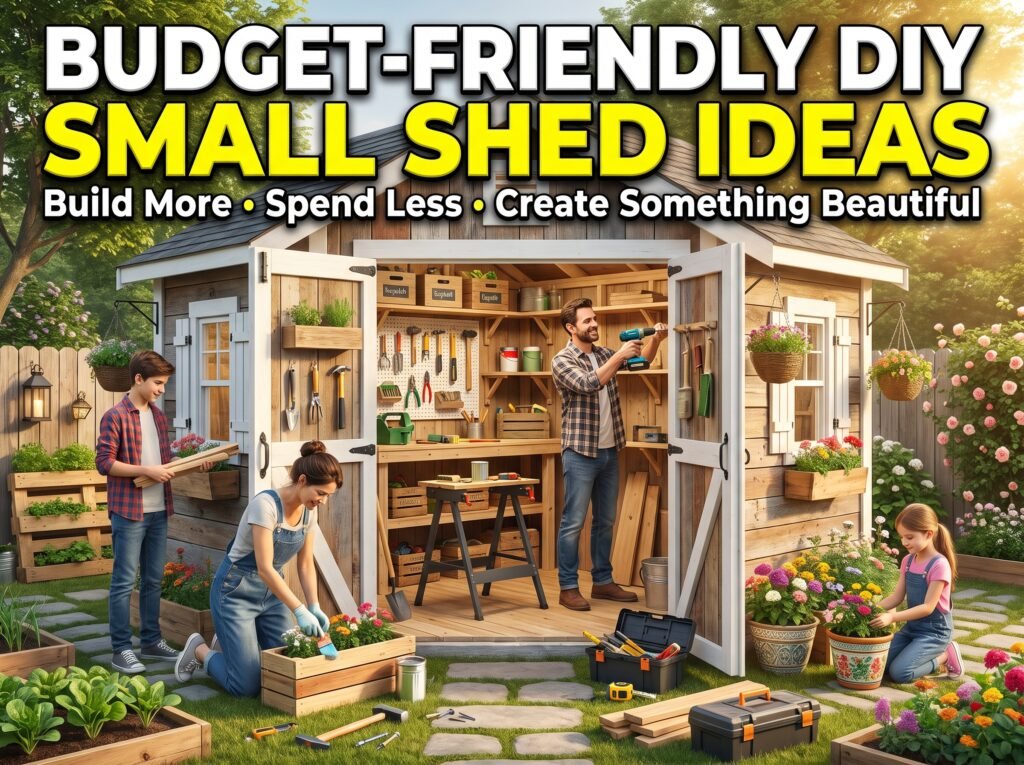
Not every beautiful garden shed requires a large investment. Many homeowners create impressive outdoor storage solutions while staying within a modest budget. DIY small shed ideas allow you to customize every detail while often saving thousands compared to professionally installed buildings.
Repurposed materials offer excellent opportunities for cost savings. Reclaimed timber, recycled windows, second-hand doors, leftover roofing materials, and salvaged bricks can all be incorporated into unique shed designs. Besides reducing costs, recycled materials add character and support environmentally friendly building practices.
Simple rectangular designs are generally easier and less expensive to build than complex architectural styles. Choosing a straightforward layout reduces construction time while minimizing material waste.
Instead of purchasing custom shelving, consider building storage solutions from plywood or reclaimed wood. Basic wall-mounted shelves, tool racks, and workbenches are relatively simple DIY projects that significantly improve organization.
Painting rather than replacing older sheds is another affordable transformation. A fresh coat of high-quality exterior paint, updated hardware, and new landscaping can make an aging structure look almost brand new.
For roofing, asphalt shingles remain one of the most affordable options, although metal roofing may offer better long-term durability with less maintenance.
Many homeowners also save money by installing their shed on compacted gravel instead of pouring a full concrete foundation, provided local building regulations allow it.
Careful planning, patience, and a willingness to complete some work yourself can result in a beautiful, highly functional shed without exceeding your budget.
Common Mistakes to Avoid When Choosing Small Shed Ideas
Even a well-designed shed can become frustrating if common planning mistakes are overlooked. Understanding these pitfalls before purchasing or building your shed will save time, money, and future headaches.
One of the biggest mistakes is buying a shed that is too small for future needs. While it’s tempting to choose the most compact option available, many homeowners quickly discover they have accumulated more tools, outdoor furniture, and gardening equipment than expected. Planning for future storage helps prevent overcrowding.
Poor location selection is another frequent problem. Placing a shed where it blocks sunlight, interrupts garden pathways, or creates drainage issues can reduce both functionality and appearance. Always evaluate how the shed will affect the overall flow of your outdoor space.
Ignoring local building regulations can also create unnecessary complications. Some municipalities require permits or impose restrictions on shed size, placement, and height. Checking local requirements before construction helps avoid expensive modifications later.
Ventilation is often overlooked. Without proper airflow, moisture builds up inside the shed, leading to mold, mildew, unpleasant odors, and damage to stored belongings. Roof vents, wall vents, and operable windows significantly improve air circulation.
Security should never be an afterthought. Investing in quality locks, reinforced hinges, and outdoor lighting helps protect valuable tools and equipment from theft.
Finally, many homeowners underestimate the importance of organization. Without shelves, hooks, and storage systems, even a spacious shed quickly becomes cluttered. Planning the interior layout before moving items inside ensures the space remains efficient for years to come.
Choosing the Perfect Location for Your Small Garden Shed
The location of your shed can dramatically influence its convenience, lifespan, and visual appeal. Ideally, choose a level area with good drainage to prevent water from pooling around the foundation. Positioning the shed near your garden makes tools and supplies easy to access while reducing unnecessary trips across the yard.
If possible, place the entrance where it receives adequate natural light. This improves visibility inside the shed and creates a more welcoming appearance. Consider nearby trees as well. While shade can keep the shed cooler during summer, overhanging branches may drop leaves, increase moisture, or damage the roof during storms.
Accessibility matters too. Leave enough space around the shed for maintenance, cleaning, and repairs. A well-planned location ensures your shed remains both practical and attractive for many years.
Lighting and Ventilation Tips for Small Garden Sheds
No matter how beautiful your shed looks from the outside, its interior should be comfortable, bright, and practical. Proper lighting and ventilation make a significant difference in how often you use your shed and how well it protects your belongings.
Natural light is always the best place to start. Installing one or two windows allows sunlight to brighten the interior, making it easier to find tools and complete projects during the day. Skylights are another excellent option if wall space is limited. They let in plenty of daylight without sacrificing valuable storage walls.
For evening use, energy-efficient LED lights are a smart investment. Battery-powered, solar-powered, or wired LED fixtures provide bright illumination while keeping electricity costs low. Motion-sensor lights near the entrance also improve safety and convenience, especially during winter months.
Ventilation is equally important. Without proper airflow, moisture can build up inside the shed, causing mold, mildew, rust, and unpleasant odors. Roof vents, wall vents, and louvered windows encourage air circulation while helping regulate temperature throughout the year.
If your shed will be used as a workshop, office, or hobby room, adding insulation alongside proper ventilation creates a more comfortable environment during both hot summers and cold winters.
Landscape Around Your Shed for Maximum Impact
The best small shed ideas extend beyond the building itself. Landscaping plays a huge role in transforming a simple storage shed into a beautiful focal point that enhances your entire garden.
Start by creating a defined pathway leading to the shed. Gravel, brick, stepping stones, or natural flagstone paths improve accessibility while adding charm and structure to your outdoor space.
Surrounding the shed with flower beds softens its appearance and helps it blend naturally into the landscape. Perennials such as lavender, salvia, echinacea, and black-eyed Susans provide long-lasting color with relatively little maintenance.
Climbing plants can dramatically improve the appearance of plain walls. Roses, clematis, jasmine, ivy, and honeysuckle add texture, fragrance, and seasonal interest without taking up much ground space.
Decorative containers filled with herbs or colorful annual flowers near the entrance create a welcoming atmosphere. Hanging baskets add even more visual interest while maximizing vertical space.
Solar-powered garden lights installed along pathways or around flower beds highlight the shed beautifully after sunset and improve safety during evening use.
Adding a small seating area with a bench or bistro set nearby can transform the area into a relaxing outdoor retreat where you can enjoy your garden after finishing daily tasks.
Eco-Friendly Small Shed Ideas for Sustainable Gardens
Sustainability has become an important consideration for many homeowners, and your garden shed offers several opportunities to reduce environmental impact.
Choosing responsibly sourced timber or recycled building materials is one of the simplest ways to make your project more environmentally friendly. Composite materials made from recycled plastics and wood fibers are also becoming increasingly popular due to their durability and low maintenance requirements.
Installing a rainwater collection barrel next to your shed allows you to harvest rainwater for watering plants, reducing household water consumption during the growing season.
Solar panels designed for small buildings can provide enough electricity to power lights, battery chargers, or small tools without relying on your home’s electrical system.
Energy-efficient LED lighting consumes very little electricity while lasting significantly longer than traditional bulbs.
If you’re planning a new build, incorporating windows for natural daylight reduces the need for artificial lighting during daytime hours.
Using environmentally friendly paints, stains, and wood treatments helps minimize harmful chemicals while protecting your shed from weather damage.
Even small sustainable choices add up over time, making your shed both practical and environmentally responsible.
Seasonal Maintenance Tips to Keep Your Shed Looking New
Even the highest-quality shed benefits from regular maintenance. A little attention throughout the year helps prevent expensive repairs and extends the life of your investment.
In spring, inspect the roof for loose shingles, damaged flashing, or signs of leaks. Clear away leaves and debris that may have accumulated over winter, and check gutters if your shed has them.
Summer is the perfect time to repaint or reseal wooden sheds. Warm, dry weather allows protective coatings to cure properly while improving weather resistance.
During autumn, remove fallen leaves from around the shed to prevent moisture buildup. Trim nearby trees and shrubs to improve airflow and reduce the risk of branches damaging the roof during storms.
Winter preparation involves checking door seals, lubricating hinges, and ensuring vents remain unobstructed. If heavy snowfall is common in your area, remove excessive snow from the roof to prevent structural stress.
Inside the shed, regularly sweep the floor, reorganize shelves, and dispose of unused items. Keeping the interior clean not only improves functionality but also discourages pests from nesting inside.
A few hours of maintenance each season can keep your shed looking attractive and functioning efficiently for many years.
Expert Tips for Choosing the Best Small Shed
Before making your final decision, consider how your needs may change in the future. Buying a shed that’s slightly larger than your current storage requirements often proves to be a wise investment as gardening tools, outdoor furniture, and seasonal decorations accumulate over time.
Prioritize quality construction over the lowest price. Durable materials, solid framing, weather-resistant finishes, and reliable hardware will save money on repairs and replacements in the long run.
Think carefully about accessibility. Wide doors, smooth pathways, and thoughtful interior layouts make daily use much more convenient.
If aesthetics matter to you, choose a design that complements your home’s architectural style and existing landscaping. A well-designed shed should feel like a natural extension of your outdoor living space rather than an afterthought.
Finally, don’t underestimate the importance of organization. Investing in shelves, hooks, storage bins, and work surfaces from the beginning ensures your shed remains tidy, efficient, and enjoyable to use.
Frequently Asked Questions About Small Shed Ideas
What size shed is best for a small garden?
The ideal size depends on your available space and intended use. For most compact gardens, sheds between 4×6 feet and 8×10 feet provide excellent storage while preserving valuable outdoor living space.
Are wooden sheds better than metal sheds?
Both have advantages. Wooden sheds offer a classic appearance and better natural insulation, while metal sheds require less maintenance and provide excellent durability. The best choice depends on your budget, climate, and personal preferences.
How can I make a small shed feel bigger?
Use vertical storage, install shelves and pegboards, choose light interior paint colors, add windows for natural light, and keep the floor free of clutter. These strategies create a more open and organized space.
Do I need planning permission for a small garden shed?
Requirements vary depending on your local regulations, shed size, and property location. Always check with your local authority before beginning construction or installation.
What’s the best flooring for a small shed?
Pressure-treated timber floors, concrete slabs, and compacted gravel foundations are all popular options. The right choice depends on your budget, soil conditions, and how you plan to use the shed.
Can a small shed be used as a home office?
Yes. With proper insulation, electricity, ventilation, lighting, and internet access, many compact sheds make excellent backyard offices, especially for remote workers seeking a quiet and productive environment.
How do I protect my shed from moisture?
Ensure good ventilation, install a waterproof roof, seal any gaps, elevate the shed on a proper foundation, and inspect it regularly for leaks or signs of condensation.
Conclusion: Turn Your Small Garden Into a Functional Outdoor Haven
The right small shed ideas prove that you don’t need a large backyard to create an organized, beautiful, and highly functional outdoor space. Whether your goal is extra storage, a dedicated gardening station, a peaceful reading retreat, or a stylish backyard office, a thoughtfully designed small shed can completely transform how you use your garden.
By choosing the right materials, maximizing vertical storage, incorporating attractive landscaping, and performing regular maintenance, you’ll enjoy a shed that not only meets your practical needs but also enhances the overall appearance and value of your property.
Remember that even the smallest improvements—such as adding shelving, planting flowers around the entrance, or installing solar lighting—can have a significant impact. With careful planning and a little creativity, your compact shed can become one of the most useful and attractive features in your entire garden.
Start Planning Your Dream Garden Today!
There’s never been a better time to transform your outdoor space with these inspiring small shed ideas. Whether you’re upgrading an old shed, building a new one from scratch, or searching for the perfect compact design, every improvement brings you one step closer to a more organized and enjoyable garden.
Take inspiration from the ideas in this guide, choose the solutions that best fit your space, and begin creating a shed that’s both practical and beautiful. Your future self will thank you every time you step into a clean, organized, and inviting garden retreat.
Ready to make the most of your outdoor space? Save this guide, share it with fellow gardening enthusiasts, and start turning your favorite small shed ideas into reality today!