Starting a greenhouse is one of the most rewarding ways to enjoy gardening throughout the year. Whether you dream of harvesting fresh vegetables in winter, growing fragrant herbs for your kitchen, or nurturing colorful flowers regardless of the season, a greenhouse gives you the perfect environment to make it happen. Even if you only have a compact greenhouse in your backyard, balcony, or patio, you can still produce an impressive variety of healthy plants.
Many beginners wonder what to grow in a small greenhouse without overcrowding the space or choosing crops that are difficult to manage. The good news is that a small greenhouse can be surprisingly productive when you select the right plants and organize your growing area wisely. With proper planning, you can enjoy fresh produce, beautiful blooms, and thriving seedlings almost every month of the year.
Unlike outdoor gardening, a greenhouse allows you to control temperature, humidity, and protection from harsh weather. This means fewer crop failures, a longer growing season, and healthier plants. Whether you live in a cold climate or simply want to maximize your gardening success, learning what grows best in a greenhouse is the first step toward creating a thriving growing space.
In this comprehensive guide, you’ll discover the best vegetables, herbs, fruits, flowers, and seedlings for beginners, along with practical greenhouse tips that help you make the most of every square foot.
Why a Small Greenhouse Is Perfect for Beginners
A small greenhouse may seem limited in size, but it offers enormous advantages for anyone new to gardening. Instead of managing a large growing area, beginners can focus on learning essential gardening skills while keeping maintenance simple and enjoyable.
One of the biggest benefits of a greenhouse is climate control. Plants are protected from frost, heavy rain, strong winds, and excessive heat. This stable environment reduces stress on plants and allows them to grow faster and healthier than they often would outdoors.
Another major advantage is the ability to extend the growing season. Many gardeners stop planting once temperatures drop, but greenhouse owners can continue harvesting vegetables and herbs long after outdoor gardens have finished producing.
A greenhouse also provides a safe place to start seedlings before transplanting them outdoors. Young plants receive consistent warmth and protection, resulting in stronger roots and healthier growth.
Other benefits include:
- Growing fresh vegetables throughout the year
- Better control over pests and diseases
- Earlier harvests
- Improved seed germination
- Higher crop yields
- Less weather-related damage
- Greater gardening success for beginners
Once you understand how to manage watering, ventilation, and sunlight, even a modest greenhouse can become an incredibly productive growing space.
What to Grow in a Small Greenhouse for the Best Results
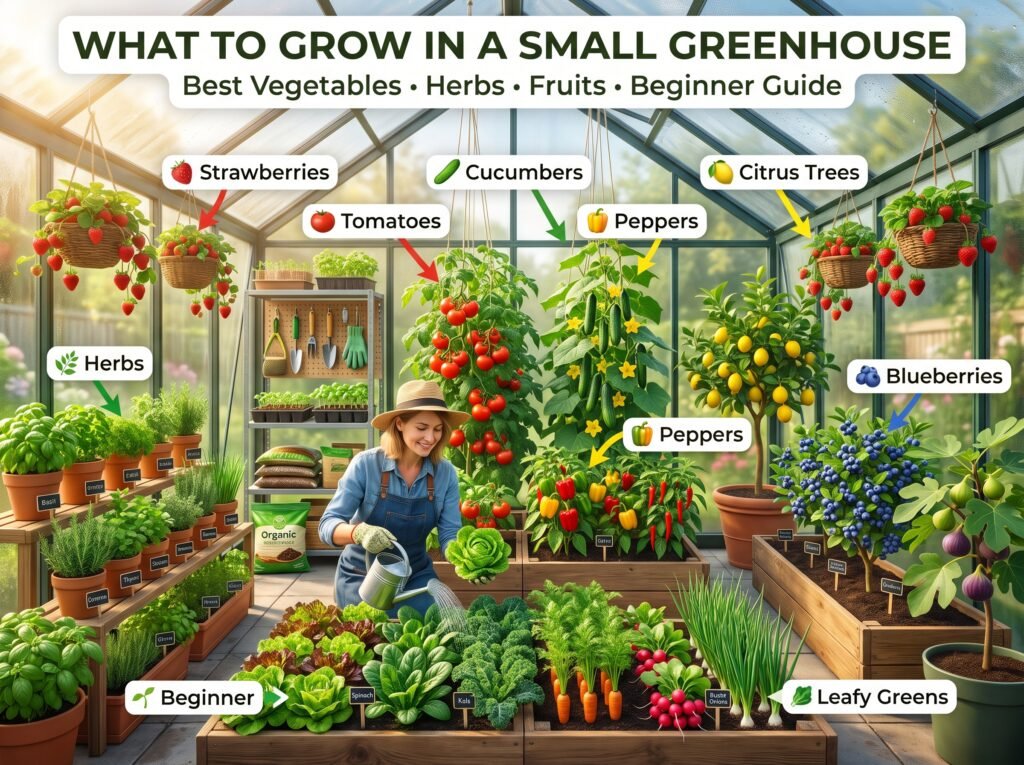
Choosing the right plants is the most important decision you’ll make as a beginner. Some crops naturally thrive inside protected environments, while others require far more room than a compact greenhouse can provide.
The best greenhouse plants share several characteristics:
- Compact growth
- High productivity
- Easy maintenance
- Good disease resistance
- Ability to grow in containers
- Continuous harvesting
Let’s explore the best choices.
Tomatoes: The Most Popular Greenhouse Crop
If there’s one plant almost every greenhouse owner grows, it’s tomatoes. They love warm temperatures, plenty of sunlight, and consistent watering.
Greenhouse tomatoes usually produce earlier than outdoor plants and continue fruiting for a much longer season. They also experience fewer problems with heavy rain, which often causes cracking and fungal diseases.
Cherry tomatoes are especially suitable for beginners because they produce large harvests in relatively small spaces.
Popular varieties include:
- Sungold
- Sweet Million
- Gardener’s Delight
- Tiny Tim
- Roma
Provide sturdy supports or trellises, remove lower leaves regularly, and ensure good airflow around the plants.
Lettuce: Fast Growing and Beginner Friendly
Lettuce is one of the easiest vegetables you can grow in a greenhouse.
Unlike many crops, lettuce actually appreciates the slightly cooler temperatures found during spring and autumn. Because it matures quickly, you can enjoy multiple harvests throughout the year.
Instead of harvesting entire heads, many gardeners use the “cut-and-come-again” method, allowing fresh leaves to regrow several times.
Popular varieties include:
- Butterhead
- Romaine
- Oak Leaf
- Loose Leaf
- Little Gem
Grow several varieties together for colorful salads all year long.
Cucumbers Thrive in Greenhouse Conditions
Cucumbers flourish inside greenhouses because they enjoy warm temperatures and consistent humidity.
Compared to outdoor plants, greenhouse cucumbers often produce straighter fruits with fewer pest problems.
Climbing varieties are particularly useful since they grow vertically, saving valuable floor space.
Maintain regular watering and harvest fruits frequently to encourage continuous production.
Peppers Love Warm Greenhouses
Sweet peppers and chili peppers perform exceptionally well in greenhouses.
These heat-loving plants struggle in cool climates but thrive once protected from cold nights.
Bell peppers reward growers with thick, colorful fruits, while chili peppers produce abundant harvests over many months.
Keep temperatures warm, provide full sunlight, and feed plants regularly with tomato fertilizer.
Spinach Produces Healthy Harvests Quickly
Spinach is another excellent crop for beginners.
It grows rapidly, tolerates cooler conditions, and requires very little maintenance.
Since spinach doesn’t occupy much space, it’s ideal for growing beneath taller crops like tomatoes.
Harvest outer leaves regularly while allowing the center to continue producing fresh growth.
Radishes: One of the Fastest Vegetables You Can Grow
If you’re eager for quick success, radishes are hard to beat.
Many varieties mature within four weeks.
Their short growing cycle makes them perfect between slower-growing crops, ensuring no greenhouse space goes unused.
Keep soil consistently moist to prevent woody roots.
Green Onions Save Space
Green onions require very little room and can even be grown in containers or narrow trays.
They’re perfect companions for herbs and leafy vegetables.
Harvest them young for salads or allow them to mature into larger onions.
Carrots in Deep Containers
While carrots require deeper soil than leafy vegetables, they still perform well inside small greenhouses when grown in containers.
Choose shorter varieties like:
- Paris Market
- Adelaide
- Thumbelina
Loose soil helps roots develop smoothly.
Best Herbs to Grow in a Small Greenhouse
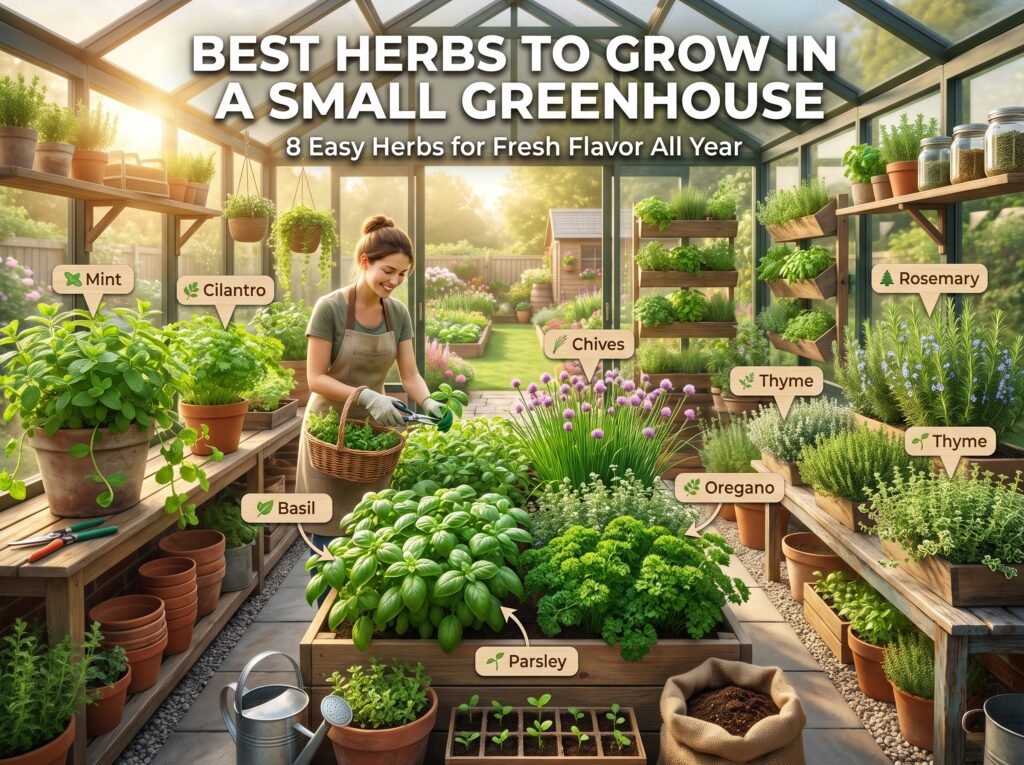
Fresh herbs are among the easiest and most rewarding greenhouse plants.
Most herbs require minimal care while producing continuous harvests.
Their pleasant fragrance also attracts beneficial insects and helps create a healthier greenhouse environment.
Basil
Basil thrives in warm temperatures.
Because it dislikes frost, greenhouse conditions are almost ideal.
Regular harvesting encourages bushier plants and larger yields.
Fresh basil pairs perfectly with tomatoes, making them excellent greenhouse companions.
Parsley
Parsley grows steadily throughout much of the year.
Both curly and flat-leaf varieties perform well in containers.
Frequent trimming stimulates fresh growth.
Mint
Mint grows vigorously inside greenhouses.
To prevent it spreading uncontrollably, always grow mint in separate pots.
It requires regular watering and partial shade during very hot weather.
Cilantro
Cilantro prefers cooler temperatures.
Grow it during spring and autumn for the best results.
Successive sowing every few weeks provides continuous harvests.
Chives
Chives require very little maintenance.
Their edible flowers also attract pollinators if your greenhouse is occasionally opened.
Oregano
Oregano thrives in containers with excellent drainage.
Once established, it becomes highly drought tolerant.
Thyme
Thyme prefers dry conditions and plenty of sunlight.
Avoid overwatering, which can cause root problems.
Rosemary
Rosemary enjoys bright light and well-drained soil.
Because it grows slowly, it’s perfect for long-term greenhouse cultivation.
Fruits That Grow Surprisingly Well in Small Greenhouses
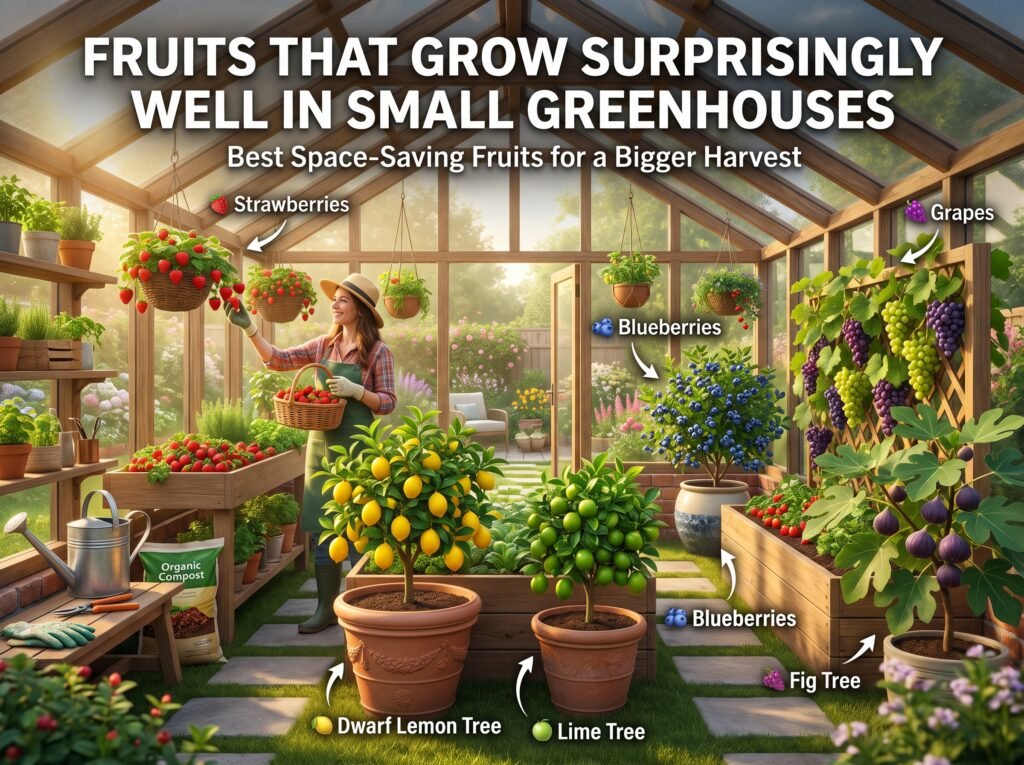
Many beginners assume greenhouses are only suitable for vegetables, but several fruits also thrive in protected environments.
The key is selecting compact varieties.
Strawberries
Strawberries are among the best greenhouse fruits.
Growing them in hanging baskets saves valuable growing space while reducing disease problems.
Greenhouse strawberries often produce sweeter fruit because they’re protected from excessive rainfall.
Dwarf Citrus Trees
Small lemon, lime, and orange trees perform beautifully inside greenhouses.
Containers make them easy to manage.
Provide excellent drainage and plenty of sunlight.
Figs
Compact fig trees adapt well to container growing.
Warm greenhouse temperatures encourage excellent fruit production.
Blueberries
Blueberries require acidic soil but reward growers with nutritious berries every season.
Growing them in pots makes maintaining proper soil conditions much easier.
Grapes
Certain grape varieties can be trained vertically along greenhouse walls.
This efficient use of vertical space allows gardeners to grow fruit without sacrificing valuable floor area.
Why Planning Your Greenhouse Layout Matters
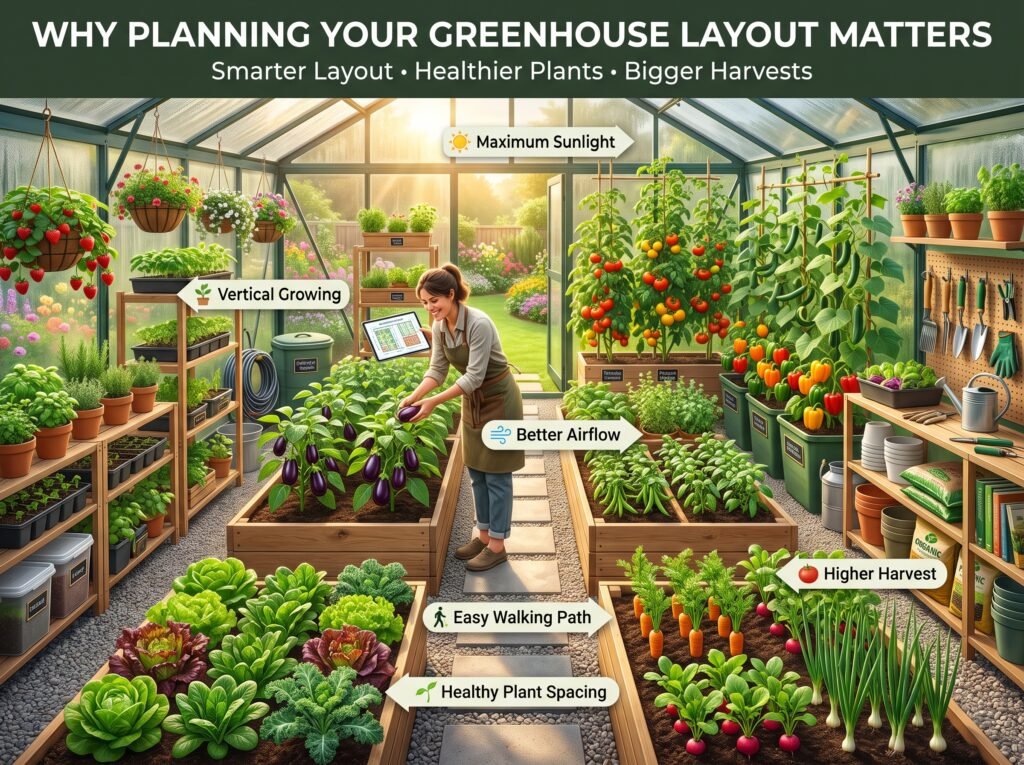
One of the biggest mistakes beginners make is planting without a layout. In a small greenhouse, every inch counts. A thoughtful arrangement helps maximize sunlight, improve airflow, and make watering and harvesting easier.
Place tall crops such as tomatoes, cucumbers, and peppers at the back or along the north side (in the Northern Hemisphere) so they don’t shade shorter plants. Medium-height crops can occupy the middle, while low-growing vegetables like lettuce, spinach, and herbs should be placed at the front for easy access.
Vertical gardening is another smart strategy. Hanging baskets, wall-mounted planters, and trellises let you grow more without taking up valuable floor space. This is especially useful for strawberries, cucumbers, and climbing beans.
A well-organized greenhouse not only looks better but also helps reduce disease by improving air circulation and making it easier to spot problems early.
What Flowers Should You Grow in a Small Greenhouse?
While vegetables often get the most attention, flowers deserve a place in every greenhouse. They brighten the growing space, attract beneficial pollinators when the greenhouse is ventilated, and can even be grown for gifts or small-scale sales. Many flowering plants also thrive in the warm, protected environment of a greenhouse.
Marigolds
Marigolds are one of the easiest flowers for beginners. Their bright yellow, orange, and red blooms add vibrant color while helping deter certain garden pests. They grow well in containers and require only moderate watering and plenty of sunlight.
Petunias
Petunias are a favorite for hanging baskets and window boxes. In a greenhouse, they bloom for months with regular deadheading and occasional feeding. Their wide range of colors makes them a beautiful addition to any greenhouse.
Geraniums
Geraniums thrive in warm conditions and reward gardeners with long-lasting flowers. They prefer well-drained soil and benefit from regular pruning to encourage bushier growth.
Begonias
If part of your greenhouse receives filtered sunlight, begonias are an excellent choice. Their attractive foliage and colorful blooms make them ideal for decorative displays.
Sweet Peas
Sweet peas produce fragrant flowers and climb easily up trellises, making them perfect for maximizing vertical space in a small greenhouse.
Seasonal Guide: What to Grow Throughout the Year
One of the greatest benefits of owning a greenhouse is the ability to grow plants almost year-round. Understanding what to plant in each season will help you make the most of your greenhouse.
Spring
Spring is the season of new beginnings, making it the perfect time to sow seeds and prepare for summer crops.
Excellent choices include:
- Tomatoes
- Cucumbers
- Peppers
- Basil
- Lettuce
- Spinach
- Herbs
- Flower seedlings
This is also the best time to start plants that will later be transplanted outdoors.
Summer
Summer brings plenty of warmth and sunlight, allowing heat-loving crops to flourish.
Grow:
- Tomatoes
- Peppers
- Eggplants
- Cucumbers
- Beans
- Melons (if space allows)
- Basil
- Oregano
During hot weather, pay close attention to ventilation and watering.
Autumn
As outdoor temperatures begin to fall, your greenhouse continues producing fresh vegetables.
Plant:
- Lettuce
- Kale
- Spinach
- Swiss chard
- Radishes
- Green onions
- Cilantro
- Parsley
These crops appreciate the cooler conditions of autumn.
Winter
Many gardeners assume growing stops in winter, but a greenhouse extends the season significantly.
Winter-friendly crops include:
- Spinach
- Lettuce
- Kale
- Carrots
- Herbs
- Microgreens
- Green onions
If temperatures become extremely cold, consider using thermal covers or a small greenhouse heater to protect sensitive plants.
Essential Tips for Growing Successfully in a Small Greenhouse
Knowing what to grow in a small greenhouse is only half the equation. Proper care ensures your plants remain healthy and productive.
Control Temperature
Most vegetables perform best between 18°C and 27°C (65°F–80°F) during the day. Excessive heat can stress plants and reduce yields.
Use roof vents, side vents, or small fans to regulate temperature.
Provide Good Ventilation
Poor airflow encourages fungal diseases such as powdery mildew and botrytis.
Open vents on warm days and use circulating fans if necessary.
Healthy airflow strengthens stems and reduces humidity.
Water Consistently
Greenhouse plants dry out faster than outdoor plants.
Water deeply rather than frequently, allowing soil to dry slightly between watering.
Avoid wetting leaves whenever possible.
Feed Plants Regularly
Fast-growing greenhouse crops quickly use available nutrients.
Apply balanced fertilizer every few weeks during active growth.
Tomatoes, cucumbers, and peppers especially benefit from regular feeding.
Monitor Humidity
High humidity encourages mold and disease.
Maintain moderate humidity levels by improving ventilation and avoiding overwatering.
Clean the Greenhouse
Remove dead leaves, weeds, and old pots regularly.
Clean glass or polycarbonate panels to maximize sunlight.
A clean greenhouse significantly reduces pest problems.
Common Beginner Mistakes to Avoid
Even experienced gardeners occasionally make mistakes. Learning from common beginner errors will save time and improve your harvests.
Overcrowding Plants
Many beginners try to grow too much in limited space.
Crowded plants receive less airflow and sunlight, increasing disease risk.
Always follow recommended spacing guidelines.
Overwatering
More water does not mean healthier plants.
Constantly wet soil causes root rot and fungal diseases.
Check soil moisture before watering.
Ignoring Ventilation
A closed greenhouse can become dangerously hot within hours.
Even during cooler weather, fresh air is essential.
Planting Crops Without Planning
Random planting often leads to poor use of space.
Group plants with similar watering and temperature needs together.
Using Poor Soil
Healthy plants begin with healthy soil.
Use quality compost mixed with well-draining potting mix.
Refresh soil regularly.
Skipping Pest Inspections
Greenhouses protect plants from weather but not from insects.
Inspect leaves weekly for:
- Aphids
- Whiteflies
- Spider mites
- Mealybugs
Early detection prevents serious infestations.
How to Maximize Space in a Small Greenhouse
One challenge many gardeners face is making the most of limited space. Fortunately, there are several techniques that dramatically increase productivity.
Grow vertically using shelves, hanging baskets, and trellises. This allows climbing vegetables and trailing fruits to flourish without crowding the floor.
Use stackable seed trays when starting seedlings. These save space during the germination stage and can be easily moved as plants grow.
Choose compact or dwarf varieties whenever possible. Modern plant breeders have developed many vegetables and fruits specifically for container gardening and small greenhouses.
Practice succession planting. Instead of sowing all your lettuce or spinach at once, plant a new batch every two to three weeks. This ensures a continuous harvest while making efficient use of available space.
Finally, rotate crops throughout the year. Once one crop finishes, replace it with another suited to the next season. This keeps your greenhouse productive month after month.
Benefits of Growing Your Own Greenhouse Produce
Growing your own food offers rewards that go beyond saving money. Freshly harvested vegetables often taste better and retain more nutrients than store-bought produce that has traveled long distances.
A greenhouse also gives you greater control over what goes into your food. You can reduce or eliminate synthetic pesticides and grow using organic methods if you choose.
Gardening is also a proven stress reliever. Spending time tending plants can improve mental well-being, encourage physical activity, and provide a satisfying sense of accomplishment.
If you have children, a greenhouse is an excellent educational space where they can learn about nature, responsibility, and healthy eating.
Frequently Asked Questions
What is the easiest plant to grow in a greenhouse?
Lettuce is one of the easiest greenhouse crops because it grows quickly, requires minimal care, and can be harvested repeatedly using the cut-and-come-again method.
Can I grow vegetables all year in a greenhouse?
Yes. With proper temperature management and seasonal crop selection, many vegetables can be grown throughout the year.
How often should I water greenhouse plants?
It depends on the crop, weather, and soil. Check the soil daily and water when the top layer begins to dry. Avoid keeping the soil constantly saturated.
Is a greenhouse worth it for beginners?
Absolutely. A greenhouse protects plants from harsh weather, extends the growing season, and creates a more forgiving environment for new gardeners to learn and succeed.
What vegetables grow best in a small greenhouse?
Tomatoes, peppers, cucumbers, lettuce, spinach, radishes, carrots, herbs, and green onions are among the best choices for beginners.
Can fruit grow in a small greenhouse?
Yes. Strawberries, dwarf citrus trees, blueberries, compact figs, and certain grape varieties all grow successfully in small greenhouses when given the right care.
Final Thoughts: Start Growing with Confidence
Learning what to grow in a small greenhouse doesn’t have to be overwhelming. The key is to begin with reliable, beginner-friendly crops that match your available space and local climate. Tomatoes, leafy greens, herbs, peppers, cucumbers, strawberries, and compact fruit trees are all excellent options that provide generous harvests with relatively simple care.
As you gain experience, you can experiment with new varieties, improve your greenhouse layout, and extend your growing season even further. Remember that every successful gardener started as a beginner. Each season brings new lessons, and every harvest builds confidence.
A small greenhouse may have limited dimensions, but its potential is enormous. With thoughtful planning, consistent maintenance, and a willingness to learn, it can become one of the most productive areas of your home garden.
Ready to Start Your Greenhouse Gardening Journey?
Now that you know what to grow in a small greenhouse, it’s time to put that knowledge into action. Start with a handful of easy-to-grow vegetables and herbs, organize your space efficiently, and enjoy the satisfaction of harvesting fresh produce throughout much of the year.
Whether your goal is healthier meals, lower grocery bills, or simply the joy of gardening, a small greenhouse can help you achieve it. Keep learning, keep experimenting, and don’t be afraid to try new plants as your confidence grows.
If you found this guide helpful, explore our other greenhouse gardening articles for expert tips, detailed growing guides, product reviews, and practical advice to help you create a thriving greenhouse in every season.