What is the enhanced greenhouse effect, and why does it matter? The enhanced greenhouse effect is the strengthening of Earth’s natural greenhouse effect, mainly because human activities increase the concentration of greenhouse gases in the atmosphere. This change makes the planet lose heat to space less efficiently at first, creating an energy imbalance that leads to warming.
Table of Contents
The word “enhanced” can sound positive, but here it simply means increased. Earth’s natural greenhouse effect helps keep the planet warm enough to support familiar ecosystems and human life. The problem begins when additional greenhouse gases push the climate away from the conditions in which our communities, agriculture, and infrastructure developed.
You do not need a science degree to understand the process. Start with sunlight entering the Earth system, heat leaving it, and gases that influence the movement of that heat. From there, the connections to fossil fuels, forests, farming, melting ice, and changing weather become much easier to follow.
This guide explains seven central facts, answers common questions, and connects the science to practical decisions. Understanding the mechanism gives you a stronger basis for evaluating climate headlines and recognising which solutions address the underlying cause.
What Is the Enhanced Greenhouse Effect? Understand the Science Behind a Warmer Earth

The enhanced greenhouse effect is an increase in atmospheric heat retention caused by higher concentrations of greenhouse gases. In discussions of modern climate change, the term primarily describes the additional warming influence created by human activities, including burning fossil fuels and changing how land is used.
A useful distinction is that greenhouse gases do not generate the Sun’s energy. They affect how energy moves through the atmosphere and escapes into space. When their concentrations increase, the climate system must adjust to a changed balance between incoming and outgoing energy.
The British Geological Survey identifies human releases of carbon dioxide as a contributor to this additional greenhouse effect. The process builds on a natural feature of our atmosphere, rather than introducing a completely new physical mechanism. British Geological Survey: The greenhouse effect.
A Simple Definition You Can Remember
Think of the enhanced greenhouse effect as human activity turning up Earth’s existing heat-retaining system. More greenhouse gases alter the flow of infrared energy, causing the surface and lower atmosphere to warm as the planet adjusts.
The word “anthropogenic” sometimes appears alongside this explanation. It means caused by people. Therefore, the anthropogenic enhancement of the greenhouse effect refers to the extra warming influence associated with human changes to the atmosphere.
This definition is more accurate than saying pollution simply traps all heat forever. Energy continues to leave Earth. The important change is how efficiently it escapes and the temperature required for outgoing energy to balance absorbed sunlight.
Why This Topic Matters Beyond Science Lessons
The enhanced greenhouse effect connects energy choices with conditions that affect daily life. A household depends on reliable electricity, comfortable indoor temperatures, affordable food, and working transport. Each of those systems can be affected by a changing climate or by efforts to reduce emissions.
Understanding the cause also helps separate useful action from vague environmental claims. A product described as “green” may or may not reduce greenhouse gas emissions. The relevant questions are what emissions it avoids, how it is produced, how long it lasts, and what it replaces.
Fact 1: The Natural Greenhouse Effect Makes Earth Habitable

The greenhouse effect existed long before factories, cars, or power stations. Naturally occurring gases influence Earth’s temperature by absorbing and emitting infrared radiation. Without their warming influence, the planet’s surface would be much colder.
That makes the natural greenhouse effect essential to the world we know. The environmental challenge is the additional strengthening caused by human activity. Keeping this distinction clear prevents the mistaken idea that solving climate change means removing every greenhouse gas from the atmosphere.
How Sunlight Warms the Surface
The Sun sends energy towards Earth across a range of wavelengths. Some sunlight is reflected by clouds, atmospheric particles, ice, and other bright surfaces. The rest is absorbed by the atmosphere and surface, including oceans, soil, vegetation, and buildings.
A sunlit pavement offers a familiar example of absorption. It warms during the day because it takes in solar energy. Water and land also absorb energy, although they store and redistribute it differently. Across the planet, these everyday physical processes help determine surface temperatures.
Earth then emits energy as infrared radiation. Because Earth is much cooler than the Sun, the wavelengths it emits differ from those that dominate incoming sunlight. That difference is central to understanding why greenhouse gases matter.
How Greenhouse Gases Influence Outgoing Heat
Greenhouse gas molecules absorb infrared radiation at particular wavelengths and also emit infrared radiation. Energy is exchanged among gases, the surface, and space. Emission occurs in different directions, including towards the surface.
The atmosphere is therefore part of an active energy exchange, rather than a solid lid. Air movement, evaporation, clouds, and radiation all play roles in Earth’s climate. Greenhouse warming is specifically connected to the atmosphere’s interaction with infrared energy.
NASA explains that human emissions strengthen this natural process by slowing heat loss to space. The result is an additional warming influence on the climate system. NASA: Causes of climate change.
Why the Blanket Analogy Has Limits
A blanket is a useful starting comparison because it helps a warm body lose heat more slowly. Adding insulation can lead to a higher temperature when energy continues to enter the system.
However, the atmosphere does not work exactly like bedding. A blanket affects several forms of heat transfer, while greenhouse gases interact with particular wavelengths of radiation. Use the analogy to understand reduced heat loss, then return to the actual mechanism: absorption and emission of infrared energy.
Fact 2: Human Activities Are Strengthening the Greenhouse Effect
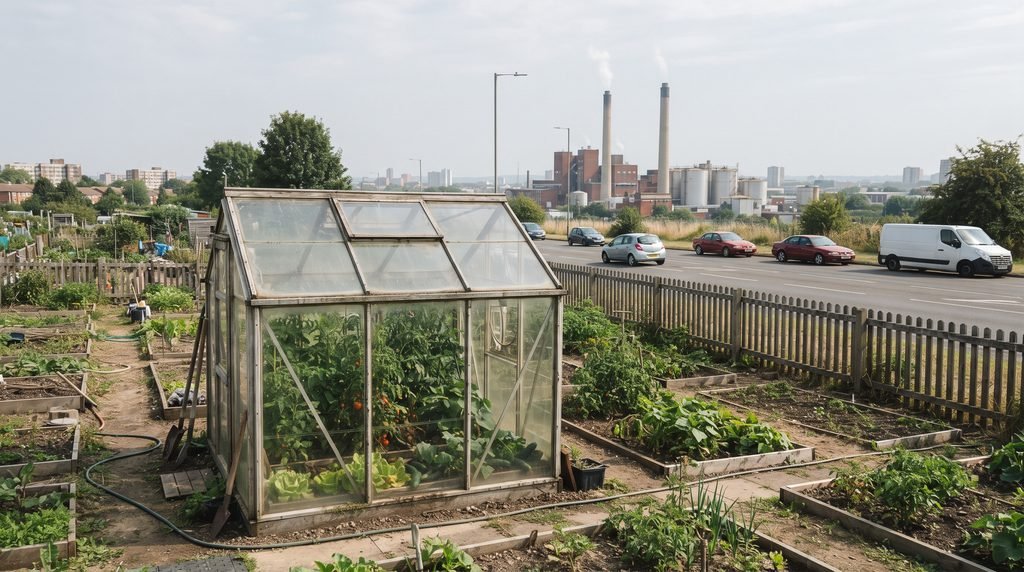
Modern society uses energy to manufacture goods, move people, heat buildings, and produce food. Many of those activities release greenhouse gases. When human additions exceed what natural processes remove, atmospheric concentrations rise.
This is why emissions and concentrations are different concepts. Emissions describe the amount released over a period. Concentration describes how much is present in the atmosphere. A change in the rate of release does not automatically mean the total atmospheric amount starts falling.
Burning Coal, Oil, and Gas Adds Stored Carbon
Fossil fuels contain carbon that was stored underground over geological timescales. Burning these fuels transfers that carbon into the active atmosphere-ocean-land system, largely as carbon dioxide.
Consider a petrol-powered vehicle. Fuel reacts with oxygen during combustion, releasing energy that moves the vehicle and producing carbon dioxide. The vehicle’s direct heat dissipates, while the emitted carbon participates in processes that influence the climate over much longer periods.
The same broad principle applies when fossil fuels supply electricity, industrial heat, or building warmth. The exact emissions depend on the fuel, technology, efficiency, and amount of energy used. Reducing wasted energy can help, but the energy source also matters.
Deforestation Changes Both Carbon Storage and Uptake
Forests contain carbon in trunks, branches, roots, and soils. Clearing or damaging them can release some of that stored carbon. It can also reduce future carbon uptake compared with leaving the ecosystem intact.
The outcome depends on what happens next. Burning vegetation, leaving it to decay, converting land to agriculture, or allowing regrowth produce different carbon pathways. This is one reason a simple tree count cannot fully describe a project’s climate value.
Protecting an established forest and planting new seedlings are also different actions. Existing ecosystems already hold carbon and support complex living communities. New trees need time, suitable conditions, and protection to develop substantial carbon stores.
Agriculture, Industry, and Waste Add Other Emissions
Agriculture can release methane through livestock digestion and certain manure systems, while nitrogen management affects nitrous oxide emissions. Flooded rice cultivation can also produce methane under oxygen-limited conditions.
Industry contributes through energy use and chemical reactions. Cement production, for example, releases carbon dioxide when limestone is processed. Switching the electricity source alone does not eliminate emissions that arise from the chemistry of making a material.
Waste management adds another pathway. Organic material decomposing without sufficient oxygen can generate methane. The climate consequences depend on how waste is prevented, collected, treated, and whether produced gas escapes or is captured.
Fact 3: Different Greenhouse Gases Play Different Roles
Greenhouse gases vary in abundance, how strongly they interact with radiation, and how long their influence lasts. Understanding these differences explains why climate action addresses several gases rather than treating all emissions as identical.
It also prevents misleading comparisons. Calling one gas “more powerful” is incomplete without specifying whether the comparison concerns equal masses, equal numbers of molecules, a particular time period, or total atmospheric warming influence.
Carbon Dioxide Is Central to Long-Term Warming
Carbon dioxide receives substantial attention because human activities release large quantities and its effects persist. After an emission, some carbon is taken up by land and oceans, while some remains in the atmosphere for a long time.
There is no single simple atmospheric lifetime that captures all of this behaviour. Different removal processes operate on different timescales. This makes cumulative emissions important: the total carbon dioxide released over time strongly influences the resulting warming.
An everyday comparison is a financial balance that keeps growing while deposits exceed withdrawals. Slower deposits help, but they do not immediately empty the account. Likewise, reducing annual emissions is progress, even though it does not automatically reverse accumulated atmospheric carbon dioxide.
Methane Has a Stronger Near-Term Influence Per Unit Mass
Methane is a potent greenhouse gas that remains in the atmosphere for a shorter time than the long-lasting portion of a carbon dioxide emission. Its climate importance is particularly strong over shorter evaluation periods.
Major human sources include fossil fuel operations, livestock, waste, and rice cultivation. This creates several opportunities for targeted action, such as identifying leaks or improving the management of organic waste.
Avoid treating methane reductions as a replacement for carbon dioxide reductions. They address different parts of the problem. Cutting methane can limit near-term warming, while reducing carbon dioxide is essential for controlling the long-term accumulation that shapes future temperatures.
Nitrous Oxide Connects Climate Change With Nitrogen Use
Nitrous oxide forms through biological processes in soils and other environments. Human nitrogen inputs can increase emissions, particularly where fertiliser or manure supplies more nitrogen than plants effectively use.
The connection is not simply that all fertiliser instantly becomes greenhouse gas. Soil conditions, weather, timing, application rates, and farming practices affect the outcome. Understanding those details is important when evaluating agricultural solutions.
Nitrous oxide should also not be confused with nitrogen gas, which makes up most of the atmosphere. Similar names do not imply identical molecular behaviour or the same climate role.
Fluorinated Gases Can Matter in Small Quantities
Certain gases used in refrigeration, electrical equipment, and industrial processes have substantial warming effects per unit mass. Their total impact depends on the specific substance, how much escapes, and its atmospheric persistence.
This makes maintenance and disposal important. A cooling appliance has more than one climate connection: electricity use during operation and potential refrigerant leakage over its lifetime. Evaluating only its electricity consumption can miss part of the picture.
The practical lesson is to assess the whole system. Equipment design, refrigerant choice, servicing, and recovery at the end of use can all influence emissions.
Fact 4: Water Vapour and Other Feedbacks Can Amplify Warming
A feedback occurs when an initial change triggers another process that influences the original change. A positive feedback strengthens it, while a negative feedback weakens it. In this scientific usage, “positive” does not mean beneficial.
Feedbacks help explain why the climate response is more complex than calculating the direct effect of one extra quantity of carbon dioxide. The atmosphere, oceans, ice, and ecosystems respond together.
Water Vapour Usually Responds to Initial Warming
Water vapour is an important natural greenhouse gas. As temperatures rise, the atmosphere can sustain more water vapour, provided moisture is available. That additional vapour increases greenhouse warming and amplifies the initial temperature change.
For present-day global warming, water vapour mainly acts as a feedback. Its atmospheric amount adjusts relatively quickly through evaporation, condensation, and precipitation, unlike the long-lasting accumulation associated with carbon dioxide. NASA: How atmospheric water vapour amplifies Earth’s greenhouse effect.
This distinction answers a common question: if water vapour matters so much, why focus on carbon dioxide? A gas that sets off sustained warming can influence how much water vapour the atmosphere contains. Addressing the driver helps constrain the feedback.
Melting Ice Changes How Much Sunlight Is Absorbed
Bright ice and snow reflect sunlight. When they retreat and expose darker ocean or land, more solar energy can be absorbed. That additional absorption can encourage further warming and melting.
Scientists describe surface reflectivity as albedo. You can understand the basic idea by comparing dark and light surfaces in sunlight, although the planetary process involves seasonal changes, cloud cover, and a wide range of landscapes.
This feedback does not mean every location responds at the same rate. Geography matters. Changes in a snow-covered mountain range differ from changes over a polar ocean, even though both involve the relationship between reflectivity and absorbed energy.
Clouds and Ecosystems Add Complexity
Clouds can reflect incoming sunlight and also influence outgoing infrared energy. Their overall effect depends on features such as height, thickness, location, and timing. That makes cloud changes an important area of climate research.
Ecosystems can also affect the response. Heat, drought, fire, and changing growing conditions can influence carbon storage. Thawing frozen ground can allow previously protected organic material to decompose, releasing greenhouse gases.
These interactions create uncertainty about the exact size and timing of some future changes. They do not erase the basic physics of greenhouse warming. A useful distinction is between confidence that a mechanism exists and uncertainty about precisely how strongly every part of the system will respond.
Fact 5: Multiple Types of Evidence Support Human-Caused Warming
Scientists do not identify the enhanced greenhouse effect from one warm afternoon or one computer simulation. The evidence comes from atmospheric measurements, physical experiments, historical records, and observations of changes across the climate system.
The IPCC’s 2023 synthesis assessment concluded that human activities, chiefly greenhouse gas emissions, caused global warming. It reported approximately 1.1°C of global surface warming for 2011–2020 relative to 1850–1900. That is a comparison between specified periods, not a statement of today’s exact temperature. IPCC: Summary for Policymakers headline statements.
Atmospheric Measurements Track Carbon Dioxide
Direct monitoring shows how atmospheric carbon dioxide changes over time. Measurements need careful calibration, consistent methods, and attention to local conditions that could influence a sample.
The well-known record at Mauna Loa is one part of this observing effort. NOAA publishes both Mauna Loa information and global monitoring products, making it possible to distinguish a particular station’s record from a broader atmospheric average. NOAA Global Monitoring Laboratory: Trends in carbon dioxide.
When reading a reported concentration, check whether it is a daily reading, monthly mean, or annual average. Seasonal changes can produce short-term rises and falls even while the long-term trend increases. Comparing equivalent periods is more informative than selecting isolated values.
Oceans, Ice, and Sea Level Provide Independent Clues
Surface thermometers tell only part of the story. Ocean warming, shrinking glaciers, ice-sheet changes, and sea-level rise provide additional evidence of a warming planet. NASA brings these separate observations together in its climate evidence overview. NASA: Evidence of climate change.
The value of multiple indicators is that they test the explanation from different directions. A thermometer problem at one station cannot explain widespread ocean heat accumulation or the behaviour of glaciers across many regions.
No single indicator changes smoothly every year. Weather and natural variability still operate within the longer-term trend. Evaluating several datasets over suitable periods reduces the risk of drawing conclusions from a brief fluctuation.
Natural Factors Do Not Explain the Whole Modern Pattern
The Sun, volcanic eruptions, and natural ocean-atmosphere variability influence climate. Scientists include these influences when investigating temperature changes rather than assuming they do not exist.
However, changes in solar energy do not explain the observed modern warming trend. NASA also describes the pattern of warming near the surface and cooling higher in the atmosphere as evidence consistent with increased greenhouse gases. NASA: Causes of climate change.
The reasoning resembles investigating a practical problem with several possible causes. Each explanation must fit the full set of observations. A factor that explains one short episode may still fail to explain the direction, duration, and wider pattern of long-term change.
Fact 6: The Effects Extend Beyond Higher Temperatures
Global warming changes the background conditions in which weather occurs. Its consequences extend into water supplies, ecosystems, food production, coastal planning, and the reliability of infrastructure.
The impacts vary by location and by people’s ability to prepare. A similar physical hazard can cause very different damage in places with different housing, drainage, resources, or emergency services.
Heat Extremes Become More Concerning
A warmer average shifts the range of temperatures that communities experience. Conditions that used to sit near the hot end of the local record can become more likely as the background climate warms.
The practical concern is often sustained heat, especially when buildings do not cool adequately overnight. Outdoor work, transport systems, electricity demand, and ordinary routines can all become harder to manage.
An average temperature change should therefore not be interpreted as the same small addition to every day’s forecast. Changes in extremes and their duration can matter more for daily life than the annual average alone.
Rainfall, Drought, and Flood Risk Change Unevenly
A warmer climate affects evaporation and atmospheric moisture. Some regions experience greater drying pressures, while heavy precipitation can intensify when suitable weather systems develop. NASA identifies changes in drought, heatwaves, and precipitation among the consequences of climate change. NASA: Effects of climate change.
Flood damage also depends on where people build, how water moves across the land, and whether drainage can cope. Paving over absorbent ground can increase runoff regardless of the broader climate trend.
For that reason, understanding a flood requires both climate context and local details. The same principle applies to drought: rainfall, evaporation, water demand, soil conditions, and management all help determine its consequences.
Rising Seas Create Long-Term Coastal Challenges
Seawater expands as it warms, and melting land ice adds water to the ocean. These processes contribute to sea-level rise. Floating sea ice has a different direct effect because it already displaces water.
A higher sea level changes the starting point for tides and storm surges. Coastal planning must therefore consider the background level as well as the strength of an individual storm.
Communities may need to reassess drainage outlets, coastal roads, water supplies, and the lifespan of buildings. These decisions often involve decades, which is why long-term climate information matters even when today’s shoreline appears familiar.
Wildlife and Food Systems Face Shifting Conditions
Plants and animals respond to temperature, water availability, and seasonal timing. When these change, the relationships among flowering plants, pollinators, breeding animals, and food sources can be disrupted.
Agriculture faces similarly connected pressures. A longer growing season may help certain crops in some places, but excessive heat, unreliable water, and changing pest pressures can offset potential benefits.
The outcome depends on the crop, region, management, and scale of warming. A single claim that “warming helps plants” overlooks the conditions plants need beyond carbon dioxide, including suitable temperatures, nutrients, and water.
Fact 7: Reducing Emissions Can Limit Further Warming
The enhanced greenhouse effect is connected to actions people can change. Energy systems, transport, food production, material use, and land management all offer ways to reduce the gases being added to the atmosphere.
Mitigation means reducing emissions or increasing greenhouse gas removal. Adaptation means adjusting to climate impacts. Both are useful, but they serve different purposes. A flood barrier can reduce local damage without reducing the greenhouse gases driving global warming.
Cleaner Energy and Efficiency Work Together
Reducing unnecessary energy demand lowers the amount of energy that must be supplied. Insulation, efficient equipment, sensible building design, and better industrial processes can contribute, depending on local conditions.
Changing the energy source addresses another part of the problem. Electricity produced with low greenhouse gas emissions can support cleaner transport, heating, and manufacturing when suitable technologies replace fossil fuel use.
Good decisions examine the full service being provided. The goal is comfortable homes, mobility, and useful products with fewer emissions. Simply buying more equipment does not guarantee a better outcome if it adds consumption without replacing a more polluting activity.
Transport Solutions Depend on Real Travel Needs
Walking, cycling, public transport, shared journeys, and electric vehicles can each play a role. Their suitability depends on distance, accessibility, safety, available infrastructure, and the electricity system.
A person living near reliable public transport faces different choices from someone in a remote area. Effective climate advice recognises those constraints instead of assuming everyone can make the same change immediately.
At the community level, planning can make lower-emission choices easier. Locating homes near services and providing safe transport options changes what is practical for many people at once.
Protecting Ecosystems Supports Emissions Reduction
Protecting forests, peatlands, and other carbon-rich ecosystems can help avoid emissions and preserve carbon stores. Restoration can provide further benefits when it suits the location and is managed over time.
However, carbon storage in living systems can be vulnerable to fire, drought, disease, and future land-use changes. Claims about offsetting emissions should therefore explain how storage is measured and protected.
Nature protection is valuable in its own right, including for wildlife and water regulation. Its climate contribution is strongest when paired with direct cuts in fossil fuel emissions, rather than used to justify unlimited continued releases.
Methane and Waste Deserve Focused Attention
Identifying leaks, improving equipment maintenance, preventing food waste, and managing organic material can address emissions that might otherwise be overlooked. These actions require measurement and follow-through, not just broad promises.
For a household, avoiding wasted food can begin with planning portions and using what is already available. For an organisation, the equivalent might be tracking waste sources and correcting purchasing or storage problems.
The broader lesson is to connect action with a specific emissions pathway. A clear explanation of what changes and why it reduces emissions is more useful than an environmental label without supporting detail.
Common Misunderstandings About the Enhanced Greenhouse Effect
Climate terms often appear together, making it easy to confuse processes that are related but distinct. Clearing up a few common misunderstandings makes the whole subject easier to understand.
It Is Not the Same as the Ozone Hole
The ozone layer helps protect life from ultraviolet radiation. Ozone depletion concerns changes in that protective layer, while the enhanced greenhouse effect concerns changes in Earth’s energy balance involving infrared radiation.
There are connections between atmospheric chemistry and climate, and some substances influence both. Nevertheless, a hole in the ozone layer is not the main explanation for modern global warming.
Remember the different questions each topic answers. Ozone protection concerns how much harmful ultraviolet radiation reaches the surface. Greenhouse warming concerns the balance of energy entering and leaving the climate system.
A Garden Greenhouse Works Differently
A garden greenhouse warms partly because its enclosure limits the exchange of warm indoor air with cooler outdoor air. Sunlight enters and warms surfaces inside, but ventilation strongly influences how much that warmth builds up.
Earth has no glass roof preventing air from escaping into an outside atmosphere. Its greenhouse effect relies on radiative processes involving atmospheric gases, alongside the wider climate system’s movement of heat.
The shared name is helpful for introducing warming, but the mechanisms are not identical. Opening a greenhouse vent is therefore not an accurate model for solving planetary greenhouse warming.
Cold Weather Does Not Disprove Global Warming
Weather describes short-term conditions. Climate describes longer-term patterns and their variability. A cold day or snowy week can occur within a warming global climate.
Think about the difference between one shopping receipt and a year’s spending pattern. A single low bill does not show that annual spending has fallen. In the same way, a local weather event cannot establish the direction of global temperature change.
The useful questions concern place, period, and scale. Is the claim about one town, a continent, or the planet? Does it compare days, years, or decades? Matching the evidence to the claim avoids many misleading arguments.
Small Atmospheric Concentrations Can Have Large Effects
Carbon dioxide makes up a small fraction of the atmosphere, but abundance alone does not determine a substance’s influence. Its ability to interact with infrared radiation is what makes it climatically important.
Nitrogen and oxygen dominate the air, yet their ordinary molecular forms do not absorb Earth’s infrared radiation in the same way as the main greenhouse gases. Molecular properties matter alongside quantity.
Similarly, carbon dioxide can be both necessary for photosynthesis and a driver of warming when its concentration rises. A substance can perform a useful biological role while creating problems when its amount changes.
Frequently Asked Questions
What Is the Enhanced Greenhouse Effect in One Sentence?
The enhanced greenhouse effect is the human-driven strengthening of Earth’s natural greenhouse effect, mainly through increased greenhouse gas concentrations that alter heat loss to space and cause warming. This definition identifies the cause, the mechanism, and the result without suggesting that heat becomes permanently trapped.
What Is the Difference Between Global Warming and Climate Change?
Global warming refers to the long-term rise in global average surface temperature. Climate change is broader and includes shifts in rainfall, extremes, ice, oceans, and seasonal conditions. The enhanced greenhouse effect is a major mechanism driving current warming, while climate change describes the wider changes that follow and interact with it.
Is the Enhanced Greenhouse Effect Entirely Caused by Carbon Dioxide?
No. Methane, nitrous oxide, and certain industrial gases also contribute. Water vapour amplifies warming mainly as a feedback. Carbon dioxide remains central because of the scale of human emissions and the long-lasting influence of accumulated releases. Understanding the complete problem requires attention to several gases and their different properties.
Can We Remove the Entire Greenhouse Effect?
Removing the natural greenhouse effect would be undesirable because it helps maintain Earth’s habitable conditions. The practical goal is to limit the additional human influence. That means reducing emissions and managing unavoidable residual emissions, while protecting people and ecosystems from changes already occurring.
Will Temperatures Immediately Return to Normal if Emissions Stop?
No immediate return to pre-industrial conditions should be expected. Reaching net-zero carbon dioxide is necessary to approximately halt further carbon-dioxide-driven warming, while changes in other climate influences also matter. Some responses, including sea-level change, continue over much longer timescales. Stopping further damage and reversing existing changes are different challenges.
Is There Still a Reason to Act if Warming Has Already Happened?
Yes. Future risks depend on how much further warming occurs, so preventing additional emissions remains meaningful. Climate action is not an all-or-nothing exercise with a single moment after which every effort becomes useless. Earlier and deeper reductions can limit the scale of future change and reduce the burden of adaptation.
Turn Your Understanding Into a Practical Next Step
Understanding what is the enhanced greenhouse effect begins with a clear distinction: natural greenhouse warming supports life, while human activities are strengthening that process and changing the climate. The evidence connects rising greenhouse gas concentrations with an energy imbalance and a warming Earth.
You can use that understanding whenever you assess a climate claim. Ask which gas or process is involved, what evidence supports the statement, which time period is being discussed, and whether a proposed solution addresses emissions or adaptation. Those questions turn a confusing headline into something you can evaluate.
Now choose one action you can follow through on this week. Review where your household or workplace wastes energy, reduce avoidable food waste, investigate a realistic lower-emission travel option, or support a community project that makes cleaner choices more accessible. Choose something specific enough that you can tell whether it happened.
Save this guide for future reference, share it with someone who wants a clear climate explanation, and leave a comment with the question you still want answered. Better understanding becomes more useful when it leads to an informed decision—and your next decision can start today.