Growing your own vegetables, herbs, flowers, and seedlings has never been more rewarding. If you’ve been looking for an affordable way to extend your growing season while adding a charming feature to your garden, building a DIY greenhouse with old windows is one of the best projects you can take on. Instead of throwing away old wooden windows, you can transform them into a beautiful, eco-friendly greenhouse that saves money and reduces waste.
Whether you’re an experienced gardener or a complete beginner, this guide will show you everything you need to know about planning, designing, and building a greenhouse using reclaimed windows. Along the way, you’ll discover practical tips, common mistakes to avoid, and ideas to make your greenhouse both functional and visually appealing.
Why Build a DIY Greenhouse with Old Windows?
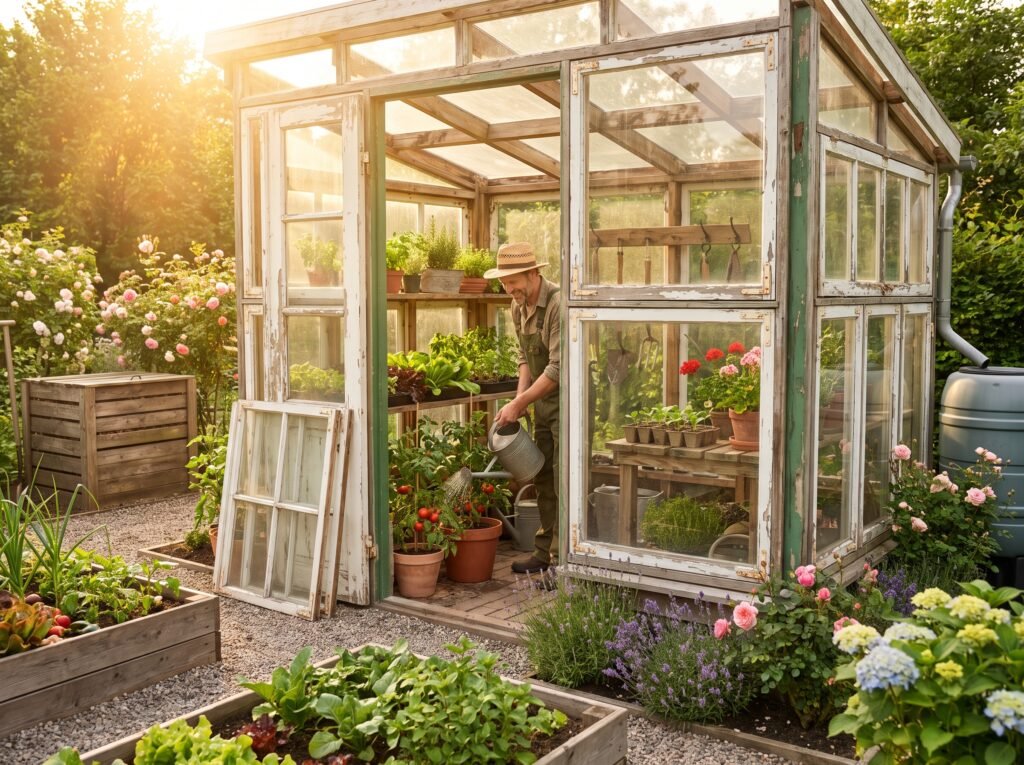
A DIY greenhouse with old windows is much more than a weekend woodworking project. It combines sustainability, creativity, and gardening into one rewarding experience. Old windows, especially those with wooden frames, can often be found at salvage yards, renovation sites, recycling centers, or even in your own garage. Rather than allowing these materials to end up in a landfill, you can give them a second life.
Unlike many inexpensive plastic greenhouses, reclaimed windows provide a sturdy structure that can last for years when properly maintained. The glass allows sunlight to enter while trapping heat, creating an ideal environment for growing plants throughout much of the year.
Building your own greenhouse also allows complete customization. You decide the size, shape, roof style, shelving, ventilation, and overall appearance. Every greenhouse becomes unique because every collection of old windows is different.
Perhaps the greatest advantage is the sense of accomplishment. Watching vegetables grow inside a greenhouse you built with your own hands is incredibly satisfying and can inspire a lifelong passion for gardening.
DIY Greenhouse with Old Windows – Build an Affordable Garden Paradise Today
If you’ve ever dreamed of having a greenhouse but assumed it would cost thousands of dollars, you’ll be pleasantly surprised. A DIY greenhouse with old windows can often be built for a fraction of the cost of a commercial greenhouse.
Many homeowners already have unused windows stored away. Others can source reclaimed windows at little or no cost from local building supply recyclers, classified ads, or renovation projects. By combining these reclaimed materials with basic lumber and hardware, you can create a durable greenhouse without exceeding your budget.
This project is perfect for gardeners who value sustainability, enjoy DIY projects, and want a greenhouse with timeless character. Instead of looking like a standard kit greenhouse, an old-window greenhouse has personality, history, and charm that complements almost any backyard.
Whether your goal is growing tomatoes earlier in spring, protecting delicate herbs during autumn, or nurturing exotic plants year-round, a homemade greenhouse offers endless possibilities.
Benefits of Building a Greenhouse from Old Windows
One of the biggest reasons gardeners choose reclaimed windows is affordability. Commercial greenhouses often cost anywhere from several hundred to several thousand dollars. Building your own can reduce costs dramatically while providing similar functionality.
Another important benefit is environmental sustainability. Every reused window helps reduce landfill waste and lowers the demand for newly manufactured construction materials. Reclaimed building materials also have a much smaller environmental footprint than producing new glass and frames.
A greenhouse made from vintage windows also becomes a beautiful focal point in your garden. Many older windows feature decorative wooden frames, divided panes, and unique architectural details that simply cannot be replicated by modern greenhouse kits.
Functionality is another major advantage. The glass captures solar energy, warming the interior naturally during daylight hours. This creates an ideal microclimate for vegetables, flowers, herbs, and seedlings. Gardeners can start plants earlier in spring, continue harvesting later into autumn, and even grow certain crops throughout winter with proper insulation.
Building the structure yourself also allows complete flexibility. Need taller walls for climbing cucumbers? Prefer extra ventilation? Want built-in potting benches? Everything can be customized according to your gardening style.
Why Old Windows Are Perfect for Greenhouse Construction
Glass has been used in greenhouses for centuries because it transmits sunlight exceptionally well. Unlike some plastics that become cloudy over time, quality glass remains clear for decades if properly maintained.
Older wooden windows are especially attractive because they are often built from high-quality timber that has already proven its durability. Many vintage windows feature thick frames that provide excellent structural strength.
Another advantage is availability. Home renovations frequently generate windows that are still perfectly usable. Salvage stores, Habitat for Humanity ReStores, antique shops, local online marketplaces, and demolition projects are excellent places to find affordable windows.
Each reclaimed window contributes character to your greenhouse. Instead of a uniform appearance, you’ll create an artistic structure filled with history and individuality.
Planning Your DIY Greenhouse with Old Windows
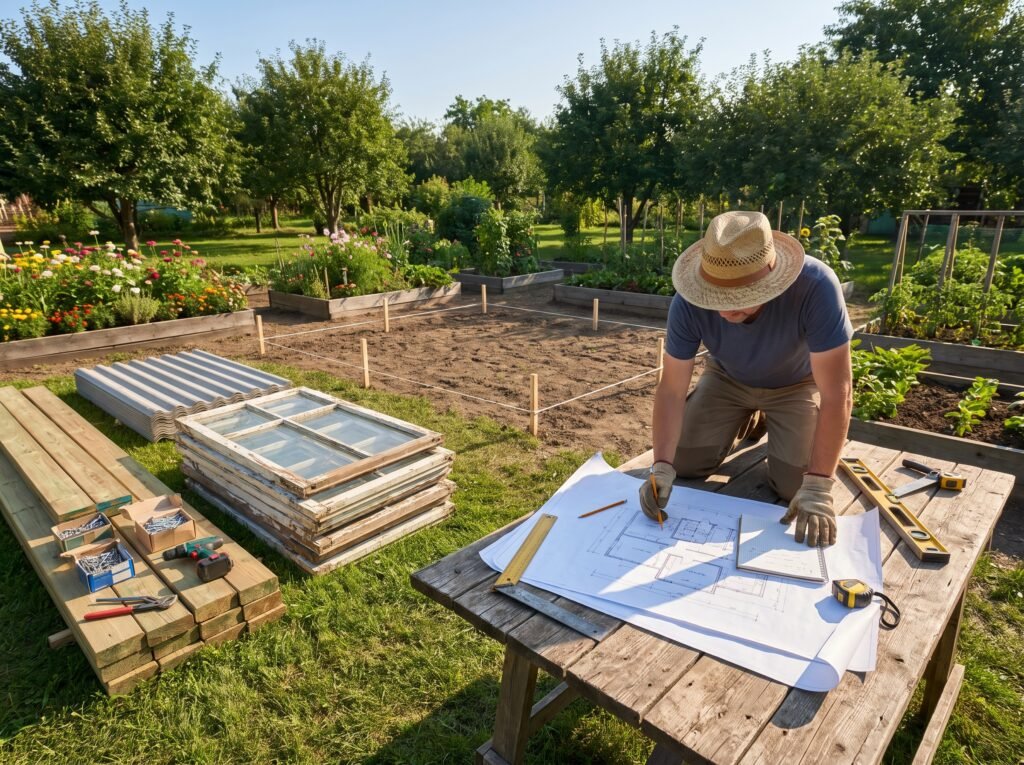
Proper planning determines whether your greenhouse becomes an enjoyable long-term investment or an ongoing maintenance challenge.
Before collecting materials, spend time deciding exactly how you intend to use your greenhouse.
Ask yourself questions like:
- Will you grow vegetables year-round?
- Are you primarily starting seedlings?
- Will large potted plants need space?
- Do you need room for shelving?
- Should there be space for a workbench?
- Will electricity or water be added later?
Your answers influence every design decision, including size, location, foundation, ventilation, and roofing.
Sketch several layouts before beginning construction. Measure each reclaimed window carefully because no two windows are likely to be identical.
Creating accurate measurements early prevents expensive mistakes later.
Choosing the Perfect Size
Many first-time builders underestimate how quickly greenhouses fill with plants.
Although a compact greenhouse may seem sufficient initially, gardeners often wish they had built something larger after a single growing season.
Popular greenhouse sizes include:
Small Greenhouse (6×8 feet)
Ideal for beginners with limited garden space. Suitable for herbs, seed trays, lettuce, and several vegetable containers.
Medium Greenhouse (8×10 feet)
Provides enough room for tomatoes, peppers, cucumbers, shelving, and comfortable movement.
Large Greenhouse (10×12 feet or larger)
Perfect for dedicated gardeners growing multiple crops year-round while maintaining work areas and storage.
Whenever possible, build slightly larger than your current needs. Gardening hobbies tend to expand naturally.
Finding the Best Location
Location has a tremendous impact on greenhouse performance.
Your greenhouse should receive at least six to eight hours of direct sunlight every day. Morning sunlight is especially valuable because it warms the greenhouse early and reduces moisture buildup that can encourage fungal diseases.
Avoid placing the greenhouse beneath large trees. Falling branches, heavy shade, and excessive leaf litter create unnecessary maintenance.
Choose level ground with excellent drainage. Standing water around the foundation may eventually damage wooden framing.
If possible, position the longest side facing south (or southeast in some climates). This orientation maximizes sunlight exposure throughout the growing season.
Also consider convenience. A greenhouse located close to your house encourages more frequent visits, easier watering, and faster harvesting.
Nearby access to electricity and water also makes future upgrades much easier.
Understanding Sunlight Requirements
Plants require light for photosynthesis, and even the most beautiful greenhouse cannot compensate for poor sunlight.
Observe your intended location throughout the day.
Notice:
- Morning shade
- Afternoon shade
- Shadows from fences
- Neighboring buildings
- Trees that may grow larger over time
Seasonal sunlight changes should also be considered. Winter sun sits lower in the sky, making nearby obstructions more significant than during summer.
A bright location dramatically improves plant growth while reducing heating costs.
Essential Materials You’ll Need
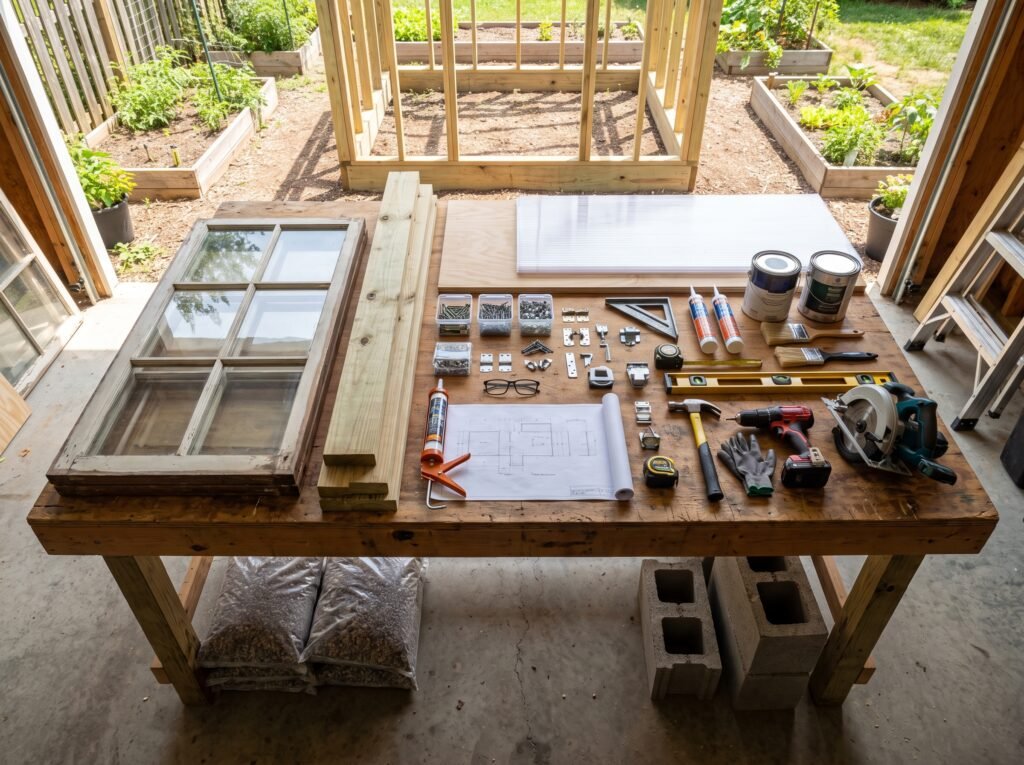
One reason people love building a DIY greenhouse with old windows is that many materials are inexpensive or already available.
The exact list depends on your design, but most projects require:
Old Windows
Try collecting windows of similar thickness. Minor size differences can be accommodated during framing.
Pressure-Treated Lumber
Use treated lumber for the base where moisture exposure is highest. Standard construction lumber can often be used for upper framing.
Plywood
Useful for roof framing, door construction, and structural reinforcement.
Screws and Exterior Fasteners
Exterior-grade screws resist rust much better than ordinary screws.
Roofing Material
Options include:
- Polycarbonate panels
- Corrugated clear roofing
- Additional reclaimed windows
- Tempered glass
- Twin-wall panels
Hinges
Needed for doors, roof vents, and ventilation windows.
Weatherproof Sealant
Silicone sealant prevents drafts while protecting against rain infiltration.
Exterior Paint or Wood Preservative
Protects wooden frames from moisture damage.
Gravel
Provides drainage beneath foundations.
Concrete Blocks or Footings
Support the greenhouse structure while preventing movement.
Door Hardware
Handles, latches, locks, and weather stripping improve usability.
Tools Required
Fortunately, most DIY enthusiasts already own many of the necessary tools.
Common tools include:
- Tape measure
- Circular saw
- Power drill
- Impact driver
- Carpenter’s square
- Level
- Hammer
- Screwdrivers
- Safety glasses
- Work gloves
- Paint brushes
- Caulking gun
- Ladder
Having quality tools makes construction significantly easier and improves overall accuracy.
Inspecting Old Windows Before Use
Not every reclaimed window belongs in your greenhouse.
Carefully inspect every piece before building.
Check for:
- Broken glass
- Rotting wooden frames
- Loose joints
- Severe warping
- Missing glazing
- Large cracks
Minor cosmetic imperfections are perfectly acceptable and often add charm.
However, structural damage should be repaired before installation.
Clean each window thoroughly, remove loose paint, sand rough areas, and repaint if necessary. This preparation greatly extends the greenhouse’s lifespan.
Deciding on a Foundation
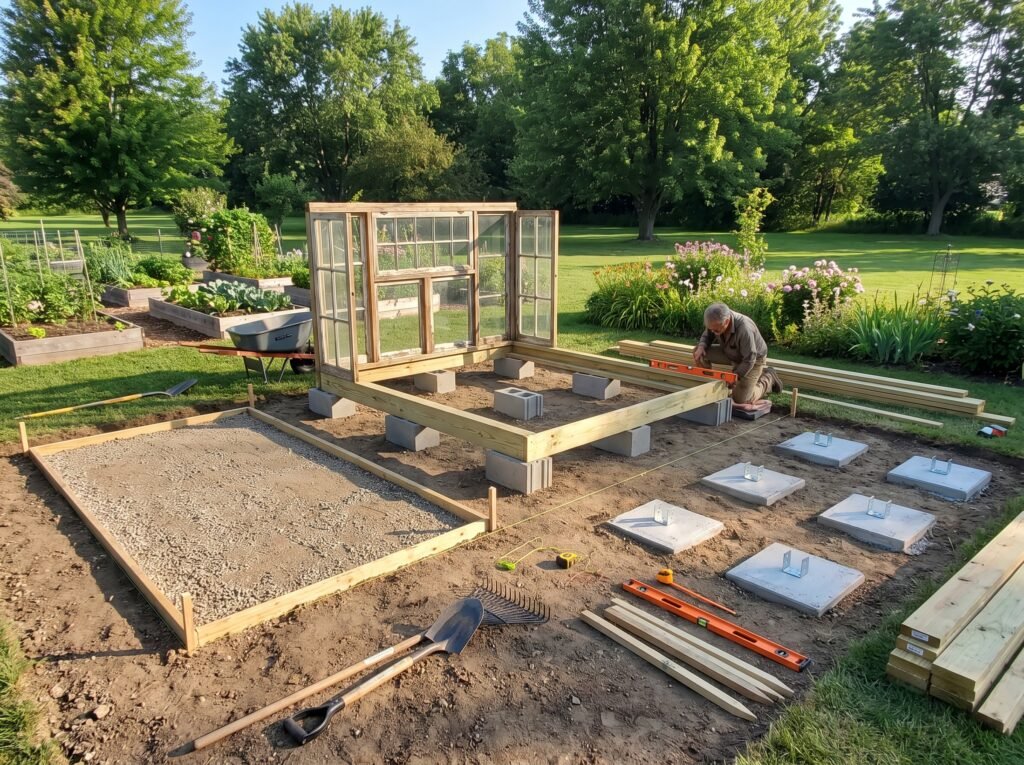
A greenhouse is only as strong as its foundation. Even lightweight structures require a stable base to prevent shifting, sagging, or water damage over time.
There are several foundation options, each with its own advantages depending on your budget, soil conditions, and the size of your greenhouse.
A simple gravel foundation is one of the easiest and most affordable choices. It provides excellent drainage, helping to prevent water from pooling around the base of the greenhouse. This option works well for smaller structures and can often be completed in a single day.
Concrete blocks are another popular option because they create a level, stable base while keeping the wooden frame off the ground, reducing the risk of rot. They’re relatively inexpensive and suitable for most DIY greenhouse projects.
For larger or permanent greenhouses, poured concrete footings offer the greatest strength and durability. Although they require more time and effort to install, they provide a solid foundation that can withstand strong winds and heavy loads.
No matter which foundation you choose, take the time to level the site carefully. A flat, stable base will make the entire building process smoother and ensure your old windows fit together properly.
Best Vegetables to Grow in a DIY Greenhouse with Old Windows
One of the greatest rewards of building a DIY greenhouse with old windows is the ability to grow fresh produce for much longer than a traditional outdoor garden allows. The protected environment creates warmer temperatures, shields plants from harsh weather, and gives you greater control over growing conditions.
Tomatoes are among the most popular greenhouse crops because they thrive in warm, sunny environments. Inside a greenhouse, tomatoes generally produce healthier plants and higher yields while suffering less damage from heavy rain and strong winds. Providing stakes or trellises allows them to grow vertically and saves valuable space.
Peppers are another excellent choice. Sweet peppers, chili peppers, and bell peppers all appreciate the consistent warmth that a greenhouse provides. They often mature earlier and continue producing fruit later into autumn than outdoor plants.
Cucumbers flourish in greenhouse conditions as well. Vertical supports help vines climb upward, improving airflow while making harvesting easier. The warm temperatures encourage rapid growth and continuous production.
Leafy greens such as lettuce, spinach, kale, Swiss chard, and arugula perform exceptionally well during cooler months. These crops allow you to enjoy fresh salads even when outdoor temperatures begin to drop.
Other vegetables well suited for greenhouse growing include carrots, radishes, beets, spring onions, beans, peas, broccoli, cauliflower, cabbage, eggplant, zucchini, celery, and various Asian greens.
By rotating crops throughout the year, your greenhouse can remain productive in every season.
Best Herbs to Grow
Fresh herbs are among the easiest and most rewarding greenhouse crops.
Basil thrives in warm temperatures and produces abundant leaves throughout the growing season. Mint grows vigorously but should be kept in containers to prevent spreading.
Parsley, cilantro, dill, oregano, rosemary, thyme, sage, chives, and lemon balm also perform exceptionally well inside a greenhouse.
Growing herbs close to your kitchen means you’ll always have fresh flavors available for cooking while saving money on store-bought herbs.
Best Fruits to Grow
Although many people associate greenhouses primarily with vegetables, they are also ideal for growing delicious fruits.
Strawberries produce sweet berries earlier than outdoor plants while remaining protected from birds and heavy rain.
Blueberries can thrive in containers if provided with acidic soil.
Dwarf citrus trees, including lemons and limes, appreciate greenhouse warmth in cooler climates.
Other excellent greenhouse fruits include figs, grapes, raspberries, blackberries, melons, passion fruit, and even certain tropical fruits in heated greenhouses.
The stable environment often results in healthier plants and higher-quality fruit.
Beautiful Flowers for Your Greenhouse
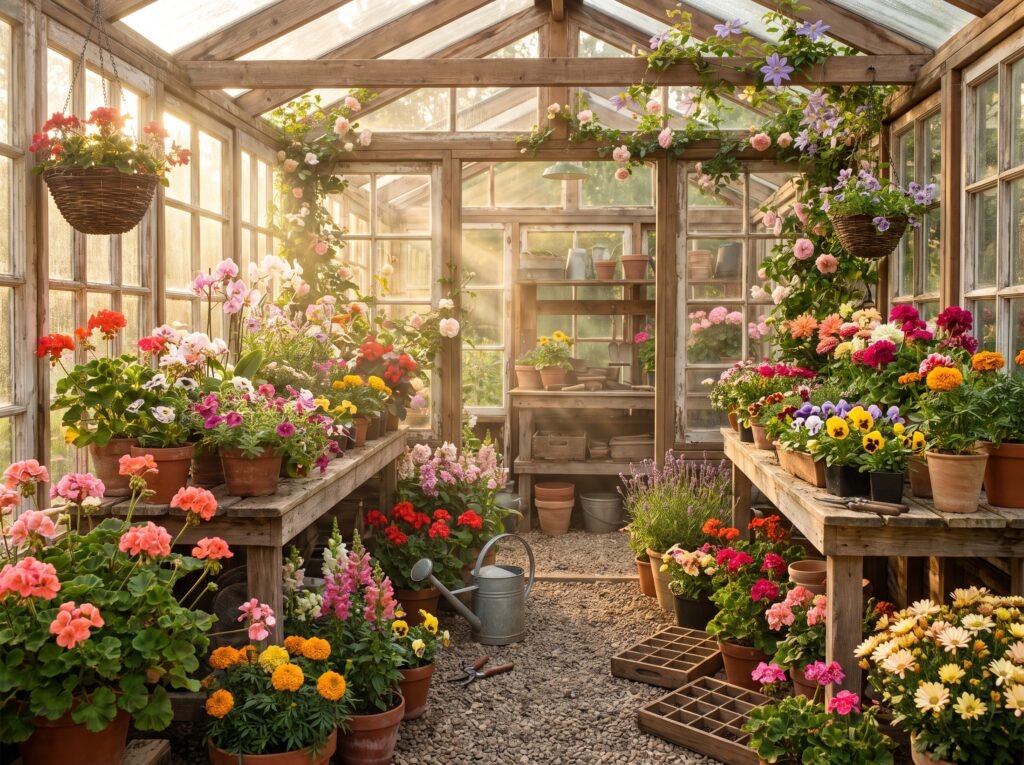
Flowers add color, fragrance, and valuable pollinator support to your greenhouse.
Popular choices include:
- Geraniums
- Petunias
- Begonias
- Marigolds
- Pansies
- Orchids
- Lavender
- Snapdragons
- Zinnias
- Dahlias
- Roses
- Chrysanthemums
Growing flowering plants alongside vegetables also creates an inviting atmosphere while attracting beneficial insects when greenhouse doors are open.
Seasonal Greenhouse Care
A greenhouse requires different care throughout the year. Understanding seasonal maintenance ensures healthy plants regardless of the weather outside.
Spring
Spring is one of the busiest gardening seasons. Begin sowing vegetable seeds, transplant young seedlings, and inspect your greenhouse after winter. Clean the glass thoroughly to maximize sunlight, repair any damaged seals, and check that vents open and close properly.
This is also the ideal time to organize shelves, disinfect pots, and prepare irrigation systems before rapid plant growth begins.
Summer
Summer brings intense heat, making ventilation the top priority.
Open roof vents and side windows early in the morning to encourage airflow. Shade cloth can help protect delicate plants from scorching sunlight during extremely hot afternoons.
Water more frequently, monitor humidity, and remove any dead leaves to reduce disease risk.
Check for pests regularly, as warm temperatures encourage rapid insect reproduction.
Autumn
Autumn is the perfect time to prepare your greenhouse for cooler weather.
Harvest remaining summer crops and replace them with cool-season vegetables like spinach, lettuce, kale, and broccoli.
Inspect weather stripping around doors and windows to prevent heat loss. Clean gutters and remove fallen leaves from around the greenhouse foundation.
Reduce watering frequency as temperatures decline.
Winter
Winter maintenance focuses on protecting plants from freezing temperatures.
Seal drafts, monitor overnight temperatures, and consider adding bubble wrap insulation to interior walls for additional warmth.
Use greenhouse heaters only when necessary and maintain good ventilation to prevent excessive humidity.
Continue checking for pests, as enclosed environments can still support insect populations even during winter.
Routine Greenhouse Maintenance Tips
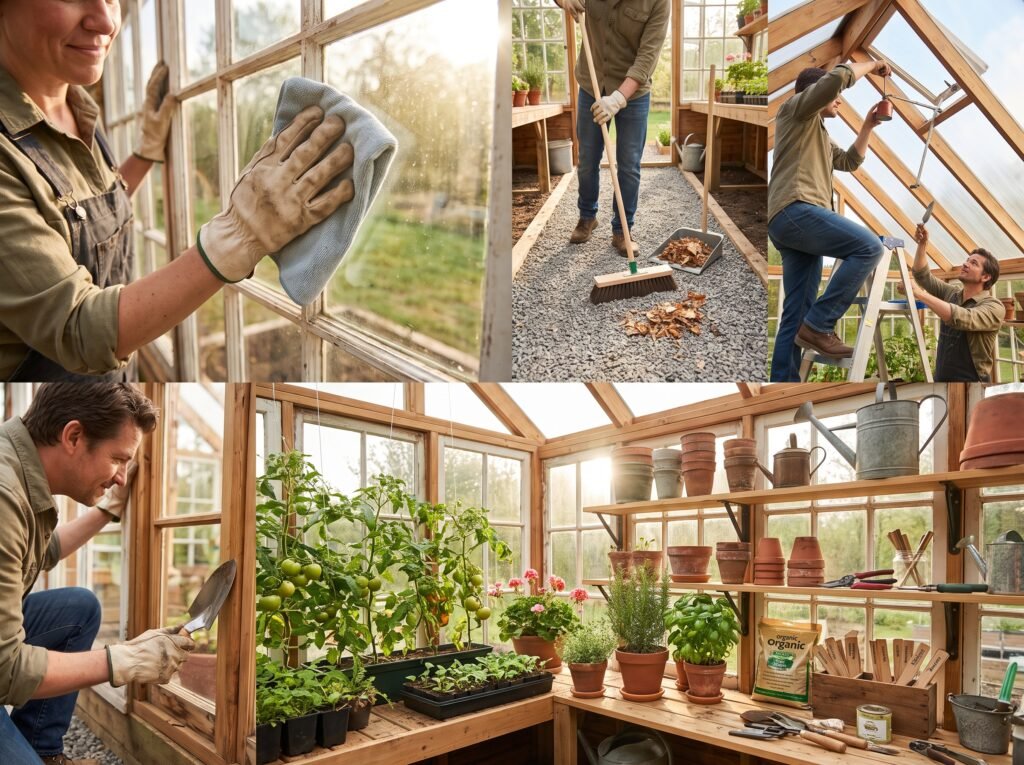
A well-maintained greenhouse lasts longer and produces healthier plants.
Wash the glass several times each year to remove dirt, pollen, and algae that reduce sunlight penetration.
Inspect wooden frames annually for signs of rot, peeling paint, or insect damage. Repaint or reseal exposed wood whenever necessary.
Lubricate hinges, door latches, and vent mechanisms to ensure smooth operation.
Keep weeds under control both inside and outside the greenhouse. Weeds compete for nutrients and often harbor pests.
Clean benches, pots, trays, and gardening tools regularly to minimize disease transmission between plants.
Monitor temperature and humidity using reliable thermometers and hygrometers.
Simple maintenance performed consistently prevents expensive repairs later.
Common Mistakes to Avoid
Even experienced gardeners occasionally make mistakes. Learning from common problems helps your greenhouse remain productive from the beginning.
One of the most frequent mistakes is selecting a poor location. Too much shade dramatically reduces plant growth regardless of how well the greenhouse is built.
Another common error is poor ventilation. Without adequate airflow, excessive heat and humidity create ideal conditions for fungal diseases and stressed plants.
Many first-time builders also underestimate the importance of a strong foundation. Uneven ground eventually causes windows to shift, doors to stick, and structural problems to develop.
Using untreated lumber where it contacts the ground often results in premature wood rot. Pressure-treated lumber or naturally rot-resistant wood significantly extends the lifespan of your greenhouse.
Overcrowding plants reduces air circulation and increases disease risk. Leave adequate spacing so each plant receives sufficient sunlight and airflow.
Many gardeners also overwater greenhouse plants. Because rainfall does not enter naturally, watering habits should be based on soil moisture rather than a fixed schedule.
Ignoring pests is another costly mistake. Aphids, whiteflies, spider mites, and fungus gnats multiply rapidly inside warm greenhouses. Regular inspections help identify problems before they become severe.
Finally, skipping routine maintenance often leads to expensive repairs that could have been prevented with simple inspections.
DIY Greenhouse Cost Breakdown
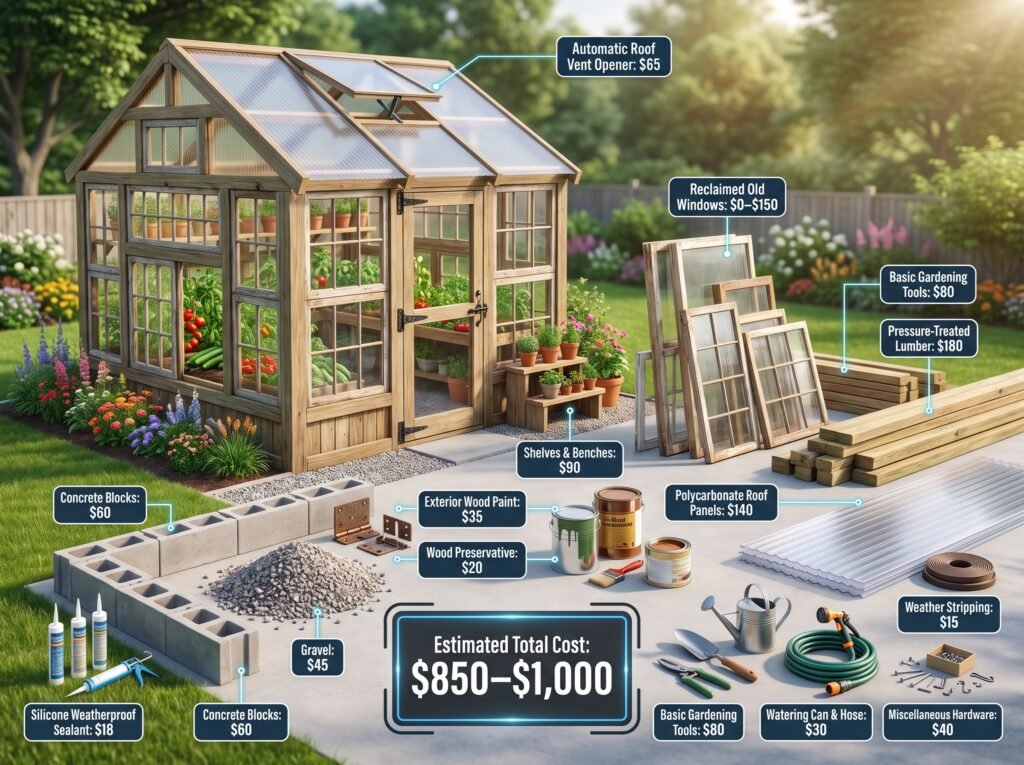
One of the biggest advantages of building a DIY greenhouse with old windows is affordability.
A small greenhouse using mostly reclaimed materials may cost between $250 and $600, depending on the quality of the windows and lumber.
Medium-sized greenhouses generally range from $600 to $1,200, especially if new roofing panels, shelving, and automatic vents are added.
Larger custom greenhouses may cost $1,200 to $2,500 or more, which is still often significantly less than purchasing a comparable commercial greenhouse.
Typical expenses include reclaimed windows, treated lumber, roofing material, screws, hinges, sealant, foundation materials, paint, shelving, and optional upgrades such as irrigation systems or automatic vent openers.
Using recycled materials whenever possible can reduce costs dramatically while making the project more environmentally friendly.
Frequently Asked Questions
Is a DIY greenhouse with old windows worth building?
Absolutely. It provides an affordable, environmentally friendly way to extend the growing season while recycling valuable building materials.
How long will an old-window greenhouse last?
With proper maintenance, treated wood, and regular repainting, a well-built greenhouse can last 15 to 30 years or even longer.
Can beginners build a greenhouse using old windows?
Yes. With careful planning, basic carpentry tools, and patience, beginners can successfully complete this project over several weekends.
What is the best roof material?
Polycarbonate panels are often recommended because they are lightweight, durable, and provide excellent insulation. Many builders combine them with reclaimed glass walls.
Do I need planning permission?
Regulations vary by location. Always check your local building codes and homeowner association requirements before beginning construction.
Can I use different-sized windows?
Yes. Most DIY greenhouses use a mixture of reclaimed windows. Careful measuring and custom framing allow different sizes to fit together successfully.
How do I keep my greenhouse warm during winter?
Seal all drafts, insulate with bubble wrap if needed, maximize sunlight exposure, and use a greenhouse heater during extremely cold weather if necessary.
Conclusion
Building a DIY greenhouse with old windows is far more than a simple construction project—it is an investment in sustainable living, home gardening, and long-term self-sufficiency. By transforming reclaimed windows into a functional greenhouse, you reduce waste, save money, and create a beautiful outdoor feature that enhances your property.
With proper planning, a solid foundation, quality materials, and regular maintenance, your greenhouse can provide fresh vegetables, herbs, fruits, and flowers throughout much of the year. Whether you’re starting seeds in early spring, harvesting tomatoes in summer, or growing leafy greens during winter, the greenhouse becomes an essential part of your gardening journey.
Every reclaimed window tells a story, and together they create a greenhouse that is both practical and full of character. The satisfaction of harvesting healthy, homegrown produce from a structure you built yourself is hard to match.
Start Building Your DIY Greenhouse Today!
There’s never been a better time to begin your own DIY greenhouse with old windows. Start collecting reclaimed windows, sketch your design, gather your materials, and take the first step toward creating an affordable, eco-friendly gardening space.
Don’t wait for the perfect season—every day you delay is another opportunity to grow your own fresh vegetables, herbs, fruits, and flowers. Build a greenhouse that reflects your creativity, supports sustainable living, and provides years of rewarding harvests.
Ready to transform old windows into a thriving garden? Start your DIY greenhouse project today and enjoy the benefits of year-round gardening, lower costs, and a greener future!