Strawberries are one of the most rewarding fruits to grow at home, but anyone who has tried growing them outdoors knows that weather, pests, birds, disease, and unpredictable temperatures can make the harvest disappointing. This naturally leads many gardeners to ask, can you grow strawberries in a greenhouse and expect a better crop? The answer is yes. In fact, a greenhouse can create an excellent growing environment for strawberries and may allow you to enjoy healthier plants, earlier fruit, and a longer harvesting season.
Table of Contents
When strawberries are grown inside a greenhouse, you have far more control over temperature, moisture, watering, and protection from harsh weather. The protected environment can be particularly useful in cooler climates where outdoor strawberry plants may struggle to produce ripe fruit early in the year. A greenhouse can also help protect flowers and developing berries from heavy rain, strong winds, frost, and some common garden pests.
However, growing strawberries under glass or polycarbonate is not simply a matter of placing a few plants in a greenhouse and waiting for fruit. Strawberries still need plenty of light, suitable soil or compost, good airflow, regular watering, and careful feeding. Pollination is another important consideration because natural pollinators may not always enter your greenhouse when the flowers are open.
Understanding how to create the right conditions makes a significant difference. Whether you have a large greenhouse, a small greenhouse, a mini greenhouse, or a simple sheltered growing structure, strawberries can be a productive and attractive addition to your growing space.
Can You Grow Strawberries in a Greenhouse? Yes, and Here Is Why It Works
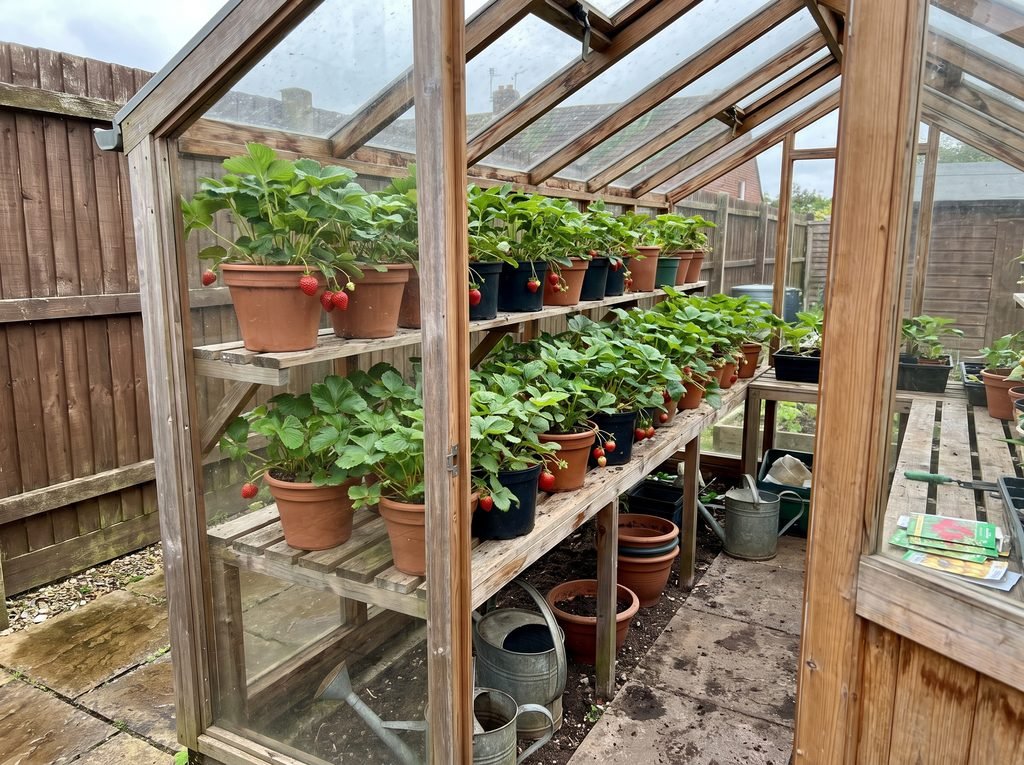
The simple answer to can you grow strawberries in a greenhouse is a confident yes. Strawberries are well suited to protected growing because they respond well to stable temperatures, good sunlight, and protection from excessive moisture. A greenhouse gives you an opportunity to extend the natural growing season and reduce some of the problems that can affect plants grown directly in the garden.
One of the biggest advantages is temperature control. Strawberries are relatively hardy plants, but their flowers can be damaged by frost. When temperatures fall sharply outdoors, an unprotected strawberry plant may suffer flower damage that reduces the number of berries it can produce. A greenhouse provides a physical barrier that can reduce the impact of cold conditions.
A greenhouse can also provide protection from heavy rain. Strawberries dislike sitting in consistently wet conditions because excess moisture can contribute to fungal diseases and fruit rot. Inside a greenhouse, the grower has more control over watering and can keep leaves and fruit drier than they might be in an exposed outdoor bed.
Another benefit is protection from birds and some insects. Ripe strawberries are extremely attractive to birds, and anyone who has grown them outdoors has probably experienced the frustration of checking a plant one day and finding that the ripest berry has disappeared. Growing strawberries under cover makes it easier to protect the crop.
The greenhouse environment can also make harvesting easier. Instead of searching through a large outdoor bed, you can keep plants in containers, raised beds, grow bags, hanging baskets, or purpose-built strawberry planters. This can make maintenance more convenient and allows gardeners with limited space to grow a surprising number of plants.
What Makes a Greenhouse Good for Growing Strawberries?
A greenhouse does not automatically provide perfect conditions. Its design, orientation, ventilation, and location can all influence how well strawberry plants perform. Before planting, consider how much sunlight reaches the greenhouse during the day.
Strawberries need plenty of light to produce strong growth and develop sweet fruit. A greenhouse positioned where it receives several hours of direct sunlight is generally much better than one placed in deep shade. If your greenhouse is surrounded by tall fences, buildings, mature trees, or dense shrubs, the plants may receive insufficient light.
Ventilation is equally important. A closed greenhouse can become surprisingly hot, particularly on bright spring and summer days. Temperatures can rise quickly, creating stress for strawberry plants and increasing humidity. Good ventilation helps maintain a healthier environment and reduces the risk of fungal problems.
Opening roof vents, doors, or side vents during warm periods can improve air circulation. On particularly hot days, shading may also become useful. The goal is not to keep the greenhouse hot at all costs. Instead, the goal is to provide the plants with a stable, bright, well-ventilated environment.
Can Strawberries Grow in a Greenhouse All Year?
Another common question related to can you grow strawberries in a greenhouse is whether the plants can remain productive throughout the entire year. Strawberries are perennial plants, but continuous fruit production throughout all twelve months is not realistic for most home growers without careful variety selection and environmental management.
During the colder months, strawberry plants naturally slow their growth. Many varieties benefit from a period of dormancy or cooler conditions. A greenhouse can protect plants from extreme weather, but it does not completely change the natural growth cycle of strawberries.
The good news is that a greenhouse can extend the productive season. Depending on the variety and local climate, gardeners may be able to encourage earlier flowering and fruiting in spring while continuing to harvest later into the season.
Some everbearing or day-neutral varieties are particularly useful when a longer harvest is desired. These types can produce fruit over an extended period when conditions are suitable. Traditional June-bearing varieties usually provide a heavier crop during a more concentrated period.
Rather than expecting strawberries to fruit continuously all year, it is better to think of a greenhouse as a tool for extending the growing and harvesting season.
Choosing the Best Strawberry Varieties for a Greenhouse
Choosing the right variety is one of the most important decisions when planning greenhouse strawberry production. Not all strawberry plants behave in exactly the same way, and some are more suitable for containers or protected growing than others.
Everbearing varieties can be especially attractive for greenhouse gardeners because they may produce several flushes of fruit. Day-neutral strawberries can also provide a longer cropping period under suitable conditions. These varieties can be useful when you want fresh berries over many weeks rather than one large harvest.
June-bearing strawberries remain an excellent choice if your main goal is a large harvest during a specific period. They can perform very well in greenhouse conditions when provided with enough light, proper feeding, and good airflow.
When buying strawberry plants, start with healthy stock from a reputable nursery or garden supplier. Look for plants with strong crowns, healthy green leaves, and no obvious signs of disease. Avoid plants that appear weak, damaged, or severely stressed.
If you are growing in a smaller greenhouse, compact varieties can be particularly convenient. You may also want to consider varieties that perform well in containers because container cultivation makes it easier to move plants, control growing media, and manage spacing.
Can You Grow Strawberries in a Greenhouse from Seeds?
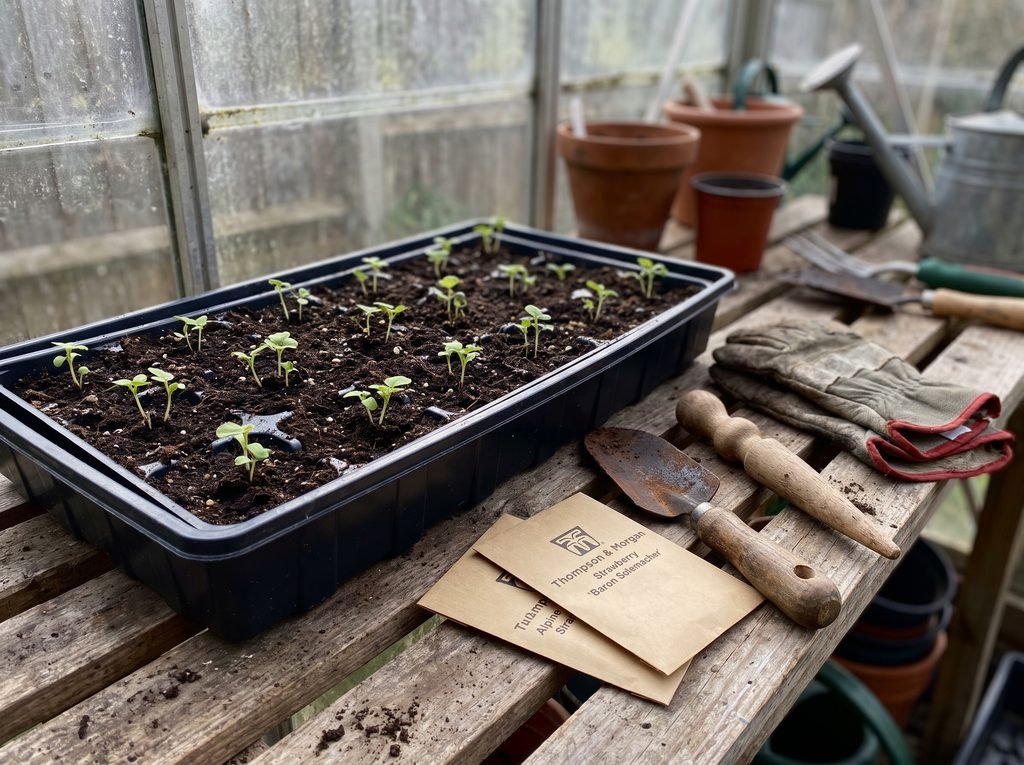
Yes, strawberries can technically be grown from seed, but most gardeners find that starting with young plants is easier and faster. Growing from seed takes patience because the plants need time to germinate, develop, and eventually reach fruiting size.
Young strawberry plants, plugs, or bare-root plants give you a significant head start. They allow the greenhouse to be used for the part of the growing process where controlled conditions provide the greatest benefits.
Growing from seed can still be an enjoyable experiment, particularly for gardeners who want to understand the full life cycle of the plant. However, if your main goal is to produce strawberries efficiently, established plants are usually the more practical option.
The Best Place to Grow Strawberries Inside a Greenhouse
Once you have selected your plants, placement becomes important. Strawberries should receive enough light without being crowded together.
Plants need space around them because good airflow reduces humidity and allows leaves to dry more quickly after watering. Crowded plants often create pockets of still, humid air that encourage fungal disease.
Container-grown strawberries should ideally be positioned so that all plants receive adequate sunlight. Avoid placing large pots in front of smaller plants where they can cast prolonged shade.
Hanging baskets can be especially useful because they make good use of vertical greenhouse space. Strawberry towers and tiered planters are another option where floor space is limited.
The greenhouse floor should also drain well. Standing water around containers can create an unnecessarily damp environment. Raised staging or plant supports can help improve drainage and airflow.
What Soil Do Strawberries Need in a Greenhouse?
Strawberries prefer fertile but well-drained growing conditions. The exact growing medium depends on whether you plant them directly into a greenhouse border, containers, grow bags, or specialist strawberry planters.
A good-quality, free-draining compost can work very well for container strawberries. The growing medium should hold enough moisture to support the plants without becoming waterlogged.
If planting into greenhouse soil, improve poor soil with well-rotted organic matter and ensure the area drains properly. Strawberries dislike constantly saturated roots.
The pH of the growing medium also matters, although strawberries are relatively adaptable. A slightly acidic to neutral growing environment is generally suitable.
Fresh compost should provide some initial nutrients, but feeding will become increasingly important as the plants grow and produce fruit. Overfeeding can encourage excessive leafy growth rather than balanced fruit production, so fertilizer should be used according to the needs of the plants.
How Much Water Do Greenhouse Strawberries Need?
Watering is one of the areas where greenhouse strawberry growing can become easier and more precise. Outdoor plants may receive rain one day and dry conditions the next, while greenhouse plants depend largely on the gardener for their water supply.
The goal is to keep the root zone consistently moist without allowing it to remain saturated. During active growth and fruit production, strawberries may need regular watering, particularly in warm greenhouse conditions.
Container plants can dry out more quickly because they have a limited amount of growing medium. On hot days, pots may require more frequent attention.
Water should ideally be directed toward the base of the plant rather than sprayed across the leaves and fruit. Wet foliage combined with poor ventilation can increase the likelihood of fungal disease.
Morning watering is often a practical choice because excess surface moisture has more time to evaporate during the day. Always check the compost before watering rather than relying on a fixed schedule.
Feeding Strawberries for Larger and Sweeter Fruit
Healthy strawberry plants need access to essential nutrients, especially during flowering and fruit development. A balanced feeding approach can help plants produce strong growth without encouraging too much foliage.
Many gardeners use a suitable tomato or fruit fertilizer once the plants begin flowering because these products are commonly designed to support fruit production. Follow the instructions on the product label and avoid assuming that more fertilizer will automatically result in more strawberries.
Overfeeding can cause excessive vegetative growth and may create nutrient imbalances. Regular but sensible feeding is usually better than heavy applications.
The nutrient requirements of strawberries also depend on whether they are grown in containers or in a soil border. Container-grown plants have a limited reservoir of nutrients and may need more consistent feeding as the season progresses.
Pollination: One of the Most Important Greenhouse Strawberry Tips
When discussing can you grow strawberries in a greenhouse, pollination deserves special attention. Strawberry flowers need successful pollination for well-shaped fruit to develop.
Outdoor strawberries benefit naturally from bees and other pollinating insects. A greenhouse can reduce access for these insects, particularly when doors and vents remain closed.
Fortunately, many modern strawberry varieties have flowers that contain both male and female reproductive parts, making pollination possible within the same flower. Even so, pollination may be improved through gentle air movement or manual assistance.
Opening greenhouse doors and vents during suitable weather can allow pollinating insects to enter. Avoid doing this when conditions are extremely cold, wet, or windy.
You can also gently move pollen between flowers using a soft small brush, particularly in enclosed conditions. Lightly touching the inside of several flowers can help distribute pollen.
Some gardeners also use electric toothbrushes or other gentle vibrating tools, but careful manual pollination is often sufficient for a small home crop.
Poor pollination can result in small, uneven, or misshapen strawberries, so paying attention to flowering conditions can have a noticeable impact on the final harvest.
How Temperature Affects Greenhouse Strawberries
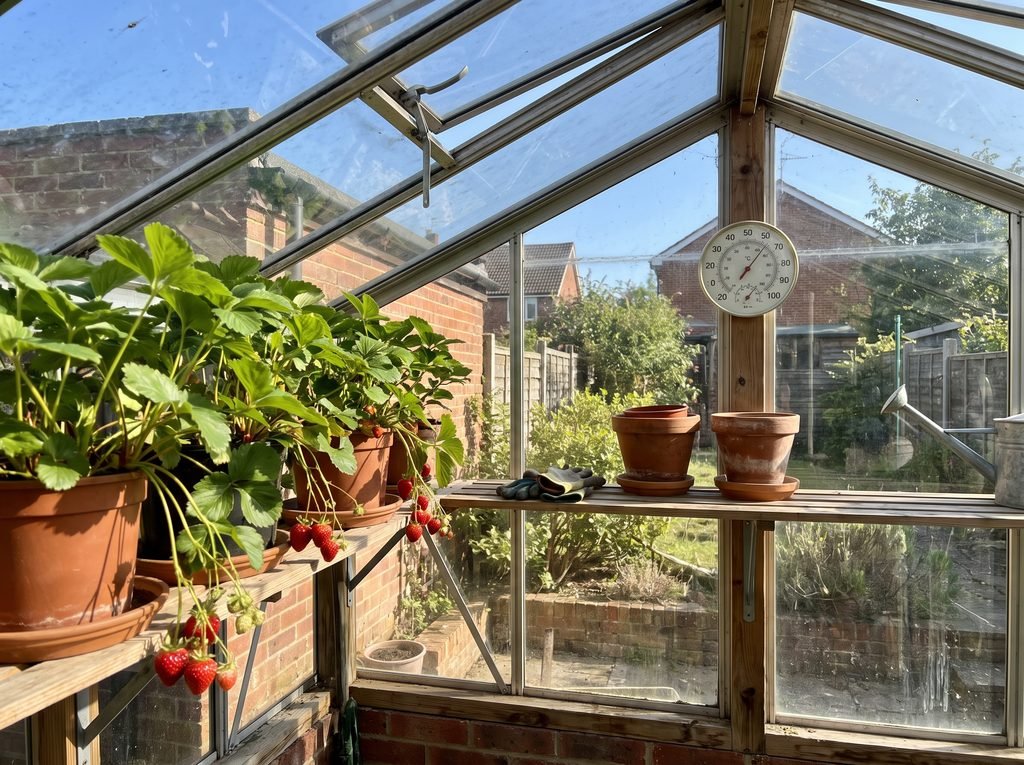
Temperature has a major influence on strawberry growth. Strawberries can tolerate relatively cool conditions, but sudden temperature extremes can cause problems.
Cold temperatures may slow growth and damage delicate flowers. Excessive heat, meanwhile, can stress plants, cause rapid moisture loss, and interfere with fruit quality.
A greenhouse can become significantly warmer than the outdoor temperature during sunny weather. This is why ventilation should be treated as an essential part of strawberry care.
On hot days, open vents and doors when appropriate and consider shading if the greenhouse receives intense midday sunlight. Good air movement helps keep the growing environment more stable.
At night, avoid creating unnecessary exposure to severe cold. In particularly cold climates, frost protection may be useful.
The ideal environment is therefore one that provides protection without trapping excessive heat and humidity.
Do Strawberries Need Heating in a Greenhouse?
Heating is not normally essential for growing ordinary greenhouse strawberries. These plants are capable of handling cool weather, especially when they are established and healthy.
However, heating can be useful in specific situations. Gardeners who want to encourage very early growth may use controlled heating to protect plants from severe cold. Heated propagation areas may also help young plants get established earlier.
For most home growers, good insulation, ventilation management, and sensible seasonal timing are more important than trying to keep the greenhouse warm throughout the winter.
Using unnecessary heating can increase costs significantly, especially in a large greenhouse. It is generally more practical to use heating strategically rather than maintaining summer-like temperatures all year.
Growing Strawberries in Pots Inside a Greenhouse
Growing strawberries in pots is one of the easiest ways to take advantage of a greenhouse. Containers give you control over the growing medium and allow individual plants to be managed separately.
Choose a container with adequate drainage holes. Strawberries have relatively shallow roots, so an extremely deep pot is not always necessary, but the container should provide enough space for healthy root development.
Avoid overcrowding several plants in a small container. Give each plant enough room for leaves and roots to develop.
Containers also make it easier to move plants around the greenhouse. For example, you might relocate flowering plants to a brighter area or move mature plants when you need additional space.
Hanging baskets are another excellent option. They save floor space and can make harvesting easier because ripe fruit hangs away from the soil surface.
Can You Grow Strawberries in a Greenhouse Using Grow Bags?
Yes, grow bags can be an effective method for greenhouse strawberry growing. They are convenient, lightweight, and designed for container cultivation.
Grow bags should be placed where they receive sufficient light and where excess water can drain freely. Because the growing medium in grow bags can dry out relatively quickly, moisture levels should be monitored carefully.
Strawberries can also be grown in specialist strawberry planters with multiple planting pockets. These are particularly useful for small greenhouses because they allow several plants to share vertical space.
Regardless of the container style, drainage remains essential. Always check that water is able to leave the container rather than collecting around the roots.
How to Plant Strawberries Correctly in a Greenhouse
Planting strawberries correctly gives them the best possible start. The crown, which is the central part of the plant where the leaves emerge, should sit at approximately the right depth.
Do not bury the crown deeply beneath the growing medium because this can encourage crown problems. At the same time, avoid leaving too much root structure exposed.
After planting, water the plants thoroughly so the compost settles around the roots. Keep the growing medium moist but not waterlogged while the plants establish.
Spacing is equally important. Plants should have enough room for healthy leaf development and air movement. Overcrowding can make maintenance more difficult and increase disease pressure.
Managing Strawberry Runners in a Greenhouse
Strawberry plants often produce runners, which are long stems that develop new plantlets. These runners can be useful if you want to propagate new plants, but they can also divert energy away from fruit production.
For plants grown mainly for berries, many gardeners remove unwanted runners during the growing season. This encourages the mother plant to focus more resources on flowering and fruit development.
If you want to create new plants, selected runners can be pinned into small pots of compost until they develop roots. Once established, they can be separated from the parent plant.
A greenhouse can make runner propagation particularly convenient because you have more control over moisture and temperature.
Protecting Greenhouse Strawberries from Pests
Growing strawberries in a greenhouse reduces exposure to some outdoor pests, but it does not make the plants completely pest-free. Aphids, spider mites, slugs, and other pests can still cause problems.
Regular inspection is one of the best forms of protection. Check the undersides of leaves, young shoots, flowers, and the growing medium.
Aphids can multiply rapidly, particularly when plants are growing vigorously. Early detection makes management much easier.
Spider mites may become more problematic in warm, dry greenhouse conditions. Improving humidity balance, maintaining plant health, and encouraging good environmental management can help reduce stress.
Slugs and snails may occasionally enter greenhouses as well, especially where the structure has gaps or plants are positioned directly on the ground.
Avoid waiting until serious damage is visible. Inspecting your plants frequently gives you the opportunity to respond early.
Common Diseases That Can Affect Greenhouse Strawberries
A greenhouse protects strawberries from many outdoor conditions, but high humidity can create an environment where fungal diseases thrive.
Botrytis, sometimes called grey mould, can become a serious issue when fruit and foliage remain damp. Good ventilation is one of the most important preventive measures.
Remove damaged or rotting fruit quickly rather than allowing it to remain among healthy berries. Dead leaves and other plant debris should also be cleared from the growing area.
Powdery mildew may appear when conditions are poorly balanced, particularly where airflow is inadequate.
The key principle is prevention. Avoid excessive watering, provide space between plants, ventilate the greenhouse, and maintain a clean growing area.
Healthy plants are generally better able to cope with environmental stress than plants that are already struggling.
Why Are My Greenhouse Strawberries Not Producing Fruit?
Finding healthy strawberry plants covered in leaves but very few berries can be frustrating. Several different factors may be responsible.
Insufficient light is one possibility. Strawberries need plenty of light for productive growth, and a dark greenhouse location may lead to weak plants and limited flowering.
Another issue can be excessive nitrogen. High-nitrogen feeding encourages leafy growth, sometimes at the expense of flowers and fruit.
Poor pollination is also worth considering, especially if the greenhouse is kept closed throughout flowering.
Temperature stress may play a role as well. Extremely hot or cold conditions can interfere with normal flower development and fruit set.
Finally, the variety itself matters. Some strawberry plants naturally produce fruit during a more limited period than others.
Instead of immediately adding more fertilizer, look at the entire growing environment. Light, temperature, watering, feeding, pollination, and plant health all work together.
Why Are My Greenhouse Strawberries Small?
Small strawberries can be caused by several factors. Poor pollination is one possibility, particularly when fruit develops unevenly.
Crowded plants may also struggle because they compete for light, nutrients, water, and growing space.
Insufficient watering during fruit development can reduce berry size, particularly when greenhouse temperatures are high.
Another possibility is the natural behavior of the variety. Some strawberries simply produce smaller fruit than others.
For consistently larger berries, focus on healthy plants, adequate light, consistent moisture, balanced nutrition, good pollination, and appropriate spacing.
Why Are My Strawberries Turning Brown or Rotting?
Brown or rotting fruit is often associated with excessive moisture and fungal problems. In a greenhouse, this can happen when humidity is high and airflow is poor.
Watering the plants from above can leave moisture sitting on flowers and fruit. Poor ventilation then allows that moisture to remain for longer periods.
Make sure the greenhouse has adequate ventilation and try to keep watering focused around the base of the plants.
Remove affected fruit immediately. Leaving rotten berries beside healthy ones can allow problems to spread.
Also check whether your plants are overcrowded. Improving spacing may have a surprisingly large impact on greenhouse strawberry health.
How to Get Sweeter Strawberries in a Greenhouse
Gardeners often ask can you grow strawberries in a greenhouse and get sweeter fruit than they would outdoors. The answer depends on growing conditions and variety, but greenhouse management can certainly contribute to better-quality berries.
Good light is essential because photosynthesis helps plants produce the sugars needed for ripe fruit. Allowing strawberries to ripen properly before harvesting can also improve flavor.
Avoid harvesting fruit too early merely because it has started to turn red. Many varieties develop their best flavor when they have reached full ripeness.
Balanced watering is important too. Extreme fluctuations between very dry and very wet conditions can place unnecessary stress on plants.
Variety plays a major role. Some strawberries are naturally much sweeter and more aromatic than others, so selecting a variety known for flavor can make a major difference.
When Should You Plant Strawberries in a Greenhouse?
The ideal planting time depends on the type of plants you purchase and your local climate. Strawberry plants can often be established during periods when the greenhouse provides protection from severe outdoor conditions.
Bare-root plants and potted plants may have different planting windows, so always follow the supplier’s guidance for the particular variety.
Greenhouse growing gives you slightly more flexibility because the structure can protect young plants from harsh weather. However, it is still important to work with the natural seasonal cycle rather than forcing plants into unsuitable conditions.
Spring is often an especially attractive period for establishing plants because increasing daylight supports vigorous growth.
Can You Grow Strawberries in a Small Greenhouse?
Absolutely. One of the biggest advantages of strawberries is that they do not require a huge amount of space.
A small greenhouse can support strawberries in pots, hanging baskets, troughs, grow bags, and vertical planters. By making good use of vertical space, even a compact greenhouse can produce a worthwhile crop.
The most important issue is not the total size of the greenhouse but whether the plants receive enough light and ventilation.
A small greenhouse can actually be easier to manage because the plants are easy to reach. The main challenge is avoiding overcrowding.
Choose a manageable number of plants and give them enough space to thrive rather than trying to fill every available corner.
Can You Grow Strawberries in a Greenhouse in the UK?
For UK gardeners, the answer is particularly encouraging. The UK’s relatively changeable weather makes protected growing attractive for strawberries because a greenhouse can help reduce the impact of late frost, prolonged rain, and cool conditions.
A greenhouse can also offer earlier opportunities for growth in spring and help protect fruit during periods of unsettled weather.
However, summer ventilation is extremely important in the UK as well. Greenhouses can become very hot even when the outdoor weather feels comfortable.
Using vents, doors, shading, and regular checks can help maintain a healthier environment.
How Often Should You Check Greenhouse Strawberries?
Regular inspection should become part of your routine. A quick check each day during active growth can help you spot watering problems, pest infestations, damaged leaves, and ripe fruit.
During flowering and fruiting, frequent checks are particularly useful because environmental conditions can change rapidly.
Look at the leaves for discoloration, inspect flowers for signs of damage, and check the growing medium for moisture.
As fruit begins to ripen, daily harvesting may be necessary because strawberries can move from nearly ripe to fully ripe surprisingly quickly.
Frequent harvesting also encourages you to remove damaged or diseased fruit before it affects neighboring berries.
Harvesting Strawberries from a Greenhouse
Harvesting is arguably the most enjoyable stage of the entire process. For the best flavor, strawberries should generally be picked when they have developed their characteristic ripe color and are beginning to soften slightly.
Use clean hands or scissors and handle the berries gently. Strawberries bruise easily, and damaged fruit deteriorates quickly.
Pick ripe fruit regularly rather than leaving it on the plant unnecessarily.
If you have several varieties with different ripening times, your greenhouse can provide an extended harvest window rather than a single overwhelming crop.
Once harvested, strawberries are best enjoyed fresh. Their delicate texture means they do not store as long as many commercial fruits, which is one reason homegrown berries can be so rewarding.
Can You Grow Strawberries in a Greenhouse Without Chemicals?
It is possible to grow strawberries using a low-chemical or organic-style approach. Good hygiene, healthy plants, proper ventilation, careful watering, and regular inspections can prevent many problems before they become severe.
Integrated pest management is a useful philosophy for home gardeners because it focuses on prevention and early intervention rather than automatically reaching for chemical treatments.
Keep the greenhouse clean, remove diseased plant material, avoid overwatering, and maintain appropriate spacing.
Encouraging beneficial insects where practical can also help with some pest management challenges.
The exact approach depends on the gardener, but healthy growing conditions are always an excellent first line of defense.
Greenhouse Strawberries vs Outdoor Strawberries
Outdoor strawberries benefit from natural rainfall, pollinating insects, and a large growing environment. They can produce excellent crops, especially when planted in a good location.
Greenhouse strawberries, however, offer increased control. You can manage watering more precisely, protect fruit from heavy rain, reduce bird damage, encourage earlier production, and make better use of limited space.
The main disadvantages are the need for active ventilation, watering, and monitoring. A neglected greenhouse can quickly become too hot or humid.
For gardeners who enjoy checking plants and managing their environment, greenhouse growing can be especially satisfying.
Common Mistakes When Growing Strawberries in a Greenhouse
One common mistake is overcrowding. Gardeners often become excited about the idea of maximizing every available inch of greenhouse space, but strawberries need room for air movement and healthy growth.
Another common mistake is overwatering. Because greenhouses protect plants from rain, growers sometimes compensate by applying too much water. The roots require moisture, not constantly saturated compost.
Poor ventilation is another major problem. Keeping every door and vent closed may feel like the best way to protect plants, but excessive humidity and heat can create serious growing problems.
Overfeeding can also lead to disappointing results. More fertilizer does not automatically mean more fruit.
Finally, ignoring pollination can reduce fruit quality. During flowering, make sure the greenhouse environment allows adequate opportunities for successful pollination.
A Simple Greenhouse Strawberry Care Routine
A successful routine does not have to be complicated. Start each morning by checking the growing medium and looking at the plants for signs of stress.
During warm weather, check greenhouse ventilation early because temperatures can increase quickly.
Water plants when needed rather than automatically following the same schedule every day. Remove damaged leaves and rotten fruit as soon as you notice them.
During flowering, pay attention to pollination and encourage gentle air movement.
As the berries develop, maintain consistent moisture and monitor fruit closely.
Regular small actions are usually much more effective than waiting until a problem becomes serious.
Can You Grow Strawberries in a Greenhouse and Get an Earlier Harvest?
Yes, extending the season is one of the most appealing benefits of protected growing. A greenhouse can create warmer conditions earlier in the year, helping plants move into active growth sooner than fully exposed outdoor plants.
The exact timing depends on the greenhouse, the strawberry variety, local weather, and whether additional protection is used.
Early harvesting can be especially useful for gardeners who want fresh strawberries before the main outdoor crop becomes available.
Careful temperature management is essential, however. Encouraging plants to grow early is only useful if the resulting flowers can be protected from damaging cold.
What to Do with Strawberry Plants After Harvest
Once the main crop has finished, strawberry plants still need care. Continue watering as required and maintain healthy foliage.
Remove damaged or diseased leaves, but avoid cutting plants back unnecessarily unless recommended for the variety and growing system.
Runners can be removed or used for propagation.
Plants grown in containers may eventually become less productive as they age. Replacing older plants with healthy young stock can maintain productivity over time.
Good post-harvest care also helps plants prepare for future growth.
Frequently Asked Questions About Growing Strawberries in a Greenhouse
Can you grow strawberries in a greenhouse during winter?
Yes, strawberry plants can survive winter in a greenhouse, but active fruit production during the coldest part of the year is not guaranteed. A greenhouse mainly provides protection and can reduce exposure to severe weather. The plants still respond to natural seasonal conditions.
Can you grow strawberries in a greenhouse from regular garden strawberry plants?
Yes. Many ordinary garden strawberry varieties can be grown successfully inside a greenhouse. Their performance will depend on variety, light, temperature, watering, pollination, and general plant care.
Do strawberries need full sun in a greenhouse?
Strawberries perform best with plenty of sunlight. A bright greenhouse location is usually much better than deep shade, although ventilation and heat management are also important during very sunny periods.
Do greenhouse strawberries need bees?
Strawberries can often pollinate without bees because many varieties have flowers containing both male and female reproductive structures. Nevertheless, bees and gentle manual pollination can improve pollination success in enclosed conditions.
Can strawberries grow in hanging baskets in a greenhouse?
Yes. Hanging baskets are an excellent option, especially where greenhouse floor space is limited. They also make the fruit easy to see and harvest.
How many strawberries can one plant produce?
The number varies according to variety, plant age, growing conditions, pollination, feeding, and overall health. A healthy plant can produce a useful crop, but there is no single number that applies to every growing situation.
Is a greenhouse better than outdoor growing for strawberries?
Neither method is automatically better for every gardener. A greenhouse offers greater environmental control and protection, while outdoor growing can be simpler and requires less active monitoring. For gardeners seeking earlier crops or protection from unpredictable weather, greenhouse growing can be particularly valuable.
Final Thoughts: Can You Grow Strawberries in a Greenhouse Successfully?
So, can you grow strawberries in a greenhouse? Absolutely, and for many gardeners it can be one of the best ways to produce delicious homegrown berries while gaining greater control over the growing environment.
The key is to think beyond simply placing strawberry plants under cover. Successful greenhouse growing depends on several factors working together. Plants need sufficient light, suitable growing media, consistent moisture, balanced feeding, adequate ventilation, sensible temperatures, and successful pollination.
A greenhouse can reduce many of the challenges associated with outdoor strawberry growing. It can protect flowers from damaging weather, keep fruit away from heavy rain, reduce bird damage, improve growing-season control, and make it possible to use containers and vertical growing systems in surprisingly small spaces.
At the same time, the greenhouse environment must be managed carefully. Excess heat, humidity, overcrowding, and poor watering can create new problems if they are ignored.
The good news is that strawberry plants are approachable for beginners. You do not need an enormous greenhouse or an advanced growing system to get started. A few healthy plants in quality compost, placed in a bright and well-ventilated location, can provide a rewarding first crop.
Whether you are growing strawberries in pots, grow bags, hanging baskets, raised beds, or greenhouse borders, the same basic principles apply: give the plants light, protect them from extremes, water carefully, feed sensibly, maintain airflow, and harvest the berries when they are fully ripe.
If you have been wondering can you grow strawberries in a greenhouse, there is no reason to keep wondering. Choose a suitable variety, prepare your growing space, and give the plants the conditions they need. With a little regular care, your greenhouse can become a productive strawberry-growing space that delivers sweet, fresh fruit straight from your own garden.
Ready to Grow Your Own Greenhouse Strawberries?
There is no better time to start planning your strawberry crop. Select healthy plants, prepare a bright and well-drained growing area, and make ventilation part of your everyday routine. With the right setup, even a small greenhouse can produce a surprisingly enjoyable harvest.
Start with a few plants, learn how they respond to your greenhouse conditions, and build your growing system from there. Once you taste your first perfectly ripe greenhouse strawberry, you may find that growing your own fruit becomes one of the most satisfying parts of your gardening year.