If you own a greenhouse, you already know that temperature is one of the biggest factors affecting plant health and productivity. Whether you are growing vegetables, herbs, flowers, or tropical plants, maintaining a stable environment helps plants grow faster, produce higher yields, and survive during cold weather. This is where small greenhouse heating systems become essential.
A small greenhouse may seem easy to manage, but temperatures can drop quickly during winter nights. Without proper heating, frost can damage delicate seedlings, slow plant growth, and even kill valuable crops. Choosing the right heating system ensures your greenhouse remains productive throughout the year while keeping energy costs under control.
In this complete guide, you’ll learn everything you need to know about small greenhouse heating systems, including the different types available, their advantages and disadvantages, installation tips, energy-saving strategies, maintenance advice, and how to choose the best heating solution for your greenhouse.
Why Small Greenhouse Heating Systems Are Worth the Investment
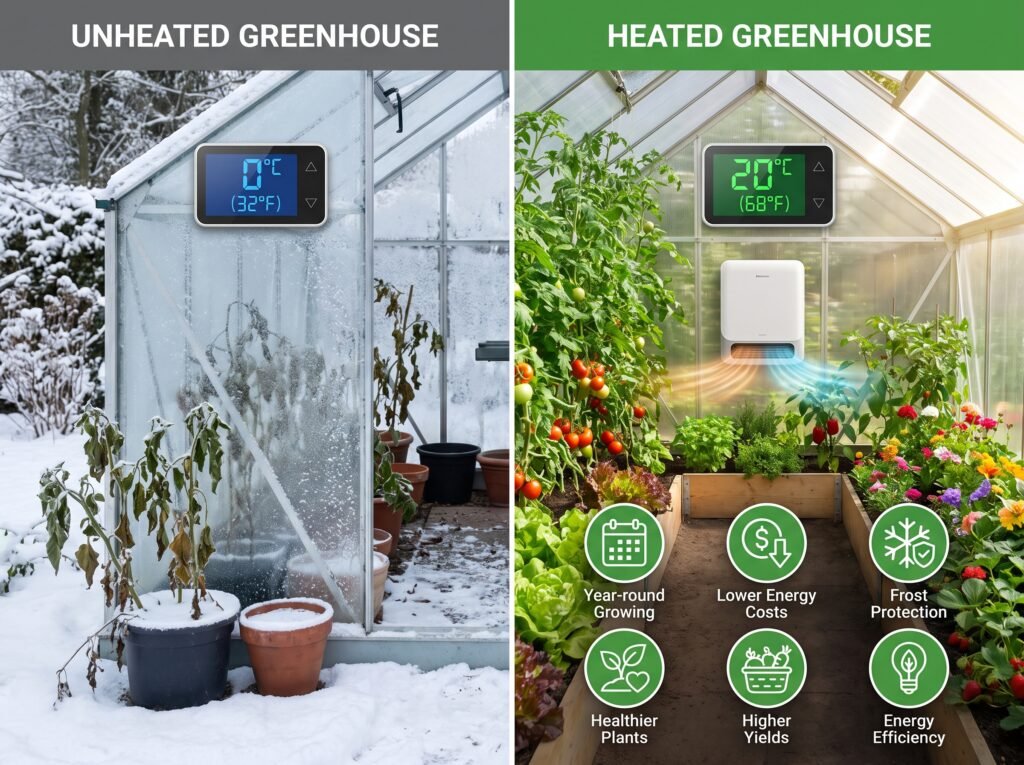
Many gardeners assume that a greenhouse automatically stays warm throughout winter. In reality, greenhouses trap solar heat during the day but lose it rapidly after sunset. On freezing nights, the inside temperature may become nearly the same as the outside temperature without supplemental heating.
Installing one of the best small greenhouse heating systems helps maintain a stable growing environment regardless of outdoor conditions. This consistency protects seedlings from frost damage, encourages faster growth, extends the growing season, and allows gardeners to cultivate crops that normally wouldn’t survive in colder climates.
Heating also reduces plant stress. Large temperature fluctuations weaken plants, making them more vulnerable to pests and diseases. A properly heated greenhouse creates a healthier environment where vegetables, herbs, and ornamental plants thrive throughout the year.
Understanding How Greenhouse Heating Works
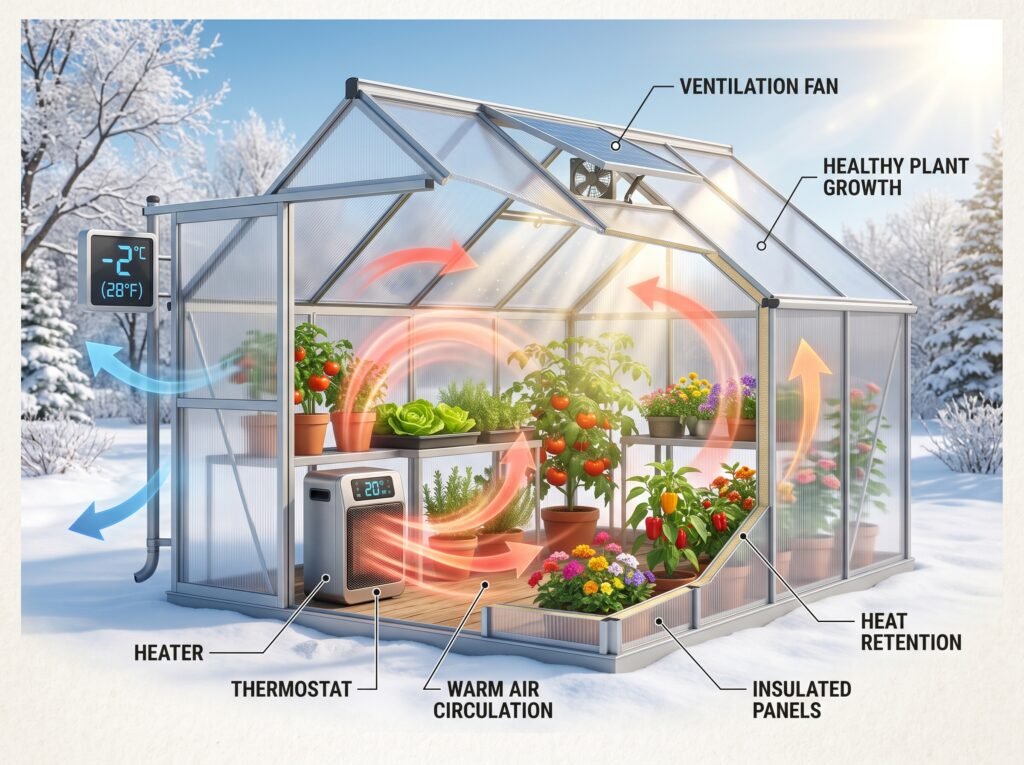
A greenhouse heating system replaces the heat that escapes through the glass or polycarbonate panels during cold weather. Modern systems use electricity, gas, propane, kerosene, biomass, solar energy, or geothermal heat to maintain a desired temperature.
Most greenhouse owners also install thermostats that automatically switch heaters on and off. This prevents overheating while reducing energy consumption.
Good heating isn’t just about producing warmth—it’s also about distributing that warmth evenly. Air circulation fans often work alongside heaters to eliminate cold spots and maintain consistent temperatures throughout the greenhouse.
Types of Small Greenhouse Heating Systems
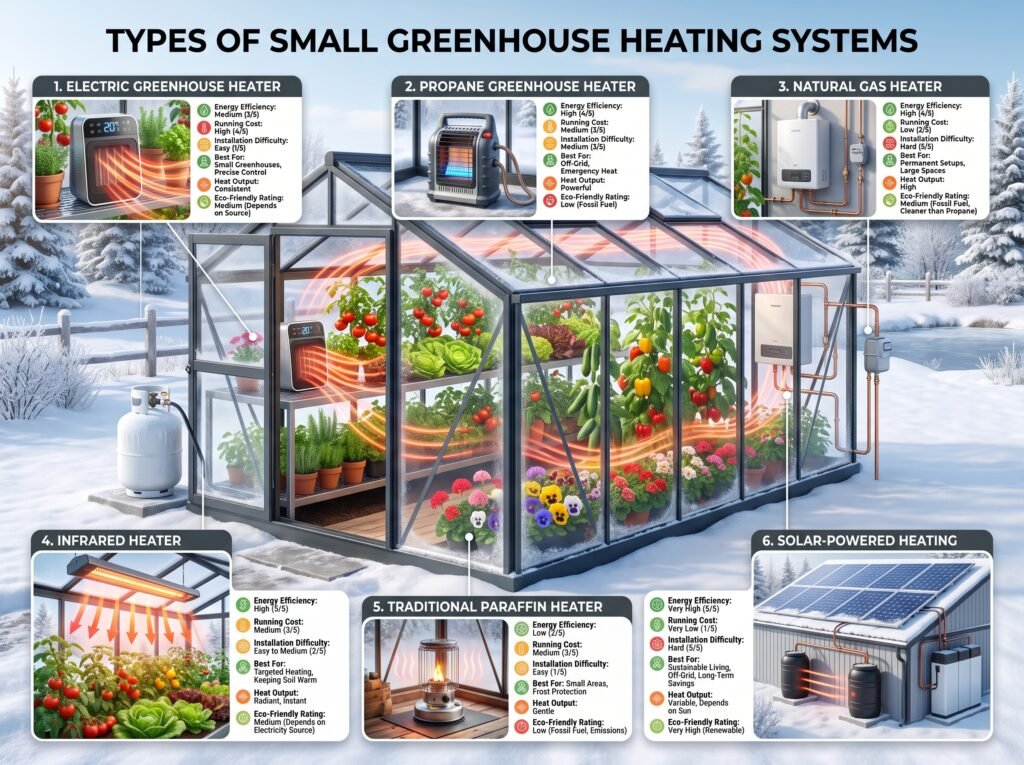
Choosing the right heating system depends on your greenhouse size, climate, budget, and the types of plants you grow.
Electric Greenhouse Heaters
Electric heaters are among the most popular small greenhouse heating systems because they are easy to install and require very little maintenance.
Most models include built-in thermostats, safety shutoffs, and adjustable temperature controls. They produce clean heat without releasing harmful gases, making them ideal for enclosed greenhouses.
Electric heaters work especially well for hobby gardeners with greenhouses under 120 square feet.
Advantages
- Clean and quiet operation
- Easy installation
- Accurate temperature control
- Low maintenance
- Safe for indoor use
Disadvantages
- Higher electricity costs in some regions
- Requires access to power outlets
Propane Greenhouse Heaters
Propane heaters generate significant heat quickly, making them suitable for areas with harsh winters.
Many commercial growers prefer propane because it continues working even during electrical outages.
Some propane heaters also produce carbon dioxide, which can slightly benefit plant growth when ventilation is adequate.
However, proper ventilation is essential since combustion produces moisture and gases.
Natural Gas Heaters
If your property already has a natural gas connection, natural gas heating can be one of the most economical long-term options.
Although installation costs are higher, operating expenses are usually lower than electricity.
These systems work particularly well for permanent greenhouses used throughout the year.
Infrared Greenhouse Heaters
Infrared heaters warm plants, soil, and objects directly instead of heating the surrounding air.
This approach reduces heat loss and improves energy efficiency.
Because plants absorb radiant heat effectively, infrared systems often consume less electricity while maintaining healthier growing conditions.
Paraffin Heaters
Traditional paraffin heaters remain popular among gardeners with very small greenhouses.
They require no electricity and are inexpensive to purchase.
However, they require regular refilling, careful monitoring, and proper ventilation.
While suitable for occasional winter protection, they are generally less efficient than modern heating options.
Solar Heating Systems
Solar-powered heating has become increasingly popular among environmentally conscious gardeners.
Solar heating systems collect sunlight during the day and store thermal energy inside water barrels, stone flooring, or specialized thermal batteries.
Although solar heating alone may not provide enough warmth during severe winters, combining it with another heating system creates an efficient hybrid solution.
How to Choose the Best Small Greenhouse Heating Systems
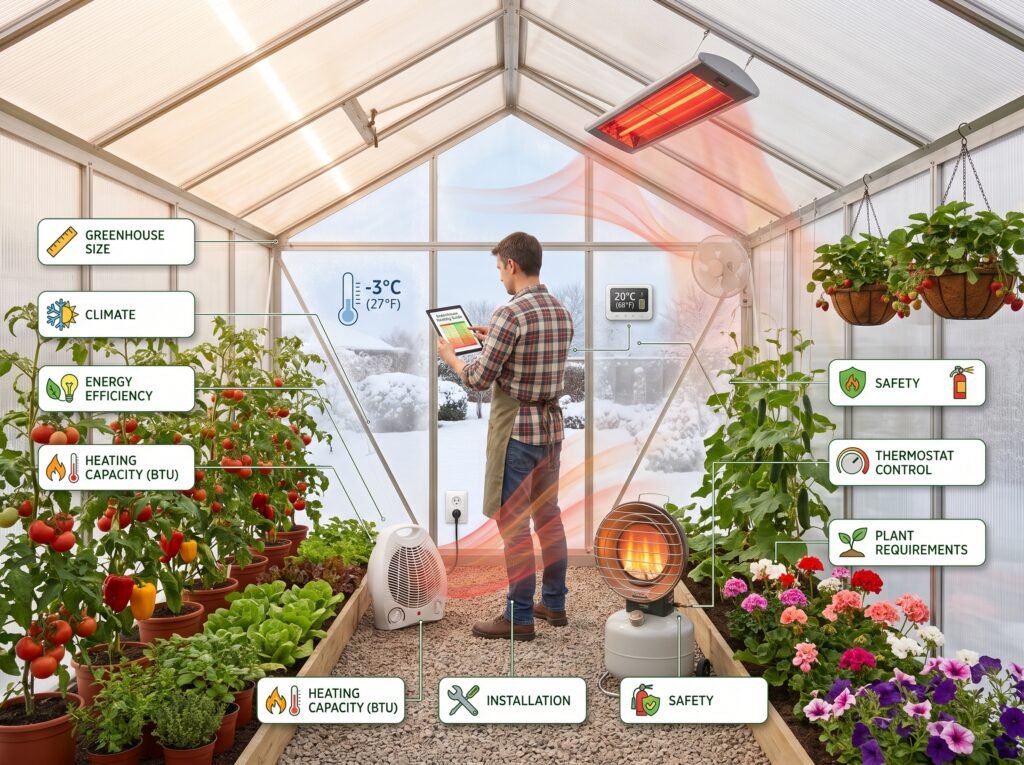
Not every greenhouse requires the same heating setup.
Before purchasing a heater, consider several important factors.
Greenhouse Size
Larger greenhouses naturally require more heating power.
A compact walk-in greenhouse may only need a small electric heater, while larger hobby greenhouses often require multiple heaters or higher-capacity units.
Always calculate the required BTU (British Thermal Units) before buying.
Climate
Gardeners living in mild coastal regions require much less heating than those experiencing freezing winters.
Understanding your local climate helps prevent purchasing an oversized or undersized heating system.
Insulation
Good insulation dramatically reduces heating costs.
Double-wall polycarbonate panels retain significantly more heat than single-pane glass.
Weather stripping around doors and vents also prevents warm air from escaping.
Plant Requirements
Different plants prefer different temperatures.
For example:
- Tomatoes thrive around 18–24°C.
- Lettuce grows well at 10–18°C.
- Tropical orchids require much warmer conditions.
Choose a heating system capable of maintaining your plants’ ideal temperature range.
Calculating Heating Requirements
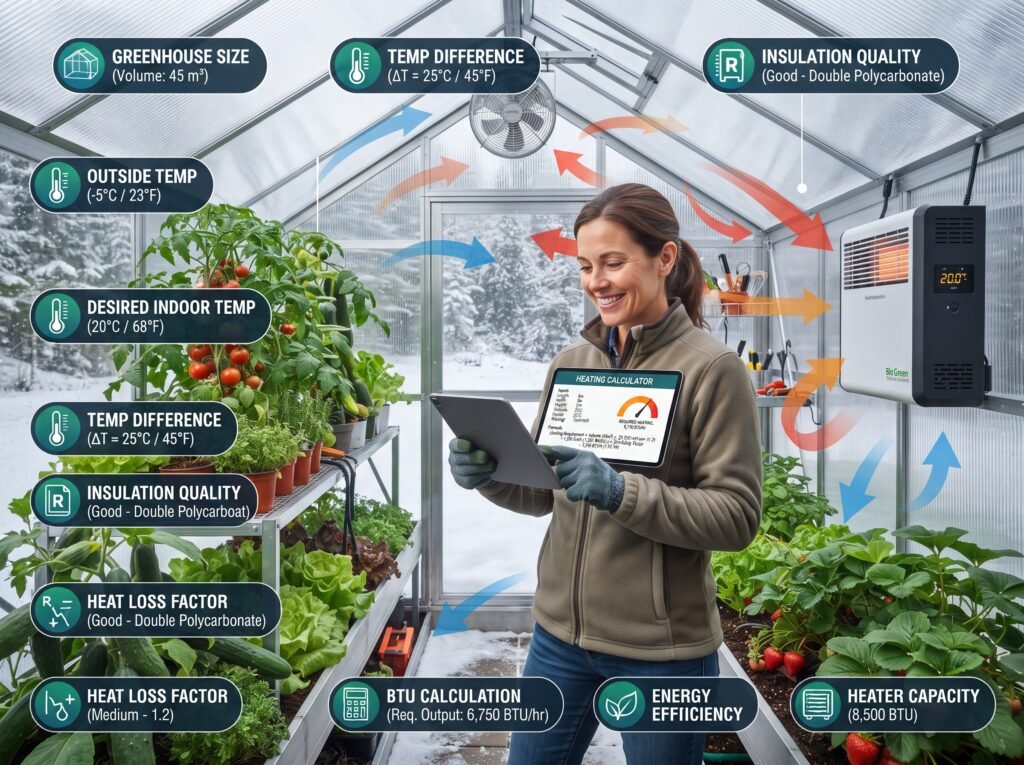
One common mistake is buying a heater that’s either too powerful or too weak.
Heating requirements depend on:
- Greenhouse dimensions
- Insulation quality
- Outside winter temperatures
- Desired indoor temperature
- Wind exposure
Many heater manufacturers provide BTU calculators that simplify this process.
Choosing the correct size improves efficiency while lowering energy costs.
Energy-Efficient Ways to Improve Small Greenhouse Heating Systems
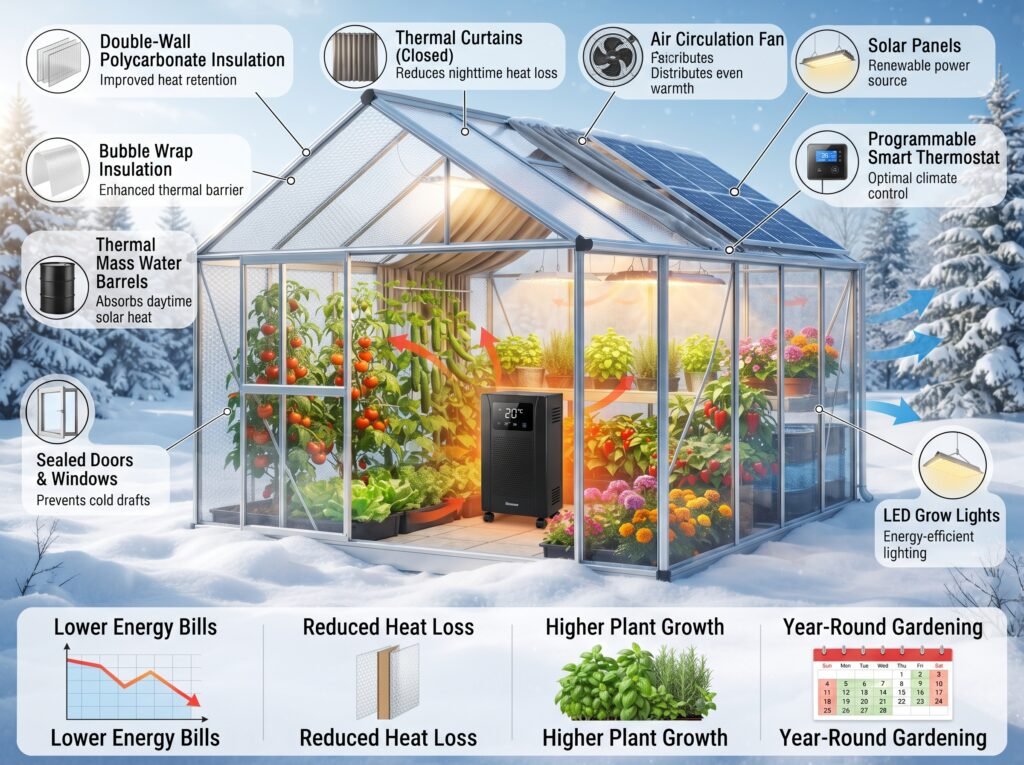
Buying an efficient heater is only part of the solution.
Reducing heat loss saves even more money over time.
Install Thermal Curtains
Thermal curtains trap warm air inside the greenhouse during cold nights.
Many commercial growers use them because they significantly reduce heating expenses.
Use Bubble Wrap Insulation
Special greenhouse bubble wrap adds an extra insulating layer without blocking much sunlight.
This inexpensive upgrade can reduce heat loss by up to 40%.
Seal Air Leaks
Small gaps around doors, vents, and windows allow valuable heat to escape.
Weatherproof sealing tape provides an affordable solution.
Add Thermal Mass
Water barrels, bricks, or stone flooring absorb heat during the day and slowly release it overnight.
This passive heating method reduces temperature fluctuations.
Install Air Circulation Fans
Warm air naturally rises.
Fans distribute heat evenly throughout the greenhouse while reducing cold pockets.
Common Mistakes When Using Small Greenhouse Heating Systems
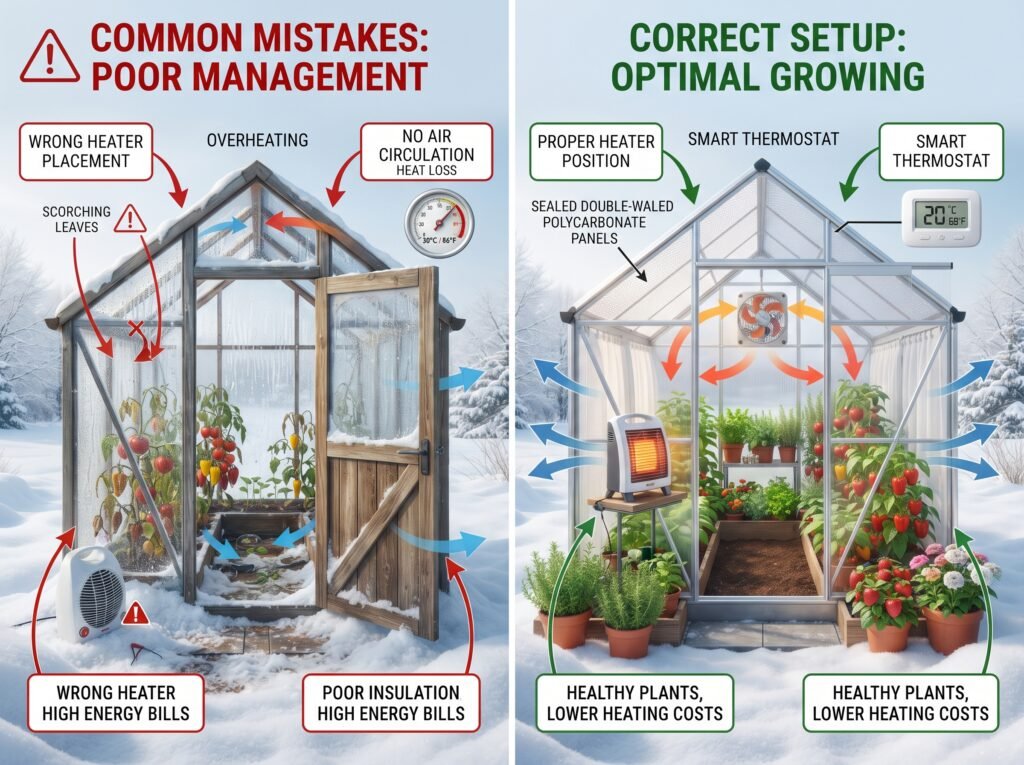
Many beginners unknowingly waste energy or damage plants.
One common mistake is overheating the greenhouse. Higher temperatures don’t always produce faster growth. Excessive warmth can encourage fungal diseases and weak plant development.
Another mistake is placing heaters too close to plants. Direct heat may scorch leaves and dry the soil quickly.
Ignoring humidity is another issue. Heating often lowers humidity levels, which may stress tropical plants.
Finally, skipping maintenance can reduce heater efficiency and increase operating costs.
Safety Tips for Greenhouse Heating
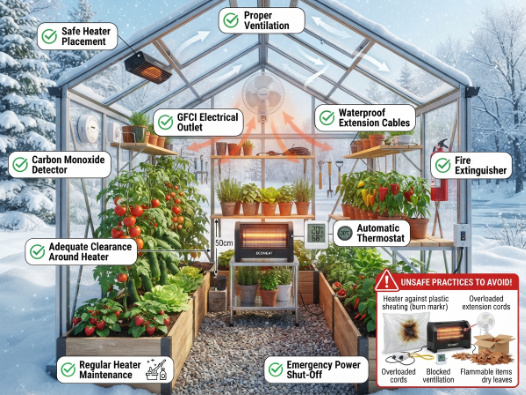
Safety should always come first.
Keep heaters away from flammable materials such as cardboard, dry leaves, and plastic containers.
Install carbon monoxide detectors when using gas or propane heaters.
Check electrical wiring regularly for damage.
Never overload extension cords.
Follow the manufacturer’s maintenance schedule and inspect heaters before each winter season.
Maintaining Small Greenhouse Heating Systems
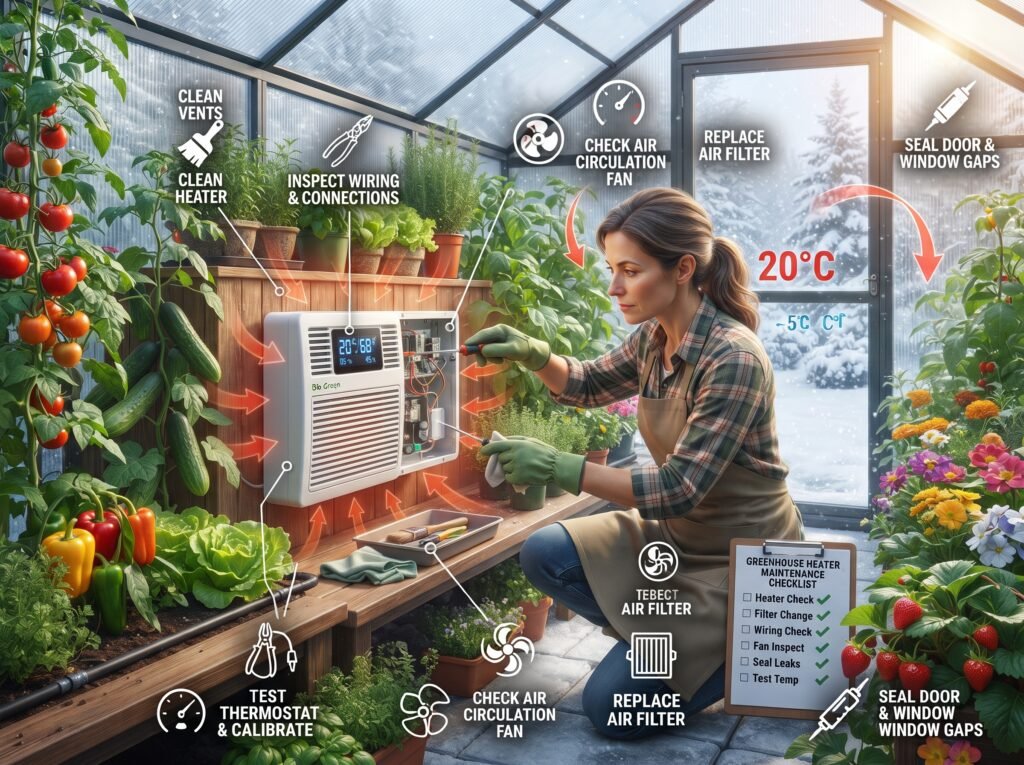
Regular maintenance extends equipment life and improves efficiency.
Clean dust from heater vents.
Replace worn filters if applicable.
Inspect thermostats for accurate temperature readings.
Test fans before winter begins.
Check gas connections for leaks.
Lubricate moving components when recommended.
Simple maintenance prevents unexpected breakdowns during freezing weather.
Comparing Heating Costs
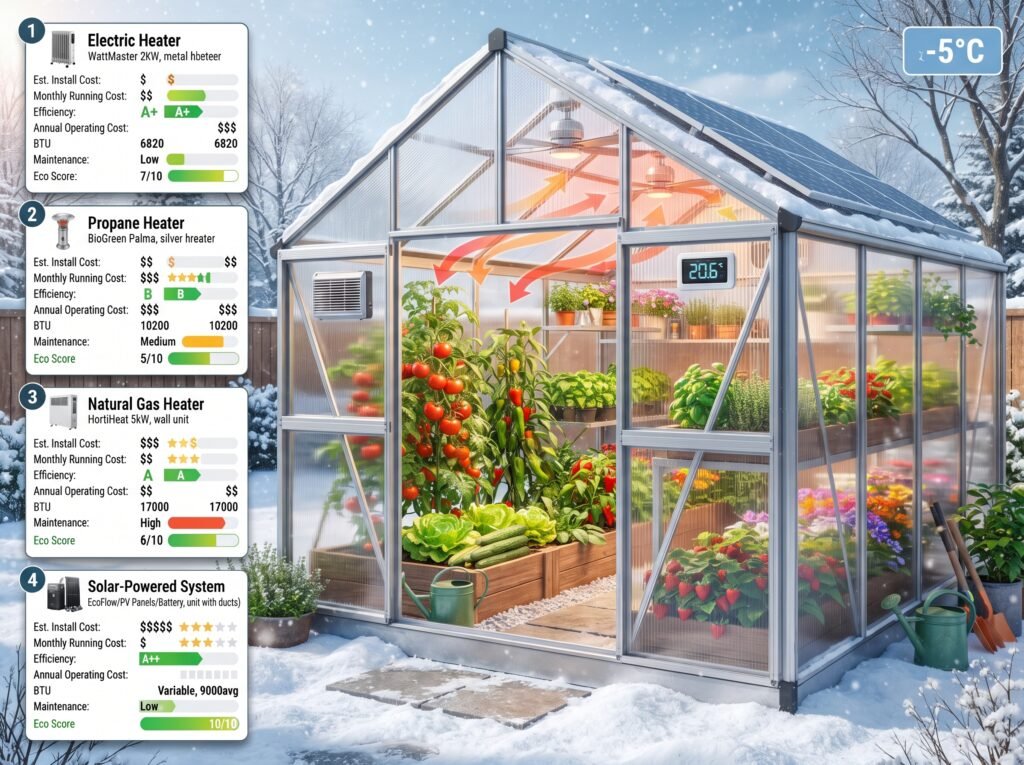
The total cost of heating depends on local energy prices, greenhouse insulation, and outside temperatures.
Electric heaters generally have low installation costs but may cost more to operate.
Natural gas often provides lower long-term operating expenses.
Propane offers excellent flexibility where natural gas isn’t available.
Solar systems require a higher upfront investment but provide significant long-term savings.
Choosing the cheapest heater isn’t always the smartest decision. Consider total ownership costs over several years.
Best Plants to Grow in a Heated Greenhouse
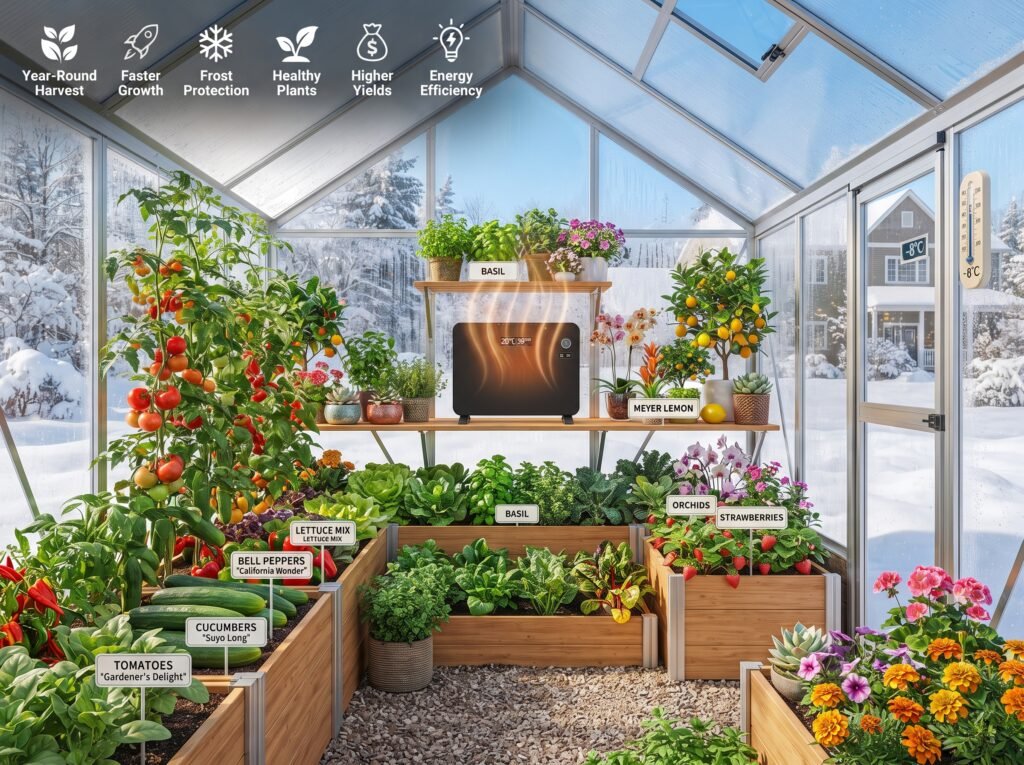
A heated greenhouse opens many exciting gardening opportunities.
You can grow tomatoes, cucumbers, peppers, lettuce, spinach, basil, parsley, strawberries, orchids, citrus trees, succulents, and even tropical flowers throughout the year.
Starting seedlings earlier also gives gardeners a significant advantage before the outdoor growing season begins.
Why Temperature Control Matters
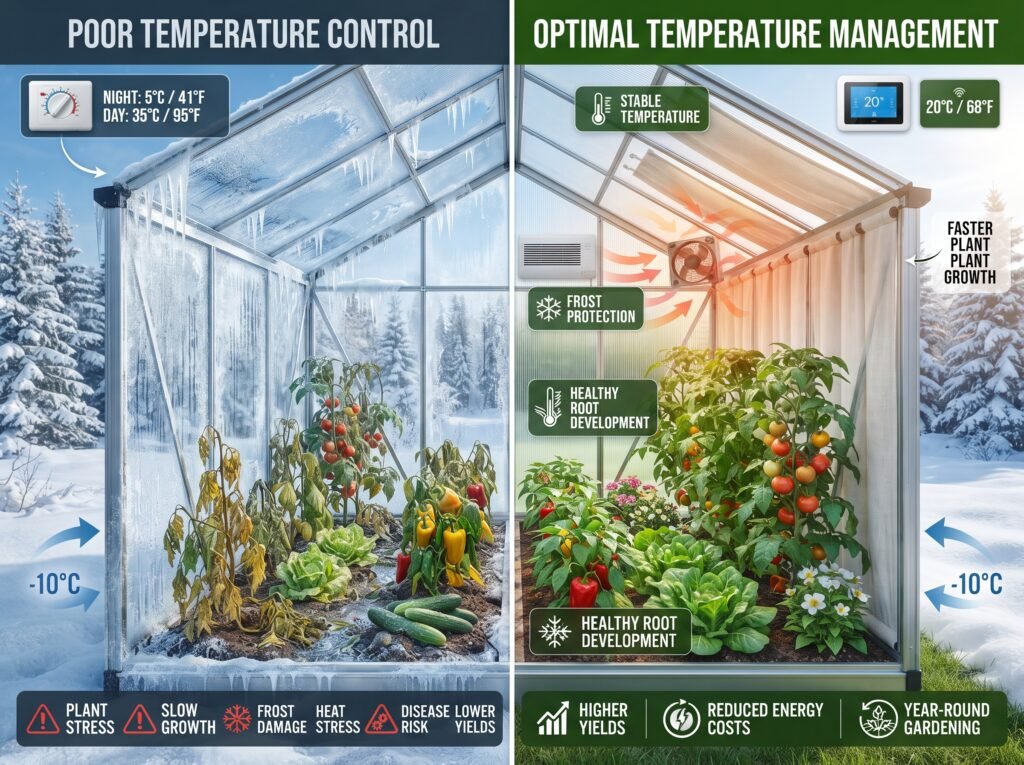
Temperature consistency is often more important than high temperatures.
Frequent swings between warm days and freezing nights stress plants, slow photosynthesis, and reduce yields.
Using programmable thermostats helps maintain stable growing conditions while minimizing unnecessary heating.
Many modern systems even connect to smartphone apps for remote monitoring.
Eco-Friendly Heating Alternatives
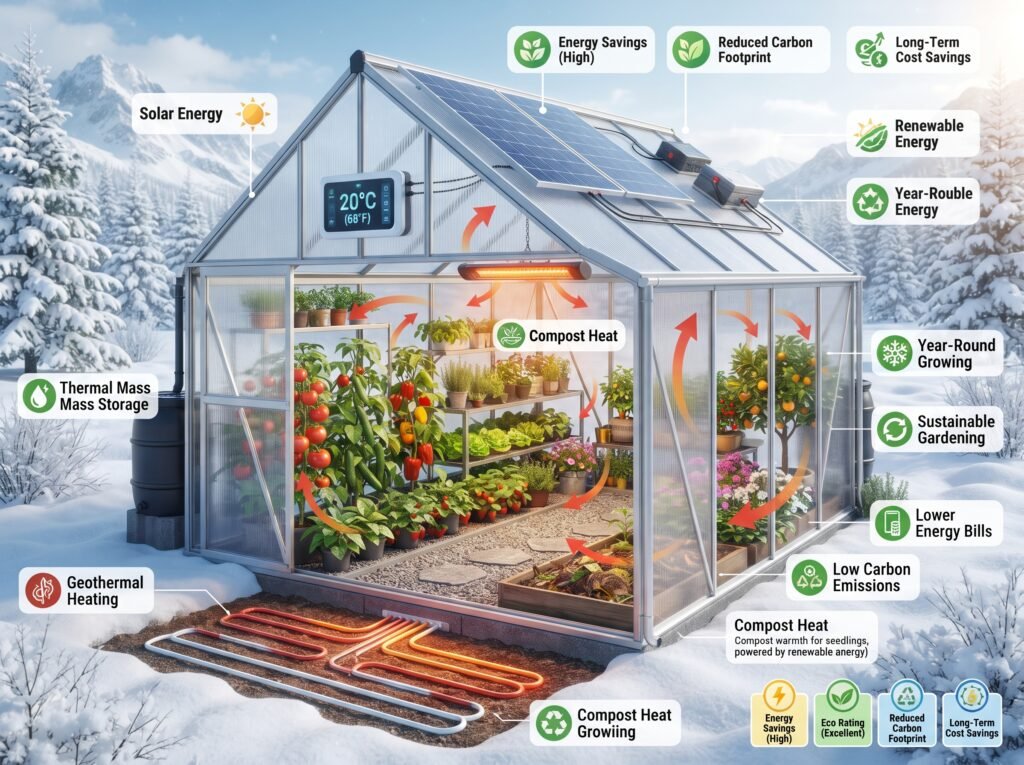
Sustainability has become increasingly important.
Many gardeners now combine several eco-friendly methods.
Composting generates natural heat.
Ground-source geothermal systems maintain consistent underground temperatures.
Solar panels can offset electricity costs.
Rainwater barrels also serve as thermal mass.
Combining these techniques with efficient heaters creates environmentally friendly small greenhouse heating systems that reduce both energy bills and carbon emissions.
Frequently Asked Questions About Small Greenhouse Heating Systems
What temperature should a small greenhouse stay during winter?
Most vegetables grow well between 10°C and 18°C, while tropical plants usually require 18°C to 24°C. The ideal temperature depends on the plants you are growing.
Is an electric heater enough for a small greenhouse?
Yes. For most hobby greenhouses, a quality electric heater with a thermostat provides sufficient warmth and is one of the easiest solutions to install and maintain.
How can I reduce heating costs?
Improve insulation, seal air leaks, use thermal mass, install bubble wrap, add circulation fans, and choose an energy-efficient heater with automatic temperature controls.
Can I heat a greenhouse without electricity?
Yes. Options include propane heaters, paraffin heaters, solar heating, compost heating, and geothermal systems. Each has different installation costs and maintenance requirements.
Which heating system is the most energy efficient?
Infrared heaters and well-designed solar-assisted systems are among the most energy-efficient options, especially when combined with proper insulation and thermostatic controls.
Final Thoughts
Choosing the right small greenhouse heating systems can completely transform your gardening experience. Instead of worrying about frost, temperature fluctuations, or losing valuable plants during winter, you can enjoy healthy growth and productive harvests throughout the year.
Whether you select an electric heater for convenience, propane for powerful heating, natural gas for lower running costs, or a solar-assisted setup for sustainability, the key is matching the system to your greenhouse size, local climate, and gardening goals. Don’t overlook the importance of insulation, air circulation, and regular maintenance, as these factors significantly improve efficiency and reduce energy bills.
A warm, stable greenhouse doesn’t just protect plants—it extends your growing season, increases yields, and allows you to cultivate a wider variety of crops with confidence.
Ready to Upgrade Your Greenhouse?
If you’re planning to grow fresh vegetables, vibrant flowers, or delicate seedlings year-round, now is the perfect time to invest in the right small greenhouse heating systems. Compare different heating options, improve your greenhouse insulation, and choose a reliable thermostat to create the ideal growing environment. A small investment today can lead to healthier plants, bigger harvests, lower energy costs, and a greenhouse that performs efficiently in every season. Start building a warmer, more productive greenhouse today and enjoy gardening without limits.