Imagine stepping into your garden and finding a peaceful private retreat surrounded by glass, natural light, timber, and greenery. Instead of using your greenhouse only for growing tomatoes, herbs, flowers, and seedlings, you could turn part of it into a relaxing warm space designed for quiet evenings and restorative breaks. That is the basic idea behind a greenhouse sauna.
A greenhouse sauna combines the visual appeal of a glass garden structure with the warmth and atmosphere associated with a traditional sauna. It can become an attractive feature in a garden, especially for homeowners who want something different from an ordinary shed, summerhouse, or outdoor wellness cabin. However, creating one successfully requires much more than placing a sauna heater inside a greenhouse. Heat, humidity, ventilation, glazing, electrical systems, flooring, drainage, privacy, and fire safety all need to be considered carefully.
Table of Contents
The concept is particularly interesting because greenhouses already have some characteristics that suit a warm outdoor retreat. Their transparent walls allow sunlight to enter, they connect the user with the garden, and their enclosed structure can provide shelter from wind and rain. At the same time, typical greenhouse materials and construction methods are not automatically suitable for sauna temperatures or high humidity. This is why planning matters so much.
In this guide, you will learn what a greenhouse sauna is, how it works, the benefits and challenges, the best materials to consider, heating options, ventilation requirements, insulation ideas, privacy solutions, maintenance tips, common mistakes, and practical ways to create a comfortable garden sauna experience without compromising safety.
What Is a Greenhouse Sauna and Why Is It Becoming So Popular?
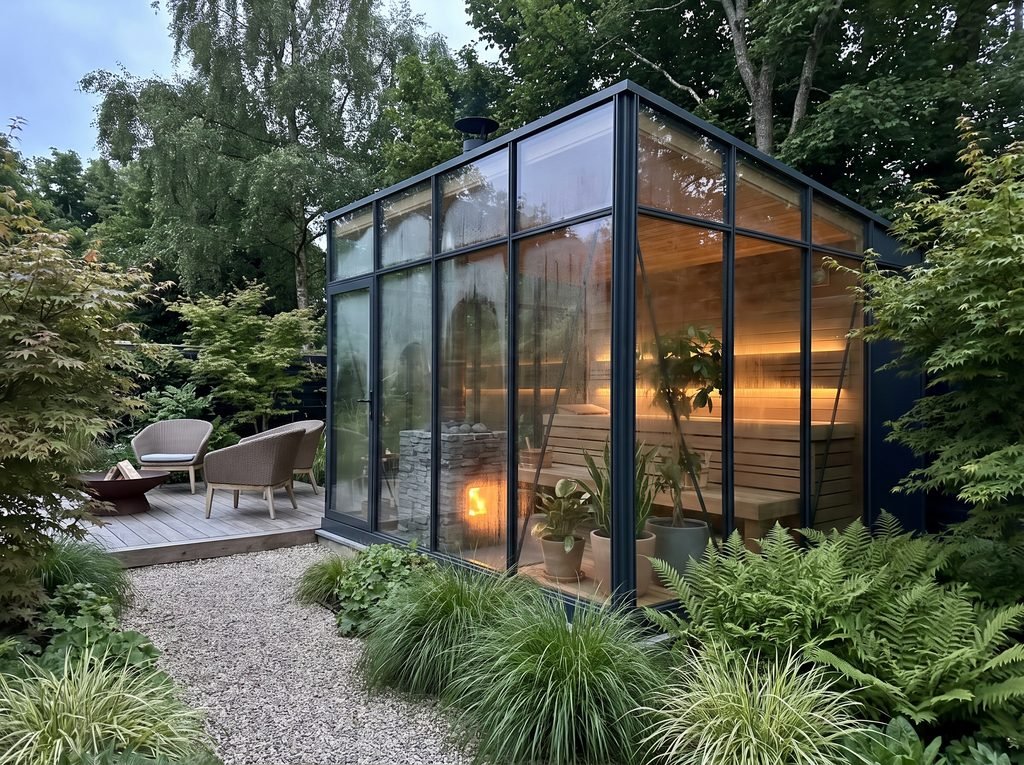
A greenhouse sauna is essentially a sauna or sauna-inspired relaxation space installed inside, beside, or as part of a greenhouse-style garden structure. Depending on the design, it may be a fully enclosed sauna room surrounded by glass or a more open garden wellness space containing a traditional sauna cabin.
There is no single standard design. Some greenhouse saunas are built by placing a compact timber sauna inside a larger greenhouse. Others use a greenhouse shell as the outer building and create a properly insulated sauna room within it. More creative designs combine a small sauna compartment with a warm lounging area, changing space, outdoor shower, or garden seating.
The attraction is easy to understand. Traditional indoor saunas can feel isolated from nature, while an outdoor greenhouse sauna can provide a much stronger connection with the landscape. During the day, sunlight can filter through the glazing. In the evening, garden lights can create a cozy atmosphere. In cooler seasons, the contrast between the warm interior and the cold garden outside can make the experience especially appealing.
Another reason the idea attracts attention is design flexibility. A greenhouse sauna does not have to look like a commercial spa. It can be rustic, modern, Scandinavian-inspired, minimalist, traditional, or highly customized to match an existing garden.
However, the term can be misleading. A standard greenhouse is designed primarily for plants, while a sauna is designed for controlled human heat exposure. These are two very different environments. A successful greenhouse sauna must therefore be designed around sauna requirements rather than assuming that a greenhouse can safely function as one without modification.
Greenhouse Sauna Ideas for Different Garden Styles
One of the biggest advantages of this concept is that it can be adapted to many gardens. A small urban garden might use a compact greenhouse-style structure with a two-person sauna interior. A larger rural garden could accommodate a spacious building with a sauna, changing room, shower, and relaxation area.
A Small Greenhouse Sauna for Compact Gardens
For a small garden, simplicity is often the best approach. A compact timber sauna room can sit inside a glazed outer structure, creating a cozy space without requiring a huge footprint.
A two-person sauna may be enough for homeowners who mainly want a quiet place to unwind. Adding a small bench outside the sauna room can create a useful transition area where users can cool down and enjoy fresh air.
Compact designs also tend to be easier to heat and maintain. A smaller interior means less air volume to warm, while a separate exterior envelope can provide additional protection from weather.
A Luxury Garden Greenhouse Sauna
Larger gardens offer more creative possibilities. A luxury greenhouse sauna might include a traditional wood-lined sauna room, changing area, shower, relaxation chairs, decorative lighting, and an outdoor deck.
Glass can be used strategically rather than covering every wall. A large window facing trees or a garden border may provide the visual effect you want without turning the entire structure into a highly exposed space.
Natural materials such as cedar, heat-treated timber, stone, and textured wood can help create a premium spa-like atmosphere.
A Rustic Greenhouse Sauna
A rustic design could combine reclaimed timber, natural stone, wooden benches, warm lighting, and a simple greenhouse frame. This style works especially well in cottage gardens, allotments, woodland gardens, and rural properties.
The aim is not to create a polished commercial spa. Instead, the greenhouse sauna can feel like an extension of the garden itself.
A Modern Minimalist Greenhouse Sauna
For contemporary homes, a minimalist greenhouse sauna can use clean lines, dark framing, simple timber interiors, discreet LED lighting, and large areas of glazing.
A restrained material palette often creates a stronger visual effect than adding too many decorative elements. The sauna should feel calm and uncluttered.
Why Build a Greenhouse Sauna Instead of a Traditional Sauna?
There are several reasons people consider this type of project.
The first is the connection with nature. A greenhouse-style sauna can make it possible to enjoy views of plants, trees, flowers, and changing weather while staying in a controlled warm environment.
The second is design appeal. Traditional outdoor saunas can look like small wooden cabins. While that style is attractive, a greenhouse sauna offers a different architectural character.
The third benefit is versatility. A carefully designed garden structure can potentially serve more than one purpose. The sauna may be the main feature, but the surrounding area can function as a changing space, relaxation room, garden room, or sheltered seating area.
Another attraction is the possibility of using natural daylight. Rather than relying entirely on artificial lighting, the design can make the most of daytime sunlight.
The concept may also appeal to homeowners who already have a greenhouse structure and are considering alternative uses for it. However, converting an existing greenhouse requires particularly careful planning because its original materials and systems may not have been designed for sauna conditions.
Greenhouse Sauna vs Traditional Outdoor Sauna
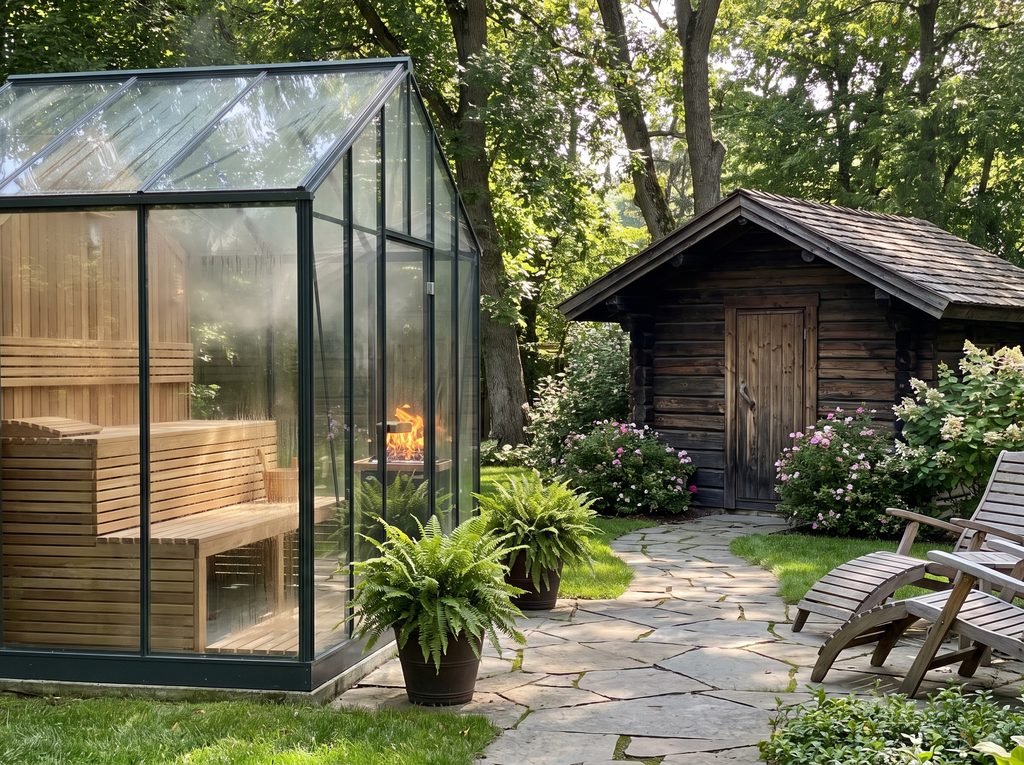
A traditional sauna is designed specifically for heat. Its walls, benches, heater, ventilation, insulation, controls, and electrical equipment are selected for that environment.
A greenhouse is designed for plants.
That difference is extremely important.
A sauna typically needs effective insulation, controlled ventilation, heat-resistant interior materials, proper electrical installation, and a heater designed for the intended space. A greenhouse often prioritizes sunlight transmission, plant ventilation, moisture management, and lower-temperature environmental control.
The key question is therefore not simply, “Can I put a sauna in a greenhouse?” The better question is, “How can I design a greenhouse-style structure around the technical requirements of a sauna?”
That mindset helps avoid many common mistakes.
How Does a Greenhouse Sauna Work?
A typical greenhouse sauna concept has two environmental layers.
The first is the external greenhouse-like envelope. This may consist of glass or polycarbonate panels supported by a timber or metal frame.
The second is the sauna interior. This should generally be treated as the actual heat-controlled room, with appropriate wall construction, insulation, interior cladding, benches, heater, ventilation, and controls.
This layered approach is often more practical than trying to turn the greenhouse shell itself into the complete sauna chamber.
The outer glazing can provide visual connection with the garden while the inner sauna room creates a controlled thermal environment.
Depending on the design, the space between the inner sauna room and the greenhouse envelope can act as a buffer zone. It may also be useful as a changing or relaxation area.
Choosing the Right Greenhouse Structure
The structure is one of the first major decisions.
Glass is visually impressive and provides excellent natural light. However, it can also create significant solar heat gain and raises privacy considerations.
Polycarbonate is another possibility. It is generally lighter and available in different forms, including multiwall panels with insulating properties. However, the suitability of a particular polycarbonate product depends on its temperature rating, construction, framing method, and intended application.
A greenhouse designed for gardening should not automatically be assumed suitable for a sauna environment.
Frame materials matter as well. Timber creates a warm, natural appearance, while aluminum can provide a modern look and requires less routine protection from moisture. The structural system should be selected based on the overall building design, local weather conditions, and the additional loads created by sauna equipment and interior construction.
Insulation Is One of the Most Important Considerations
One of the biggest challenges in a greenhouse sauna is controlling heat.
Sauna temperatures can be far higher than those normally found inside a greenhouse. If the space is poorly insulated, the heater may need to work continuously, energy costs can rise, and the user experience may be uncomfortable.
A dedicated insulated sauna room inside the greenhouse is therefore a sensible design approach for many projects.
The exact wall, ceiling, and floor assembly depends on the materials used, local climate, building regulations, and heater specification. The goal is to create a controlled thermal envelope rather than allowing the sauna’s heat to escape immediately through large areas of glazing.
The ceiling deserves particular attention because warm air rises. Poorly insulated overhead surfaces can produce substantial heat loss.
Doors also matter. A sauna door should close securely and be suitable for the environment. Gaps, poor seals, or unsuitable materials can negatively affect temperature control.
What Kind of Heater Should a Greenhouse Sauna Use?
The heater is the heart of the sauna.
Electric sauna heaters are popular because they are relatively easy to control and can provide predictable heat. They also avoid the combustion products associated with wood-burning systems.
A wood-burning sauna stove can create a traditional experience and may appeal to people who enjoy natural fire and the ritual associated with lighting a stove. However, it introduces additional requirements for flue installation, clearances, combustion air, heat shielding, and fire safety.
The heater must be appropriately sized for the actual sauna volume and construction. Manufacturers typically provide sizing guidance based on room dimensions and materials, and large glazed areas can affect heater requirements.
Do not select a heater simply because it fits inside the space. The entire installation should follow the manufacturer’s requirements and applicable safety standards.
Can You Use a Wood-Burning Stove in a Greenhouse Sauna?
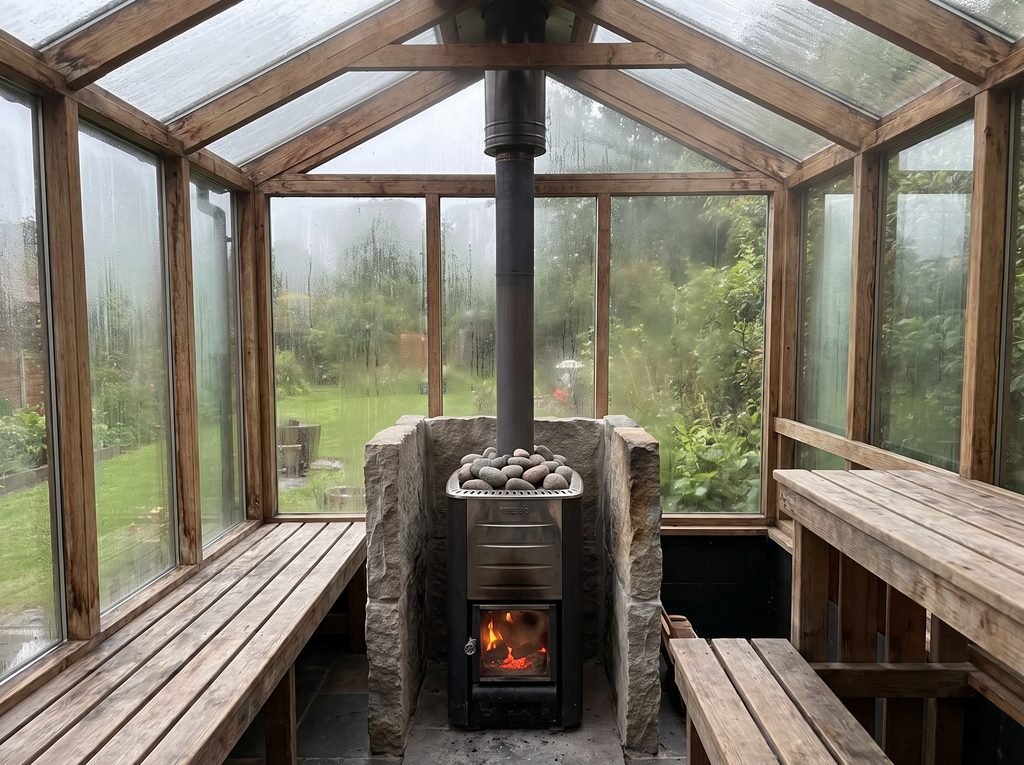
It is possible to create a greenhouse-style sauna with a wood-burning stove, but this approach demands particular caution.
A stove requires a properly designed flue system, adequate ventilation, appropriate clearances from combustible materials, heat protection, and a safe method for managing ashes and fuel.
Large glass panels, timber frames, polycarbonate panels, curtains, plants, furniture, and other nearby materials must all be considered.
The flue must pass through the structure using the correct components and clearances specified for that system. Improvised penetrations through greenhouse roofing or walls are not appropriate.
A qualified professional should assess this type of installation, especially where local regulations or planning requirements apply.
For many homeowners, an electric sauna heater will be the simpler option because it removes the need for a chimney and combustion system.
Ventilation in a Greenhouse Sauna
Ventilation is essential for both comfort and moisture management.
A sauna needs fresh air, and the design should allow stale air and excess humidity to leave the space in a controlled way.
The ventilation strategy depends on the heater type, sauna design, room volume, and manufacturer guidance. In general, the location of air inlets and outlets matters because air movement affects temperature distribution and the overall sauna experience.
A greenhouse environment also adds another consideration: condensation.
Warm humid air meeting cooler glass can produce condensation. Over time, persistent moisture can contribute to mold, staining, material deterioration, or unpleasant odors.
Good ventilation can help manage this, but the building should also be designed so that moisture does not become trapped in walls, ceilings, or hidden cavities.
The Role of Glass in a Greenhouse Sauna
Glass is arguably the defining visual feature of this concept.
Large windows can create beautiful views and make the sauna feel open and connected to the landscape. Watching rain, snow, autumn leaves, or evening light from a warm sauna can be part of the appeal.
Yet glass also creates challenges.
Direct sunlight can cause the interior to heat rapidly. Privacy can be difficult, especially in urban gardens. Cold glass surfaces may contribute to condensation, while large glazed areas can increase heat loss during cooler periods.
The best approach is often strategic glazing rather than maximum glazing.
For example, one side of the sauna could face a private garden view while other surfaces remain more insulated. External screening, planting, blinds, or architectural privacy panels can provide additional control.
Should a Greenhouse Sauna Have Plants Inside?
Plants can look beautiful in a greenhouse sauna concept, but you should think carefully about where they are placed.
A conventional sauna reaches conditions that many garden plants do not tolerate well. High temperatures and rapid changes in humidity can stress or damage plants.
Instead of placing ordinary greenhouse plants inside the hottest sauna chamber, consider using greenery in the surrounding relaxation zone where temperatures are lower.
A separate plant area can create the greenhouse atmosphere without forcing plants to endure sauna-level heat.
Decorative greenery can also be positioned outside the sauna room, allowing the user to enjoy the visual effect through glass.
Flooring for a Greenhouse Sauna
Flooring should be practical, durable, moisture-resistant, and easy to clean.
The exact choice depends on the design. Some sauna interiors use timber flooring, while other designs incorporate tile, concrete, stone, or specialized sauna flooring assemblies.
Slip resistance is important, particularly if the design includes showers or frequent water use.
Drainage should also be considered. If water will be used inside the sauna area or an adjacent shower space, the floor needs to be designed to manage it effectively.
A simple-looking floor can hide a surprisingly complex construction beneath it. Waterproofing, drainage, insulation, structural support, and ventilation all need to work together.
Choosing Interior Wood for a Greenhouse Sauna
Wood is closely associated with sauna design because it creates a warm and natural environment.
Popular sauna interior woods include cedar, spruce, aspen, alder, and other species selected for their appearance and suitability for warm humid conditions.
The right wood depends on budget, availability, appearance, thermal characteristics, and local sourcing.
Benches deserve particular attention. They should be comfortable, securely constructed, and suitable for repeated exposure to heat and humidity.
Avoid unnecessary finishes that may not be suitable for sauna interiors. Follow the recommendations of the wood and sauna-system manufacturers when selecting treatments.
Greenhouse Sauna Benches: Comfort Matters
A sauna can look spectacular but still feel uncomfortable if the benches are poorly designed.
Bench height, depth, spacing, and placement influence the experience. You want enough room to sit comfortably and move safely without creating awkward contact with hot surfaces.
The number of people using the sauna should also influence the layout.
A small two-person sauna can use a compact bench arrangement, while a family-sized sauna may need multiple levels or longer seating.
However, larger benches increase interior volume and may influence heater sizing. Everything is connected.
Adding a Shower or Cold-Water Area
One of the most appealing aspects of an outdoor sauna is the ability to create a complete hot-and-cold wellness routine.
A greenhouse sauna could potentially include an outdoor shower, water station, cold plunge, garden hose shower, or dedicated cooling zone.
These features should not be treated as simple add-ons. Water supply, drainage, freezing temperatures, waterproofing, slip resistance, and privacy all require planning.
A cold plunge also introduces its own maintenance and safety requirements. If water is stored for repeated use, filtration and sanitation need to be considered.
For a simpler setup, a basic outdoor shower near the sauna may provide much of the desired experience without the complexity of a plunge pool.
Privacy Ideas for a Glass Greenhouse Sauna
Privacy is one of the biggest concerns with large glass structures.
A greenhouse sauna that looks perfect in a rural garden may feel uncomfortable in a suburban setting.
Fortunately, privacy does not require removing the visual character of the building.
Tall planting can create a natural screen. Bamboo, shrubs, ornamental grasses, hedging, or trees may help depending on the garden.
Exterior blinds or sauna-compatible screening can provide flexible control.
Frosted or obscured glazing can also be used strategically, especially at lower viewing levels.
Another option is architectural screening made from timber slats or decorative panels. These can create privacy while still allowing light into the surrounding garden room.
Lighting Ideas for a Greenhouse Sauna
Lighting can completely change the atmosphere.
During the day, natural light may be enough. At night, warm low-level lighting can transform the sauna into a peaceful retreat.
Avoid excessive brightness. Sauna lighting is usually most effective when it feels soft, indirect, and relaxing.
LED lighting can be placed behind benches or architectural details, provided the equipment is appropriate for the temperature and location where it is installed.
Electrical components must be selected and installed for the environmental conditions. A standard indoor light fitting should not simply be placed in a high-temperature sauna area without confirming suitability.
How to Keep a Greenhouse Sauna Comfortable in Winter
Winter use is one of the most attractive possibilities because the contrast between warm interior air and cold outdoor temperatures can be dramatic.
However, winter also exposes weaknesses in the building envelope.
A dedicated insulated sauna room will generally perform more predictably than a simple glass enclosure.
The greenhouse outer layer can provide weather protection, while insulation and the sauna’s own thermal envelope keep the actual bathing room warm.
In extremely cold conditions, water pipes and drainage systems also need protection from freezing.
Winter ventilation must be balanced carefully. You need fresh air without unnecessarily losing excessive heat.
What About Summer Heat?
Summer creates the opposite problem.
A greenhouse naturally collects solar energy, and a sauna placed inside it could become excessively hot even before the heater is switched on.
This can make the space uncomfortable and potentially put additional stress on materials and equipment.
Ventilation, shading, blinds, roof vents, external screens, and carefully chosen glazing can help manage solar gain.
Some homeowners may choose to use the sauna mainly during cooler months and treat the greenhouse portion as a garden lounge during summer.
That approach can make the structure more versatile throughout the year.
Greenhouse Sauna Safety: What You Should Never Ignore
Safety should be central to the design.
High heat, hot stones, electrical equipment, timber, glass, water, and potentially fire all exist within a relatively small space.
The heater must be installed according to manufacturer instructions, including required clearances and protective measures.
Electrical work should be completed by a suitably qualified professional and designed for the environmental conditions.
Any wood-burning heater requires appropriate flue and combustion provisions.
The sauna should have sensible access and a door that can be opened easily. The floor should not create unnecessary slip hazards.
A thermometer and appropriate controls should be provided so users can monitor conditions.
People should also understand their own tolerance to heat. Staying in extreme heat for too long can be dangerous, and users should leave immediately if they feel dizzy, weak, confused, nauseated, or otherwise unwell.
Children require particular care around hot sauna equipment and high-temperature environments.
A greenhouse sauna can be relaxing, but it should never be treated as a completely risk-free garden decoration.
Is a Greenhouse Sauna Expensive to Build?
The answer depends heavily on design.
A compact structure with an existing greenhouse shell and a basic electric sauna system can cost considerably less than a custom luxury garden spa.
On the other hand, a high-end greenhouse sauna with premium glazing, custom timber interiors, changing facilities, drainage, shower systems, landscaping, lighting, and specialized electrical work can become a substantial investment.
The major cost areas typically include the structure, sauna room construction, heater, electrical installation, insulation, interior timber, doors, glazing, flooring, drainage, ventilation, and professional labor.
One mistake is to budget only for the heater and greenhouse.
The technical systems that make the space safe and comfortable can represent a significant part of the total project.
DIY Greenhouse Sauna or Professional Installation?
Some parts of the project may be suitable for experienced DIY builders, particularly decorative work, landscaping, planting, and non-technical interior finishing.
However, specialist work such as electrical systems, structural modifications, stove installation, flue systems, waterproofing, and drainage may require professional expertise.
The complexity depends on the design and local requirements.
A sensible approach is to separate the project into stages and identify which parts require specialist involvement.
Before modifying an existing greenhouse, inspect its frame, foundation, glazing, roof, drainage, and structural condition. A structure that is perfect for tomato plants may not be suitable for the additional weight and environmental demands of a sauna installation.
Planning Permission and Building Rules
Rules vary by location, property type, structure size, and how the building is used.
A greenhouse may sometimes fall under different rules from an occupied garden building, sauna, or recreational structure.
Adding plumbing, electrical systems, permanent foundations, or a wood-burning stove can also create additional requirements.
Before construction, check the rules that apply in your area rather than assuming that an existing greenhouse automatically qualifies for unrestricted conversion.
Professional advice may be worthwhile, particularly for larger structures or permanent installations.
Common Greenhouse Sauna Mistakes to Avoid
One common mistake is using a standard greenhouse as though it were a finished sauna.
Another is choosing an undersized heater without accounting for glazing and construction.
Poor ventilation is another problem. A sauna that becomes excessively humid or difficult to refresh can quickly become unpleasant.
Ignoring privacy is also common. A beautiful glass structure may not be relaxing if neighboring properties can see directly into it.
Some homeowners focus heavily on aesthetics and forget drainage. Water and condensation can become major problems when moisture management is not considered early.
Another mistake is placing unsuitable electrical equipment in a hot or humid area.
Finally, people sometimes try to solve every problem themselves. Technical systems are not the right place to prioritize saving a little money over safe installation.
How to Design the Perfect Greenhouse Sauna Layout
Start by thinking about how you want to use the space.
Will it be a two-person relaxation sauna? A family sauna? A sauna and garden lounge? A complete wellness room?
Once the purpose is clear, the layout becomes easier to plan.
A simple design might have a dedicated sauna room at one end of the greenhouse, with benches facing a garden window. The opposite end could contain a small changing area and a door leading to an outdoor shower.
A larger layout could include an enclosed sauna room, separate changing space, shower, seating area, and exterior deck.
Try to create a natural sequence: enter, change, heat up, cool down, relax, and leave.
Good design is not only about appearance. It should also make movement through the space easy and intuitive.
Small Greenhouse Sauna Design Tips That Make a Big Difference
You do not need a huge building to create an attractive sauna.
A small footprint can still feel luxurious when the layout is efficient.
Use built-in benches instead of bulky furniture. Use vertical storage for towels and accessories. Keep the material palette simple.
A well-positioned window can provide more visual impact than a wall covered with decorative features.
Use the surrounding garden as part of the design. Trees, planting borders, stone paths, gravel, and outdoor seating can make the sauna feel like a destination rather than another garden building.
Can You Turn an Existing Greenhouse Into a Sauna?
In some cases, an existing greenhouse can become part of a sauna project, but conversion should be evaluated carefully.
Check the structure first. Look for corrosion, frame movement, damaged glazing, weak foundations, leaks, and poor drainage.
Then consider the thermal envelope. A conventional greenhouse may have little insulation, making it difficult to maintain sauna conditions efficiently.
The safest solution may be to build an insulated sauna module inside the existing greenhouse rather than trying to make the original greenhouse enclosure carry the entire thermal burden.
This preserves the glasshouse appearance while giving the sauna itself a proper interior environment.
How to Maintain a Greenhouse Sauna
Maintenance should be planned from the beginning.
The sauna interior should be cleaned regularly according to the manufacturer’s recommendations. Benches should be kept dry and inspected for wear.
The ventilation system should remain clear.
Glass should be cleaned so that natural light and garden views remain unobstructed.
Sealants, joints, roofing, and drainage should be inspected periodically, especially after severe weather.
If the structure includes timber exposed to outdoor moisture, its protective treatment may need maintenance.
Electrical systems and heaters should also be inspected according to manufacturer and local requirements.
A little routine care can prevent small issues from becoming expensive repairs.
Making Your Greenhouse Sauna More Energy Efficient
Energy efficiency begins with the thermal envelope.
The better the sauna room is insulated, the easier it is to maintain the required temperature.
A correctly sized heater is also important. A heater that is too small may run excessively, while a poorly selected system may deliver inconsistent results.
Door and window design matters as well.
Using a smaller insulated sauna room within a larger greenhouse envelope can be one of the most effective strategies because you can preserve the glasshouse experience while reducing the volume of air that needs to be heated.
Shading the outer glazing during intense summer sunlight can also reduce unwanted heat gain.
Greenhouse Sauna Accessories Worth Considering
Accessories can improve the experience, but they should be selected with the environment in mind.
A dedicated bucket and ladle can suit traditional sauna use. Comfortable towels, robes, a thermometer, storage hooks, and a bench outside the sauna can all make the experience more convenient.
A small outdoor seating area is particularly useful because cooling down is an important part of the overall experience.
For a luxury design, homeowners might consider smart lighting, weather-resistant speakers, decorative screens, or integrated storage.
The best accessories are those that make the space more comfortable without cluttering it.
Creating a Relaxing Greenhouse Sauna Experience
A sauna is not only about temperature.
The surroundings influence the experience just as much.
Natural materials, quiet surroundings, soft lighting, clean lines, and a comfortable transition area can turn a basic sauna into a memorable retreat.
Think about sounds as well. Trees moving in the wind, rain hitting glass, birds in the garden, or complete evening quiet can become part of the atmosphere.
A carefully designed greenhouse sauna can therefore feel more like a private garden sanctuary than a simple heated room.
Is a Greenhouse Sauna Good for Your Garden?
Potentially, yes, especially when the design is integrated thoughtfully.
Instead of creating a structure that looks disconnected from the rest of the property, the greenhouse sauna can become part of the garden’s overall landscape.
Paths can lead naturally toward the sauna. Plants can frame the exterior. A seating area can connect the sauna to the lawn or patio.
The building can even become a year-round focal point.
During cool evenings it functions as a sauna retreat. During the day it may work as a bright garden lounge. Depending on the design, parts of the structure can support plants and outdoor activities when the sauna is not being used.
Frequently Asked Questions About Greenhouse Saunas
What is a greenhouse sauna?
A greenhouse sauna is a sauna concept built inside, beside, or as part of a greenhouse-style garden structure. It combines the visual connection of a glasshouse with a dedicated heated sauna environment.
Can I put a sauna heater inside a normal greenhouse?
A normal greenhouse should not automatically be considered suitable for a sauna heater. Heater type, clearances, ventilation, electrical systems, materials, and structural design all need to be assessed.
Is glass suitable for a greenhouse sauna?
Glass can be used effectively as part of the overall design, especially for views and natural light. However, excessive glazing can increase heat loss, solar gain, condensation, and privacy concerns.
Is polycarbonate a good option?
Polycarbonate may be useful for some greenhouse-style outer structures, but the specific product must be appropriate for the temperatures, construction, and application involved.
Can a greenhouse sauna be used all year?
Yes, with the right design. Winter performance depends on insulation, heating, weather protection, ventilation, and protection of water systems from freezing. Summer use requires effective control of solar heat gain.
Can I build a greenhouse sauna myself?
Some non-technical parts can be DIY projects, but electrical installations, structural changes, wood-burning stoves, flues, and complex waterproofing may require qualified professionals.
How many people can use a greenhouse sauna?
That depends on the sauna’s internal dimensions and bench design. A compact sauna may suit one or two people, while larger layouts can accommodate families or groups.
Do greenhouse saunas need ventilation?
Proper ventilation is important for user comfort and moisture management. The exact ventilation strategy should be designed according to the sauna system, heater, room size, and installation requirements.
Can I grow plants inside a greenhouse sauna?
Plants can be used in cooler surrounding areas, but the hottest part of a sauna may not be suitable for ordinary greenhouse plants. A separate relaxation or greenhouse zone is often a better solution.
Pros and Cons of a Greenhouse Sauna
The biggest advantage is the combination of wellness and garden design. A greenhouse sauna can provide privacy, warmth, natural light, and views of the outdoors in one unusual structure.
Its flexibility is another benefit. With thoughtful planning, the building can include a sauna, relaxation area, outdoor shower, garden seating, and possibly a separate plant zone.
The disadvantages mostly involve complexity. Large glazed areas can create thermal challenges. Moisture can become a problem. Privacy needs to be planned. Specialized electrical and heating equipment must be installed correctly.
The concept is therefore most successful when it is approached as a purpose-built wellness building rather than a simple greenhouse conversion.
Final Thoughts: Is a Greenhouse Sauna Worth It?
A greenhouse sauna can be an exceptional addition to a garden when it is designed around safety, comfort, efficiency, and the natural character of the property.
The most successful projects do not try to make a greenhouse behave exactly like a conventional sauna. Instead, they combine the strengths of both concepts. The glasshouse provides daylight, views, shelter, and architectural character, while a dedicated sauna room provides insulation, heat control, ventilation, and a comfortable environment.
For a small garden, that may mean a compact sauna pod inside a greenhouse-style shell. For a larger property, it could become a full garden wellness retreat with timber interiors, a shower, cooling area, outdoor deck, and landscaped surroundings.
Before starting, think about your intended use, budget, climate, available garden space, privacy, heating method, insulation strategy, and local building requirements.
Then design the project around those priorities.
Most importantly, do not let the visual appeal of glass and timber distract from the technical side of the project. A beautiful sauna is only truly successful when it is also comfortable, durable, efficient, and safely installed.
A well-designed greenhouse sauna can turn an underused part of a garden into a place you genuinely look forward to visiting. Imagine finishing a cold winter walk, stepping into a warm wooden room, watching the garden through the glass, and then cooling down outside beneath the open sky. That combination of nature and relaxation is what makes the idea so appealing.
Ready to Create Your Own Greenhouse Sauna?
Start with the basics: choose the right location, decide whether you want a dedicated sauna room inside the greenhouse or a purpose-built hybrid structure, determine your preferred heating system, and plan insulation and ventilation before worrying about decorative details.
Do not rush the technical decisions. A thoughtful design at the beginning can save considerable money and frustration later.
Once the fundamentals are right, you can personalize the space with beautiful timber, soft lighting, garden planting, comfortable seating, privacy screening, and the finishing touches that make the sauna feel uniquely yours.
A greenhouse sauna is more than a garden building. Done properly, it can become a private year-round retreat where architecture, wellness, and nature come together.
Start planning the space around how you want to feel when you use it—and build the details around that vision.