A well-designed growing space can completely change the way you use your garden. Instead of depending entirely on outdoor weather, you can create a more controlled environment for raising seedlings, protecting tender plants, growing vegetables for longer, enjoying exotic plants, or simply spending more time surrounded by greenery. In 2026, that idea goes beyond the traditional glass structure at the end of a garden. Modern gardeners are choosing from classic greenhouses, compact growhouses, practical lean-to designs, stylish conservatories, and multipurpose glazed spaces that combine gardening with everyday living.
Table of Contents
Although these structures may look similar, they are designed for different purposes. A greenhouse is primarily a controlled growing environment, while a conservatory is generally designed as an extension of a home. A growhouse is usually a smaller, simpler and more affordable growing structure, often made with a lightweight frame and plastic or polycarbonate covering. Understanding those differences makes it much easier to choose the right option for your garden, budget and lifestyle.
A good growing structure is not simply about adding glass or plastic panels. Its success depends on light, ventilation, orientation, drainage, temperature control, access, construction quality and the types of plants you want to grow. A structure that looks impressive can still perform badly if it overheats during summer, stays too cold in winter or receives very little useful sunlight.
The Royal Horticultural Society describes greenhouses as valuable protected environments for raising seedlings, growing tender plants, extending the growing season and overwintering plants. It also notes that glass provides excellent light transmission, while polycarbonate glazing can be durable and retain heat effectively.
This complete 2026 guide explores the differences between greenhouses, conservatories and growhouses, explains how to choose the right design, looks at practical growing techniques, discusses heating and ventilation, and shows how to turn a covered garden space into something genuinely productive and enjoyable.
Why a Greenhouse Can Transform Your Garden in 2026
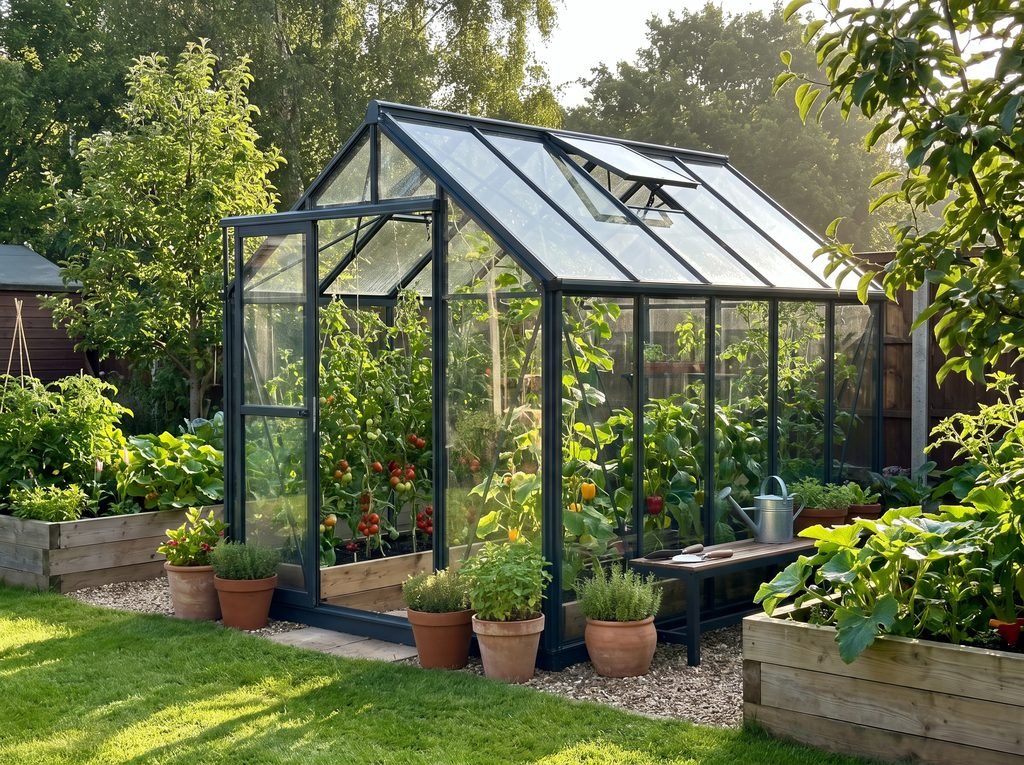
One of the biggest advantages of a greenhouse is control. Outdoor gardening is always influenced by wind, heavy rainfall, sudden temperature changes, late frosts and fluctuating seasonal conditions. A protected structure does not eliminate those problems completely, but it gives you a valuable buffer between your plants and the outside environment.
That extra protection can mean starting seeds earlier, keeping young plants safer, harvesting vegetables for longer and growing crops that might struggle in an exposed garden. Even an unheated structure can extend the effective growing season, while heating and insulation can provide additional protection for plants that need warmer conditions.
The RHS explains that even a small, unheated greenhouse can help gardeners extend the season and grow a broad range of vegetables. It can be used for early sowing, summer crops such as tomatoes, cucumbers, peppers and chillies, and later autumn crops when outdoor conditions become less favourable.
There is also a psychological benefit that is easy to overlook. A greenhouse gives you a dedicated place to garden regardless of whether the lawn is wet or the wind is strong. For many people, it becomes a quiet workspace where they can pot plants, take cuttings, monitor seedlings and enjoy the garden throughout more of the year.
In 2026, there is another reason these structures are attracting attention: efficient use of space. Smaller urban gardens, patios and compact plots can still benefit from vertical growing, shelving, hanging containers and carefully selected crops. You do not necessarily need a huge structure to become a productive gardener.
Greenhouse, Conservatory or Growhouse: What Is the Difference?
The terms are sometimes used interchangeably, but there are important differences.
A greenhouse is designed specifically for plant cultivation. Its construction is usually based around transparent or translucent glazing, ventilation and a layout that makes growing practical. Traditional greenhouses often use glass and aluminium, while modern versions may use polycarbonate or other glazing materials.
A conservatory, by contrast, is generally a home extension with a large amount of glazing. It may contain furniture, flooring, electrical systems, lighting and heating, and is normally designed as a living or leisure space rather than a dedicated growing environment.
A growhouse sits somewhere closer to the greenhouse category but is typically smaller, lighter and more economical. Many growhouses use a metal or plastic frame with a transparent PVC cover. They are useful for people who have limited space, want an inexpensive starting point or only need modest protection for plants.
The right choice depends on what you want from the structure. Someone growing tomatoes, peppers and seedlings may get much more value from a traditional greenhouse. Someone who wants a bright extra living space may prefer a conservatory. Someone with a balcony, patio or tiny garden could find that a growhouse offers the best combination of cost and usefulness.
Understanding the intended purpose before purchasing prevents one of the most common mistakes in garden design: buying a structure because it looks attractive instead of choosing one that actually suits your plants and routine.
How to Choose the Best Greenhouse for Your Garden
Choosing a greenhouse begins with your growing goals. Think about what you want to grow, when you want to grow it and how much time you are prepared to spend maintaining the space.
If your main goal is raising seedlings in spring, a relatively compact structure with good light and ventilation may be enough. If you want to grow large tomato plants, climbing cucumbers and peppers throughout the summer, height and floor area become more important. Gardeners interested in tender plants or year-round cultivation may also need insulation and heating.
The location is equally important. A greenhouse placed in deep shade may be convenient, but convenience does not compensate for poor light. The RHS recommends choosing a position with as much uninterrupted sunshine as possible while providing shelter from cold winds. Orientation can also be adjusted according to how you expect to use the structure during different seasons.
Think carefully about nearby trees too. Large branches can create shade, drop leaves and potentially damage glazing. Tree roots may also interfere with foundations or paving. Similarly, placing a greenhouse right beside a tall wall can create a sheltered microclimate, but it can also reduce available light.
Access matters more than many first-time buyers expect. You will need to carry compost, trays, pots, watering equipment and harvested crops into and out of the structure. A narrow entrance or awkward path can quickly become frustrating.
Glass or Polycarbonate: Which Material Is Better?
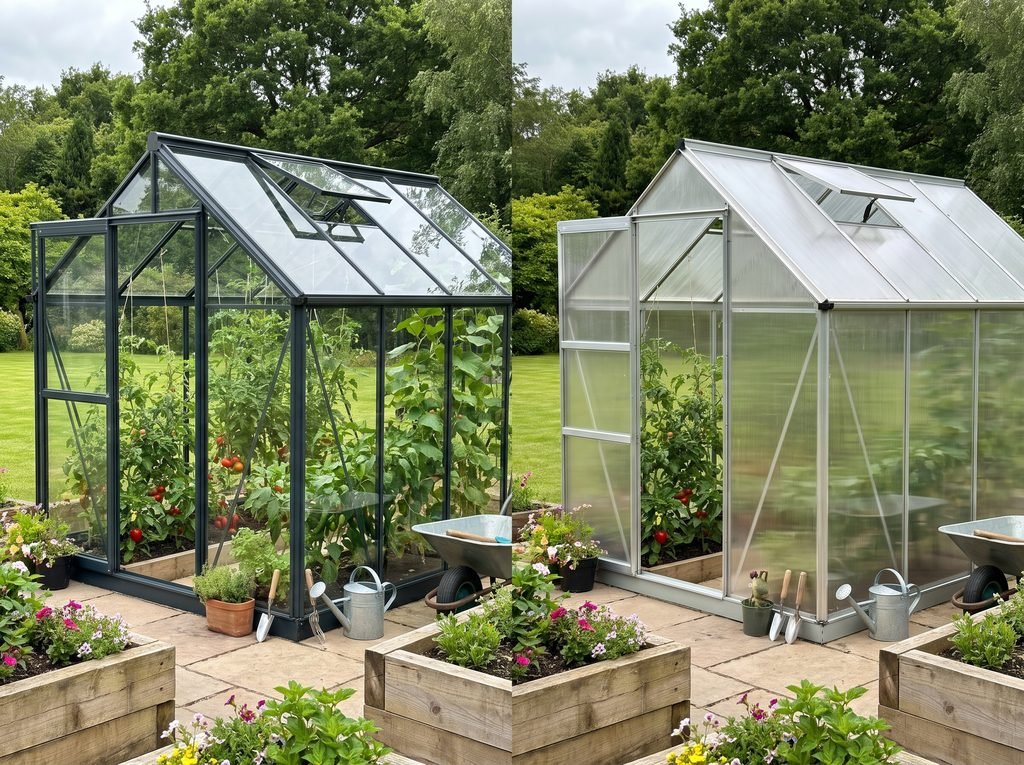
Glazing has a major impact on performance, appearance and long-term maintenance.
Traditional glass remains popular because it offers excellent light transmission and creates the classic greenhouse appearance many gardeners love. The RHS notes that glass transmits and holds more light than plastic glazing and gives a particularly broad range of uses.
Glass can also be visually attractive in a mature garden, especially when paired with a well-designed aluminium frame or traditional timber structure. It does, however, require careful handling because individual panes can break.
Polycarbonate glazing has become a popular alternative because it is durable and can provide useful insulation. It is especially attractive for families, exposed gardens or anyone concerned about the practical risks associated with large areas of glass.
The choice is not simply about which material is “best.” It is about matching the material to your needs. A heritage-style garden may benefit from the look of glass, while a busy family garden might value the resilience of polycarbonate.
There is also a difference between various types of polycarbonate. Twin-wall and multi-wall sheets can provide additional insulation because of the air spaces within them. Their appearance is different from clear horticultural glass, but the performance may be more suitable for certain climates and uses.
The Importance of Ventilation
A beautiful glazed structure can become dangerously hot on a sunny day if ventilation is poor.
Plants require appropriate temperatures, airflow and humidity. When temperatures rise inside a closed structure, plants can suffer stress, and high humidity can contribute to fungal problems. Good ventilation helps regulate the environment and allows excess heat to escape.
Roof vents are particularly valuable because hot air naturally rises. The RHS advises that roof ventilation is especially important and indicates that roof vents should ideally be provided on both sides of the ridge, with ventilation capacity related to the floor area.
Automatic vent openers are a useful convenience because they can react when temperatures rise, opening without requiring you to be at home. However, they should not be treated as a complete substitute for active management. On exceptionally warm days, doors and additional vents may still be needed.
Good ventilation also helps reduce stagnant, humid conditions. This matters for both plants and people because a greenhouse that feels excessively damp is often harder to manage.
Where Should You Position a Greenhouse?
Positioning can make a dramatic difference to performance.
Start by observing your garden throughout the day. Identify where sunlight falls in the morning, at midday and during the afternoon. Consider both seasonal changes and future growth from trees or neighbouring vegetation.
An east-west orientation may help maximise winter light, while north-south orientation can work particularly well for summer crops depending on the site. The RHS notes that orientation should take into account when the structure will be used most heavily.
Avoid low areas where rainwater naturally collects. Standing water around foundations can create drainage problems and contribute to damp conditions.
A level base is also important. Uneven foundations can cause doors to stick, panels to misalign and frames to become unstable. Whether you use a paved foundation, slab or other suitable base, it should be properly prepared for the weight and design of the structure.
Making the Most of Limited Space
A small greenhouse can be remarkably productive when organised intelligently.
Instead of spreading everything across the floor, use the vertical space. Shelving can hold seed trays and smaller pots, while taller crops can occupy the central growing zone. Hanging baskets can be useful for suitable trailing plants, and wall-mounted supports can make better use of otherwise empty areas.
The key is to avoid overcrowding.
Plants need room for air to circulate around leaves and stems. Overcrowding can increase humidity and make pests and diseases harder to spot. The RHS recommends giving plants more space as they grow because improved spacing can help prevent disease and contain early pest problems.
Plan your layout before the growing season becomes busy. Allow space for watering, harvesting, pruning and inspection. A structure packed with plants may look productive, but if you cannot comfortably reach the pots and beds, maintenance becomes difficult.
What Can You Grow in a Greenhouse?
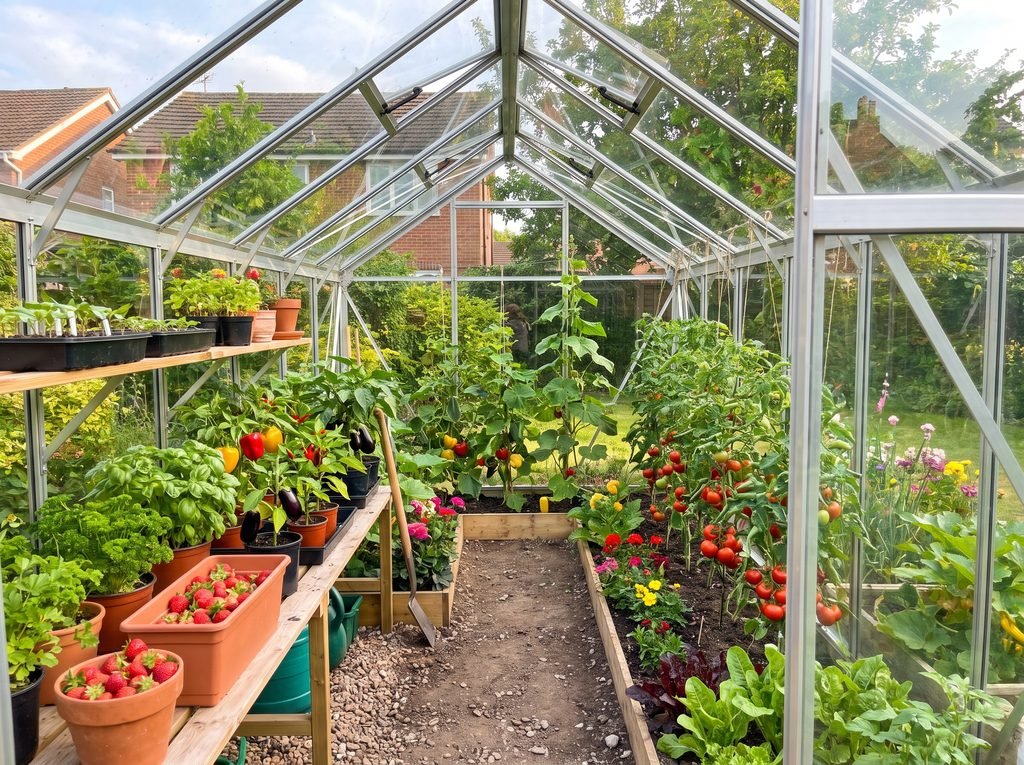
The possibilities are far broader than tomatoes.
Tomatoes are perhaps the classic greenhouse crop because they benefit from warmth and protection. Cucumbers, peppers, chillies and aubergines can also perform very well under suitable conditions. More adventurous gardeners can try melons, okra and other heat-loving crops.
The RHS specifically recommends protected cultivation for a wide range of tender vegetables and notes opportunities for early crops, summer production and later autumn harvests.
Seedlings are another major use. Starting plants under cover gives them protection while they establish stronger roots and leaves before being moved outside.
Herbs can also thrive in a suitable protected environment. Basil, for example, appreciates warmth, while parsley and other herbs can be cultivated at various times of year.
Flowers are equally worthwhile. A greenhouse can be used for raising bedding plants, taking cuttings, overwintering tender plants and experimenting with varieties that may struggle outdoors.
The best approach is to think of the structure as a seasonal workspace rather than a space dedicated to one crop.
Growing Vegetables Under Cover
A productive growing plan often starts months before harvest.
During late winter and early spring, hardy seeds can be started under protection before outdoor conditions become favourable. Tender crops can then be introduced as temperatures rise.
By mid-spring, gardeners can begin preparing summer crops such as cucumbers, beans, courgettes and melons. During late spring and early summer, young plants can move into their final growing positions once conditions are suitable.
Summer is usually the busiest period. Watering becomes more important, ventilation needs more attention and fast-growing plants need regular support and training.
By late summer and autumn, the structure can transition to another role. Salad leaves, autumn crops and certain hardy plants can extend productivity after outdoor summer crops have finished. The RHS provides a seasonal approach that demonstrates how a productive structure can remain useful through much of the year.
Watering and Humidity Management
Water management is one of the biggest lessons new gardeners learn.
Plants growing in a protected environment can dry out quickly because they receive more warmth and may be sheltered from natural rainfall. Seedlings can be especially demanding.
However, excessive watering can be just as problematic as underwatering.
The aim is consistency. Check the growing medium rather than following a fixed routine blindly. Different crops have different moisture requirements, and conditions can change dramatically between a cloudy spring day and a hot summer afternoon.
Good drainage is essential. Pots and containers should have appropriate drainage holes, while borders should not sit in stagnant water.
Humidity also deserves attention. In hot weather, damping down the floor can increase humidity and may help reduce some heat and pest-related problems. The RHS recommends this technique during hot conditions and also stresses the importance of ventilation.
Heating a Greenhouse in Winter
Heating can extend the growing season, but it should be approached carefully.
Not every greenhouse needs to be heated. An unheated structure can still provide useful protection for many half-hardy plants and can be particularly valuable for raising young plants when outdoor conditions are unsuitable.
The RHS notes that heating allows more extensive year-round use but also highlights the cost considerations involved.
Before installing a heater, ask what temperature your plants actually require. Maintaining a frost-free environment is very different from trying to create summer conditions in January.
For example, some tender plants can be protected with relatively cool winter temperatures, while tropical plants may require significantly warmer conditions. RHS guidance notes that cool conservatory and greenhouse plants may need a winter night minimum around 5°C, while warmer tropical plants can require substantially higher temperatures.
Insulation can help reduce unnecessary heat loss. Bubble insulation, for example, is suggested by the RHS as an option for many structures.
The most efficient strategy is usually to combine sensible plant selection, insulation, thermostatic control and targeted heating rather than attempting to keep an entire structure hot continuously.
Should You Choose a Growhouse?
A growhouse can be an excellent entry point for beginners.
It is generally simpler, lighter and less expensive than a full-scale greenhouse. That makes it appealing to gardeners with limited space or those who are unsure whether protected growing will become a long-term hobby.
Growhouses are especially useful on patios, balconies, small gardens and rented properties where a permanent structure may not be appropriate.
They can protect seedlings, herbs, young vegetables and smaller plants from wind and cold. Some designs have multiple shelves, allowing several layers of plants within a small footprint.
The main compromise is durability. Lightweight covers can be more vulnerable to strong winds or accidental damage than robust glass or polycarbonate structures. Ventilation and anchoring are also important.
A growhouse should therefore be selected according to local exposure and intended use. For a sheltered patio, a simple model may be perfectly practical. For an exposed garden, a stronger structure may provide better long-term value.
Conservatories as Green Growing Spaces
A conservatory offers a very different experience because it combines the qualities of a room with the benefits of glazing.
Rather than treating it solely as a plant-growing area, homeowners can use it as a flexible transition between indoor and outdoor spaces. Plants can bring colour and greenery into the room, while large glazed areas create a stronger visual connection with the garden.
However, conservatories are not automatically ideal for plants. Their internal temperatures can vary considerably, especially in summer. RHS advice recommends ventilation and shading to prevent overheating and plant scorch in conservatories.
Choosing suitable plants is therefore important. Cool conservatories may suit citrus, certain orchids, cacti and other plants that appreciate bright conditions without excessive winter warmth.
A conservatory designed thoughtfully can function as a beautiful indoor garden, but it should not be confused with a purpose-built greenhouse.
Conservatory Planning Permission and Building Regulations in the UK
If you are considering a conservatory as a home improvement project in England, planning and building regulations should be checked before work begins.
Planning Portal explains that a conservatory is often permitted development when certain limits and conditions are met, although those rights do not apply in every situation. Restrictions can arise because of factors such as property type, planning conditions, Article 4 directions or designated areas.
Building regulations are a separate matter from planning permission. Planning Portal states that conservatories normally qualify for an exemption from building regulations when specific conditions are met, including being at ground level, having a floor area of no more than 30 square metres, being separated from the house by suitable external-quality doors, windows or walls, and meeting other relevant conditions. A new structural opening between the existing house and the conservatory can require building regulations approval even where the conservatory itself would otherwise be exempt.
Because individual properties and projects vary, current requirements should always be checked with the relevant planning authority and building control body before construction. GOV.UK also emphasises that planning permission and building regulations approval are separate matters and that approval may be needed for building work depending on its nature.
Making a Conservatory More Comfortable Throughout the Year
Traditional conservatories have sometimes struggled with extreme temperature swings. The challenge is often that large glazed areas can make the room too hot in strong sunshine and too cold during winter.
Modern design can address these problems through better glazing, roof systems, shading, ventilation and insulation.
External shading can be particularly effective during hot weather because it reduces solar gain before heat reaches the interior. Internal blinds still have a role, but once sunlight has entered through the glass, some of that energy is already inside.
Ventilation is another major factor. Opening windows and roof vents can release hot air, while suitable heating and insulation can improve winter comfort.
Plant selection can also help. Instead of choosing delicate tropical species that demand precise conditions, consider a mixture of robust plants that tolerate the environment you can realistically provide.
Design Ideas for a Beautiful Garden Growing Space
Function and appearance do not have to compete.
A traditional greenhouse can become an attractive garden feature by using a carefully prepared path, surrounding planting, decorative containers and a tidy interior layout.
Modern structures can work well with minimalist gardens, while timber-framed designs may complement cottage-style landscapes.
Inside, consider creating visual zones. One area can be dedicated to seedlings, another to larger crops and another to potting or propagation. This makes the space easier to manage and gives every tool and activity a logical home.
Lighting can also improve usability, especially where the structure is used as a workspace. However, electrical equipment should be installed safely and in accordance with applicable requirements.
Good design should make the structure feel like part of the garden rather than an object placed randomly in it.
Common Greenhouse Mistakes to Avoid
One of the most common mistakes is choosing size based only on available space rather than intended use. Gardeners frequently discover that their first structure is too small once shelves, pots, bags, supports and mature plants are added.
Another problem is insufficient ventilation. A structure may stay pleasantly warm in spring but become excessively hot once summer arrives.
Poor drainage is another avoidable issue. Water that sits around the base can create structural and gardening problems.
Ignoring wind exposure can also lead to trouble. Lightweight structures need secure anchoring, particularly in exposed areas.
Overcrowding is a common mistake once plants begin growing quickly. What seemed like generous space in April can feel extremely crowded by June.
Finally, many people fail to plan winter use. Even when you are not actively growing crops, the structure may still be valuable for overwintering plants, storing suitable garden items or preparing the next season.
Pest and Disease Prevention
Protected cultivation does not automatically mean pest-free cultivation.
Warm, sheltered conditions can encourage certain pests such as whitefly, red spider mite, leafhoppers, mealybugs and scale insects. Fungal problems can also emerge when poor ventilation combines with excessive humidity.
Regular inspection is more effective than waiting for a serious infestation.
Check the undersides of leaves, inspect new growth and look for changes in plant colour or vigour. Yellow sticky traps can provide an early indication of flying pests, and the RHS recommends them as a useful monitoring tool.
Cleanliness also matters. Remove dead leaves, spent flowers and old growing material. Disinfect suitable pots and trays when necessary, and avoid bringing obviously diseased plants into the structure.
Good growing conditions are part of pest prevention too. Healthy, appropriately watered and well-spaced plants are often better able to cope with problems than stressed plants.
Sustainable Growing in 2026
Gardeners are increasingly looking for ways to reduce waste and unnecessary energy use.
One simple improvement is rainwater collection. Rainwater can be stored and used for garden irrigation, reducing reliance on treated mains water.
Another is smarter heating. Instead of maintaining high temperatures throughout winter, choose plants according to the temperatures you can realistically provide. Use thermostatic controls where heating is required, insulate strategically and monitor actual temperatures with a suitable thermometer.
The RHS recommends minimum/maximum thermometers for greenhouse monitoring and suggests insulation as part of winter management.
Peat-free growing media can also form part of a more environmentally conscious gardening approach. When buying compost, look for products that clearly state their composition and are appropriate for the plants you intend to grow.
Sustainability does not mean making the structure less productive. In many cases, careful planning reduces costs while improving results.
Greenhouse Automation and Smart Gardening
Technology is gradually changing protected gardening.
Automatic vent openers are already widely useful, but modern gardeners can go much further with temperature sensors, automated irrigation, smart plugs, timers and environmental monitoring devices.
These tools can provide information about temperature and humidity, helping you understand how the environment changes throughout the day.
Automation should support gardening rather than replace basic observation. A sensor may tell you that the temperature is rising, but it cannot always explain why a plant is wilting. Human inspection remains important.
For busy gardeners, however, a few carefully chosen automated systems can make a significant difference. Automatic irrigation can reduce the risk of plants being forgotten during a short absence, while automatic ventilation can provide additional protection during hot weather.
A Practical Year-Round Growing Calendar
January and February
The structure may be relatively quiet, but winter is an excellent time for planning. Clean glazing where appropriate, inspect frames, check seals and ensure ventilation systems work correctly. Protect tender plants from damaging cold and avoid unnecessary heating.
March and April
Spring brings renewed activity. Begin sowing suitable seeds and raising young plants under protection. Monitor temperatures carefully because sunny days can become surprisingly warm while nights remain cold.
The RHS recommends frequent checking of seedlings and explains that unheated structures may still be too cold for some young plants early in spring.
May and June
This is the transition into peak growing. Tomatoes, peppers, cucumbers, herbs and other warm-season plants become more important. Watering increases, ventilation becomes essential and plants need regular support.
July and August
Summer maintenance becomes the priority. Ventilate aggressively during hot weather, provide shade where necessary and check plants frequently. The RHS advises opening doors and vents on warm, sunny days and using shading to help prevent temperatures from becoming excessive.
September and October
Begin clearing finished summer crops and preparing for autumn growing. Salad leaves, herbs and selected hardy crops can continue production under protection.
November and December
Winter preparation becomes important. Clean the structure, protect suitable plants, inspect heating equipment and add insulation where required. Reduce unnecessary watering because many plants use less water during cooler, darker periods.
How Much Does a Greenhouse Cost?
There is no single answer because the price depends on size, materials, glazing, foundations, accessories and installation.
A basic growhouse may cost far less than a traditional greenhouse. A small aluminium greenhouse is typically more affordable than a large premium structure, while bespoke timber or heritage-style designs can cost considerably more.
The initial purchase price is only part of the calculation. Consider the cost of preparing the base, installing shelving, adding staging, purchasing pots and trays, providing irrigation, installing heating and replacing damaged or worn components.
It is often better to buy a well-designed structure that genuinely meets your needs than to choose the cheapest possible option and replace it later.
Think about value over several years rather than focusing solely on the initial payment.
Is a Greenhouse Worth It?
For many gardeners, absolutely.
The greatest advantage is not merely having another building in the garden. It is gaining more control over the timing and conditions of growing.
A successful structure can produce earlier harvests, extend seasonal production, provide space for propagation, protect sensitive plants and make gardening possible during periods when the outdoor plot is unpleasant or impractical.
The value becomes even greater when the structure is used throughout the year rather than only during summer.
However, a greenhouse is not automatically worthwhile for everyone. If you dislike regular watering, ventilation and plant care, a large structure may become a maintenance burden.
The best purchase is therefore one that matches your actual lifestyle rather than an idealised vision of how you might garden.
How to Make Your Growing Space More Productive
Productivity is not simply a matter of planting more.
It is about using the available space efficiently, selecting crops that suit the environment and planning succession planting.
For example, a fast-growing salad crop can occupy space early in the year before a larger summer crop needs the same area. After the summer crop is removed, another quick crop can take its place.
The RHS recommends using catch crops and planning planting schedules so that available greenhouse space remains productive for longer.
Vertical supports also provide opportunities to grow upwards, especially with cucumbers and other climbing plants.
The result is a structure that changes through the seasons instead of sitting mostly unused for several months.
Choosing Between a Permanent Structure and a Temporary One
A permanent greenhouse makes sense for gardeners who know they will use the structure for years. It can justify stronger foundations, better glazing, integrated staging and more sophisticated heating or irrigation.
A temporary growhouse may be a better choice for someone who is experimenting, renting a property or working with an uncertain garden layout.
There is no universal winner.
The right solution depends on how committed you are to protected cultivation, how long you expect to stay at the property and how much maintenance you want to undertake.
Starting small can be sensible. If you discover that you enjoy growing under cover, you can always expand later.
Greenhouses and Conservatories for Family Gardens
Protected growing can also become a family activity.
Children can learn how seeds germinate, how roots develop and why plants need light, water and nutrients. A small dedicated area for easy crops such as lettuce, strawberries, herbs or tomatoes can create a hands-on gardening project.
A conservatory can serve a related educational role when suitable plants are grown indoors. Seeing seasonal changes up close can help children understand natural cycles in a way that screens and books cannot fully reproduce.
The key is to keep the experience simple. A small number of easy-to-grow plants can often provide more satisfaction than a large collection that demands complicated maintenance.
Future-Proofing Your Garden Structure
A structure should be chosen with future needs in mind.
You may begin with seedlings but later become interested in exotic plants. You may start with a few tomato plants and eventually want raised beds, automatic irrigation or a dedicated potting bench.
Building a little flexibility into the design can save money later.
Choose enough height for mature crops, provide accessible doors, allow for additional ventilation and consider where electricity or water might be needed in the future.
For conservatories, future-proofing may involve considering insulation, shading and roof design from the beginning rather than trying to solve overheating or energy problems after construction.
Final Thoughts: Create a Growing Space That Works for You
The best garden structure is not necessarily the biggest, most expensive or most impressive. It is the one that performs well for the plants you want to grow and fits naturally into your garden and lifestyle.
A traditional greenhouse remains one of the most versatile choices for gardeners who want to raise seedlings, grow vegetables, protect tender plants and extend the season. A growhouse can deliver many of the same benefits on a smaller scale and with a lower initial commitment. A conservatory offers something different, creating a bright living space that can also support a carefully selected collection of plants.
Whatever direction you choose in 2026, focus on the fundamentals: good light, reliable ventilation, suitable drainage, sensible temperature management, enough working space and regular observation.
Do not rush the buying decision. Measure your garden, study sunlight patterns, think about the crops you want to grow and consider how much time you can realistically dedicate to maintenance.
Most importantly, design the space around how you actually live and garden. A well-planned growing structure can become much more than an attractive addition to your property. It can become your year-round place for experimenting, learning, harvesting and enjoying the garden.
Ready to Create Your Ideal Growing Space?
Whether you are planning a classic glass greenhouse, a compact growhouse or a modern conservatory, start by matching the structure to your goals rather than simply choosing the cheapest or largest option. Compare glazing materials, ventilation, size, insulation, access and future growing needs before making your final decision.
A thoughtfully chosen structure can give you more growing time, more protection and far more opportunities to enjoy your garden throughout the year. Start with the space you have, choose plants that match your conditions and build your growing routine season by season. The result can be a productive, beautiful and genuinely rewarding part of your home and garden.