A polycarbonate greenhouse can be an excellent choice for UK gardeners who want a practical growing space that combines protection, durability and useful insulation. Unlike traditional glass greenhouses, polycarbonate models use lightweight plastic glazing that is much less likely to break into dangerous shards. This makes them particularly appealing for busy family gardens, homes with pets, exposed plots and gardeners who want something easier to handle during installation.
Table of Contents
A polycarbonate greenhouse can also help gardeners extend the growing season. A greenhouse creates a controlled environment where seeds can be started earlier, young plants can be protected from unpredictable weather and crops can continue producing later into the year. According to the Royal Horticultural Society, even a small, unheated greenhouse can help extend the season and support a wide range of vegetables.
For UK gardens, however, choosing the right structure involves more than simply looking at the lowest price. Panel thickness, glazing design, frame strength, ventilation, anchoring, available space and intended use can all influence how useful your greenhouse will be. A good buying decision starts by understanding how these features work together.
This guide explores everything you need to know before buying a polycarbonate greenhouse, from the main advantages and possible disadvantages to panel types, positioning, installation, maintenance, ventilation, winter growing and practical buying considerations.
Why Choose a Polycarbonate Greenhouse for a UK Garden?
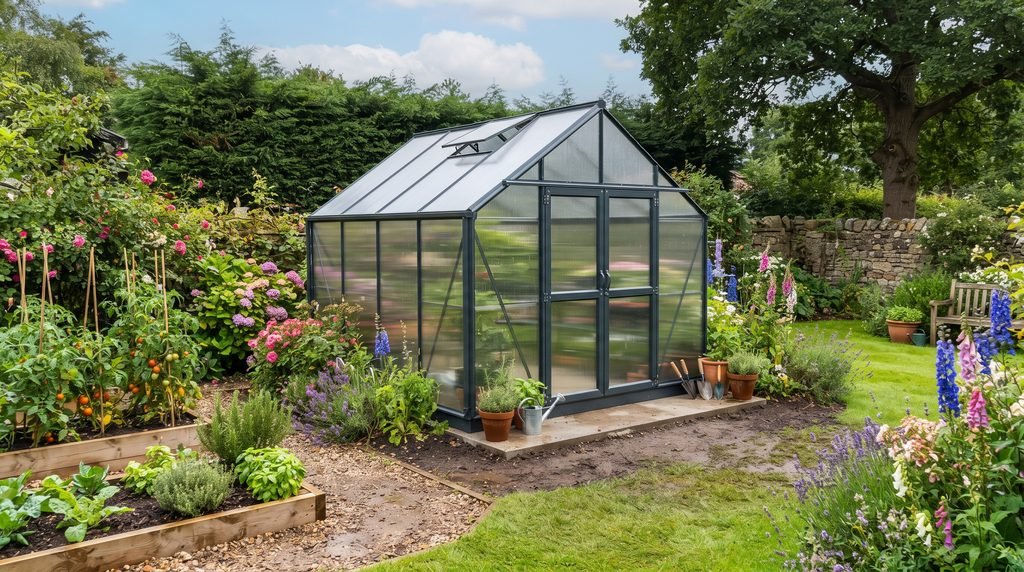
The biggest attraction of a polycarbonate greenhouse is the combination of strength and practicality. Polycarbonate glazing is manufactured from a tough thermoplastic material that can withstand impacts much better than ordinary horticultural glass. The RHS describes polycarbonate sheeting as lightweight, durable in adverse weather and resistant to breakage, while also noting that it can retain heat effectively.
That combination is particularly useful in Britain. UK gardens can experience strong winds, heavy rain, sudden temperature changes and occasional hail. While no greenhouse should be described as literally indestructible, polycarbonate glazing is considerably more forgiving than conventional glass when accidental impacts occur.
A polycarbonate greenhouse can therefore make sense for gardeners who are concerned about broken panes. A football kicked across the garden, a fallen branch or an unfortunate accident during maintenance can potentially damage glazing. With glass, the result may be dangerous shards and a costly replacement. Polycarbonate is designed to resist impact, although the frame, fixings and panels can still be damaged if exposed to severe forces.
Another reason gardeners choose a polycarbonate greenhouse is weight. Polycarbonate panels are lighter than glass, which can make handling and assembly easier. This can be particularly valuable for DIY installation, smaller gardens and situations where transporting heavy panes would be inconvenient.
The material is also available in different constructions. Twin-wall panels are formed with internal channels between two layers, producing an air gap that contributes to insulation. The exact performance varies according to the product, panel thickness and manufacturer, so shoppers should always inspect the published specifications rather than assuming every panel will perform identically.
Polycarbonate Greenhouse Benefits You Should Know
When comparing a polycarbonate greenhouse with a conventional glass model, it helps to consider how the structure will actually be used. A greenhouse is an investment in growing space, and its value comes from how comfortably and reliably it performs throughout the year.
One of the main benefits is safety. Polycarbonate does not behave like traditional glass when struck. Rather than immediately breaking into sharp fragments, it is designed to absorb impacts more effectively. That does not mean polycarbonate cannot crack, bend or become damaged, but it can offer peace of mind where accidental impacts are a concern.
A second major benefit is durability. A quality polycarbonate greenhouse can provide many years of service when the frame is properly assembled and the panels are cared for correctly. Durability does not depend on glazing alone, though. A strong frame, secure fixings, good foundations and suitable anchoring are equally important.
The material is also relatively lightweight. This makes a polycarbonate greenhouse easier to move during assembly and can reduce some of the practical challenges associated with large glass panes. Anyone planning to build a greenhouse without professional help may appreciate this advantage.
Another useful characteristic is insulation. Twin-wall polycarbonate can help reduce heat loss compared with single-layer glazing because its internal structure creates an insulating air space. Recent UK greenhouse guidance also highlights how twin-wall polycarbonate can be useful when warmth and extended use are more important than achieving maximum light transmission.
For gardeners growing tomatoes, cucumbers, peppers, salads, herbs, seedlings or ornamental plants, that additional protection can be useful. It can help create a more stable environment, especially during transitional seasons when outdoor temperatures fluctuate considerably.
Are Polycarbonate Greenhouses Really Shatterproof?
The word “shatterproof” is commonly used in greenhouse marketing, but it is worth understanding what it actually means.
A polycarbonate greenhouse is better described as shatter-resistant or impact-resistant rather than completely impossible to break. Polycarbonate is tough, but it is not invulnerable. A severe impact, incorrect installation, excessive wind pressure, damaged framing or poor-quality material can still lead to cracking or panel failure.
The practical advantage is that polycarbonate is much less likely to behave like ordinary glass during an impact. This distinction is especially important for families with children, gardens used for sports, properties near trees and allotments where equipment is frequently moved around.
It is also important to understand that the glazing itself is only one part of the safety equation. A strong panel attached to a weak frame does not automatically produce a strong greenhouse. Likewise, a sturdy frame can still suffer if panels are poorly fitted or the structure is not anchored securely.
When choosing a polycarbonate greenhouse, therefore, consider the entire construction. Look at the frame material, connection points, door arrangement, roof vents, panel fixing system and anchoring options. A durable greenhouse is a complete system rather than a collection of individual panels.
Understanding Polycarbonate Panel Construction
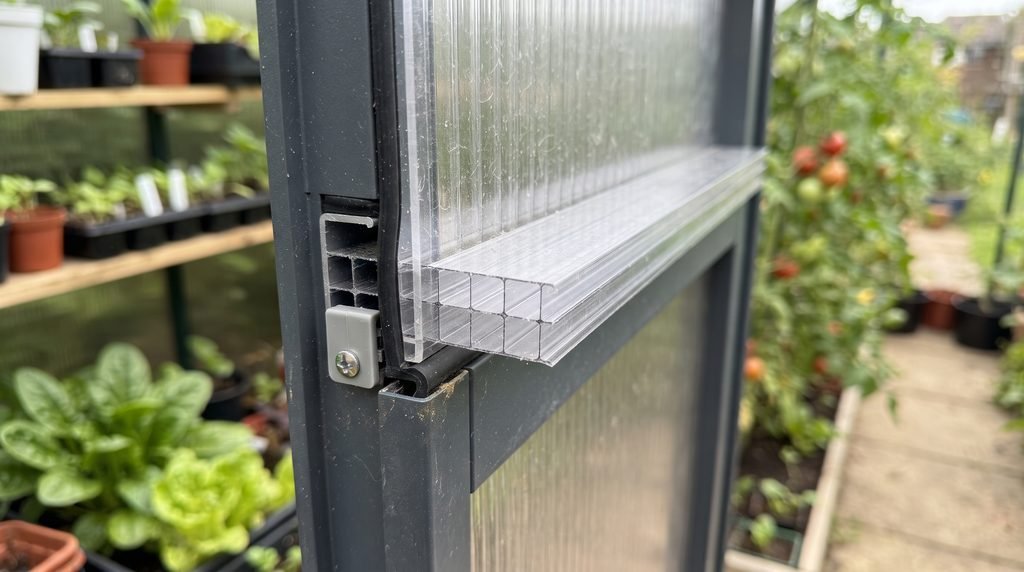
Not all polycarbonate glazing is the same. One of the most important decisions when shopping for a polycarbonate greenhouse is understanding whether the panels are single-wall, twin-wall or another multi-wall construction.
Single-wall polycarbonate is essentially one layer of plastic glazing. It can be relatively inexpensive and lightweight, and because there are fewer internal structures interfering with light transmission, it may allow strong levels of light into the growing area.
Twin-wall polycarbonate consists of two outer layers separated by internal channels. This construction provides additional rigidity and creates an insulating air space. For gardeners who want to use their greenhouse during cooler months, twin-wall glazing can be attractive.
The trade-off is that additional layers and internal structures can reduce light transmission. The RHS notes that clear polycarbonate transmits less light than glass, with clear polycarbonate given as transmitting around 83% of incoming light in its greenhouse guidance. This may matter for seedlings and plants with high light requirements.
The best choice therefore depends on your growing goals. If your main priority is spring-to-autumn use, maximum brightness may be especially important. If you want greater protection and improved insulation for longer seasonal use, a twin-wall polycarbonate greenhouse may be more appealing.
Choosing the Right Size of Polycarbonate Greenhouse
Size is one of the easiest things to underestimate.
Many first-time buyers select a greenhouse based on the amount of space they think they currently need. Unfortunately, plants, pots, trays, shelves and gardening equipment have a habit of taking over. A greenhouse that initially appears generous can become crowded once the growing season begins.
Before buying a polycarbonate greenhouse, measure the available area carefully. Consider not only the footprint of the structure but also clearance around the doors, room for maintenance and how the greenhouse will be accessed.
Think vertically as well as horizontally. Shelving and hanging systems can make better use of limited floor space, particularly in smaller models. A narrow greenhouse with efficient shelving can sometimes be more practical than a wider structure with poor organisation.
For beginners, an undersized greenhouse can become frustrating surprisingly quickly. If your garden permits it, choosing slightly more growing space than you initially think you need can provide useful flexibility.
At the same time, bigger is not automatically better. A large polycarbonate greenhouse requires more room, stronger preparation and potentially more work to ventilate and maintain. The structure should be appropriate for the garden, your budget and the number of plants you realistically intend to grow.
Small Polycarbonate Greenhouse Options
A small polycarbonate greenhouse can be an effective solution for patios, compact gardens and gardeners with limited growing requirements.
A smaller model can still provide protected space for seed trays, herbs, lettuce, peppers, tomatoes and young plants. For a beginner, this can be a convenient way to learn greenhouse gardening without committing to a large structure.
The main limitation is airflow and capacity. Small greenhouses can heat up quickly during sunny weather, meaning ventilation becomes particularly important. The RHS warns that greenhouses can overheat during sunny conditions and recommends combining ventilation and shading to protect plants.
A compact polycarbonate greenhouse should therefore have practical ventilation features. Roof vents are particularly valuable because warm air rises. Doors can also provide additional airflow, while automatic vent openers can help when you are away from home.
Large Polycarbonate Greenhouses for Serious Growing
For gardeners who want to grow larger quantities of vegetables, start many plants from seed or maintain plants over longer periods, a larger polycarbonate greenhouse may be more suitable.
Extra floor space allows you to separate different growing areas. You might use one side for tomatoes, another for cucumbers and peppers, and a dedicated bench for seedlings. More space can also improve airflow between plants.
However, large structures need careful planning. A larger greenhouse captures more solar energy and can become extremely warm in summer. Ventilation must therefore be treated as a core feature rather than a luxury.
A spacious polycarbonate greenhouse also needs good foundations and anchoring. Larger structures can be exposed to greater wind forces, especially if positioned in open areas. Following the manufacturer’s installation requirements is essential.
Where Should You Position a Polycarbonate Greenhouse?
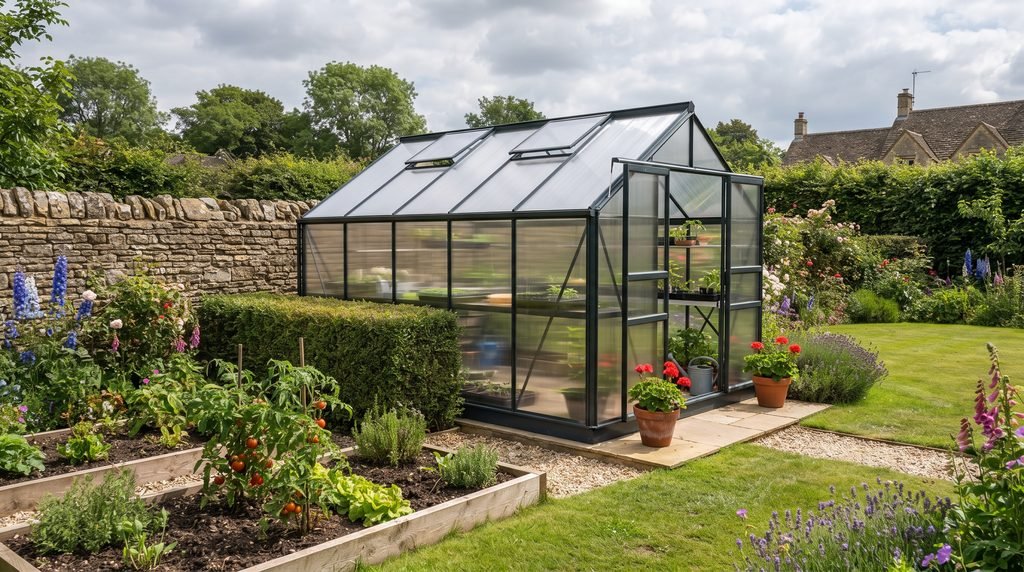
Position has a major influence on greenhouse performance.
A polycarbonate greenhouse should ideally be placed where it can receive good levels of sunlight while remaining reasonably sheltered from strong winds. Avoid locations where nearby buildings, fences or large trees cast heavy shadows for much of the day.
Morning and midday sunlight can be particularly valuable during cooler parts of the year. However, excessive exposure can contribute to overheating in summer, so ventilation and shading remain important.
Wind exposure deserves special attention. A greenhouse in a very exposed location may experience stronger pressure on its panels and frame. Shelter from a building, hedge or suitable boundary can help, although you should avoid creating a location where airflow is completely restricted.
Trees also require caution. Falling branches can damage glazing, while nearby roots may complicate foundation work. A site that looks attractive during installation might become problematic later.
Preparing the Ground for Your Greenhouse
Good preparation can determine whether a polycarbonate greenhouse remains stable and level over time.
The ground should be firm, stable and reasonably level. Depending on the design, you may install the greenhouse on a prepared base, slab, paved surface or manufacturer’s recommended foundation system.
A level base helps doors operate properly and reduces stress on the frame. If the structure is twisted during installation because it is standing on uneven ground, panels and connections may not fit correctly.
Water drainage should also be considered. You do not want rainwater collecting around the base of the structure. A sensible site plan can help prevent muddy conditions and reduce problems during wet UK winters.
Before assembling a polycarbonate greenhouse, read the manufacturer’s foundation requirements carefully. Different models have different recommendations, and the correct installation method can depend on dimensions, frame design and intended location.
Ventilation Is Essential in a Polycarbonate Greenhouse
One of the most common mistakes beginners make is assuming that a greenhouse should simply trap as much heat as possible.
That is not how greenhouse growing works.
A polycarbonate greenhouse can become surprisingly hot in direct sunlight, even when the outside air feels comfortable. The RHS recommends ventilation and shading because greenhouses can overheat from spring into autumn. It notes that temperatures above roughly 27°C can cause plant damage in some situations.
Roof vents are particularly useful. Hot air rises and can escape through upper openings, drawing in cooler air through lower openings or the door.
Automatic vent openers can be extremely useful because they reduce the risk of forgetting to ventilate. However, automatic openers should support, not replace, adequate ventilation capacity.
A good polycarbonate greenhouse setup should make it easy to control temperature. Open doors and vents when conditions demand it, monitor the temperature and provide shading during intense sunlight.
Shading a Polycarbonate Greenhouse
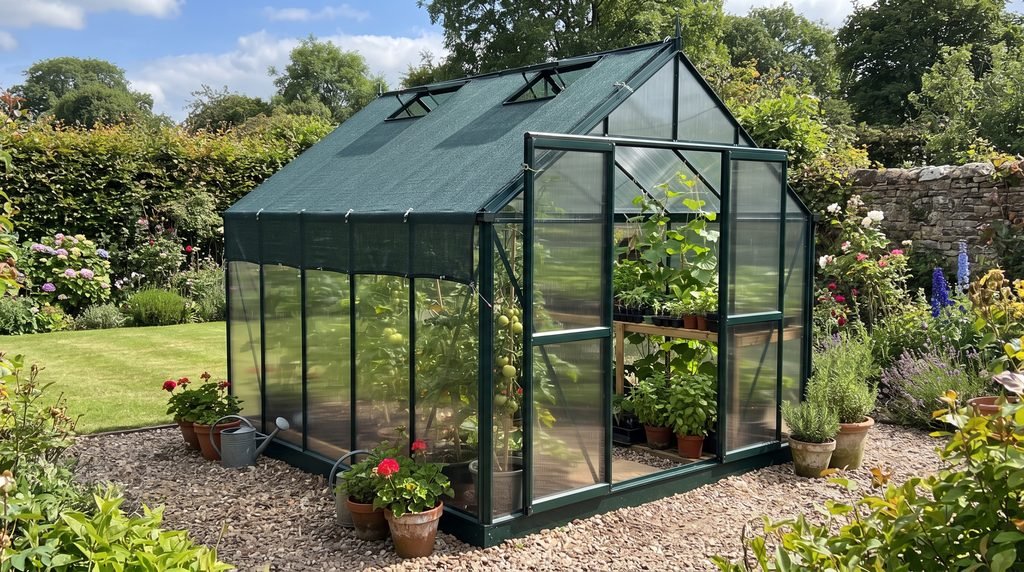
Sunlight is essential for plant growth, but too much direct heat can become a problem.
The RHS recommends using shading and ventilation to prevent overheating and advises using only the minimum necessary shading because shading also reduces the light plants receive.
This balance is especially important in a polycarbonate greenhouse. The goal is not to keep the greenhouse dark. Instead, shading should be used strategically during periods of excessive heat and intense sunlight.
Different crops have different light requirements. Tomatoes and peppers generally benefit from bright conditions, while some delicate seedlings can suffer when temperatures climb rapidly.
A thermometer can help you avoid relying on guesswork. Checking greenhouse temperatures at different points during the day gives you a better understanding of how the structure reacts to changing weather.
Growing Vegetables in a Polycarbonate Greenhouse
One of the biggest reasons gardeners invest in a polycarbonate greenhouse is the ability to grow vegetables under protection.
Tomatoes are a classic choice because they benefit from warmth and protection. Cucumbers, peppers, aubergines, salads, herbs and many other crops can also make good use of greenhouse space.
A greenhouse can allow you to start crops earlier and protect young plants from difficult outdoor weather. It may also help extend the harvesting period later into the season.
The RHS explains that greenhouses are useful for growing vegetables in several ways and that even small, unheated structures can support productive crops.
Good crop planning is important. Avoid overcrowding plants simply because you have extra greenhouse space. Adequate air movement helps reduce the conditions that encourage some diseases.
Starting Seeds in a Polycarbonate Greenhouse
Seed starting is another major advantage of having protected growing space.
A polycarbonate greenhouse can provide a sheltered environment where trays and pots are protected from heavy rain, wind and sudden temperature changes.
However, seedlings need more than warmth. Light is equally important. This is one reason panel selection matters. Because polycarbonate can transmit less light than clear glass, some gardeners may find that high-light seedlings benefit from choosing glazing with good light transmission.
Seedlings also require careful watering. Small containers can dry quickly, yet excessive moisture can create other problems. Regular monitoring is more effective than following a rigid watering schedule regardless of weather.
When seedlings become larger, giving them additional spacing can improve airflow and reduce overcrowding.
Using a Polycarbonate Greenhouse Through Winter
A polycarbonate greenhouse can still be useful during winter, but expectations should be realistic.
Polycarbonate glazing can provide useful protection, but an unheated greenhouse does not automatically become a warm winter environment. Hardy plants may simply need protection from severe weather, while tender plants may require supplemental heating or additional insulation.
The RHS explains that winter heating can help expand the range of plants that can be grown, while gardeners who do not heat their greenhouse can still use it to shelter half-hardy plants.
For plants that require specific winter temperatures, a thermostatically controlled heater may be appropriate. The right temperature depends on the plants being grown, rather than on the greenhouse itself.
Humidity also matters in winter. Damp conditions can encourage mould and rot, so ventilation should not be forgotten just because outdoor temperatures are low.
Heating a Polycarbonate Greenhouse Efficiently
Heating can transform a polycarbonate greenhouse from a seasonal growing space into a more controlled environment, but it should be approached carefully.
Before purchasing a heater, decide what temperature your plants actually need. There is little benefit in maintaining tropical temperatures when your crops are perfectly happy in cooler conditions.
Insulation can also play a role. The RHS notes that insulating materials can reduce heat loss but can also reduce light reaching plants.
A thermostat is useful because it can prevent unnecessary heating. Rather than running a heater continuously, the system can respond to temperature changes.
Energy costs should also be considered. For many gardeners, the most efficient approach is to grow crops suited to the available conditions rather than trying to create an artificial summer throughout the entire winter.
Condensation and Humidity
Condensation can occur inside any greenhouse, and a polycarbonate greenhouse is no exception.
Moisture comes from watering, wet compost, plant transpiration and differences between internal and external temperatures. Excessive humidity can contribute to fungal problems, particularly when air is stagnant.
Ventilation is therefore essential throughout the year. Even during winter, mild sunny days can provide opportunities to open vents or doors and refresh the air.
Plant spacing also matters. Crowded foliage reduces airflow and can create humid pockets around leaves.
Maintaining sensible watering practices, keeping surfaces reasonably clean and monitoring conditions regularly can all help.
Cleaning and Maintaining Polycarbonate Panels
Keeping a polycarbonate greenhouse clean is important for both appearance and plant performance.
Dust, algae, dirt and other debris can reduce the amount of light entering the greenhouse. The RHS recommends cleaning greenhouse glazing because cleaner panes allow more light through and can also help with general hygiene.
Use suitable cleaning methods recommended by the manufacturer. Avoid harsh chemicals or abrasive tools unless the glazing supplier specifically says they are safe.
When cleaning panels, inspect them at the same time. Look for cracks, loose edges, damaged fixings and gaps. Early detection can prevent minor problems from becoming major ones.
A polycarbonate greenhouse does not need complicated maintenance, but regular checks can make a significant difference to its lifespan.
Does Polycarbonate Turn Yellow?
The quality of polycarbonate matters when considering long-term appearance.
Some products are manufactured with UV protection designed to help resist degradation from sunlight. However, performance depends on the material, construction and manufacturing quality.
Rather than choosing a polycarbonate greenhouse based only on a low price, check the product specifications and warranty information. A reputable manufacturer should provide clear information about the glazing, UV protection and expected durability.
Installation also matters. Panels that are fitted incorrectly may be more vulnerable to damage or deterioration.
Polycarbonate Greenhouse vs Glass Greenhouse
The choice between glass and polycarbonate ultimately depends on what you value most.
Glass can provide excellent clarity and light transmission, which is one reason traditional glasshouses remain popular. It also has a classic appearance that many gardeners love.
A polycarbonate greenhouse, by comparison, focuses more heavily on impact resistance, lightweight construction and insulation, depending on the panel type.
Neither material is perfect. The RHS specifically points out that clear polycarbonate can transmit less light than glass, which may matter for high-light crops and seedlings.
The best choice therefore depends on the garden, growing style, budget and level of maintenance you prefer.
Is a Polycarbonate Greenhouse Good for Beginners?
Yes, a polycarbonate greenhouse can be a very practical choice for beginners.
Its relatively lightweight glazing can make installation less intimidating than handling large glass panels, while the impact-resistant nature of the material can reduce some concerns about accidental breakage.
Beginners should concentrate on three fundamentals: sunlight, ventilation and watering. These factors have a huge influence on greenhouse success.
It is also wise to begin with manageable crops. Tomatoes, peppers, salad leaves, herbs and seedlings can provide plenty of learning opportunities without making the first season unnecessarily complicated.
As you gain confidence, you can expand into more advanced crops and winter growing.
How Much Does a Polycarbonate Greenhouse Cost?
Prices vary considerably depending on size, frame material, panel construction, brand, features and installation requirements.
A smaller polycarbonate greenhouse can be relatively affordable, while premium large structures with stronger frames, thicker glazing, automatic vents and additional accessories can cost substantially more.
Instead of comparing only the headline price, consider the total cost of ownership. You may need shelving, staging, anchoring equipment, automatic vent openers, irrigation equipment, thermometers, shading and potentially heating.
A greenhouse that appears cheaper initially may become more expensive if essential accessories need to be added later.
When comparing models, make sure you are comparing similar specifications. Panel thickness, glazing construction and frame quality can make apparently similar greenhouses very different in real-world performance.
What to Look for Before Buying a Polycarbonate Greenhouse
A sensible buying decision starts with your growing goals.
Ask yourself how many plants you want to grow, whether you plan to use the greenhouse through winter, how much space is available and how exposed your garden is to wind.
Then examine the construction of the polycarbonate greenhouse you are considering.
Look at the panel specification first. Determine whether it is single-wall, twin-wall or another configuration. Check the thickness and light transmission information where available.
Examine the frame. Aluminium is commonly used because it is relatively lightweight and resistant to corrosion, although construction quality still varies between products.
Check the doors. A greenhouse that is difficult to access quickly becomes inconvenient.
Ventilation is equally important. Look for roof vents and consider whether automatic openers can be installed.
Finally, check the foundation and anchoring requirements. A greenhouse needs to stay stable in real UK weather, not just look good on a calm summer day.
Free UK Delivery: What Should Buyers Check?
If you are shopping for a polycarbonate greenhouse advertised with free UK delivery, carefully read the delivery terms before placing an order.
“Free UK delivery” may not always mean every postcode or remote location is included. Some retailers apply regional exclusions, delivery surcharges or special arrangements for large structures.
It is also worth checking whether delivery is kerbside, whether someone must be available to receive the greenhouse and whether the delivery vehicle can access your property.
For large greenhouse kits, delivery logistics can be surprisingly important. Confirm dimensions, package quantities and access restrictions before ordering.
The same principle applies to installation services. A greenhouse may be advertised at an attractive base price but cost more once assembly, foundations or additional accessories are included.
Installing Your Polycarbonate Greenhouse
Installation quality can influence the performance of a polycarbonate greenhouse for years.
Start with the base. It must be stable, level and appropriate for the greenhouse design.
Follow the manufacturer’s instructions carefully instead of trying to improvise. Different systems use different panel orientations, fixing methods and frame connections.
Polycarbonate panels may also have a specific orientation where UV-protected surfaces need to face outward. Always follow the manufacturer’s instructions because incorrect panel orientation can affect longevity.
Do not rush the assembly. It is usually better to spend additional time ensuring that the structure is square, level and securely fastened than to discover problems after the greenhouse is completed.
Once assembled, test the doors, vents and panel connections. Check that everything moves smoothly and that no sections appear excessively stressed.
Anchoring Matters More Than Many Buyers Expect
Even the best polycarbonate greenhouse can become vulnerable when it is not properly anchored.
Wind does not need to break the glazing to create a serious problem. A poorly secured structure may shift, lift or become distorted during severe weather.
This is why the base and anchoring system should be treated as essential components rather than optional extras.
Follow the manufacturer’s guidance and consider the conditions of your particular garden. An exposed coastal or rural location may need more careful planning than a sheltered urban garden.
Common Mistakes to Avoid
One of the most common mistakes is buying a greenhouse that is too small.
Another is ignoring ventilation because the focus is entirely on keeping the greenhouse warm. As the RHS explains, excessive greenhouse temperatures can harm plants, making ventilation and shading essential.
Poor positioning is another frequent problem. A greenhouse hidden behind buildings may receive inadequate sunlight, while one placed in an extremely exposed position can face unnecessary wind stress.
Overwatering is another issue. More humidity does not automatically mean healthier plants. Watering should respond to plant needs, growing medium and weather conditions.
Finally, neglecting maintenance can shorten the useful life of your greenhouse. Regularly inspect the panels, frame, vents and doors so small problems can be addressed early.
Making the Most of Your Polycarbonate Greenhouse
Once your polycarbonate greenhouse is installed, organisation can make the growing experience much easier.
Use benches for seedlings and smaller pots. Grow taller crops in areas where they will not shade low-growing plants excessively. Keep frequently used tools close to the entrance and leave enough space to move around comfortably.
Think about irrigation before plants become large. Hand watering may work well for a small structure, while larger greenhouses may benefit from a carefully designed irrigation system.
Rainwater collection can also be useful for gardeners looking to make better use of available resources.
Good housekeeping should become part of your routine. Remove dead leaves, clear fallen debris and inspect plants frequently. Greenhouses are controlled growing environments, but they still require active management.
What Can You Grow in a Polycarbonate Greenhouse?
The possibilities are broad.
Tomatoes remain one of the most popular choices, while cucumbers, peppers and aubergines can also perform well under protected conditions.
Salad leaves, herbs and young vegetable plants can make productive use of smaller spaces. Seedlings and cuttings can benefit from protection before being moved outdoors.
Ornamental gardeners can also use a polycarbonate greenhouse for tender plants, propagation and overwintering.
The right crops depend on the temperatures your greenhouse can realistically maintain. A completely unheated structure is very different from a heated greenhouse maintained at tropical temperatures.
That distinction is worth remembering before buying unusual or demanding plants.
Is a Polycarbonate Greenhouse Worth It?
For many UK gardeners, the answer can be yes.
A polycarbonate greenhouse offers a useful balance of strength, impact resistance, lightweight construction and insulation potential. It can provide valuable protected space for growing vegetables, raising seedlings and extending the season.
Its limitations should also be understood. Polycarbonate may transmit less light than glass, and the greenhouse can still overheat without adequate ventilation.
In other words, the material is not a substitute for good greenhouse management.
The best results come from pairing suitable glazing with a strong frame, secure foundation, sensible positioning, effective ventilation and regular maintenance.
How to Choose the Best Polycarbonate Greenhouse for Your Needs
The best polycarbonate greenhouse is not necessarily the largest or cheapest model.
Instead, look for a structure that matches your garden and growing ambitions.
For a small garden, a compact model with good ventilation may be ideal. For a serious vegetable grower, a larger twin-wall structure could provide more useful working space and improved insulation.
For exposed gardens, frame strength and anchoring should be priorities. For gardeners focused on seedlings, light transmission deserves particular attention.
For year-round growing, insulation, heating compatibility and ventilation should all be considered together.
Taking a few extra minutes to compare these features can prevent expensive disappointment later.
Final Thoughts on Buying a Polycarbonate Greenhouse
A polycarbonate greenhouse can turn an ordinary garden into a much more productive growing environment. It creates a protected space where gardeners can start plants earlier, shelter crops from challenging weather and continue growing beyond the traditional outdoor season.
Its impact-resistant glazing is one of its biggest selling points, particularly for gardens where broken glass would be a concern. Twin-wall designs can also provide useful insulation, while lightweight panels can simplify handling and installation.
At the same time, buyers should avoid thinking of polycarbonate as an automatic guarantee of performance. Greenhouse success depends on the complete structure. Frame strength, foundation quality, ventilation, sunlight, shading, plant spacing and maintenance all matter.
The RHS’s guidance reinforces this point: greenhouse growing requires careful management of light, temperature, ventilation and humidity, especially during periods of intense summer heat and colder winter conditions.
Before buying, take accurate measurements, decide what you want to grow and consider how you will use the greenhouse across the seasons. Compare panel construction, thickness, ventilation features, frame quality and anchoring rather than choosing based purely on price.
A well-selected polycarbonate greenhouse can become one of the most useful additions to a UK garden. Whether your goal is growing fresh tomatoes, protecting seedlings, experimenting with peppers and cucumbers or simply creating a sheltered place for plants, the right greenhouse can give you more control over when and how you grow.
The smartest approach is to choose quality where it matters, install the structure correctly and maintain it throughout the year. That combination will give your polycarbonate greenhouse the best chance of becoming a dependable growing space rather than another garden purchase that gets forgotten after its first season.
Ready to create more growing space in your garden? Choose a polycarbonate greenhouse that fits your available area, growing plans and UK weather conditions, compare the glazing and frame specifications carefully, and invest in a model that gives you the durability and protection you need. The right choice today can help you grow more confidently across spring, summer, autumn and winter.