Creating an indoor garden is one of the easiest ways to enjoy fresh plants, herbs, seedlings, and greenery throughout the year. You do not need a large backyard, expensive equipment, or a traditional outdoor greenhouse to get started. With the right setup, even a small corner of a kitchen, bedroom, conservatory, balcony enclosure, utility room, or home office can become a productive growing space.
An indoor mini greenhouse can make this process even easier by creating a more controlled environment for plants. It provides a protected space where seedlings and delicate plants can receive more consistent warmth, humidity, light, and protection than they might get from an ordinary indoor windowsill. For beginners, it can also make plant care more organized and predictable.
Table of Contents
The idea is simple. Instead of scattering small pots around your home, you create a dedicated growing environment where plants can be grouped together and monitored. Depending on its size and design, an indoor setup can include shelves, trays, grow lights, humidity control, ventilation, and a variety of containers suited to different plants.
However, simply purchasing a small greenhouse structure and placing plants inside does not guarantee success. Indoor growing has its own challenges. Too much humidity can encourage fungal problems, insufficient light can result in weak growth, and excessive heat can damage young plants. Choosing the right location and understanding the needs of your plants is therefore just as important as selecting the greenhouse itself.
This comprehensive guide explains how to create an indoor mini greenhouse, where to place it, what to grow inside, how to manage light and humidity, how to avoid common mistakes, and how to turn a compact growing area into a productive indoor garden.
Why an Indoor Mini Greenhouse Is a Smart Choice for Home Gardeners
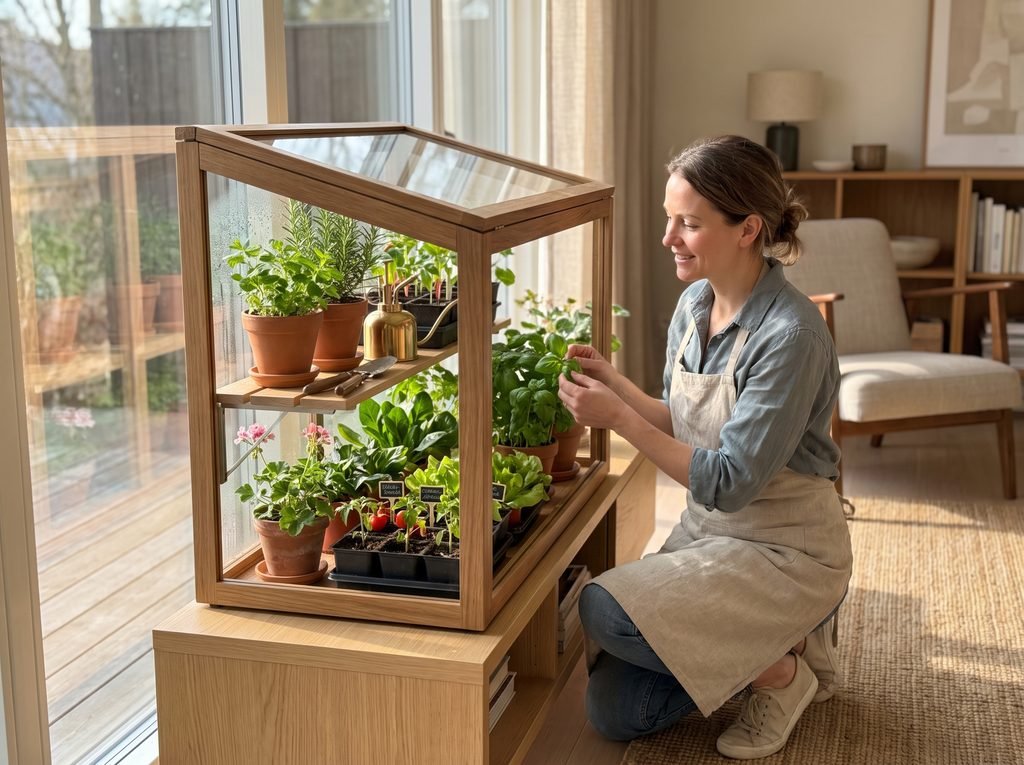
An indoor mini greenhouse can be useful for anyone who wants more control over growing conditions without dedicating an entire room to plants. One of its biggest advantages is environmental consistency. Indoor temperatures can fluctuate less dramatically than outdoor conditions, and a small protected structure can provide an additional layer of stability.
Seedlings are particularly well suited to this type of setup. Young plants can be sensitive to cold drafts, sudden temperature changes, and dry air. A protected growing area helps create a more suitable environment while giving you the ability to observe plants closely.
Another benefit is space efficiency. A traditional greenhouse may require a garden, foundation, or permanent installation. By contrast, a compact indoor structure can fit on a shelf, countertop, plant stand, or small section of floor space.
This makes indoor growing especially appealing to apartment residents, renters, people without gardens, and gardeners who simply want to extend their growing season.
An indoor greenhouse can also help you organize your gardening routine. Instead of keeping seed trays on windowsills or moving pots from room to room, you can establish one dedicated location for propagation and plant care.
The controlled environment can be especially valuable during the early stages of plant development. Once seedlings become stronger, they can be moved outdoors, transferred into larger containers, or relocated to another part of the home depending on their needs.
How to Choose the Right Location for an Indoor Mini Greenhouse
Location is one of the most important decisions you will make when setting up an indoor mini greenhouse. Even a high-quality structure will perform poorly if it is positioned in an unsuitable area.
Natural light should be one of your first considerations. A bright room with access to indirect or filtered sunlight can provide an excellent starting point. A south-facing window may receive strong light for many hours, while east- or west-facing windows can provide moderate morning or afternoon exposure.
However, direct sunlight through glass can sometimes cause temperatures inside a small enclosure to rise rapidly. This is especially important during warmer months. A greenhouse placed directly beside a powerful sunny window may become much hotter than the surrounding room.
Avoid locations near radiators, heaters, fireplaces, air-conditioning vents, and frequently opened exterior doors. These areas can expose plants to sudden temperature changes or excessively dry air.
You should also consider accessibility. Your growing area should be somewhere you can easily inspect every day. If the structure is hidden in a rarely used corner, it becomes easier to forget watering, ventilation, pest monitoring, or pruning.
A good location should provide a balance of light, stable temperature, airflow, and convenience.
What Size Should an Indoor Mini Greenhouse Be?
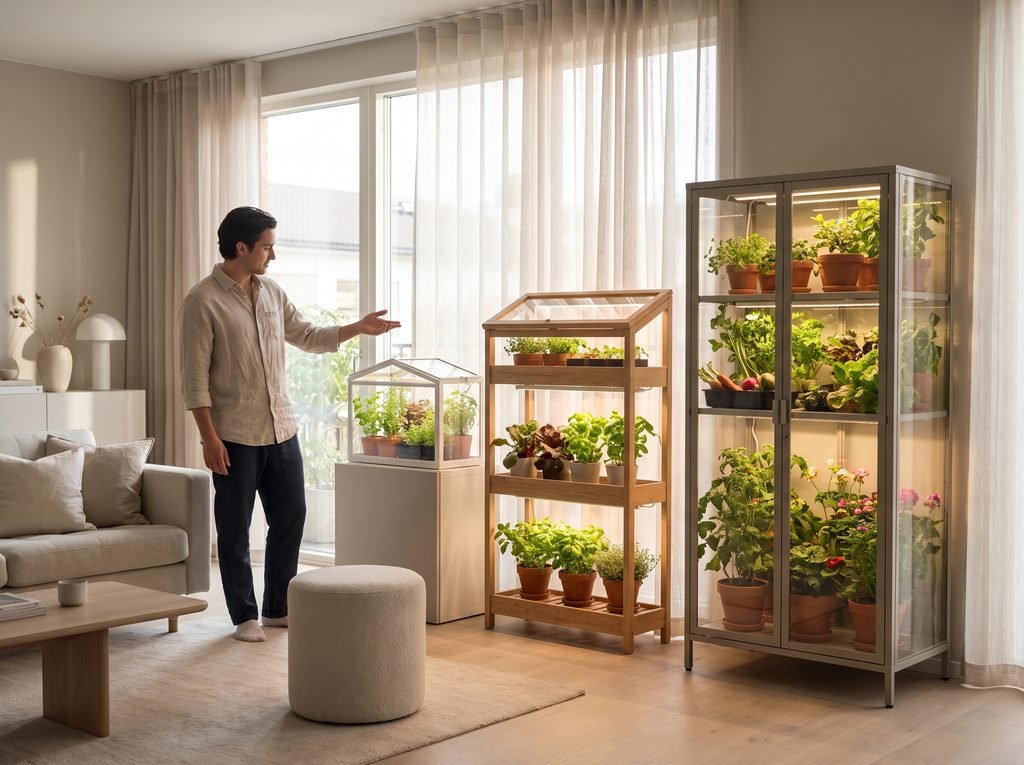
There is no single ideal size for an indoor mini greenhouse because the right dimensions depend on your available space and gardening goals.
If your primary purpose is starting vegetable seedlings, a small shelving unit with several growing levels may be enough. If you want to grow herbs, ornamental plants, cuttings, and small houseplants simultaneously, you may benefit from a taller structure with multiple shelves.
Before buying anything, measure the area where you plan to install it. Do not forget to measure the height as well as the width. A greenhouse that fits the floor space may still be too tall for a shelf, cabinet, or low-ceilinged area.
Think about the plants you eventually want to grow rather than only the number of plants you have today. Crowding can quickly become a problem as seedlings grow.
Vertical space can be particularly valuable in small homes. A multi-tiered structure allows you to use the same floor area while increasing the total growing capacity.
At the same time, avoid choosing an enclosure that is too large for your available environment. Bigger does not necessarily mean better. A compact structure can be easier to heat, light, ventilate, clean, and monitor.
What Can You Grow in an Indoor Mini Greenhouse?
One of the most exciting parts of creating an indoor mini greenhouse is deciding which plants to grow. Fortunately, many plants can benefit from protected indoor conditions.
Herbs are a natural choice. Basil, parsley, coriander, chives, mint, oregano, and thyme can all be grown indoors when they receive sufficient light and appropriate moisture.
Leafy vegetables can also perform well. Lettuce, spinach, mustard greens, and some varieties of kale can be started in containers. Microgreens are particularly suitable because they grow rapidly and require relatively little space.
For vegetable gardeners, an indoor setup is especially useful for starting tomato, pepper, cucumber, and aubergine seedlings before transferring them outdoors when conditions are suitable.
Flowers can also be started in a protected environment. Marigolds, petunias, sweet peas, snapdragons, and other flowering plants can benefit from early propagation.
Houseplant enthusiasts can use an indoor greenhouse for humidity-loving tropical plants, cuttings, propagation projects, and smaller specimens that require greater environmental control.
The most important consideration is not whether a plant can physically fit inside the greenhouse. You also need to determine whether its light, temperature, humidity, and airflow requirements can be met.
Understanding Light Requirements for Indoor Growing
Light is often the most underestimated factor in indoor gardening.
Plants require light to carry out photosynthesis, and natural sunlight inside a home may not always be intense or consistent enough to support healthy growth. A plant may appear to survive while producing weak stems, pale leaves, slow growth, or excessive stretching.
When setting up an indoor mini greenhouse, assess the amount of light available throughout the day rather than relying on a quick visual impression.
A window that appears bright to your eyes may still provide insufficient light for certain crops. Buildings, curtains, trees, neighboring structures, and seasonal changes can all affect exposure.
Grow lights can provide a more consistent solution. LED grow lights are widely used in indoor gardening because they can provide targeted illumination without requiring the greenhouse to sit directly next to a window.
The height of the light is important. A lamp positioned too far away may provide weak illumination, while one placed too close can stress or damage sensitive plants.
Using adjustable shelving can make lighting easier to manage because you can change the distance between plants and lights as seedlings grow.
How to Manage Temperature in an Indoor Mini Greenhouse
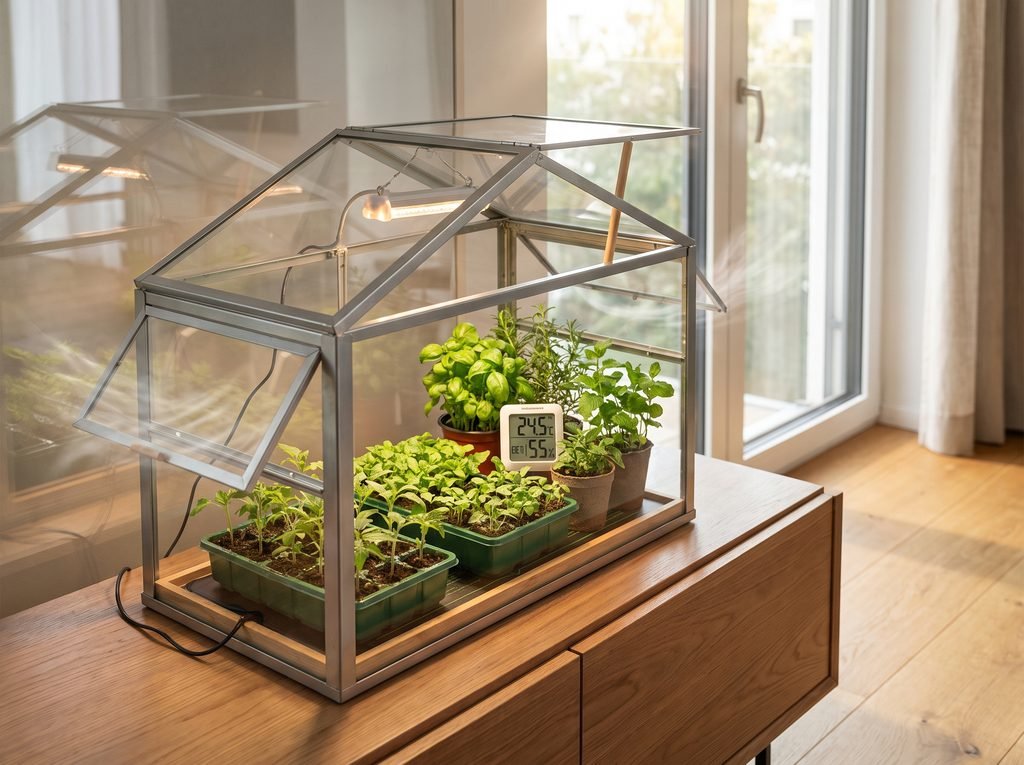
Temperature control is another important part of growing successfully.
An indoor mini greenhouse can naturally become warmer than the surrounding room because its enclosed space retains heat and reduces air movement. This can be helpful in cool weather, but excessive heat can become a serious problem.
Seedlings generally appreciate stable conditions rather than extreme temperatures. The exact temperature range depends on the plant species, so you should always check the requirements for what you are growing.
Avoid assuming that warmer is always better. Excessive heat can lead to rapid moisture loss, wilted foliage, poor root development, and stressed plants.
During sunny periods, open the greenhouse cover or ventilation panels when necessary. If the structure has adjustable vents, use them to release accumulated heat.
A basic indoor thermometer can make temperature management much easier. Instead of guessing how warm the growing area feels, you can monitor actual conditions.
When winter temperatures drop, some growers may use a suitable propagation heat mat for seedlings. These devices can provide gentle warmth to the root zone, but they should be used according to the manufacturer’s instructions and kept away from water.
Humidity: Getting the Balance Right
Humidity can be one of the biggest advantages of an indoor mini greenhouse, but too much humidity can quickly create problems.
Many young plants and tropical species appreciate higher humidity than the average heated home provides. Enclosing them can reduce moisture loss and create a more humid microenvironment.
However, stagnant, excessively humid air can encourage fungal and bacterial problems. Condensation on the inside of the greenhouse is not automatically dangerous, but persistent wetness combined with poor airflow should be addressed.
Good ventilation is therefore essential.
Open vents periodically, leave suitable gaps where appropriate, and avoid overcrowding plants. Water the growing medium according to each plant’s needs rather than simply maintaining constant moisture.
Humidity meters can provide useful information if you are managing more sensitive plants. They are not essential for every beginner, but they can make it easier to identify environmental changes.
Remember that humidity and soil moisture are not the same thing. A humid enclosure does not mean your plants require constantly wet compost.
Airflow and Ventilation Matter More Than You Think
A small growing enclosure can look perfectly healthy while quietly developing an airflow problem.
Without adequate air movement, moisture can remain trapped around leaves and stems. This creates a favorable environment for certain fungal issues and can also contribute to weak plant growth.
An indoor mini greenhouse should therefore not be treated as a sealed box.
Regular ventilation can be as simple as opening the front cover for a period each day. Some structures include zippered doors, vents, roll-up covers, or mesh sections that help improve airflow.
For larger setups, a small circulating fan can help move air gently around the plants. The goal is not to blast the seedlings with strong wind. You want mild, consistent circulation.
Air movement can also help strengthen stems. Plants grown in completely still environments can sometimes develop weaker growth compared with plants exposed to gentle movement.
Choosing the Right Containers and Growing Medium
The container you use can have a major impact on plant health.
Seed trays are useful for starting many seedlings at once, while individual pots can provide more space for plants as they mature. Choose containers with suitable drainage holes so excess water has somewhere to escape.
Poor drainage is one of the most common causes of plant problems indoors. A beautiful greenhouse cannot compensate for waterlogged roots.
The growing medium should also match the plants you are growing. A general-purpose seed-starting mix may be appropriate for seedlings, while established plants may require a more nutrient-rich potting mix.
Avoid using heavy outdoor garden soil in small indoor containers unless it has been appropriately prepared for container use. Dense soil may drain poorly and can introduce unwanted pests or pathogens.
Clean containers are particularly important when propagating plants. Reusing pots and trays without cleaning them can increase the risk of transferring problems from one plant to another.
Watering Plants in an Indoor Mini Greenhouse
Watering may sound simple, but it requires careful attention in a compact enclosed environment.
An indoor mini greenhouse can reduce evaporation, meaning plants may require less frequent watering than plants sitting in ordinary indoor air. At the same time, higher temperatures or strong grow lights may increase water use.
The best approach is to check the growing medium rather than following a rigid calendar.
Touch the surface of the soil and consider the weight of the container. Some plants prefer to dry slightly between watering, while others perform better with more consistent moisture.
Water slowly and evenly so the root zone becomes properly hydrated without creating standing water.
Morning watering is often practical because it gives excess moisture time to evaporate during the day and allows foliage to dry more quickly.
Avoid routinely spraying leaves unless the plant specifically benefits from misting. Constantly wet foliage can increase the likelihood of certain problems in poorly ventilated conditions.
How to Prevent Pests Inside Your Indoor Mini Greenhouse
Indoor plants are not immune to pests. In some cases, a protected structure can make it easier for an infestation to spread because plants are located close together.
Common indoor gardening pests may include fungus gnats, aphids, spider mites, whiteflies, and scale insects.
The best defense is regular observation.
Inspect leaves, stems, and growing media frequently. Look underneath leaves because pests often hide there. Check for sticky residue, discoloration, webbing, tiny insects, distorted growth, or sudden decline.
New plants should be inspected before being introduced into the greenhouse. Quarantining unfamiliar plants for a period can help prevent problems from spreading to established specimens.
Cleanliness also matters. Remove dead leaves and spilled soil promptly. Keep shelves, trays, and containers clean.
Early detection is much easier to manage than a large infestation.
Organizing Your Indoor Mini Greenhouse for Better Results
Organization can dramatically improve how enjoyable your gardening routine becomes.
Instead of placing every pot wherever there is an empty space, divide your indoor mini greenhouse into functional zones.
Seed trays can occupy one shelf, established plants another, and propagation projects another. Plants with similar requirements can be grouped together so you do not have to manage radically different environmental conditions within the same small space.
Labeling containers is another helpful habit. Record the plant name and sowing date so you know how old each batch is.
You can also track watering, germination, transplanting, and feeding dates in a simple notebook or digital document.
A well-organized setup makes it easier to identify which techniques are working and which need to change.
Over time, these records can become an extremely useful personal growing guide.
The Best Plants for Beginners
Beginners often get better results by starting with relatively forgiving plants instead of immediately attempting difficult tropical species.
Herbs are a practical starting point because they can provide a quick sense of progress. Basil and chives, for example, can be rewarding when grown under appropriate conditions.
Lettuce and microgreens are also excellent options because they grow relatively quickly, allowing beginners to see the results of their care.
Seedlings of larger garden plants can provide another useful project. Starting tomatoes or peppers indoors can teach you about sowing depth, light, watering, transplanting, and acclimatization.
Once you become comfortable with these basics, you can experiment with more demanding plants.
The goal is not to create a perfect greenhouse immediately. It is to learn how small environmental changes affect plant growth.
Common Mistakes to Avoid With an Indoor Mini Greenhouse
One common mistake is overcrowding. Gardeners naturally want to maximize available space, but too many plants packed together can reduce airflow and increase competition for light.
Another mistake is assuming that condensation always indicates healthy humidity. Heavy condensation combined with stagnant air can become a warning sign that ventilation needs improvement.
Overwatering is another frequent problem. Indoor gardeners sometimes water on a schedule instead of checking soil moisture. This can leave roots constantly wet.
Insufficient lighting is also a major issue. Plants may survive for weeks in poor light without producing healthy growth.
Excessive heat is another concern, especially near sunny windows. A small greenhouse can warm rapidly even when the room itself feels comfortable.
Finally, beginners sometimes buy equipment before identifying what their plants actually need. It is better to understand the growing requirements first and then purchase equipment that solves a specific problem.
How to Use Shelving to Maximize Small Spaces
Shelving is one of the easiest ways to expand growing capacity without taking over an entire room.
A vertical indoor mini greenhouse allows several plant levels to occupy the same footprint. This is particularly useful for apartments and compact homes.
When using multiple shelves, pay attention to lighting. Each level should receive enough illumination for the plants placed there. Adjustable lights can be especially useful because the distance between shelves and foliage may vary.
Leave enough room for plants to grow vertically. Seedlings that seem tiny at first can become surprisingly tall within a few weeks.
You should also make sure the shelving unit is stable. Containers filled with wet growing medium can become heavier than expected.
A stable, well-lit shelving arrangement can turn a small corner of a room into a surprisingly productive growing station.
Using an Indoor Mini Greenhouse for Seed Starting
Seed starting is one of the most valuable uses for an indoor mini greenhouse.
Instead of waiting for suitable outdoor conditions, you can begin certain plants indoors and give them a head start.
Fill your seed trays with an appropriate growing medium and sow seeds according to the instructions for each variety.
Provide suitable moisture, light, temperature, and ventilation.
Once seedlings emerge, they usually need strong light to prevent excessive stretching. At this stage, monitoring becomes especially important because young seedlings can change rapidly.
As plants develop true leaves and become stronger, they may eventually need to be transplanted into larger containers.
If you intend to move them outdoors later, remember that indoor-grown seedlings generally need a gradual transition to outdoor conditions. Abrupt changes in sunlight, wind, and temperature can cause stress.
Propagating Plants in an Indoor Mini Greenhouse
Plant propagation is another excellent reason to create an indoor growing space.
Many plants can be propagated through stem cuttings, division, leaf cuttings, or other methods depending on the species.
A protected environment can maintain higher humidity around young cuttings, helping reduce moisture loss while roots develop.
However, propagation still requires attention to airflow and cleanliness.
Avoid keeping every cutting in a permanently closed, highly humid environment. Ventilation remains important.
Use clean tools when taking cuttings and provide suitable growing media. Different plants have different propagation requirements, so research the specific variety before beginning.
Watching roots develop and seeing a cutting become an independent plant can be one of the most rewarding parts of indoor gardening.
Cleaning and Maintaining Your Indoor Mini Greenhouse
Regular maintenance helps keep the growing environment healthy.
Wipe shelves and surfaces to remove soil, dust, and plant debris. Wash reusable trays and containers between growing cycles.
Inspect the greenhouse cover periodically for condensation, algae, dirt, or signs of deterioration.
Check zippers, hinges, shelves, and support structures to make sure everything remains secure.
Do not allow dead leaves and damaged plant material to accumulate because they can become a source of pests or disease.
Maintenance does not need to take hours. A few minutes of inspection and cleaning during your regular gardening routine can prevent larger problems later.
Seasonal Adjustments for Indoor Growing
Your indoor garden may need different care throughout the year.
During winter, indoor heating can create dry air even when temperatures are comfortable. Plants may need closer humidity monitoring, but increasing humidity should not come at the expense of ventilation.
Natural light levels can also be lower in winter, which may make grow lights more important.
During summer, overheating is often the bigger concern. Sunny windows can raise temperatures quickly, so ventilation becomes particularly important.
Seasonal changes in daylight can also affect the growth rate of plants.
The key is to avoid treating your greenhouse as a static environment. Observe how it changes and adjust accordingly.
How Much Equipment Do You Really Need?
You do not need a huge collection of gadgets to create a successful indoor mini greenhouse.
For many beginners, the essentials are a suitable enclosure or shelving structure, containers, growing medium, healthy plants or seeds, adequate light, and a watering method.
A basic thermometer can be useful. A humidity meter can help with more sensitive plants.
Grow lights become important when natural light is inadequate.
A small fan can help improve airflow in larger or crowded setups.
Heat mats and other specialized equipment may be helpful for particular propagation projects, but they are not automatically necessary.
Start with the fundamentals. Add equipment only when you identify a genuine need.
This approach saves money and keeps the setup easier to manage.
Creating a Beautiful Indoor Greenhouse Garden
Function does not have to come at the expense of appearance.
Your indoor growing area can become an attractive feature in your home.
Use matching pots, wooden shelves, labeled containers, and neatly arranged trays to create a visually appealing setup.
Grouping plants by height can make the space feel more organized. Taller plants can go toward the back while smaller pots remain visible in front.
Decorative elements can also be used, provided they do not interfere with ventilation, lighting, or plant access.
A clean, attractive greenhouse is more likely to become part of your everyday routine rather than a temporary gardening experiment.
How to Make Your Indoor Mini Greenhouse More Efficient
Efficiency comes from consistency rather than complexity.
Keep plants with similar requirements together. Position lights carefully so you are not wasting illumination on empty space. Use containers with appropriate drainage to reduce watering problems.
Make regular observations rather than making major changes every day.
Plant growth is rarely improved by constantly changing conditions. Give your plants time to respond.
A simple routine can make a major difference. Check the plants, inspect moisture, look for pests, observe temperature, and confirm that lighting is working properly.
This routine takes only a few minutes but allows you to catch problems before they become serious.
When Should You Move Plants Out of the Indoor Mini Greenhouse?
Not every plant needs to remain inside forever.
Seedlings may eventually outgrow their original containers or the available greenhouse space.
If you are preparing plants for an outdoor garden, you should gradually acclimatize them rather than moving them directly from a protected indoor environment into harsh outdoor conditions.
This process allows plants to adjust to stronger light, changing temperatures, airflow, and other environmental factors.
The timing depends on the plant and local conditions, so avoid using a one-size-fits-all schedule.
Some plants may remain indoors permanently, particularly houseplants and herbs intended for kitchen use.
The purpose of the greenhouse is to provide an environment that supports the plant at its current stage. Once its needs change, your growing strategy should change too.
Is an Indoor Mini Greenhouse Worth It?
For many home gardeners, the answer is yes.
An indoor mini greenhouse can provide a practical way to grow plants in limited space while giving you greater control over the growing environment.
It can support seed starting, propagation, herb growing, houseplant care, and seasonal gardening projects.
The biggest benefit is not necessarily the structure itself. It is the ability to create a dedicated space where you can observe plants closely and respond to their needs.
That makes the setup particularly useful for beginners who want to learn gardening through hands-on experience.
You also do not need to start with a complicated installation. A simple, well-lit, clean, ventilated enclosure can be far more effective than an expensive system that is poorly managed.
Frequently Asked Questions About Indoor Mini Greenhouses
Can I use an indoor mini greenhouse without grow lights?
Yes, provided the location receives enough suitable natural light for the plants you are growing. However, many indoor spaces do not provide enough intensity or consistency, especially during winter. In those situations, an appropriate grow light can improve results considerably.
Does an indoor greenhouse need ventilation?
Yes. Ventilation helps regulate heat and humidity while reducing stagnant air. Even small setups benefit from opening their covers or vents regularly.
Can I grow vegetables in an indoor mini greenhouse?
You can grow or start many vegetables indoors, especially seedlings and compact crops. Tomatoes, peppers, leafy greens, herbs, and microgreens are common choices, although their exact requirements vary.
How often should I water plants inside an indoor greenhouse?
There is no universal schedule. Check the growing medium and consider the needs of each plant. Because enclosed environments can reduce evaporation, watering too frequently may create problems.
Can an indoor greenhouse prevent pests?
It can provide a protected environment, but it does not guarantee pest-free plants. Regular inspection and good hygiene are still important.
Can I use an indoor greenhouse for seedlings?
Absolutely. Seed starting is one of the most useful applications because the structure can provide a more stable environment during the early stages of growth.
Does a small greenhouse need a heater indoors?
Not necessarily. If the room remains within a suitable temperature range, additional heating may not be needed. Specialized propagation heat may be useful for certain seeds and plants, but it depends on their requirements.
Final Thoughts: Build an Indoor Mini Greenhouse That Works for You
Creating an indoor mini greenhouse does not have to be complicated, expensive, or intimidating. The best setup is one that matches your home, your available space, and the plants you actually want to grow.
Start by choosing a location with suitable light and stable temperatures. Select a structure that fits comfortably without overcrowding. Then focus on the essentials: healthy plants, appropriate growing media, good drainage, consistent lighting, suitable humidity, and adequate ventilation.
Most importantly, pay attention to your plants.
Leaves, stems, soil moisture, growth rate, and overall appearance can tell you a great deal about whether the environment is working. Instead of trying to create perfect conditions from the beginning, treat your indoor garden as a learning process.
An indoor greenhouse can become much more than a place to keep plants. It can be a year-round gardening station, a propagation area, a source of fresh herbs and greens, and a simple way to bring more nature into your home.
Start small, keep the environment organized, and make improvements as you learn. A thoughtfully designed indoor mini greenhouse can help you grow more confidently, experiment with new plants, and enjoy gardening no matter what is happening outside.
Ready to Start Your Indoor Garden?
Choose a bright location, select a compact greenhouse structure, and begin with a few easy plants rather than trying to grow everything at once. Give your plants consistent care, monitor the environment regularly, and learn from each growing cycle.
Your first setup does not need to be perfect. It simply needs to be a place where your plants can grow and where you can learn.
Start your indoor mini greenhouse today and turn even a small corner of your home into a productive garden that you can enjoy throughout the year.