A wood garden shed can transform an ordinary outdoor area into a practical, attractive, and highly useful part of your home. Whether you need somewhere to store gardening tools, organize outdoor equipment, create a small workshop, or simply free up space inside your house, the right shed can make a noticeable difference. Unlike purely functional storage solutions, a wooden shed can also add warmth, character, and visual appeal to a garden.
With so many sizes, designs, materials, and price ranges available, choosing the right wood garden shed can feel more complicated than expected. A shed is not simply a box placed at the bottom of the garden. Its construction, timber quality, roof style, floor, ventilation, location, and maintenance requirements can all affect how well it performs over time.
Table of Contents
This comprehensive guide explains what you should know before buying or building a wood garden shed. From selecting the ideal design and preparing the site to protecting the timber and making better use of the interior, you will find practical information to help you create a garden storage space that is attractive, durable, and genuinely useful.
Why a Wood Garden Shed Is a Smart Addition to Your Outdoor Space
A wood garden shed offers much more than basic storage. One of its biggest advantages is versatility. A well-designed shed can be used for storing lawnmowers, bicycles, hand tools, pots, plant supplies, outdoor furniture, children’s garden equipment, and seasonal decorations. Instead of allowing these items to spread across a garage, patio, or utility room, you can create one dedicated place for them.
Wood also has a natural appearance that works particularly well in outdoor environments. The texture and warm character of timber can complement lawns, flower beds, fences, patios, and other landscaping features. A carefully finished wooden structure can feel like part of the garden rather than an industrial storage unit placed into it.
Another major advantage is flexibility. A wood garden shed can be painted, stained, decorated, insulated, fitted with shelving, or adapted for a variety of uses. This makes it suitable for homeowners who want more than simple storage.
If you choose a quality model and maintain it correctly, a wooden shed can remain useful for many years. The key is selecting appropriate materials and giving the structure the protection it needs from rain, moisture, insects, and changing weather conditions.
How to Choose the Right Wood Garden Shed for Your Garden
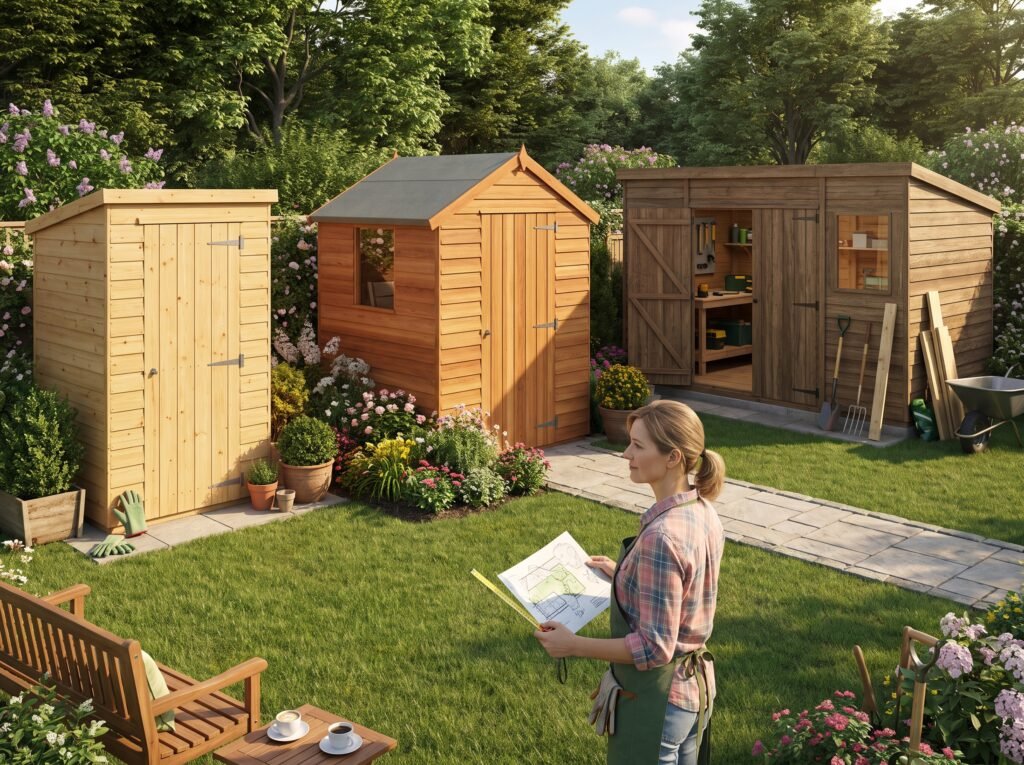
Choosing the correct shed starts with understanding how you intend to use it. Before looking at styles and colors, consider what you need the shed to accomplish. A person who only wants to store a few gardening tools will have very different requirements from someone who wants a workshop, hobby room, or bicycle storage area.
Consider the Size Before You Buy
One of the most common mistakes is purchasing a shed that is too small. A compact structure may seem sufficient when it is empty, but once you add shelves, equipment, pots, tools, and other belongings, the available space can disappear quickly.
Think about what you already need to store as well as what you are likely to purchase in the future. Garden equipment tends to accumulate over time, so leaving a little additional space can be a wise decision.
However, larger is not always better. A very large shed can dominate a small garden and leave less room for planting, entertaining, or relaxing. The best size is one that balances storage requirements with the available outdoor space.
Choose a Style That Matches Your Home
A wood garden shed is a visible feature, particularly in smaller gardens, so its appearance matters. Traditional apex sheds are popular because they provide a classic garden look and often make efficient use of vertical space.
Pent sheds have a single sloping roof and are particularly practical where height is restricted. Their streamlined design can also suit modern gardens.
If you want to create a stronger visual connection between the shed and your house, pay attention to the color, roof material, door style, and window design. A carefully chosen finish can make the shed look like a deliberate part of the landscape instead of an afterthought.
What Type of Timber Is Best for a Wood Garden Shed?
The quality of timber used in a wood garden shed has a major influence on its appearance, durability, and maintenance needs. Different manufacturers may use different grades and treatments, so it is worth looking beyond the marketing description.
Softwoods are commonly used because they can be economical, relatively lightweight, and easy to work with. Proper treatment is important because untreated timber is more vulnerable to moisture and biological decay.
Look for Properly Treated Wood
Timber treatment helps protect wood against common outdoor threats such as fungal decay and insect damage. Depending on the product, treatment may be carried out during manufacturing or applied afterward.
When comparing sheds, ask how the wood has been treated and whether the manufacturer recommends additional protection. A shed that arrives with factory treatment may still require periodic maintenance depending on the climate and finish.
You should also inspect the thickness of the panels and framing. Very thin walls may keep the purchase price low but can compromise strength, insulation, and long-term performance.
Which Wood Garden Shed Construction Is Most Durable?
Construction quality is just as important as appearance. Two sheds can look almost identical in photographs while having very different levels of structural strength.
Pay attention to the wall construction, framing, floor, roof, and joins. Strong framing provides the internal support that helps the structure withstand wind and regular use. Quality roofing is also essential because the roof receives constant exposure to rain and other weather conditions.
The floor deserves particular attention. A strong, moisture-resistant base helps protect stored equipment and reduces the risk of dampness entering from below. If the floor is not adequately supported, it can become weak or uneven over time.
A robust door is another important feature. Doors should open smoothly, close securely, and remain aligned with the frame. Poorly fitted doors can allow rain and drafts to enter and may become difficult to operate as the timber moves with seasonal changes.
Where Should You Place a Wood Garden Shed?
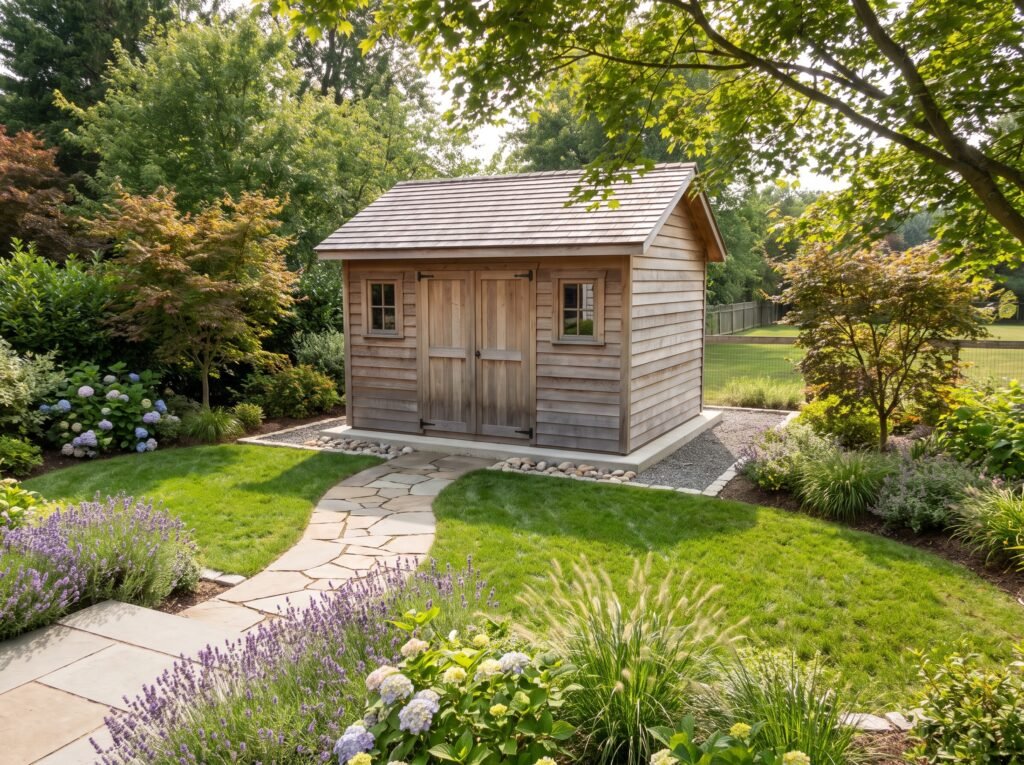
The location of your shed can influence its lifespan, convenience, and appearance. Ideally, it should be positioned on stable, level ground that drains well.
Avoid Areas That Stay Wet
Standing water is one of the biggest problems for outdoor timber structures. Constant contact with wet ground can increase the risk of moisture-related damage. Raising the shed above the ground with a suitable base can improve ventilation beneath the structure and help reduce this problem.
A concrete base, paving foundation, or other properly prepared support can provide stability. The exact solution depends on the shed, local conditions, and installation requirements.
Think About Accessibility
The shed should be easy to reach when you need it. Placing it at the farthest corner of the garden might seem efficient for maximizing open space, but it may become frustrating when you need to carry heavy tools or equipment back and forth.
Consider pathways, door clearance, lighting, and the amount of space needed to move objects in and out. A shed that is convenient to access is much more likely to stay organized and useful.
How to Prepare the Ground for a Wood Garden Shed
A quality shed needs a stable foundation. Before installation, clear away plants, debris, roots, and loose material from the selected area. The ground should be level and capable of supporting the structure.
If the foundation is uneven, the shed may shift or twist over time. This can create problems with doors, windows, walls, and roofing. Proper preparation at the beginning can prevent expensive repairs later.
Drainage is equally important. Rainwater should not collect around the shed. Creating a suitable base with good drainage can help protect the bottom of the structure and extend its useful life.
How to Make Your Wood Garden Shed More Secure
Garden sheds often contain valuable tools and equipment, so security should not be overlooked. A strong lock is a basic starting point, but the overall structure also matters.
A sturdy door with reliable hinges and a suitable locking system can make unauthorized access more difficult. Windows can also be designed with security in mind. If the shed contains expensive equipment, additional security measures may be appropriate.
Outdoor lighting can improve visibility around the shed, particularly at night. Keeping shrubs and vegetation trimmed near doors and windows can also improve visibility and access.
Security does not have to make the shed unattractive. Many modern solutions can be integrated into the structure without changing its traditional garden appearance.
How to Organize a Wood Garden Shed Efficiently
A shed can quickly become cluttered if everything is placed on the floor. Good organization makes a surprisingly large difference to how much usable space you have.
Use Vertical Storage
Shelving is one of the easiest ways to improve storage capacity. Instead of covering the floor with small tools and containers, use wall-mounted shelves to take advantage of vertical space.
Hooks and hanging systems can be useful for long-handled tools such as rakes, spades, and brooms. Keeping these items off the floor makes it easier to walk through the shed and find what you need.
Create Dedicated Storage Zones
Another effective approach is to divide the shed into simple zones. Gardening tools can have one area, plant containers another, and seasonal equipment can be kept toward the back.
This makes the space easier to manage and reduces the temptation to place items wherever there happens to be an empty corner.
A small workbench can also turn part of the shed into a practical workspace for potting plants, repairing tools, or completing small DIY tasks.
Can a Wood Garden Shed Be Used as a Workshop?
Absolutely. One of the most appealing features of timber garden structures is their adaptability. A sufficiently large and well-built wood garden shed can be turned into a workshop for hobbies, crafts, gardening projects, or light DIY work.
The requirements are different from those of a simple storage shed. A workshop benefits from natural light, electrical access where safely and legally installed, suitable ventilation, comfortable working height, and organized tool storage.
Insulation may also be worth considering if you intend to spend significant time inside. However, any electrical installation should be carried out safely and according to applicable local requirements.
Can You Insulate a Wood Garden Shed?
Insulation can make a wooden shed more comfortable, especially when it is being used as a hobby area or workspace. Insulated walls can reduce heat transfer, while a suitable roof and floor treatment can improve overall comfort.
However, insulation should be approached as part of a complete system. Moisture control and ventilation remain important because a poorly ventilated insulated space can develop condensation problems.
If the shed is intended purely for storing gardening tools, full insulation may not be necessary. For regular human occupancy or hobby use, however, it can be a worthwhile improvement.
How to Protect a Wood Garden Shed From Rain and Moisture
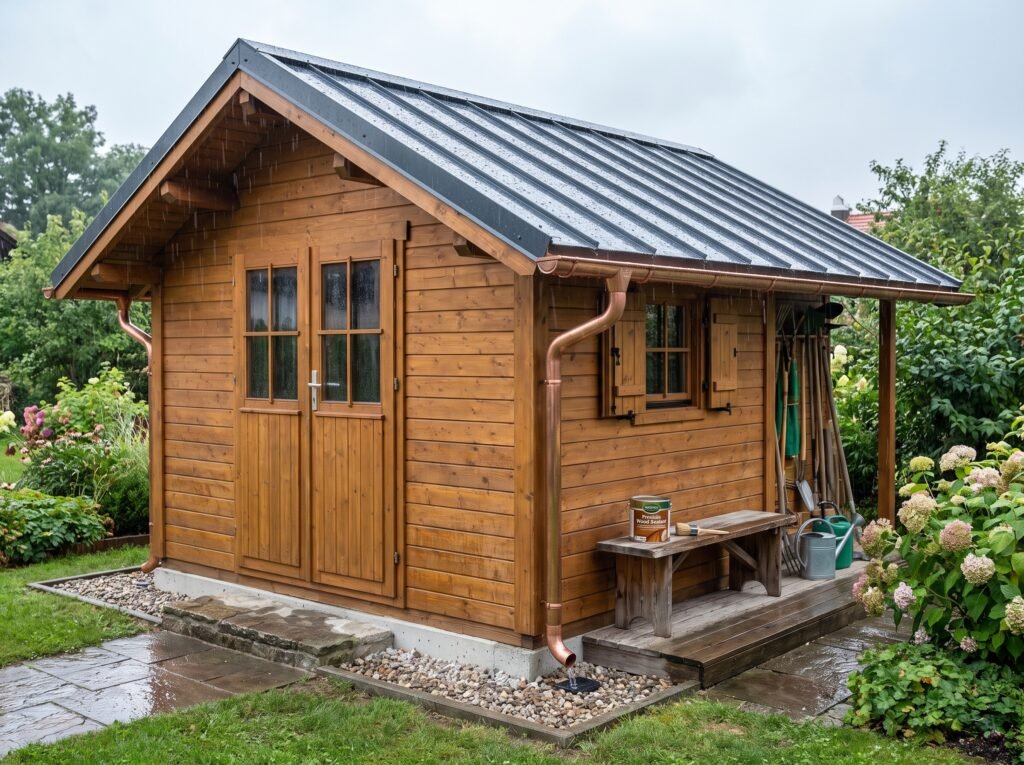
Water protection is essential for almost every wooden outdoor structure. Although quality timber can perform well outside, it still needs protection from prolonged moisture exposure.
A suitable exterior treatment can help protect the wood and maintain its appearance. Depending on the finish, treatments may include paint, stain, or other products designed for exterior timber.
Pay particular attention to vulnerable areas such as doors, window frames, roof edges, and the bottom sections of the walls.
Regular inspection is important. Look for peeling finishes, cracks, damaged boards, soft timber, leaks, or areas where water seems to collect.
The sooner you identify a problem, the easier it usually is to address.
Wood Garden Shed Maintenance Tips That Can Extend Its Life
A wooden shed should not be treated as completely maintenance-free. Fortunately, routine care is generally straightforward.
Inspect the roof regularly for signs of damage or leaks. Check the walls and framing for cracks, discoloration, or deterioration. Examine the door and hinges to make sure they continue to operate smoothly.
Keep gutters and drainage areas clear where applicable, and avoid allowing leaves or vegetation to remain against the walls for long periods.
Reapplying an appropriate exterior wood treatment at suitable intervals can also help preserve the structure. Maintenance schedules vary depending on the timber, treatment, finish, exposure, and local climate.
A few hours of preventative care can save considerable effort later.
How to Make Your Wood Garden Shed Look More Attractive
Storage does not have to mean sacrificing style. A well-designed shed can become a focal point in the garden.
Painting the exterior in a color that complements your home or garden furniture can create a cohesive appearance. Window boxes, climbing plants, decorative lighting, and surrounding flower beds can also soften the structure.
However, avoid allowing plants to grow directly against the timber. Vegetation that traps moisture against the walls can increase maintenance issues.
A simple path leading to the shed can make the area feel intentional and accessible. Even small improvements can dramatically change how the structure looks.
Is a Wood Garden Shed Better Than a Metal or Plastic Shed?
There is no single material that is perfect for every garden. The right choice depends on your priorities.
Wood is often favored for its natural appearance, adaptability, and traditional style. It can be painted, modified, repaired, and personalized relatively easily.
Metal sheds can provide strong security and may require less exterior timber maintenance, although they can have a more industrial appearance and may behave differently in hot or cold weather.
Plastic or resin sheds are often valued for their low maintenance and resistance to certain types of moisture-related deterioration. However, they may provide fewer customization options and a different aesthetic.
For gardeners who value natural materials and a classic outdoor appearance, a wood garden shed remains an attractive option.
Common Mistakes to Avoid When Buying a Wood Garden Shed
One of the biggest mistakes is focusing entirely on the purchase price. A very cheap shed may look attractive initially, but lower-quality timber, weak framing, thin panels, or inadequate roofing can lead to higher costs later.
Another common mistake is failing to check measurements carefully. Remember that the available garden space is not the only consideration. You need enough room for the structure itself, access around it, door movement, and any future maintenance.
Ignoring the foundation is another serious error. Even an excellent shed can perform poorly when installed on unstable or constantly wet ground.
It is also unwise to underestimate storage requirements. A shed that fits your belongings today may become overcrowded as your gardening needs grow.
Finally, do not assume that wood requires no maintenance. Proper treatment and regular inspection are part of owning a wooden outdoor structure.
How Much Does a Wood Garden Shed Cost?
The cost of a wood garden shed varies widely depending on dimensions, timber quality, wall thickness, roof construction, windows, doors, treatment, brand, and design.
A small basic storage shed may be relatively affordable, while a large premium structure designed as a workshop or garden room can cost substantially more.
Installation and foundation costs may also need to be considered. If you are comparing different models, calculate the complete project cost rather than focusing only on the advertised shed price.
It is often better to invest in a well-constructed shed that meets your needs than to buy the cheapest available option and replace it sooner than expected.
Should You Build or Buy a Wood Garden Shed?
Building your own shed can be rewarding if you have suitable tools, skills, time, and a clear construction plan. A DIY project also gives you more control over dimensions and design.
However, it requires careful planning. You will need to think about the foundation, framing, wall construction, roof, doors, windows, weatherproofing, and finishing.
Buying a ready-made shed can be much simpler. Modern kits are available in a wide range of styles and sizes, allowing homeowners to choose a design that suits their garden without designing every component from scratch.
The best option depends on your confidence, available time, budget, and desired level of customization.
How to Choose the Best Wood Garden Shed for Your Needs
The best wood garden shed is not necessarily the largest, most expensive, or most visually impressive model. It is the one that matches your actual requirements.
Start by identifying what you plan to store or use the shed for. Then consider the available garden space, preferred design, timber quality, foundation requirements, security, ventilation, and future maintenance.
Think about how you will use the shed several years from now rather than only how it will serve you today. Gardening habits change, equipment increases, and additional storage often becomes useful.
A carefully selected shed can provide practical value for years, while a poorly chosen one can quickly become cramped, difficult to maintain, or expensive to repair.
Transform Your Garden With the Right Wood Garden Shed
A wood garden shed can be one of the most useful improvements you make to your outdoor space. It provides dedicated storage, creates opportunities for hobbies and gardening projects, and can add a natural visual element to the landscape.
The key to getting the most from your investment is choosing the right size and construction, preparing a stable foundation, protecting the timber, and organizing the interior intelligently. Good maintenance then helps preserve both the appearance and performance of the structure.
Whether you need a compact storage unit for basic garden tools or a spacious workshop for year-round projects, there is a wood garden shed to suit almost every type of garden.
The most important step is to think beyond the initial purchase. Consider how the shed will fit into your garden, how you will use it, what you need to store, and how much maintenance you are prepared to provide. When those factors are considered together, choosing the right shed becomes much easier.
A thoughtfully selected and properly maintained wood garden shed can turn unused outdoor space into an organized, attractive, and practical extension of your home. Now is the perfect time to measure your available space, define your storage needs, and start comparing designs that fit your garden and lifestyle. The right shed is more than storage—it is an investment in a cleaner, more functional, and more enjoyable outdoor space.