Building your own greenhouse can be one of the most rewarding projects for a gardener. Instead of depending entirely on the weather, you can create a controlled growing environment where vegetables, herbs, flowers, seedlings, and other plants have a better chance to thrive. The good news is that you do not necessarily need an expensive commercial greenhouse to enjoy these benefits. With the right greenhouse building plans, careful preparation, and suitable materials, you can create a greenhouse that matches your garden, budget, and growing goals.
A well-designed greenhouse can extend the growing season, protect delicate plants from harsh weather, and give you more control over temperature, light, humidity, and ventilation. However, successful construction starts long before you install the first panel. Choosing the right location, greenhouse size, frame material, covering, foundation, doors, ventilation system, and growing layout can make a significant difference in the final result.
This guide explains everything you need to know about greenhouse building plans, from choosing a suitable design to preparing the site and understanding the most important construction details. Whether you are a beginner looking for a simple DIY greenhouse or an experienced gardener planning a larger structure, these ideas can help you build with greater confidence.
Greenhouse Building Plans: Start With a Design That Fits Your Garden
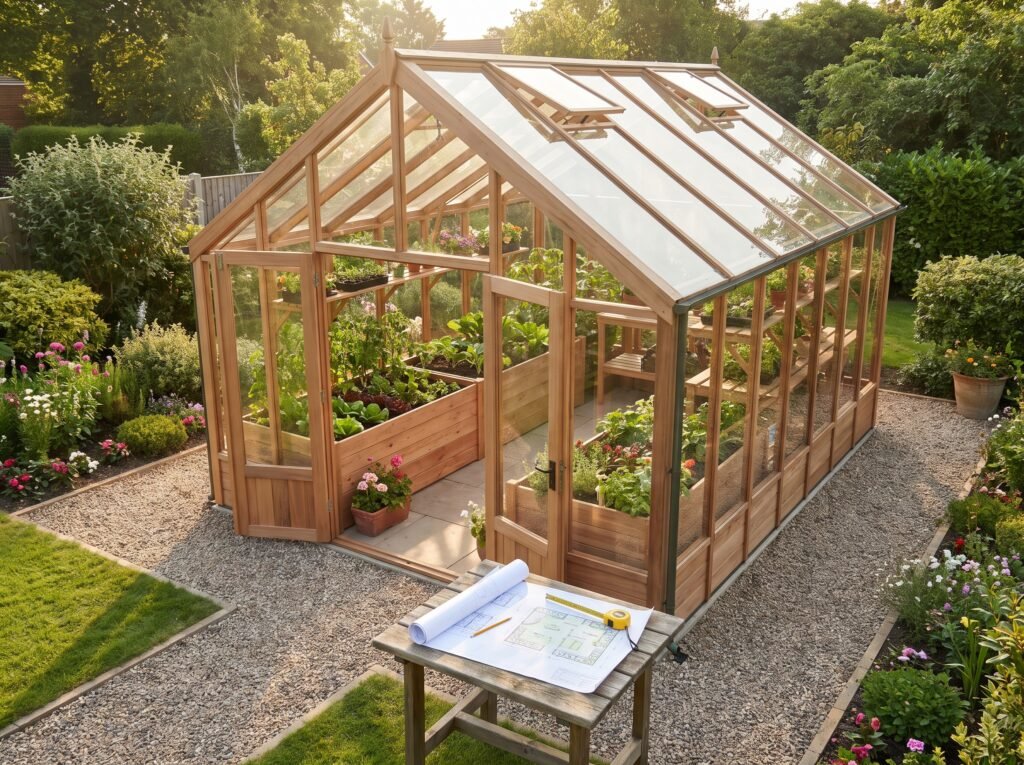
The first step in any greenhouse project is deciding exactly what you want to build. A greenhouse should not simply be a beautiful structure placed somewhere in the garden. Its design should support the plants you want to grow and the amount of time you are willing to spend maintaining it.
Before choosing a plan, think about how you currently garden and what you hope to achieve. If your main goal is starting vegetable seedlings in spring, a small greenhouse may be enough. If you want to grow tomatoes, cucumbers, peppers, flowers, and herbs throughout much of the year, you may need a larger structure with better ventilation and temperature management.
The available space in your garden also matters. Measure the proposed area carefully before selecting a greenhouse plan. Remember to leave enough room around the structure for walking, maintenance, cleaning panels, opening doors, and carrying soil or gardening equipment.
A practical greenhouse design should also allow you to move comfortably inside. A greenhouse that looks large from the outside can quickly feel cramped when benches, pots, shelves, and plants are added.
Consider the Greenhouse Shape Before You Begin Construction
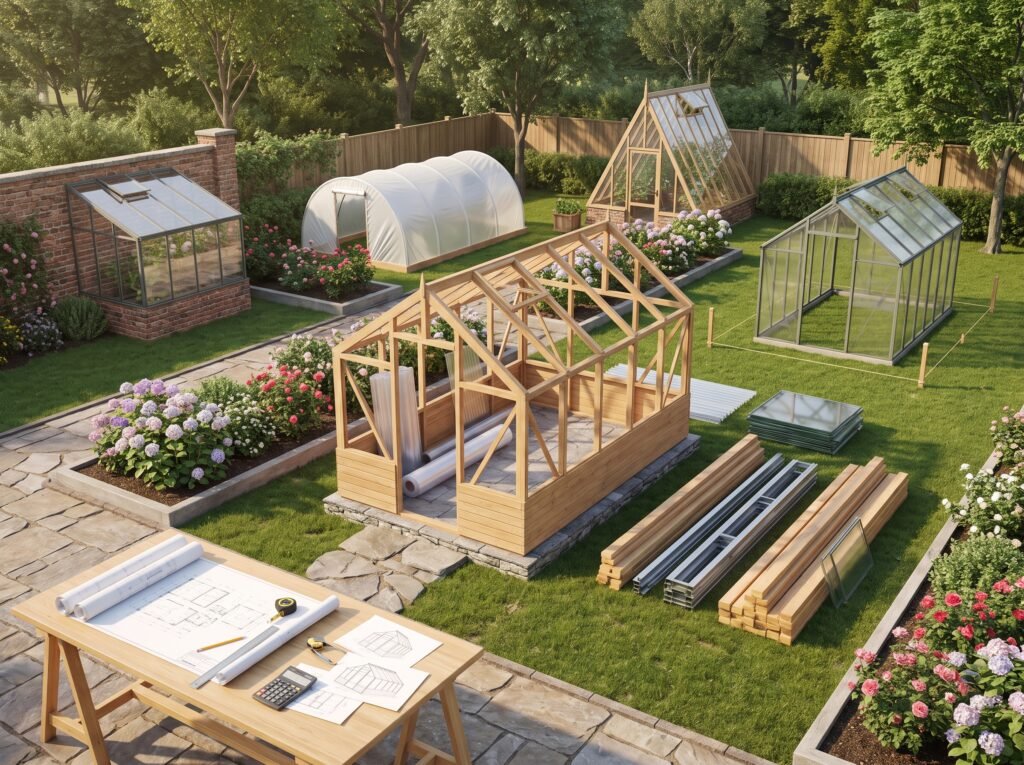
Greenhouses come in several shapes, and each design has advantages. A traditional rectangular greenhouse is popular because it provides a practical interior layout and makes efficient use of available space. It can also be easier to construct using standard materials.
Lean-to greenhouses are attached to an existing wall, making them useful when garden space is limited. Because one side of the structure is already supported by a building, a lean-to design can sometimes require fewer materials. It may also be convenient for accessing water and electricity if the greenhouse is positioned close to the house.
Hoop houses are another affordable option. Their curved frames can be relatively simple to construct and are often covered with greenhouse plastic. They are particularly useful when the primary objective is creating a larger growing area without investing in an elaborate structure.
A-frame and gothic-style designs can also be considered. Their shapes can help with rain and snow runoff, while their appearance may suit gardeners who want something more distinctive.
The best shape is not necessarily the most complicated one. Choose the structure that fits your space, climate, budget, and gardening goals.
How to Choose the Best Location for Your DIY Greenhouse
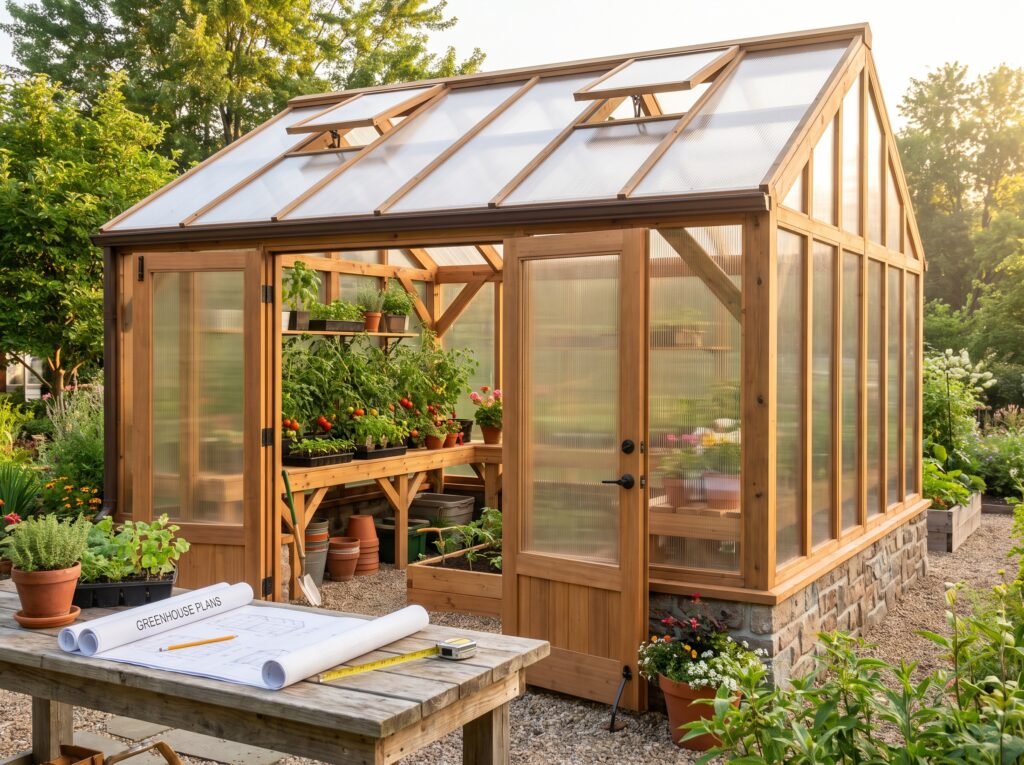
Even an excellent greenhouse plan can perform poorly if the structure is installed in the wrong location. Sunlight is one of the most important considerations because plants need sufficient light for photosynthesis and healthy growth.
Look for an area that receives plenty of sunlight during the growing day. Avoid locations where large trees, tall fences, or buildings create significant shadows. At the same time, consider whether nearby trees could drop branches onto the greenhouse during storms.
Good drainage is equally important. Water collecting around the foundation can create problems for both the structure and your plants. If your selected location stays wet after rainfall, you may need to improve drainage before construction.
Wind exposure should also be considered. A greenhouse can act like a large sail during strong winds, particularly if it has lightweight covering material. Positioning the structure in a naturally sheltered area can reduce stress on the frame.
Accessibility is another factor that is sometimes overlooked. Ideally, your greenhouse should be close enough to your home or garden tools that watering, harvesting, cleaning, and daily inspections are convenient.
Decide How Large Your Greenhouse Really Needs to Be
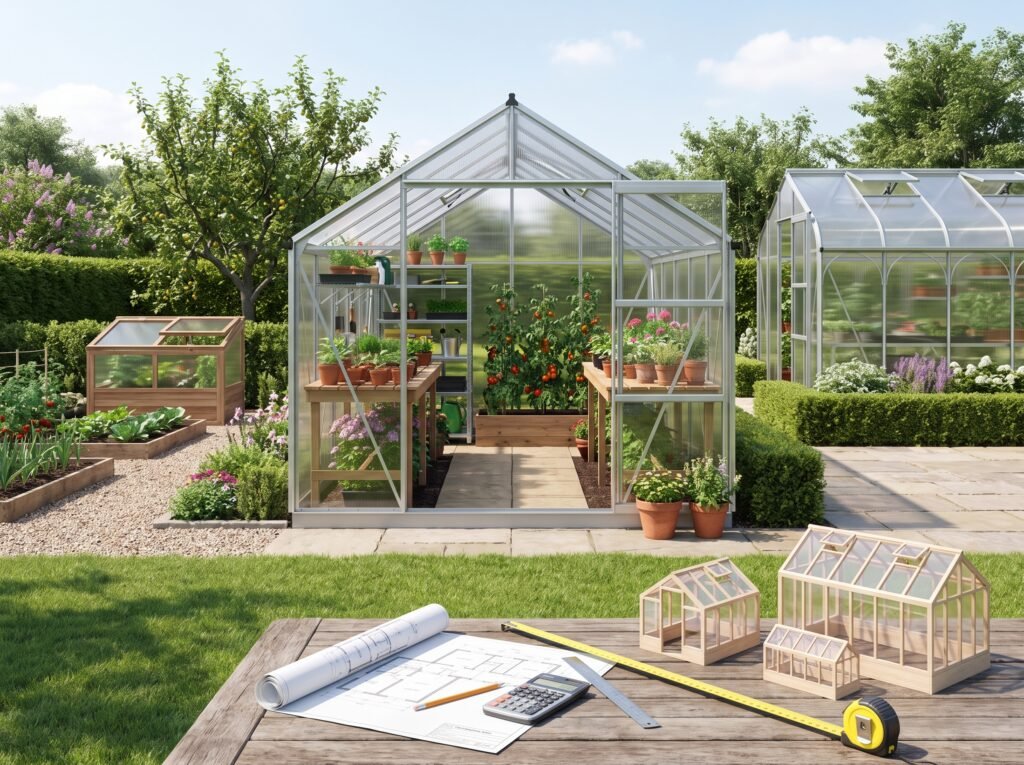
One of the biggest mistakes beginners make is choosing a greenhouse that is too small. Plants may start as tiny seedlings, but mature plants can require considerable space.
Think about the crops you intend to grow and how much room each one needs. Tomatoes and cucumbers, for example, can become tall and require vertical support. Shelving and benches can improve the use of vertical space, but they still occupy part of the greenhouse.
A useful approach is to create a simple floor layout before purchasing materials. Mark the location of benches, shelves, pathways, doors, and planting beds. This gives you a better idea of how much usable growing space will remain.
If your budget and garden allow it, building slightly larger than your immediate needs can be worthwhile. Expanding a greenhouse later can be considerably more difficult than adding extra space during the original construction.
However, bigger is not always better. A large greenhouse can require more heating, ventilation, watering, cleaning, and maintenance. Choose a size that you can realistically manage.
Select Strong and Suitable Materials for the Greenhouse Frame
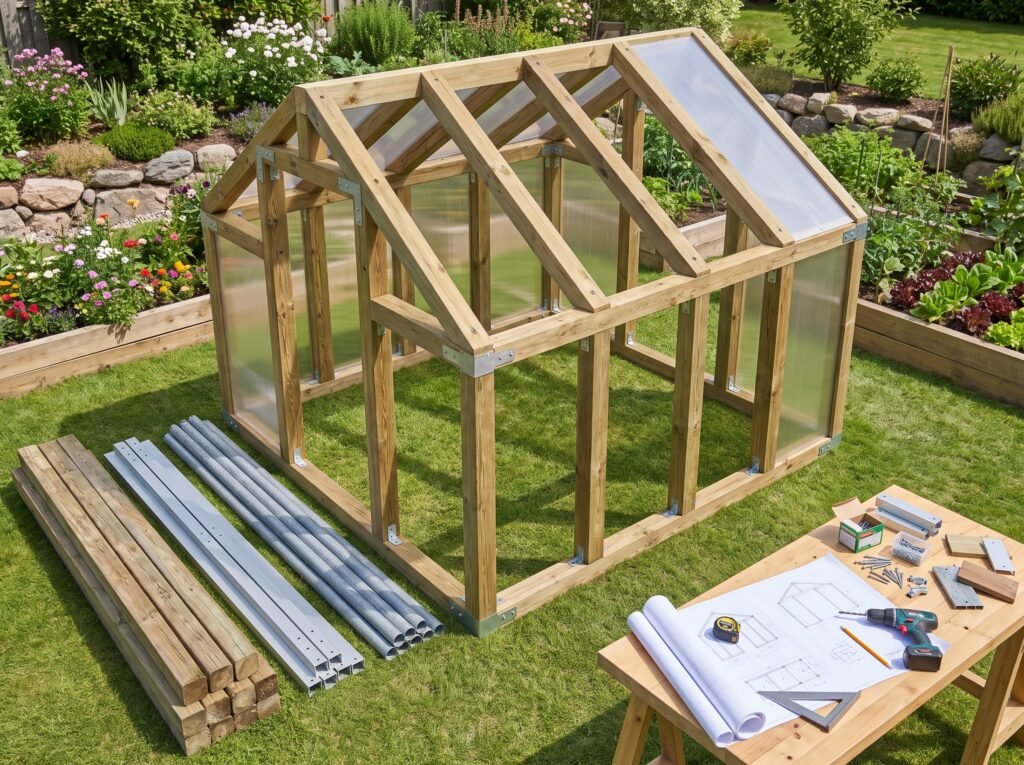
The frame forms the skeleton of the greenhouse, so its strength and durability should be important parts of your greenhouse building plans.
Wood is a popular choice for DIY projects because it is relatively easy to cut and work with. A properly constructed wooden frame can also provide an attractive natural appearance. However, wood must be protected from moisture and deterioration, especially when it is constantly exposed to humid greenhouse conditions.
Aluminum is lightweight and resistant to corrosion, making it another popular greenhouse material. It can provide a clean, modern appearance and usually requires less maintenance than untreated wood.
Galvanized steel offers strength and can be appropriate for larger structures. It may be particularly useful in areas where wind resistance is an important consideration.
The correct choice depends on the size of the greenhouse, local weather, budget, appearance, and your construction skills. Do not choose a material solely because it is inexpensive. A weak frame can create expensive problems later.
Think About the Greenhouse Covering Carefully
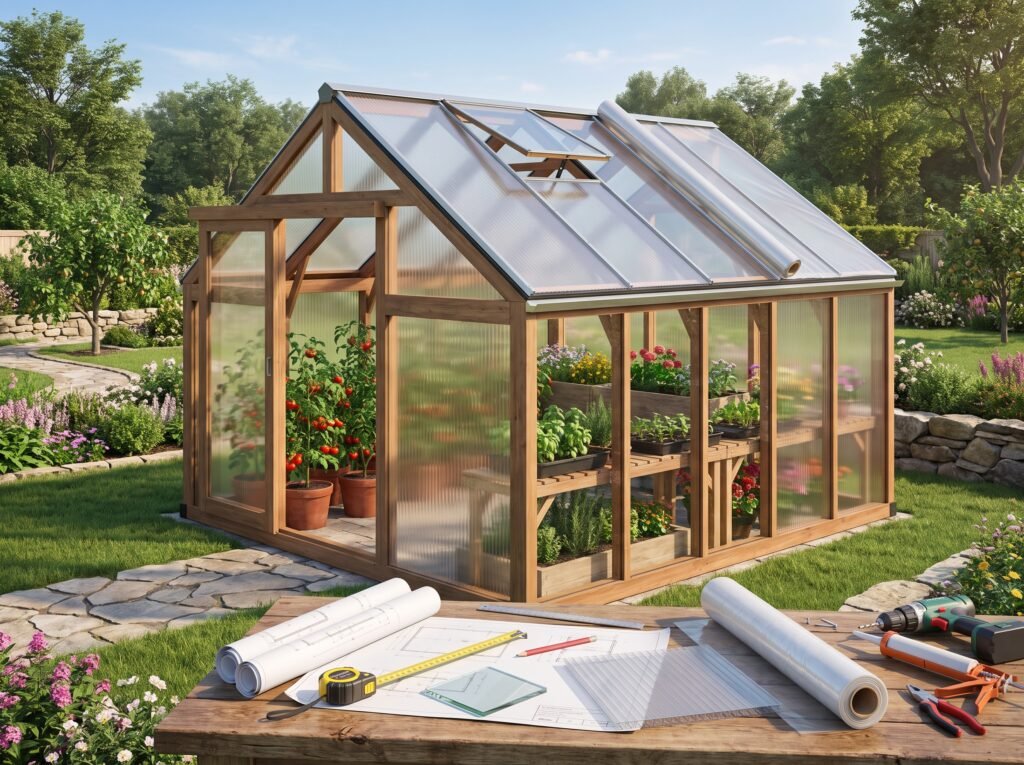
The covering determines how light enters the greenhouse and how well the structure retains heat. Common options include glass, polycarbonate, and greenhouse-grade plastic film.
Glass provides excellent light transmission and a classic greenhouse appearance. It can last for many years when properly installed, but it can be heavier, more expensive, and more fragile than some alternatives.
Polycarbonate panels are popular because they can provide durability and insulation while being lighter than traditional glass. Multi-wall polycarbonate can help reduce heat loss and is widely used in modern greenhouse designs.
Plastic film can be an economical choice, particularly for larger DIY structures. However, its lifespan depends on the quality of the material and environmental conditions, and it may eventually need replacement.
When selecting a covering, consider more than its initial price. Think about durability, insulation, light transmission, maintenance, and replacement costs.
Build a Solid Foundation for Long-Term Greenhouse Stability
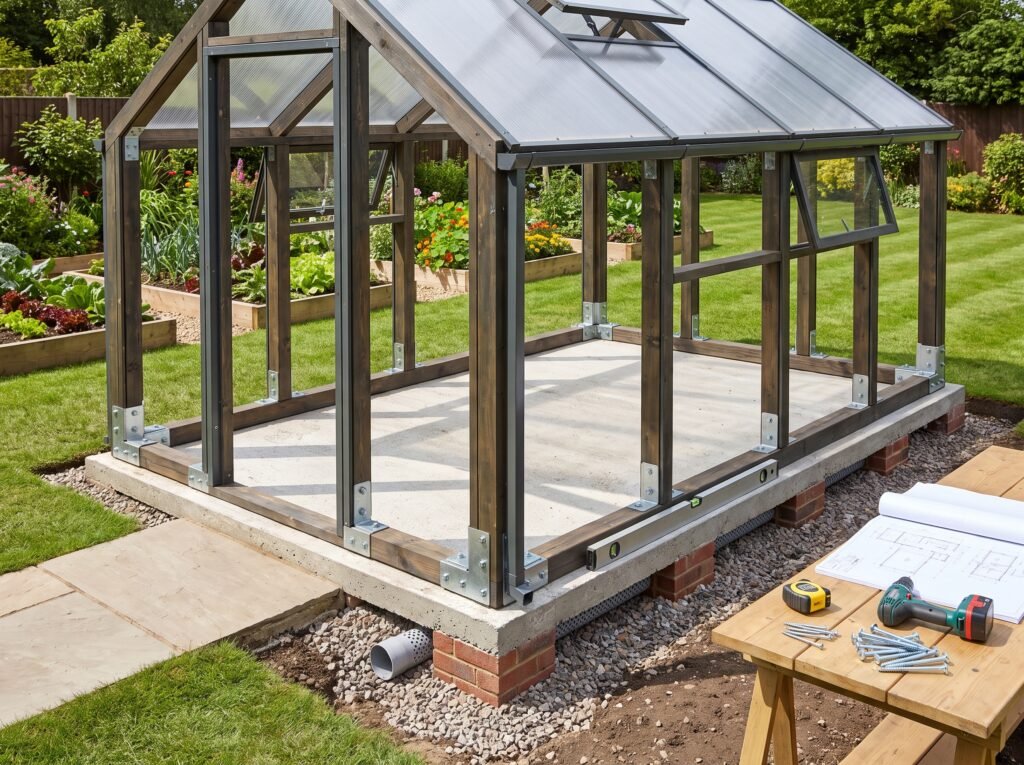
The foundation is one of the most important parts of greenhouse construction. A greenhouse needs a stable base that can support its weight and help prevent movement caused by wind or uneven ground.
Depending on the greenhouse design, the foundation might consist of treated timber, concrete, paving, ground anchors, or another suitable base system.
Before building the foundation, make sure the ground is properly prepared. Remove vegetation, level the area where appropriate, and consider drainage requirements.
A solid foundation can also make it easier to keep the greenhouse level. If the structure becomes uneven over time, doors may stop closing correctly and panels can become difficult to fit.
For larger or permanent structures, local building requirements should be checked before construction. Requirements can vary depending on location, structure size, and whether the greenhouse requires electrical or other permanent installations.
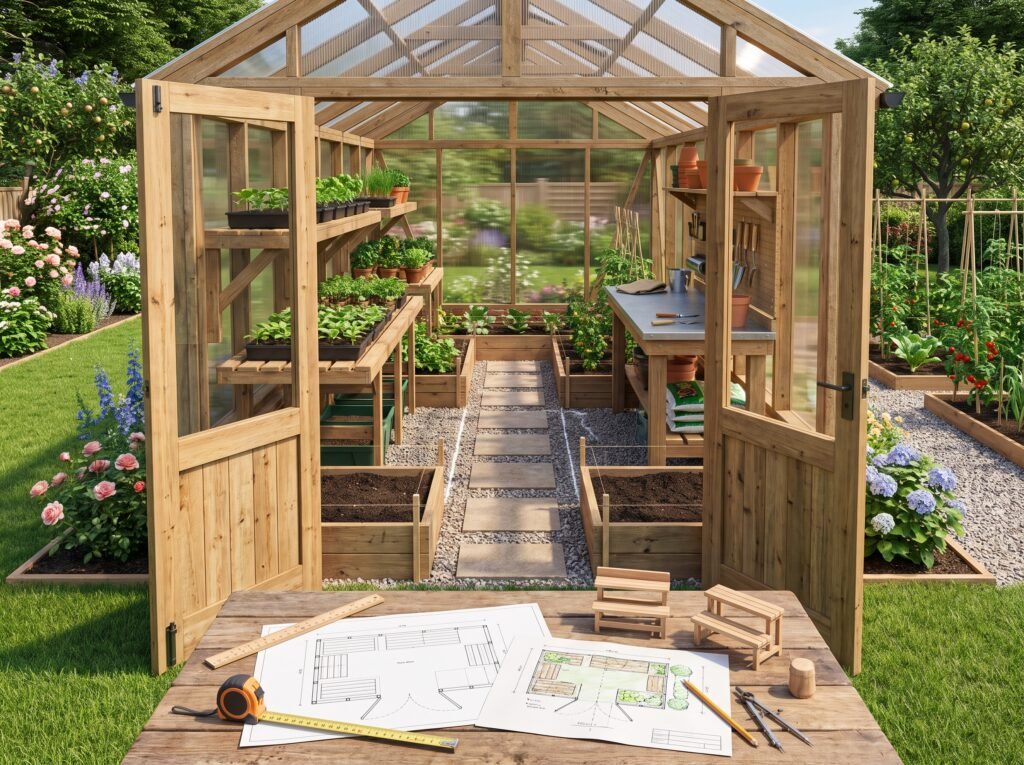
Plan Doors, Paths, Shelves, and Work Areas Before Building
Interior planning should be part of your greenhouse building plans rather than something you decide after construction.
The door needs enough clearance to allow easy movement of people, plants, pots, soil, and gardening equipment. If you use a wheelbarrow, make sure the doorway and paths can accommodate it.
Inside the greenhouse, leave sufficient walking space between growing areas. Narrow pathways may look efficient on paper but can become frustrating when plants grow larger.
Benches are useful for seedlings and potted plants, while shelves can provide additional vertical growing space. Raised beds can be incorporated into larger greenhouse designs for crops that perform best when planted directly into the soil.
Try to keep frequently used items within easy reach. A small workbench for potting plants, storing tools, or preparing seedlings can make the greenhouse much more practical.
Add Proper Ventilation to Keep Plants Healthy
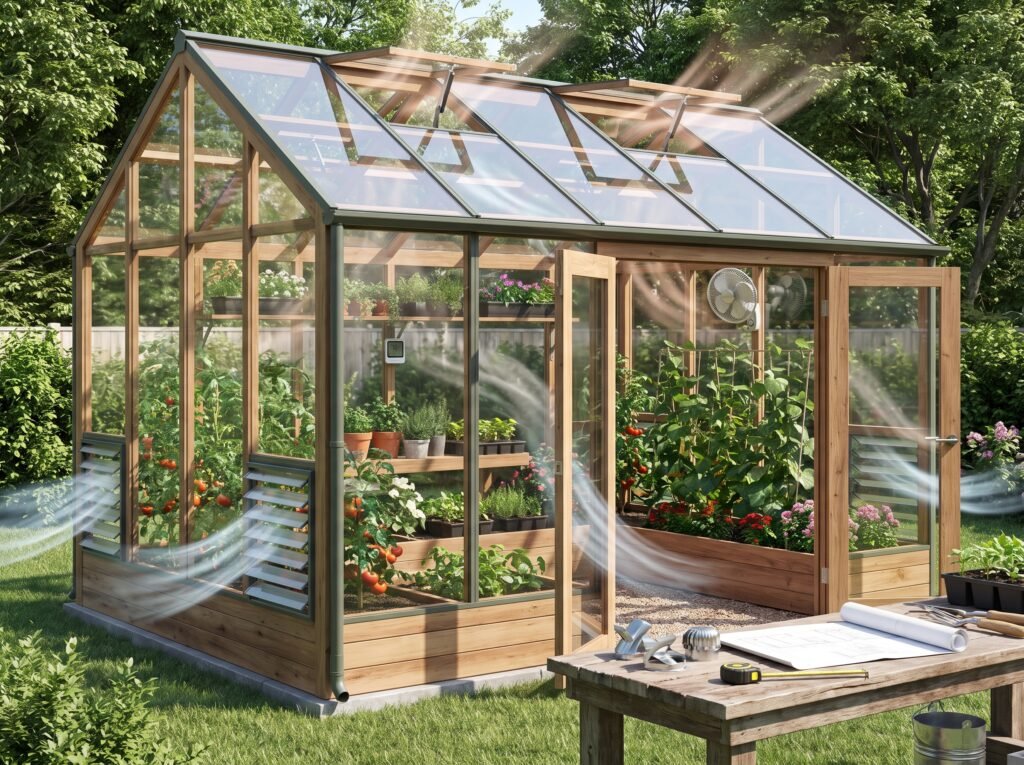
Ventilation is one of the most important features of a greenhouse. Sunlight can quickly increase the temperature inside the structure, even when outdoor temperatures are relatively comfortable.
Without adequate ventilation, excessive heat and humidity can stress plants and create conditions that encourage certain pests and diseases.
Roof vents are particularly useful because warm air naturally rises. Side vents, doors, and circulation fans can also help move air through the greenhouse.
When designing your greenhouse, consider how fresh air will enter and how warm air will escape. A well-planned ventilation system can help maintain a more stable growing environment.
Automatic vent openers are another option worth considering. They can open vents when temperatures rise and close them as temperatures fall, reducing the need for constant manual adjustment.
Think About Heating and Temperature Control
A greenhouse does not automatically remain warm during cold weather. Once the sun goes down, temperatures inside can fall significantly.
If you plan to use your greenhouse during colder months, heating may become necessary depending on your climate and the plants you want to grow.
Before installing a heater, improve insulation where possible. A well-sealed structure can retain heat more effectively than a poorly constructed greenhouse with gaps around doors and panels.
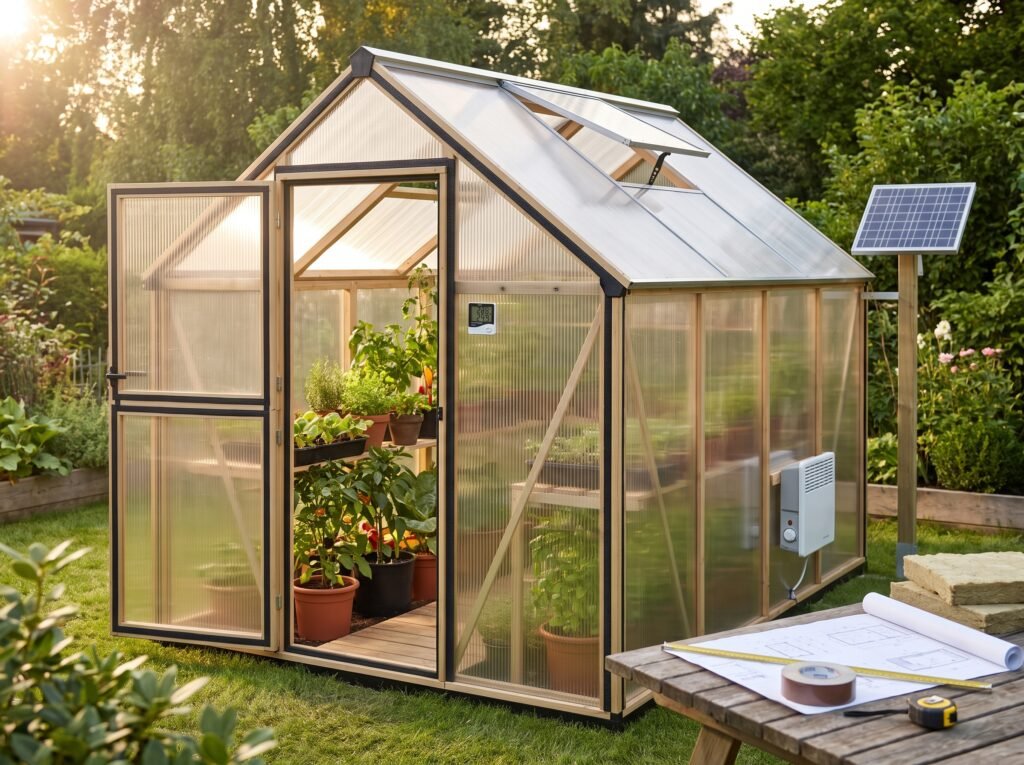
Temperature monitoring is also valuable. A basic thermometer can tell you whether conditions are becoming too hot or too cold. More advanced systems can monitor temperature automatically and control ventilation or heating equipment.
Always follow manufacturer safety instructions when using electrical equipment or heaters in a greenhouse. Keep electrical systems protected from moisture and use appropriately rated equipment.
Include Watering and Drainage in Your Greenhouse Building Plans
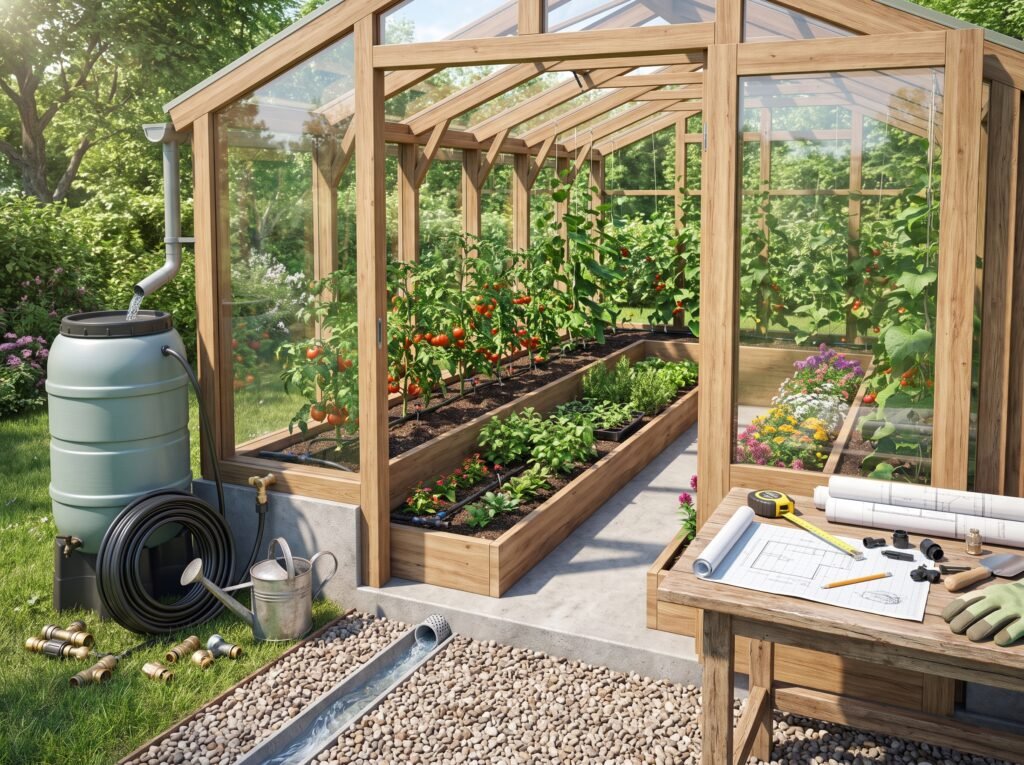
Plants need consistent access to water, and carrying watering cans back and forth from the house can quickly become inconvenient.
If possible, position the greenhouse near a reliable water source. You can also consider drip irrigation or other efficient watering systems.
Drip irrigation can deliver water directly to the growing area, helping reduce unnecessary water loss. It can also make watering easier when you are away from the garden for short periods.
Drainage is just as important as watering. Excess moisture should have a suitable route away from the growing area. Avoid creating conditions where water remains trapped around the greenhouse foundation.
Good airflow, sensible watering, and proper drainage work together to create a healthier growing environment.
Make Your Greenhouse Energy Efficient From the Beginning
Energy efficiency should be considered during the design stage rather than after the greenhouse has been completed.
Choose a suitable covering for your climate and growing goals. Seal unnecessary gaps around doors and panels while still providing enough ventilation for healthy plants.
If heating is required, use a thermostat or temperature controller where appropriate so that the system does not operate unnecessarily.
The greenhouse location can also influence energy requirements. A sheltered position may reduce heat loss and protect the structure from strong winds.
During colder periods, thermal curtains, insulating materials, or other suitable greenhouse insulation methods can sometimes help retain warmth. However, ventilation should never be completely sacrificed in an attempt to conserve heat.
Avoid These Common Greenhouse Construction Mistakes
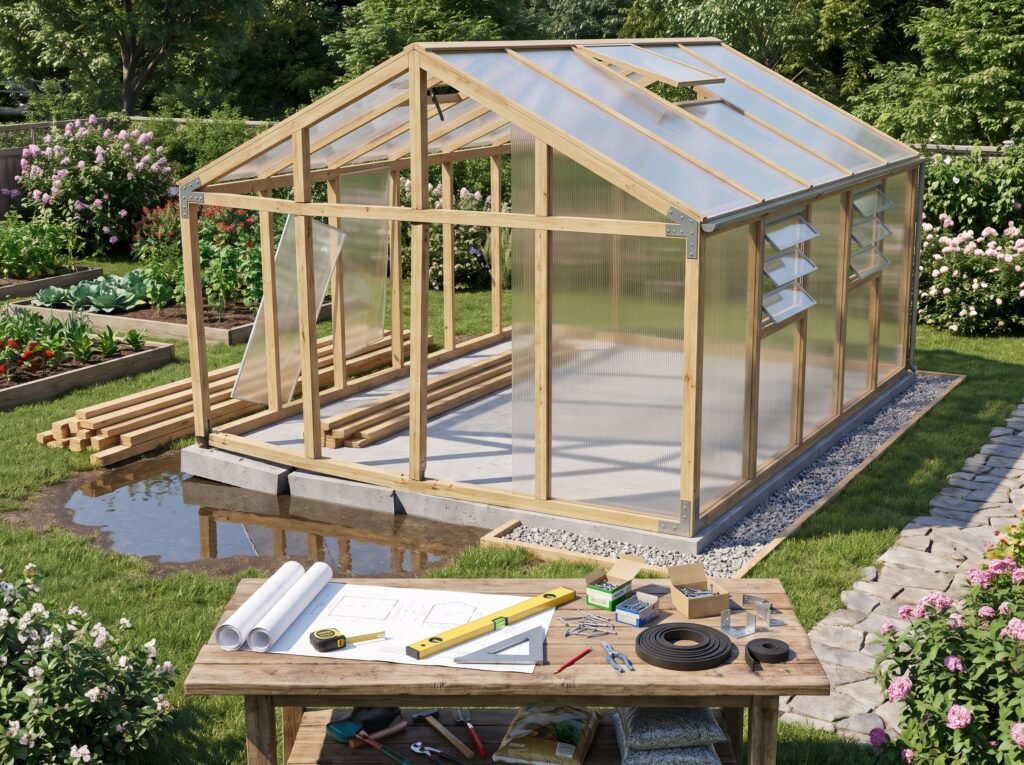
Many greenhouse problems can be prevented through careful planning. One common mistake is choosing a location without observing sunlight patterns throughout the day. A site that looks sunny in the morning may become heavily shaded later.
Another mistake is underestimating ventilation. Beginners sometimes focus heavily on the frame and covering while overlooking how quickly a greenhouse can become hot.
Using unsuitable or low-quality materials can also reduce the lifespan of the structure. Saving money at the construction stage may result in higher repair or replacement costs later.
Poor drainage is another frequent issue. Standing water can damage foundations and create unhealthy growing conditions.
Some gardeners also build without thinking about future maintenance. Every panel, vent, gutter, and door should ideally remain accessible for cleaning and repairs.
Finally, avoid designing a greenhouse entirely around its appearance. A beautiful greenhouse is useful only when it provides the growing conditions your plants need.
How to Build a Greenhouse Step by Step
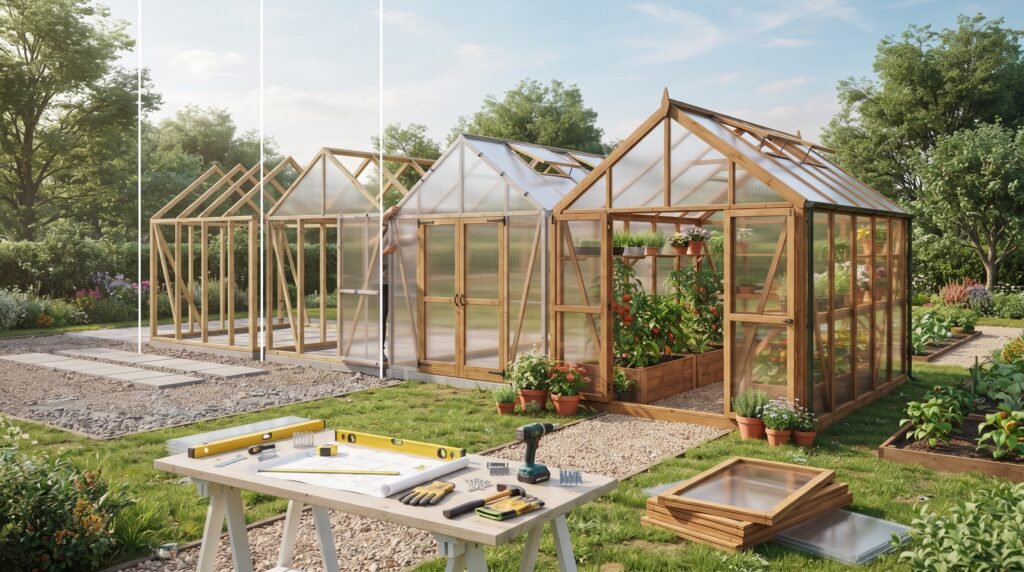
Once your design is finalized, construction can begin. Start by preparing and leveling the selected site. Remove unwanted vegetation and make sure the area can support the planned foundation.
Next, construct the foundation according to your chosen design. Check measurements carefully because small errors at this stage can create larger alignment problems later.
After the foundation is ready, assemble the frame. Check that each section is level, square, and securely connected. Do not rush this stage because the frame determines how well the covering and doors will fit.
Install the greenhouse covering according to the manufacturer’s instructions. Avoid leaving loose sections that can move excessively in strong winds.
Once the covering is secure, install doors, vents, shelving, benches, and other interior features. Test doors and ventilation openings before filling the greenhouse with plants.
Finally, inspect the entire structure. Check for sharp edges, loose fasteners, gaps, drainage problems, and areas that may require additional support.
How Much Can DIY Greenhouse Building Plans Save You?
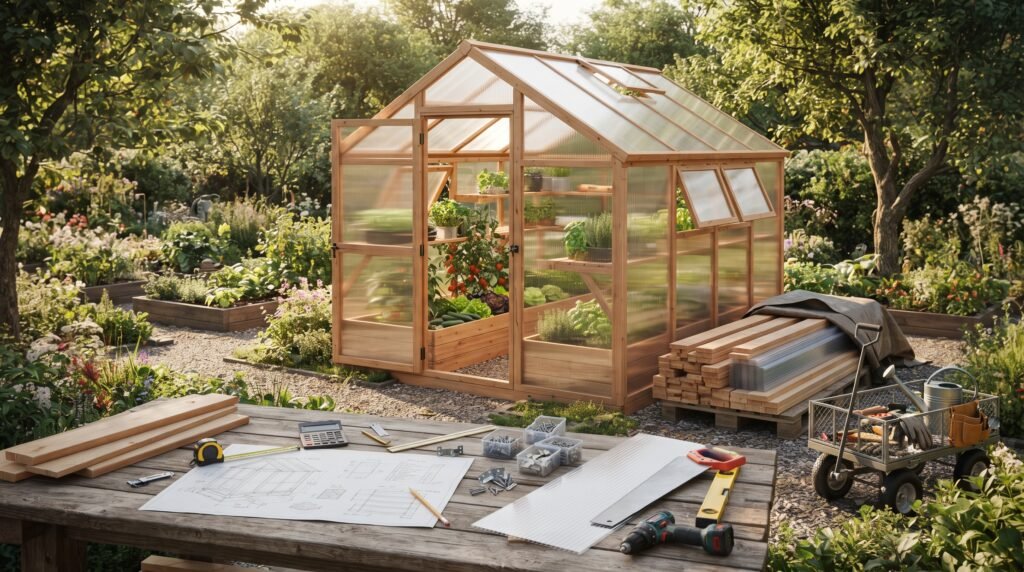
The cost of a greenhouse varies significantly depending on its size, materials, foundation, covering, heating requirements, and level of automation.
A simple DIY greenhouse can be relatively affordable if you use economical materials and complete much of the work yourself. More advanced structures with glass panels, aluminum frames, automated ventilation, heating, irrigation, and electrical systems can cost considerably more.
The biggest advantage of using greenhouse building plans is that you can control where your money goes. Instead of paying for features you do not need, you can prioritize the elements that matter most for your plants.
Before buying materials, create a realistic budget that includes the frame, covering, foundation, fasteners, doors, ventilation, irrigation, tools, and potential future maintenance.
It is also sensible to keep a small contingency budget for unexpected costs. Construction projects rarely go exactly according to the first estimate.
Greenhouse Building Plans for Different Gardening Goals
There is no single greenhouse design that works for every gardener. Someone growing seedlings in spring may need a completely different setup from a gardener growing vegetables throughout winter.
For beginners, a compact greenhouse with simple ventilation and shelving may be the best starting point. It provides enough space to learn without creating an overwhelming maintenance workload.
For vegetable gardeners, a larger structure with raised beds, strong ventilation, irrigation, and vertical supports may be more practical.
For flower growers, benches and shelves may be more valuable than large floor-level planting beds.
If you want year-round growing, your greenhouse building plans should place greater emphasis on insulation, heating, ventilation, lighting where appropriate, and temperature monitoring.
The important thing is to design around your actual gardening goals rather than copying a greenhouse simply because it looks attractive online.
How to Make Your Greenhouse More Productive Throughout the Year
A well-designed greenhouse can support plants across multiple seasons. In spring, it can provide a protected environment for starting seedlings before outdoor temperatures become suitable.
During summer, ventilation and shading may become especially important. During autumn, the greenhouse can help extend the growing season for crops that would otherwise be affected by falling temperatures.
In winter, the growing possibilities depend heavily on your climate, greenhouse insulation, heating, and the crops you select.
Succession planting can also increase productivity. Instead of harvesting one crop and leaving the space unused, plan when different crops will be planted and harvested.
Vertical growing is another effective strategy. Trellises and supports allow crops such as tomatoes and cucumbers to grow upward, making better use of available space.
Final Thoughts on Creating the Right Greenhouse Building Plans
Creating a greenhouse does not have to be an intimidating project. The key is to start with a clear plan and make decisions based on your available space, climate, budget, and gardening goals.
The best greenhouse building plans balance strength, practicality, ventilation, light, drainage, accessibility, and plant requirements. A simple structure that is correctly designed can often be more useful than an expensive greenhouse filled with features you do not need.
Take time to choose the location, measure the available space, select suitable materials, and plan the interior before construction begins. Think about how the greenhouse will perform not only on a sunny day but also during heavy rain, strong winds, hot summer weather, and cold winter nights.
Most importantly, build for the future. Your gardening interests may grow, and your greenhouse should provide enough flexibility to accommodate new plants and techniques.
If you are ready to turn your gardening ideas into a practical growing space, now is the perfect time to start. Choose a greenhouse design, measure your available area, create your material budget, and begin developing your greenhouse building plans today. With thoughtful preparation and careful construction, your DIY greenhouse can become one of the most productive and enjoyable parts of your garden.