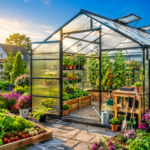
Growing plants in a controlled environment has become increasingly popular among home gardeners, commercial growers, and hobbyists alike. Whether you want to extend your growing season, protect delicate plants, or grow vegetables throughout the year, a greenhouse can completely transform your gardening experience. However, before investing in one, many people ask the same important question: what are greenhouses made of?
The answer isn’t as simple as saying glass or plastic. Modern greenhouses are constructed using a combination of different frame materials, glazing materials, foundations, ventilation systems, and hardware. Every material serves a unique purpose and directly affects the greenhouse’s durability, insulation, maintenance requirements, appearance, and overall cost.
Choosing the right greenhouse materials can save you thousands of dollars over time while creating the perfect environment for healthy plant growth. Some materials provide exceptional insulation for cold climates, while others maximize sunlight or reduce installation costs. Understanding these differences helps you make a smart long-term investment.
In this comprehensive guide, you’ll discover exactly what greenhouses are made of, compare the advantages and disadvantages of each material, learn which options professionals recommend, and understand how to choose the best greenhouse based on your budget and gardening goals.
What Are Greenhouses Made Of? Understanding Every Major Component
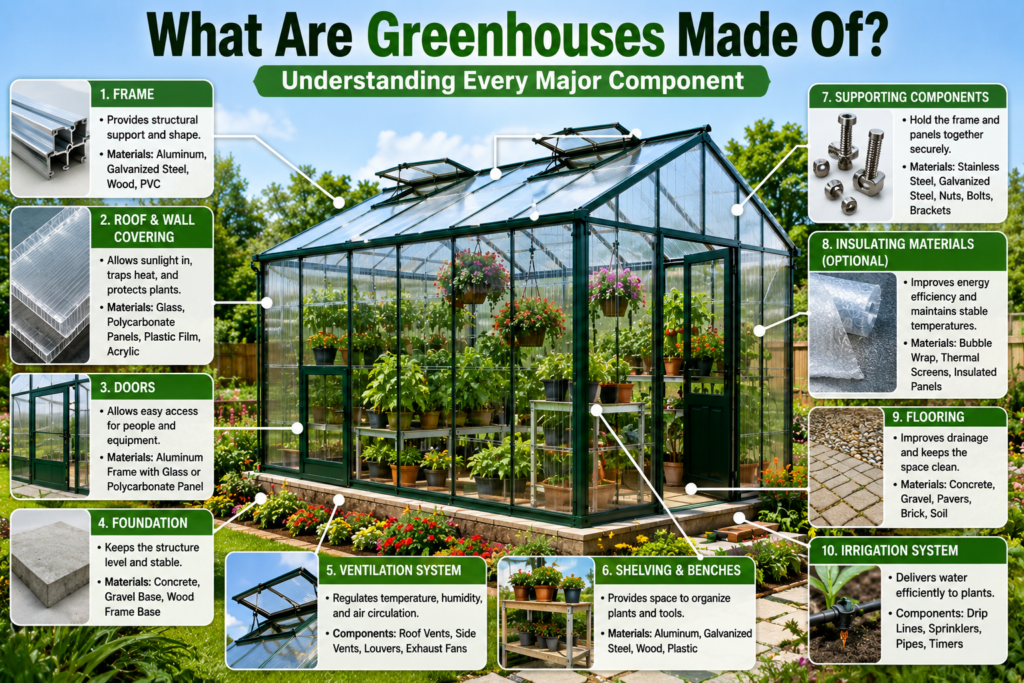
If you’ve ever wondered what are greenhouses made of, it’s important to understand that a greenhouse consists of several different structural parts working together.
Every greenhouse generally includes:
- A structural frame
- Transparent covering panels
- Foundation or base
- Doors and ventilation systems
- Fasteners and connectors
- Optional insulation materials
Each of these components can be manufactured from different materials depending on climate, budget, greenhouse size, and intended use.
For example, a hobby greenhouse may use a lightweight aluminum frame covered with polycarbonate sheets, while a commercial greenhouse may feature galvanized steel framing with polyethylene film covering thousands of square feet.
Let’s examine each component in detail.
Greenhouse Frame Materials
The frame forms the skeleton of the greenhouse. It supports the roof, walls, glazing panels, vents, and doors.
Several materials are commonly used.
Aluminum Frames
Aluminum is one of the most popular greenhouse frame materials in the world.
Its popularity comes from being lightweight, corrosion-resistant, attractive, and virtually maintenance-free.
Unlike steel, aluminum doesn’t rust, making it ideal in humid environments where moisture levels remain consistently high.
Advantages
Aluminum frames require very little maintenance throughout their lifespan. They are easy to assemble because of their lightweight construction, and they provide a clean, modern appearance that complements most gardens.
Since aluminum naturally resists corrosion, homeowners rarely need to paint or seal the frame.
Disadvantages
The biggest drawback is that aluminum conducts heat quickly. During winter months, heat escapes through the frame more easily than through wood.
This means additional heating costs in colder climates.
Galvanized Steel Frames
Commercial greenhouse operations often choose galvanized steel.
Steel provides incredible strength while remaining relatively affordable.
The galvanization process coats the steel with zinc, preventing rust for many years.
Large greenhouses capable of withstanding heavy snow, high winds, and severe weather usually rely on galvanized steel framing.
Advantages
Steel offers exceptional structural strength.
It can support large roof spans without excessive internal supports, creating more usable growing space.
It also performs well in regions that experience strong winds or heavy snowfall.
Disadvantages
Although galvanized coatings greatly reduce rust, damaged areas may eventually corrode.
Steel is also significantly heavier than aluminum, making installation more labor-intensive.
Wooden Greenhouse Frames
Wood remains a favorite among gardeners who value aesthetics.
A cedar or redwood greenhouse creates a beautiful natural appearance that blends perfectly with landscaping.
Wood also provides excellent insulation compared to metal.
Advantages
Wood naturally insulates better than aluminum or steel.
It also offers outstanding visual appeal and is easy to customize for unique greenhouse designs.
Many DIY greenhouse builders choose wood because it’s easy to cut and assemble using standard carpentry tools.
Disadvantages
Wood requires regular maintenance.
Without proper sealing or staining, moisture can cause rot, mold, or insect damage over time.
Pressure-treated lumber improves longevity but increases maintenance requirements.
PVC Frames
PVC pipe greenhouses are especially popular among beginners and DIY gardeners.
These structures are inexpensive and easy to build over a weekend.
Advantages
PVC is affordable, lightweight, and readily available at most hardware stores.
It doesn’t rust and requires very little maintenance.
Small backyard hoop houses frequently use PVC frames.
Disadvantages
PVC lacks structural strength.
Strong winds, heavy snow loads, or prolonged sun exposure may weaken the material over time.
As a result, PVC is generally recommended for temporary or seasonal greenhouses rather than permanent structures.
What Are Greenhouse Walls and Roofs Made Of?
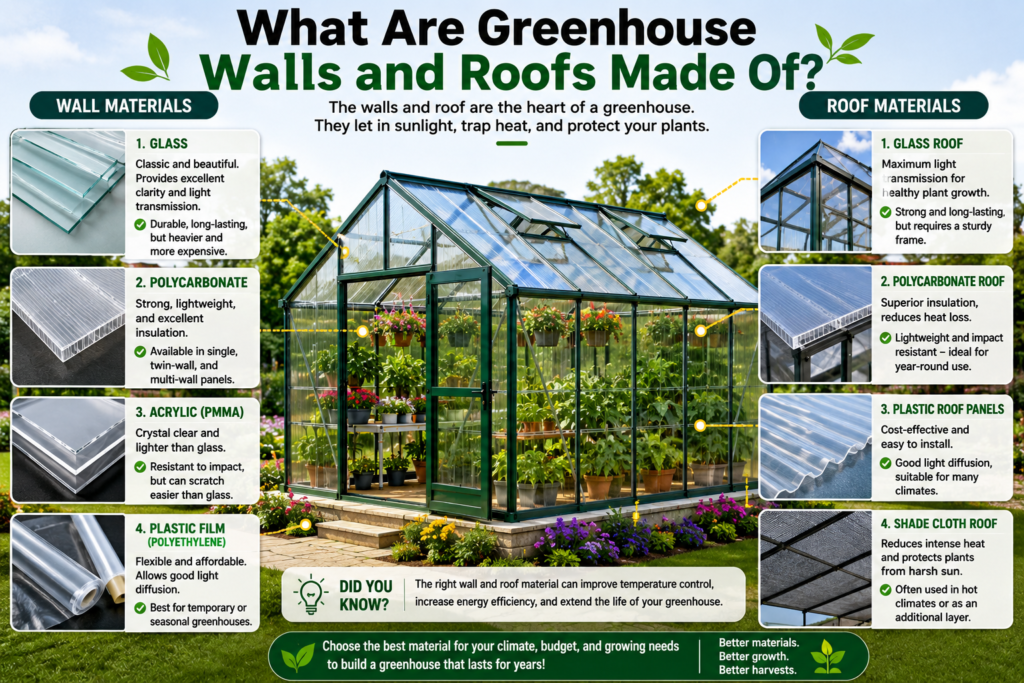
Once the frame is complete, it needs transparent materials that allow sunlight inside while trapping heat.
These coverings are called glazing materials.
Several options are available.
Glass Greenhouses
Glass has been the traditional greenhouse covering for centuries.
Many historic botanical gardens still feature beautiful glass conservatories.
Glass offers unmatched clarity, allowing maximum sunlight to reach plants.
Advantages
Glass transmits more natural sunlight than almost any other covering material.
It resists scratching and maintains its transparency for decades.
Unlike plastic materials, glass doesn’t discolor under ultraviolet light.
A well-built glass greenhouse can last for generations.
Disadvantages
Glass is expensive.
It is also heavy and can break if struck by hail, falling branches, or accidental impacts.
Installation requires strong framing and professional handling in many cases.
Polycarbonate Panels
Today, polycarbonate has become one of the most popular greenhouse materials.
These rigid plastic sheets provide an excellent balance of durability, insulation, and affordability.
Polycarbonate is available in single-wall, double-wall, triple-wall, and multi-wall designs.
Multiple layers trap air, creating superior insulation.
Advantages
Polycarbonate is virtually unbreakable compared to glass.
It diffuses sunlight evenly throughout the greenhouse, reducing hot spots and preventing plant scorching.
Its insulating properties help lower heating costs during winter.
Because it’s lightweight, installation is easier than glass.
Disadvantages
Over many years, lower-quality polycarbonate may become slightly cloudy if UV protection wears away.
It also transmits slightly less light than glass.
Nevertheless, many experts consider polycarbonate the best overall material for modern greenhouses because it combines durability with energy efficiency.
Polyethylene Plastic Film
Commercial growers often cover massive greenhouse tunnels using polyethylene film.
This flexible plastic sheeting stretches across large metal frames.
The material is inexpensive and easy to replace.
Advantages
Polyethylene film has one of the lowest installation costs.
Large commercial greenhouses covering acres can be built economically using plastic film.
Special UV-treated films improve durability while infrared additives enhance heat retention.
Disadvantages
Plastic film generally lasts only a few years before replacement becomes necessary.
It can tear during storms or become damaged by sharp objects.
For homeowners seeking a permanent greenhouse, rigid panels often provide better long-term value.
Acrylic Panels
Acrylic resembles glass but weighs much less.
It offers excellent clarity while resisting impacts better than traditional glass.
Many premium hobby greenhouses use acrylic glazing.
Advantages
Acrylic provides excellent light transmission and attractive appearance.
It is lighter than glass while offering greater impact resistance.
Disadvantages
Acrylic scratches more easily than glass.
It also expands and contracts with temperature changes, requiring careful installation.
Which Greenhouse Material Is Best?
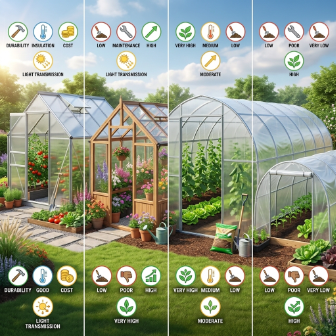
The answer depends entirely on your goals.
If you want maximum beauty and clarity, glass remains the premium choice.
If energy efficiency matters most, multi-wall polycarbonate offers outstanding insulation.
Commercial growers often prioritize affordability and choose polyethylene film.
DIY gardeners frequently select PVC frames with plastic covers because they’re inexpensive and beginner-friendly.
For most homeowners seeking a balance of durability, maintenance, insulation, and cost, aluminum framing paired with twin-wall polycarbonate panels represents one of the best overall combinations available today.
Greenhouse Foundations: Why the Base Material Matters
While many people focus on the frame and glazing, the foundation is just as important. A strong foundation keeps the greenhouse level, prevents shifting, improves drainage, and extends the lifespan of the entire structure. The type of foundation you choose depends on the greenhouse size, budget, and whether it will be a permanent or temporary installation.
Concrete is one of the most durable foundation materials available. It provides excellent stability and resists movement caused by weather or soil changes. Concrete is commonly used for large residential and commercial greenhouses because it can support heavy structures for decades.
Gravel foundations are another popular choice, especially for home gardeners. Gravel offers excellent drainage, reducing standing water that can lead to root diseases and mold. It is also less expensive than concrete and relatively easy to install.
Pressure-treated wooden bases are often used for small DIY greenhouses. They are affordable and easy to construct, although they require periodic maintenance to protect against moisture and insects.
Some portable greenhouses are placed directly on compacted soil or grass, but this approach is generally less stable and may reduce the greenhouse’s lifespan.
Greenhouse Flooring Materials
The flooring inside a greenhouse affects cleanliness, drainage, and ease of maintenance. Choosing the right material can make gardening more enjoyable while reducing weed growth and standing water.
Concrete flooring creates a clean and professional workspace. It is easy to sweep, sanitize, and maintain, making it ideal for serious gardeners and commercial operations.
Gravel remains one of the most practical flooring options because it allows excess water to drain naturally. It also helps prevent muddy conditions after watering plants.
Brick pavers add a decorative appearance while providing excellent durability. Many gardeners choose brick flooring for traditional or Victorian-style greenhouses because it creates an attractive and timeless look.
Natural soil floors are inexpensive and suitable for gardeners who prefer planting directly into the ground. However, soil floors may encourage weeds, insects, and poor drainage if not managed properly.
Rubber mats are sometimes installed in work areas to improve comfort while standing for long periods and reduce slipping hazards.
Insulation Materials Used in Greenhouses
Maintaining a stable temperature is essential for healthy plant growth, especially during colder months. Several insulation materials can improve energy efficiency and reduce heating costs.
Bubble insulation is one of the most common solutions for hobby greenhouses. Special horticultural bubble wrap creates insulating air pockets while still allowing light to pass through. It is inexpensive, easy to install, and removable during warmer seasons.
Twin-wall and multi-wall polycarbonate panels naturally provide excellent insulation because the air trapped between the layers slows heat loss. This is one of the main reasons they have become so popular among homeowners.
Weather stripping around doors and vents prevents warm air from escaping during winter while reducing drafts.
Thermal curtains are commonly used in commercial greenhouses. These retractable curtains help conserve heat at night and can also provide shade during hot summer afternoons.
Some growers also install insulated foundation boards around the greenhouse perimeter to reduce heat loss through the ground.
Ventilation Materials and Components
Good ventilation is essential regardless of the materials used to build a greenhouse. Fresh air helps regulate temperature, reduce humidity, and prevent fungal diseases.
Roof vents are often constructed from the same glazing material as the greenhouse walls, whether glass or polycarbonate. Automatic vent openers use temperature-sensitive mechanisms that open and close vents without electricity.
Side vents improve cross-ventilation by allowing cool air to enter while warm air exits through the roof.
Greenhouse doors are typically made using aluminum or wooden frames with glass or polycarbonate inserts. Double doors are especially useful for larger greenhouses because they provide easy access for wheelbarrows and gardening equipment.
Exhaust fans and circulation fans are usually made from corrosion-resistant metals and durable plastic blades designed to withstand humid environments.
Shade cloth, although not a structural material, is often installed during summer to reduce excessive sunlight and prevent overheating.
Hardware and Fasteners Used in Greenhouses
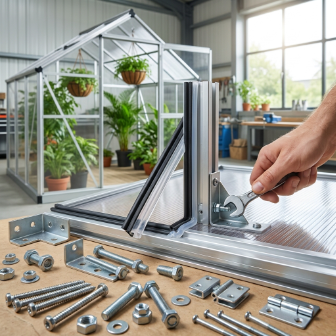
Every greenhouse relies on quality hardware to keep the structure secure and weather resistant.
Most manufacturers use stainless steel or galvanized steel screws, bolts, hinges, and brackets because these materials resist rust and corrosion. Aluminum connectors are commonly paired with aluminum frames to reduce weight while maintaining structural integrity.
Rubber gaskets and weather seals help prevent water leaks around glazing panels and doors. Silicone sealants are also widely used to improve weather resistance and increase insulation.
Choosing high-quality hardware is just as important as selecting the right frame and glazing materials because even the strongest greenhouse can fail if inexpensive fasteners corrode or loosen over time.
Eco-Friendly Greenhouse Materials
Sustainability has become an important consideration for many gardeners. Fortunately, modern greenhouse construction offers several environmentally friendly options.
Recycled aluminum is one of the most sustainable framing materials because it can be reused repeatedly without losing strength. Although producing aluminum initially requires significant energy, recycling dramatically reduces its environmental impact.
Responsibly sourced cedar and redwood provide renewable alternatives to metal frames when harvested from certified forests.
Recycled polycarbonate panels are becoming increasingly available, helping reduce plastic waste while maintaining excellent performance.
Many gardeners also incorporate reclaimed bricks, reclaimed timber, and recycled paving materials into greenhouse foundations and flooring.
Installing rainwater harvesting systems and solar-powered ventilation fans further improves the environmental performance of a greenhouse.
Cost Comparison of Greenhouse Materials
Budget plays a major role when deciding what materials to use. While the cheapest option may seem attractive initially, long-term maintenance and replacement costs should also be considered.
PVC frames combined with polyethylene film are generally the least expensive solution and work well for seasonal gardening.
Wooden frames typically fall into the mid-price range, though premium hardwoods like cedar and redwood increase the overall cost.
Aluminum frames paired with twin-wall polycarbonate panels offer one of the best balances between price, durability, and maintenance, making them a popular choice for homeowners.
Glass greenhouses are usually the most expensive due to both material and installation costs. However, they also provide unmatched appearance and exceptional longevity when properly maintained.
Commercial galvanized steel structures vary significantly in price depending on their size and complexity but are often the preferred option for large-scale agricultural operations.
Instead of focusing only on initial cost, consider the total ownership cost over twenty years, including repairs, heating efficiency, maintenance, and replacement expenses.
How to Choose the Best Greenhouse Material
The best greenhouse material depends on your specific gardening goals. If you live in a region with harsh winters, prioritize insulation by selecting multi-wall polycarbonate panels. Gardeners in mild climates may find polyethylene film offers excellent value at a much lower cost.
For those who want a beautiful greenhouse that complements their home, cedar frames combined with glass panels create an elegant and timeless appearance. Commercial growers usually prioritize structural strength and cost efficiency, making galvanized steel frames with polyethylene coverings a practical solution.
Maintenance preferences also matter. If you prefer a greenhouse that requires very little upkeep, aluminum framing is an excellent choice because it resists corrosion and never needs painting.
Ultimately, there is no single material that is perfect for every situation. The ideal greenhouse combines durability, insulation, appearance, maintenance requirements, and budget in a way that meets your individual needs.
Frequently Asked Questions
What are most greenhouses made of?
Most modern greenhouses are made from aluminum or galvanized steel frames combined with polycarbonate panels or polyethylene plastic film. These materials offer an excellent balance of durability, affordability, and insulation.
Is glass better than polycarbonate?
Glass provides superior clarity and long-term appearance, while polycarbonate offers better insulation, impact resistance, and energy efficiency. Many homeowners prefer polycarbonate because it requires less maintenance and is less likely to break.
What is the strongest greenhouse frame material?
Galvanized steel is generally considered the strongest greenhouse frame material. It can withstand heavy snow loads, strong winds, and large commercial structures.
Which greenhouse material lasts the longest?
Glass and aluminum can last several decades when properly maintained. High-quality polycarbonate panels can also provide reliable performance for many years with minimal maintenance.
Are plastic greenhouses good?
Yes. High-quality polyethylene and polycarbonate greenhouses are widely used by both home gardeners and commercial growers because they are lightweight, affordable, and effective at retaining heat.
Final Thoughts
Understanding what are greenhouses made of is the first step toward choosing a greenhouse that fits your gardening goals and budget. From sturdy galvanized steel and elegant cedar frames to energy-efficient polycarbonate panels and traditional glass, every material offers unique advantages. The right combination depends on your climate, available space, maintenance preferences, and long-term plans.
For most home gardeners, an aluminum frame paired with twin-wall polycarbonate panels provides an ideal balance of durability, insulation, affordability, and ease of maintenance. Those seeking a classic aesthetic may prefer glass and wood, while commercial growers often benefit from galvanized steel and polyethylene film.
Investing in quality materials from the beginning ensures your greenhouse remains productive, energy-efficient, and attractive for many years.
Ready to Build the Perfect Greenhouse?
Now that you know what are greenhouses made of, you’re ready to choose the best materials with confidence. Whether you’re planning a small backyard greenhouse or a large growing space, selecting the right frame, glazing, foundation, and ventilation system will make all the difference. Explore your options carefully, compare costs and performance, and create a greenhouse that supports healthier plants and bigger harvests season after season.