Growing plants inside a greenhouse offers gardeners and commercial growers the opportunity to extend the growing season, protect delicate crops, and create ideal growing conditions throughout the year. However, maintaining the correct temperature becomes challenging during cold weather. This is where an electric greenhouse heater with thermostat becomes one of the most valuable investments for any greenhouse owner.
Whether you are growing vegetables, herbs, flowers, tropical plants, or seedlings, temperature fluctuations can negatively impact plant growth, reduce yields, and even kill sensitive plants. A thermostat-controlled greenhouse heater eliminates much of this risk by automatically maintaining a consistent temperature inside the greenhouse. Instead of manually turning heaters on and off, the thermostat monitors conditions and activates heating only when necessary, improving efficiency and protecting plants from sudden cold spells. Research and greenhouse heating experts consistently recommend thermostat-controlled systems because they provide more stable climate control and reduce unnecessary energy consumption.
In this comprehensive guide, you’ll learn everything you need to know about choosing, installing, operating, and maintaining the best electric greenhouse heater with thermostat for your growing space.
Why Every Greenhouse Needs an Electric Greenhouse Heater with Thermostat
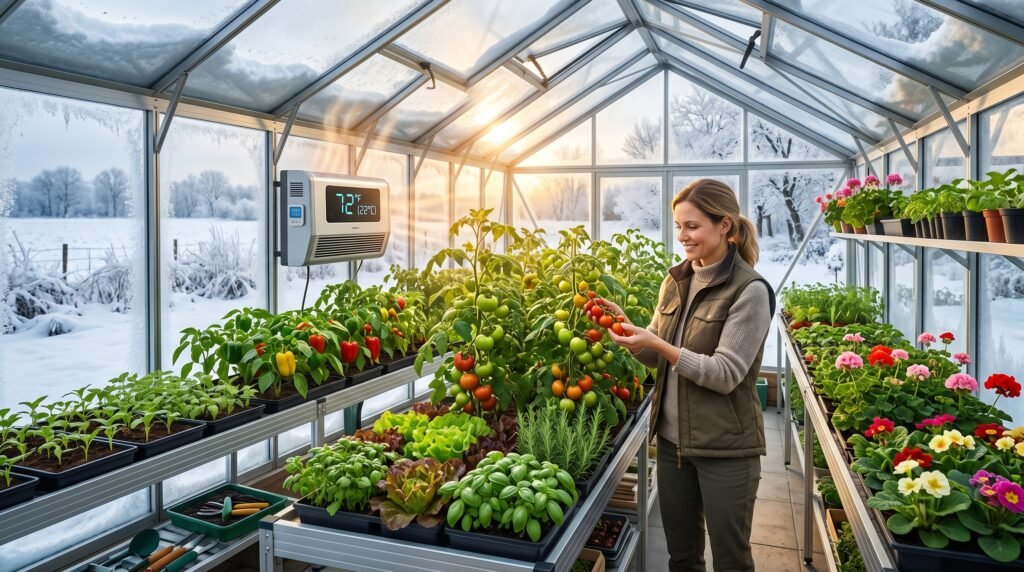
A greenhouse naturally traps solar energy during the day. Unfortunately, once the sun sets, temperatures can drop rapidly. During winter, early spring, and late autumn, these temperature swings can become dangerous for plants.
An electric greenhouse heater with thermostat solves this problem by maintaining a predetermined temperature automatically. When temperatures fall below your chosen setting, the heater activates. Once the target temperature is reached, the heater turns off.
This simple automation offers several important benefits:
- Protects plants from frost damage
- Prevents sudden temperature fluctuations
- Improves seed germination rates
- Extends growing seasons
- Reduces plant stress
- Lowers energy consumption compared to manually operated heaters
- Requires minimal daily monitoring
The thermostat acts as the brain of the heating system, ensuring plants remain within their ideal temperature range at all times.
Understanding How an Electric Greenhouse Heater with Thermostat Works
An electric greenhouse heater converts electrical energy into heat. The thermostat continuously measures the surrounding air temperature.
The process works like this:
- You select your desired temperature.
- The thermostat monitors greenhouse conditions.
- When temperatures drop below the set point, the heater activates.
- Warm air circulates throughout the greenhouse.
- Once the desired temperature is reached, the thermostat shuts the heater off.
- The cycle repeats whenever needed.
This automated process provides a stable environment that encourages healthy plant growth while minimizing wasted electricity. Modern systems can maintain temperatures within a very narrow range, helping growers achieve professional-level climate control.
Benefits of Using an Electric Greenhouse Heater with Thermostat
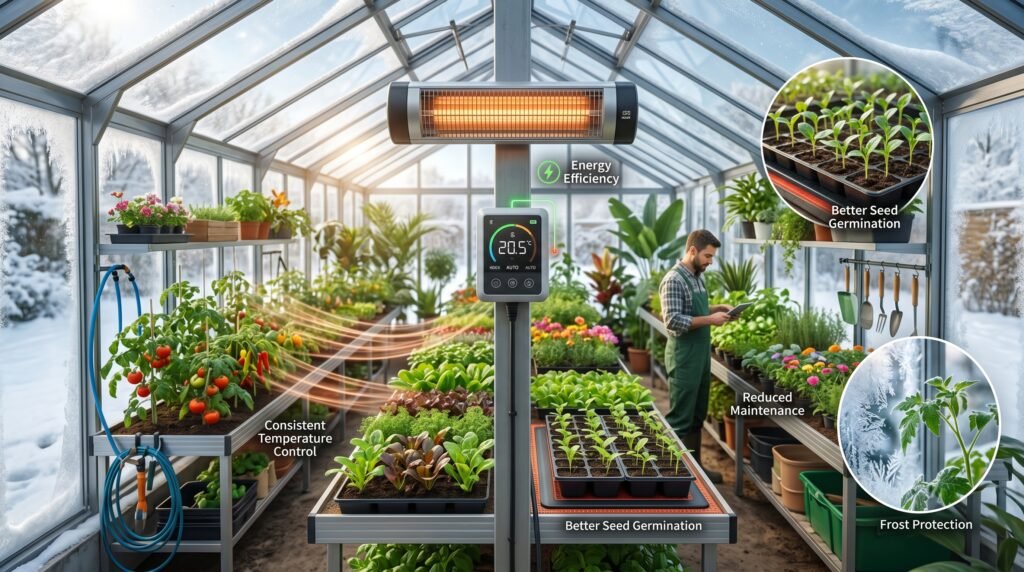
Consistent Temperature Control
Plants thrive in stable environments. Large temperature swings can shock plants, slow growth, and reduce production.
A thermostat-controlled heater automatically maintains a steady climate throughout the greenhouse, reducing stress and encouraging healthier growth.
Improved Energy Efficiency
Without a thermostat, heaters may run continuously, wasting energy and increasing electricity bills.
Thermostatic control ensures the heater only operates when needed, making it one of the most energy-efficient heating options available for greenhouse owners.
Better Seed Germination
Young seedlings require consistent warmth to germinate successfully.
A properly controlled heating system creates ideal conditions for seed starting, increasing germination rates and reducing losses.
Frost Protection
Even a single freezing night can destroy months of work.
An electric greenhouse heater with thermostat provides reliable frost protection during cold weather, ensuring plants survive winter conditions.
Reduced Maintenance
Automatic temperature regulation reduces the need for constant monitoring and manual adjustments, saving time and effort.
Types of Electric Greenhouse Heaters with Thermostat
Not all greenhouse heaters are identical. Understanding the available options helps you choose the best solution for your growing needs.
Fan Heaters
Fan heaters are among the most popular greenhouse heating solutions.
They work by heating air and distributing it evenly throughout the greenhouse using an integrated fan. This circulation prevents cold spots and improves overall temperature consistency. Fan heaters are especially suitable for medium-sized greenhouses.
Tubular Heaters
Tubular heaters provide gentle background heat.
These heaters are often used for frost protection and overwintering plants. While they do not produce the powerful airflow of fan heaters, they are highly energy efficient and ideal for smaller structures.
Ceramic Heaters
Ceramic greenhouse heaters heat quickly and distribute warmth efficiently.
Many modern ceramic units include advanced digital thermostats, safety shutoff systems, and adjustable heating levels.
Infrared Heaters
Infrared heaters warm objects directly rather than heating surrounding air.
This approach can be effective for targeted heating applications and may reduce heat loss in certain greenhouse setups.
Choosing the Right Size Electric Greenhouse Heater with Thermostat
One of the biggest mistakes greenhouse owners make is selecting the wrong heater size.
An undersized heater may struggle to maintain temperatures during cold weather, while an oversized unit can waste energy and create excessive heat.
Important factors include:
Greenhouse Dimensions
Measure:
- Length
- Width
- Height
These dimensions determine the total volume that requires heating.
Insulation Quality
Well-insulated greenhouses retain heat more effectively.
Double-wall polycarbonate panels generally require less heating than single-pane glass structures.
Local Climate
Greenhouses located in colder climates require higher heating capacities than those in mild regions.
Plant Requirements
Different plants require different temperature ranges.
For example:
- Frost-free storage: 36–45°F (2–7°C)
- Vegetable production: 50–65°F (10–18°C)
- Tropical plants: 65–80°F (18–27°C)
Features to Look for in the Best Electric Greenhouse Heater with Thermostat
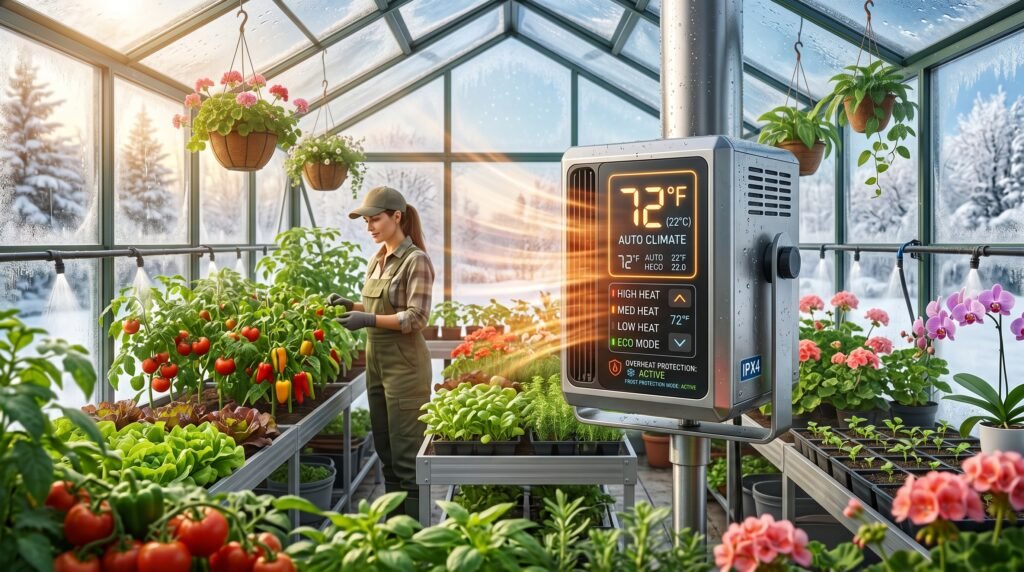
When shopping for a heater, prioritize features that improve reliability, safety, and efficiency.
Digital Thermostat
Digital controls offer greater precision than manual dial thermostats.
Overheat Protection
Essential for preventing damage and improving safety.
Waterproof Construction
Greenhouses are humid environments.
Choose heaters specifically designed to withstand moisture exposure.
Fan Circulation
Air circulation improves temperature consistency and reduces condensation.
Multiple Heat Settings
Variable output settings help optimize energy use during changing weather conditions.
Frost Protection Mode
Many greenhouse heaters include automatic frost settings to prevent temperatures from falling below safe levels.
Installation Tips for Maximum Heating Efficiency
Even the best heater will perform poorly if installed incorrectly.
Place the Heater Properly
Position the heater where airflow can circulate freely.
Avoid placing it directly behind large plants or structures that block air movement.
Keep the Thermostat at Plant Level
Temperature sensors should be located near the plants rather than near the roof, where warm air naturally accumulates. Accurate thermostat placement improves climate control and energy efficiency.
Elevate the Heater
Raising the heater slightly above floor level can improve temperature accuracy and reduce cold-floor interference.
Ensure Adequate Ventilation
While heating is important, proper ventilation remains essential for controlling humidity and preventing fungal diseases.
Energy-Saving Strategies for Greenhouse Heating
Heating costs can become significant during winter. Fortunately, several strategies can dramatically reduce energy consumption.
Improve Insulation
Seal gaps and repair damaged glazing panels.
Use Thermal Mass
Water barrels, stone pathways, and brick walls absorb heat during the day and release it slowly at night.
Install Bubble Wrap Insulation
Many growers use horticultural bubble wrap to reduce heat loss through greenhouse walls and roofs.
Lower Temperatures Slightly
Reducing nighttime temperatures by just a few degrees can significantly reduce heating costs without harming many plant species.
Use Zoning
Heat only the areas that require warmth rather than the entire greenhouse.
Common Mistakes to Avoid
Many growers unknowingly reduce heating performance through avoidable mistakes.
Choosing a Heater That Is Too Small
Always calculate heating requirements carefully before purchasing.
Ignoring Air Circulation
Warm air must move throughout the greenhouse to prevent cold spots.
Poor Thermostat Placement
Incorrect sensor placement can result in inaccurate temperature readings.
Overheating the Greenhouse
Excessive heat wastes energy and can stress plants.
Neglecting Maintenance
Regular inspection ensures reliable performance throughout the season.
Maintaining Your Electric Greenhouse Heater with Thermostat
Routine maintenance extends heater lifespan and improves efficiency.
Recommended maintenance tasks include:
- Cleaning air intakes
- Removing dust buildup
- Inspecting power cords
- Checking thermostat accuracy
- Testing safety shutoff systems
- Inspecting fan operation
A well-maintained heater operates more efficiently and reduces the risk of unexpected failures during cold weather.
Best Temperature Settings for Different Plants
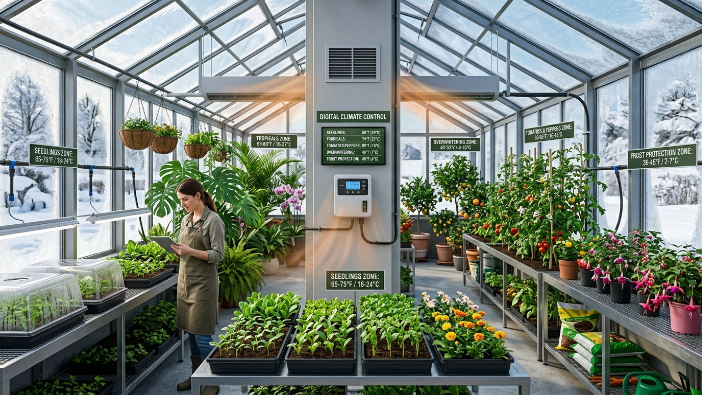
The ideal thermostat setting depends on what you’re growing.
Seedlings
65–75°F (18–24°C)
Tomatoes and Peppers
50–65°F (10–18°C)
Tropical Plants
65–80°F (18–27°C)
Overwintering Plants
40–50°F (4–10°C)
Frost Protection
36–45°F (2–7°C)
Why Electric Heaters Are Popular Among Greenhouse Growers
Electric greenhouse heaters continue to grow in popularity because they are:
- Easy to install
- Clean and fume-free
- Low maintenance
- Highly reliable
- Compatible with digital thermostats
- Suitable for small and medium greenhouses
Unlike fuel-burning systems, electric heaters produce no combustion gases inside the greenhouse, creating a cleaner environment for plants and growers.
Is an Electric Greenhouse Heater with Thermostat Worth It?
For most greenhouse owners, the answer is absolutely yes.
The combination of automatic temperature control, energy savings, plant protection, and reduced maintenance makes thermostat-controlled electric heaters one of the smartest greenhouse upgrades available.
Whether you’re protecting seedlings in early spring, overwintering valuable plants, or producing vegetables throughout winter, a thermostat-controlled heating system provides the stable environment plants need to thrive.
Final Thoughts on Choosing an Electric Greenhouse Heater with Thermostat
An electric greenhouse heater with thermostat is more than just a heating appliance—it’s a climate-control solution that helps create ideal growing conditions year-round. By maintaining consistent temperatures, reducing energy waste, and protecting plants from frost damage, these systems offer significant advantages for both hobby gardeners and commercial growers.
When selecting your heater, focus on proper sizing, thermostat accuracy, safety features, and energy efficiency. Combine your heating system with good insulation, ventilation, and routine maintenance for the best results.
If you’re serious about greenhouse gardening and want healthier plants, stronger growth, and improved harvests, investing in a high-quality electric greenhouse heater with thermostat is one of the best decisions you can make today.
Ready to Protect Your Plants?
Don’t wait until the next cold snap damages your greenhouse crops. Choose a reliable electric greenhouse heater with thermostat now, create the perfect growing environment, and enjoy healthier plants, bigger harvests, and year-round gardening success. Start upgrading your greenhouse today and experience the difference consistent temperature control can make.