Nancy Putkoski is best known as Anthony Bourdain’s first wife and former high school sweetheart. They married in 1985 and divorced in 2005, after about 20 years of marriage. Their relationship began before Bourdain became a widely recognised chef, writer and television presenter. InStyle’s profile of Putkoski outlines this history.
Table of Contents
Her name often leads readers to questions about their early relationship, the end of their marriage and her life afterward. These are reasonable questions, but the available evidence does not answer them all equally well.
Published accounts establish the main relationship timeline. Interviews offer some insight into the pressures the couple faced. Her current personal circumstances are much less clearly documented. Understanding those differences helps readers find a useful answer without mistaking speculation for biography.
Who Is Nancy Putkoski?
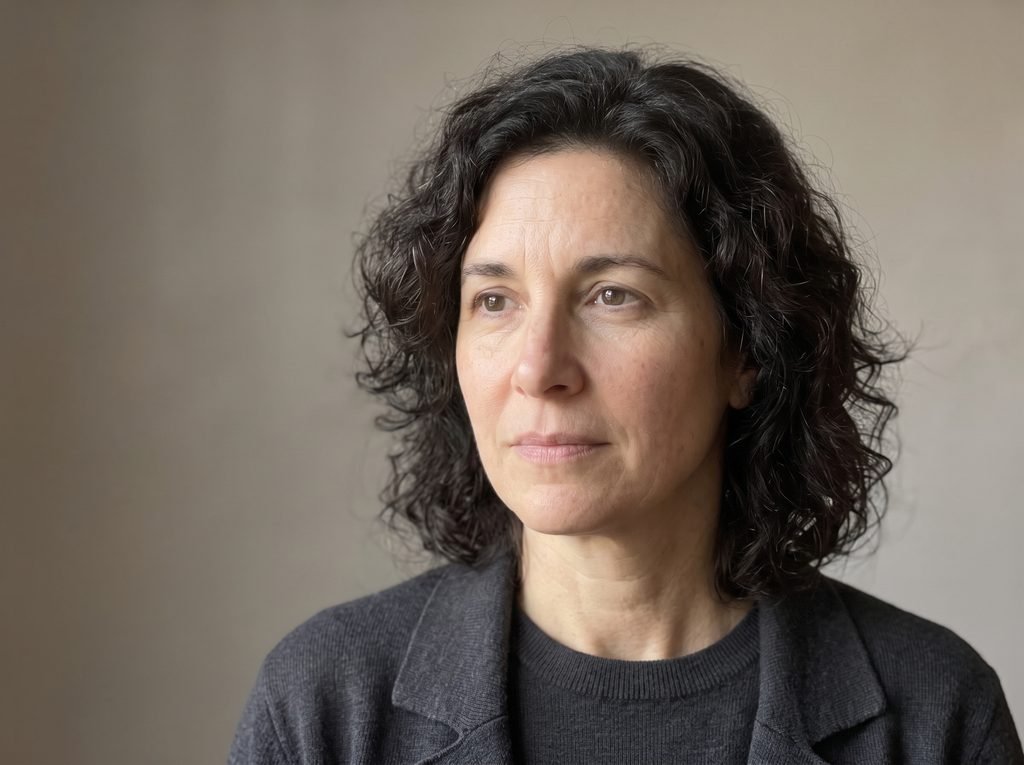
Putkoski was part of Bourdain’s life long before the public knew him through food and travel television. Describing her only as his former wife gives the basic connection, but it leaves out the length of their shared history.
Their story belongs partly to his younger years and partly to the period when his professional life changed. For someone who first encountered Bourdain as a confident television personality, that earlier timeline provides helpful context.
However, a relationship with a famous person does not automatically create a complete public biography. Knowing whom someone married does not establish their employment history, finances, beliefs or present household.
This article therefore focuses on the parts of Putkoski’s story supported by published material. Where the evidence ends, it says so. That approach gives readers a clearer picture than a profile filled with precise but unsupported personal details.
Why Her Name Appears in Bourdain’s Story
A long relationship can help explain the setting in which a person grows up and begins adult life. It can also show how different that early setting was from the public career that followed.
That does not mean every achievement or difficulty should be attributed to a spouse. Putkoski’s importance in this account comes from the documented relationship and her own contributions to its telling, rather than guesses about private influence.
How Did Nancy Putkoski Meet Anthony Bourdain?
They began dating while attending Dwight-Englewood School in New Jersey. Putkoski was a year ahead of Bourdain at school. He later followed her to Vassar College, although he left before completing a degree and moved into culinary training. These details appear in Bourdain’s biographical overview.
This sequence places their relationship before his established career. The connection began during school years and continued into adulthood, rather than starting after he became famous.
For readers outside the United States, Vassar is a college in New York State. The main point in this story is the transition from school to higher education. Attending the same institution is part of the reported timeline; it does not tell us every detail of either person’s studies.
What the Education Timeline Does Not Establish
It would be a mistake to turn the available information into a full academic biography of Putkoski. The research used here did not establish her complete course history, qualifications or later professional training.
Likewise, Bourdain’s decision to follow her does not let us reconstruct their conversations about the future. A documented decision can be described without inventing promises, disagreements or plans behind it.
Keeping those limits in view makes the early story easier to understand. There is a clear relationship history, but not a record of every step they took together.
Their Marriage: The Dates That Matter
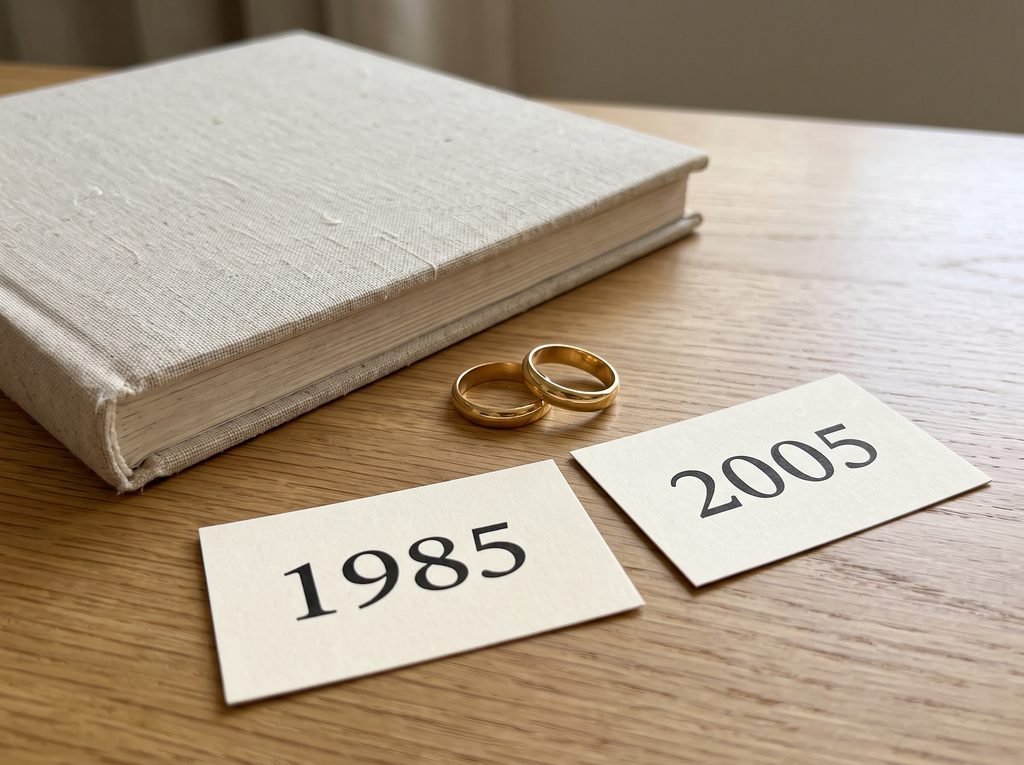
The commonly reported marriage year is 1985, and the divorce year is 2005. Their marriage therefore lasted approximately two decades. People’s account of the relationship timeline gives those dates.
The length of the marriage matters because it corrects an easy misunderstanding. This was a substantial period of adult life, not a short relationship that happened entirely in the background of an existing celebrity career.
There is also a distinction between the length of a marriage and the length of a relationship. Because they dated before marrying, “20 years of marriage” does not describe the full span of their connection.
What Is Known About Their Wedding?
The sources reviewed for this article did not establish a precise wedding date, venue, guest list or detailed account of the ceremony. The year can be reported without adding an imagined wedding scene.
That may feel less colourful than a description of a dress, reception or romantic location, but it is more useful. A specific detail should come from evidence, such as a reliable contemporary report or a clearly identified personal account.
Wedding photographs need the same care. An image of a couple together is not automatically a wedding photograph, and an undated caption cannot confirm when it was taken.
Why Bourdain’s Career Change Matters to the Timeline
To understand the setting of their marriage, it helps to know when Bourdain’s writing reached a wider audience. His essay “Don’t Eat Before Reading This” appeared in The New Yorker in 1999. Written in his own voice, it described professional kitchen life and restaurant practices. The original essay remains available in the magazine’s archive.
His memoir Kitchen Confidential followed in 2000. The book combined accounts of his working life with observations about restaurant kitchens and became a bestseller. Its publication history places this breakthrough well into the marriage.
The dates provide a useful perspective: the couple had already been married for roughly 15 years when that book appeared. Readers should therefore avoid imagining that their entire marriage resembled the later period of international recognition.
From Restaurant Work to Travel Writing
A Cook’s Tour, published in 2001, described Bourdain’s travels and food experiences. It was also connected with a television series. The book’s publication record helps place that next stage in his career.
For this biography, the relevance is the change in the kind of work involved. A restaurant career and a travelling media career can make different demands on time, location and everyday routines.
That is general context, not proof of what happened inside this particular marriage. The couple’s own published comments are the better source for understanding how they described the changes affecting them.
Why Did Nancy Putkoski and Anthony Bourdain Divorce?

In Patrick Radden Keefe’s 2017 New Yorker profile, Bourdain linked the strain on their marriage to his growing ambitions and television career. Putkoski said she had expected their shared experiences to protect their partnership and had underestimated the difficulties success could bring. The original profile includes both perspectives.
Those comments provide a supported explanation of some pressures surrounding the separation. They do not establish every cause, conversation or decision involved in ending a long marriage.
It is tempting to look for one simple answer: travel, fame, ambition or a difference in priorities. Relationships rarely become clearer when an outside writer turns a limited account into a complete verdict.
A Personal Account Is Not the Whole Record
An interview records what someone says and remembers at a particular time. It can be valuable without answering every possible question. Memories, emphasis and feelings may differ between the people involved.
A fair summary should therefore identify whose account is being described. Saying that Bourdain discussed career pressures is different from claiming that a writer has independently proved the full cause of the divorce.
The same care applies to Putkoski’s comments. They provide her perspective on their shared history, but they should not be expanded into claims about everything she wanted from life.
Avoiding Blame Beyond the Evidence
Readers can recognise that a marriage ended painfully without assigning a simple role of hero or villain. Different wishes about work, home and public attention do not tell outsiders who was right in every disagreement.
There is no need to invent a private confrontation to make the story meaningful. The documented timeline and the participants’ comments already show why this chapter deserves a measured account.
For the same reason, a later event in Bourdain’s life should not automatically be presented as a consequence of this divorce. A claim about cause needs more support than the fact that one event happened before another.
Was Putkoski the Mother of Bourdain’s Daughter?
No. Ariane Busia-Bourdain was born in April 2007 to Bourdain and Ottavia Busia. Putkoski and Busia are different people associated with different periods of his life. People’s profile of Ariane identifies her parents.
This distinction helps when reading family summaries, watching interviews or looking through image results. A story mentioning Bourdain’s wife may refer to a later relationship, even if it appears during a search for Putkoski.
Names matter more than a broad label. A caption that identifies Ottavia should not be reused as a photograph of Nancy. Similarly, an account of Bourdain’s experiences as a father should not be attached to his first marriage without checking the dates.
Readers do not need a detailed account of every later relationship to understand Putkoski’s place in the timeline. The key is to keep the people and periods separate.
Her Contribution to Bourdain’s Oral Biography
Putkoski participated in Laurie Woolever’s Bourdain: The Definitive Oral Biography. Her involvement is noted in InStyle’s account of her life.
Woolever also said that Nancy helped connect her with people from Bourdain’s childhood and early kitchen years. She discussed that research process in a Vogue interview about the book.
That involvement is more informative than the idea that someone must be either constantly public or completely absent. A person can contribute to a particular historical project without making the rest of their life available for public inspection.
What an Oral Biography Offers Readers
An oral biography brings together accounts from people who knew the subject. Readers hear different voices rather than receiving every event through one continuous narrator.
This format can be especially helpful when the subject was already a strong storyteller. It allows readers to compare that person’s public voice with recollections from others who shared different parts of their life.
However, each contribution still has a point of view. A memory should be read as a memory, with attention to who is speaking and when. Several perspectives can broaden understanding without creating a perfect record.
For someone researching Putkoski, the useful question is what she actually contributed. A summary of the whole book should not be treated as though every observation in it came from her.
Reading Memoir Alongside Biography
When following this story through books, pay attention to the type of book you are reading. A memoir is written from the author’s perspective. It selects experiences that matter to the story the author wants to tell, rather than documenting every person and event in equal detail.
That distinction is useful when looking for Putkoski in Bourdain’s writing. A passage may help explain his view of a shared experience without giving her full response. Her absence from another passage does not establish that she was absent from the event itself.
A biography or interview can add another perspective, but the same basic question remains: who is making the claim, and what did they actually witness? Reading across these forms is most helpful when the differences between them stay clear.
What Is Known About Nancy Putkoski Today?
The sources reviewed here do not establish a dependable, current account of her daily life. Her present occupation, relationship status and financial circumstances could not be verified for this article.
That is the honest answer to searches such as “Nancy Putkoski now.” A webpage can have a recent publication date while repeating material drawn from much older interviews.
An old statement may still help explain the past. It cannot automatically answer a present-day question. For example, participation in a book project establishes that contribution, not what the participant is doing several years later.
Her Age and Date of Birth
This article does not give an exact age because an adequately supported birth date was not established during research. A precise birthday should not be supplied simply because a biography template has a space for one.
School-year information also has limits. Knowing that someone was ahead of another pupil does not establish their exact date of birth. It is better to state the supported educational relationship than calculate an age from incomplete clues.
Her Career and Net Worth
No verified current net-worth figure was established. A former spouse’s book sales, television work or public earnings do not reveal another person’s assets, debts or financial arrangements.
Likewise, the sources used here do not support a detailed current professional profile. Describing someone through a marriage does not tell us whether they are employed, retired, self-employed or doing something else.
These unknowns should remain unknown unless reliable information becomes available. Replacing a missing fact with a confident guess does not make a biography more complete.
Has She Remarried?
A later marriage was not verified in the research used for this article. That should not be rewritten as a firm claim that she never remarried or is currently single.
The distinction is small in wording but large in meaning. “Not established by these sources” describes the limits of the research. “Did not happen” makes a statement about the person’s life.
Nancy Putkoski in Screen Portrayals
Emilia Jones portrays Nancy in Tony. However, the film uses dramatic liberties, so its scenes should not be treated as a complete factual account of Putkoski’s relationship with Bourdain. People’s explanation of the characters and their real-life connections makes that distinction.
A screen performance and a historical person are different subjects. An actor’s appearance, dialogue and emotional reactions belong to the finished film unless there is separate evidence connecting a detail to real events.
This matters when a viewer moves from watching a film to searching for a biography. The film may provide the question, but the answer should come from interviews, documented timelines and other reliable material.
Questions to Ask About a Dramatised Scene
Consider a hypothetical scene showing a couple discussing their future. Before repeating its dialogue as fact, ask whether the words come from a recorded conversation, a published recollection or the screenplay.
A film can express a theme without preserving the exact exchange that happened. That does not make it useless as art. It means its purpose and evidence differ from those of a factual biography.
The same applies to publicity photographs. An image of an actor playing Nancy is a production image, not an archival photograph of Nancy herself.
How to Check Photographs and Online Claims
If you want to identify a photograph of Putkoski, begin with its original publication context. Look for a caption naming the people shown, a photographer or agency credit, and a date where available.
Search results can place related images close together even when they show different people. A thumbnail beside her name may lead to an article about Bourdain generally, rather than a photograph identifying her.
Reverse-image searching can help locate earlier uses of a picture. It is a useful way to investigate context, but the result still needs a trustworthy caption. Repeated use of the same incorrect label would not confirm an identity.
Check the Claim, Not Just the Website
A familiar publication can contain interviews, opinion, reviews and film coverage. Those forms provide different kinds of evidence. A review discussing an actor’s performance does not verify the private experiences of the person portrayed.
Check whether the passage actually supports the claim being made. A source confirming the marriage year may say nothing about a wedding venue. A source naming a former partner may not discuss current relationship status.
This simple habit is especially useful when reading short biographies that attach one link to a long paragraph of unrelated personal details.
Keep Publication Dates and Event Dates Separate
An article published today may discuss a conversation from years earlier. Check both dates before describing a statement as a new update. The publication date tells you when a page appeared; the event date tells you when the reported experience happened.
For example, a newly published discussion of an old interview would still be evidence about that earlier interview. It would not confirm the speaker’s current circumstances. This is particularly relevant to searches about Putkoski’s life now, where historical material can appear beside recent headlines. Read beyond the headline before deciding that a page answers a present-day question.
Frequently Asked Questions
Does Nancy Putkoski Have a Verified Public Social Media Account?
This research did not establish an authenticated public account. A matching name, profile photograph or collection of Bourdain-related posts does not by itself confirm ownership. Avoid treating an unverified account as a source of personal statements.
Are the Terms of Her Divorce Settlement Publicly Verified Here?
No. The sources reviewed did not establish the terms of a financial settlement. Specific payment amounts or property arrangements should not be repeated without dependable documentation supporting those details.
Where Should a Beginner Start Reading More?
Start with the linked New Yorker profile for the relationship discussion and Woolever’s oral biography for a wider range of recollections. Read passages in context, identify the speaker and separate historical information from claims about the present.
Conclusion: A Clearer Account of Her Place in Bourdain’s Life
Nancy Putkoski belongs to an important early chapter of Anthony Bourdain’s story. The available record supports their long relationship, the main marriage timeline and her contribution to later accounts of his life. It offers a much less complete picture of her present circumstances.
A useful biography can explain that history without pretending to know every private detail. Readers gain more from a clear timeline and carefully attributed comments than from unsupported claims about money, motives or relationships.
If you want to explore further, follow the original reporting linked above and compare it with the book material. Before sharing a photograph or personal claim, check that its source actually supports it. That is a practical way to keep the story accurate and fair.


1 Comment