Introduction
If you’re searching for polycarbonate greenhouses for sale, you’re likely looking for a durable, weather-resistant, and efficient greenhouse that can help you grow healthy plants throughout the year. Whether you’re an experienced gardener, a commercial grower, or someone just beginning a gardening journey, investing in the right polycarbonate greenhouse can completely transform the way you cultivate vegetables, flowers, herbs, and tropical plants.
Unlike traditional glass greenhouses, polycarbonate greenhouses are designed with modern materials that offer excellent insulation, superior impact resistance, and long-lasting performance. They protect plants from harsh weather conditions while allowing sufficient sunlight to reach every corner of the growing space. Thanks to these advantages, polycarbonate greenhouses have become one of the most popular choices among homeowners and professional growers worldwide.
Today’s market offers hundreds of greenhouse models in various sizes, styles, and price ranges. From compact walk-in greenhouses perfect for small backyards to large commercial structures capable of supporting year-round farming, there is a solution for nearly every growing need. However, with so many choices available, selecting the perfect greenhouse can feel overwhelming.
This comprehensive guide explains everything you need to know before purchasing a polycarbonate greenhouse. You’ll discover how these greenhouses work, the different types available, key features to consider, pricing expectations, maintenance tips, installation advice, and practical buying recommendations. By the end of this guide, you’ll have the confidence to choose a greenhouse that fits both your gardening goals and your budget.
Why Are Polycarbonate Greenhouses So Popular?
Polycarbonate has revolutionized greenhouse construction over the past two decades. It combines strength, flexibility, and excellent insulation into one highly efficient material. Unlike traditional glass, polycarbonate panels are lightweight yet incredibly durable, making them ideal for both residential and commercial greenhouses.
One of the biggest reasons gardeners prefer polycarbonate is its ability to diffuse sunlight evenly. Rather than allowing intense direct sunlight that can scorch delicate plants, polycarbonate spreads light throughout the greenhouse, reducing shadows and creating more consistent growing conditions.
Another major benefit is impact resistance. Polycarbonate is significantly stronger than glass and can withstand hail, heavy rain, falling branches, and accidental impacts without shattering. This durability makes it especially valuable in regions with unpredictable weather.
Energy efficiency is another reason these greenhouses continue gaining popularity. Twin-wall and multi-wall polycarbonate panels trap air between layers, acting as insulation. This helps retain warmth during colder months while reducing heating costs, making year-round gardening more practical and affordable.
Additionally, many modern polycarbonate panels include UV-resistant coatings that protect both the greenhouse material and the plants growing inside. These coatings prevent discoloration, extend panel lifespan, and help maintain optimal growing conditions.
Polycarbonate Greenhouses for Sale: Discover the Perfect Greenhouse for Every Garden
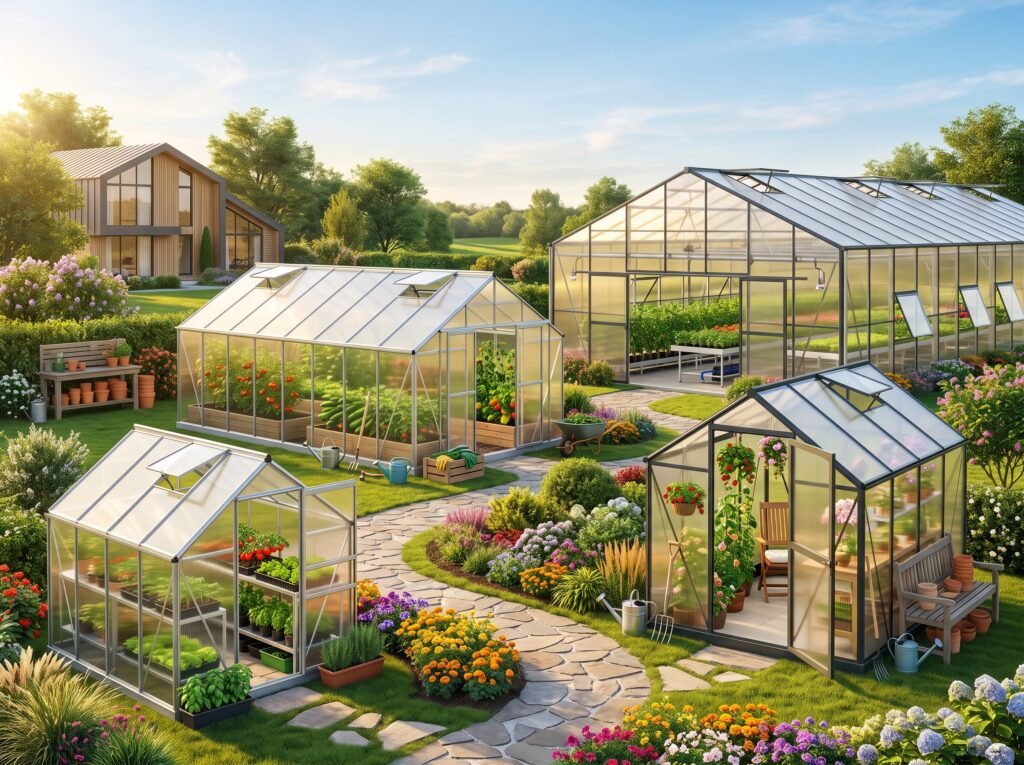
When browsing polycarbonate greenhouses for sale, you’ll quickly notice that not all greenhouses are built the same. Manufacturers offer a wide variety of models designed to suit different climates, budgets, and gardening needs.
Smaller hobby greenhouses are ideal for growing herbs, seedlings, flowers, and seasonal vegetables. These compact structures fit comfortably into most backyards while providing enough space for home gardeners to extend their growing season.
Medium-sized greenhouses offer more flexibility. Gardeners can organize shelving, raised beds, and walkways while growing a wider variety of crops simultaneously. These models are particularly popular among families who enjoy growing fresh vegetables year-round.
Large walk-in greenhouses provide generous headroom and ample planting space. Many include heavy-duty aluminum frames, reinforced roofing systems, roof vents, and lockable doors for enhanced convenience and security.
Commercial polycarbonate greenhouses represent the highest level of greenhouse production. Built for farms, nurseries, and commercial operations, these structures maximize productivity while supporting advanced irrigation, heating, and ventilation systems.
Regardless of size, quality should always be your top priority. A well-built greenhouse can last for decades with proper maintenance, making it one of the best long-term investments for serious gardeners.
Benefits of Buying a Polycarbonate Greenhouse
Purchasing a greenhouse is more than simply adding another structure to your backyard. It creates an entirely new growing environment that allows you to enjoy gardening throughout much of the year.
One of the greatest benefits is season extension. Instead of limiting planting to spring and summer, gardeners can begin seedlings earlier, continue harvesting later into autumn, and even grow certain crops during winter.
Polycarbonate greenhouses also provide better protection from pests and wildlife. Birds, rabbits, insects, and other animals have far less access to valuable crops, reducing damage and improving yields.
Another important advantage is improved plant health. Since gardeners have greater control over temperature, humidity, and ventilation, plants experience fewer environmental stresses. This often results in faster growth, healthier roots, stronger stems, and more productive harvests.
Water efficiency is another overlooked benefit. Since rainfall is controlled, irrigation becomes more precise, reducing water waste while preventing soil erosion.
Gardeners also enjoy increased flexibility. Exotic plants, orchids, citrus trees, tropical flowers, and delicate seedlings that normally struggle outdoors can thrive inside a properly managed greenhouse.
Types of Polycarbonate Greenhouses Available
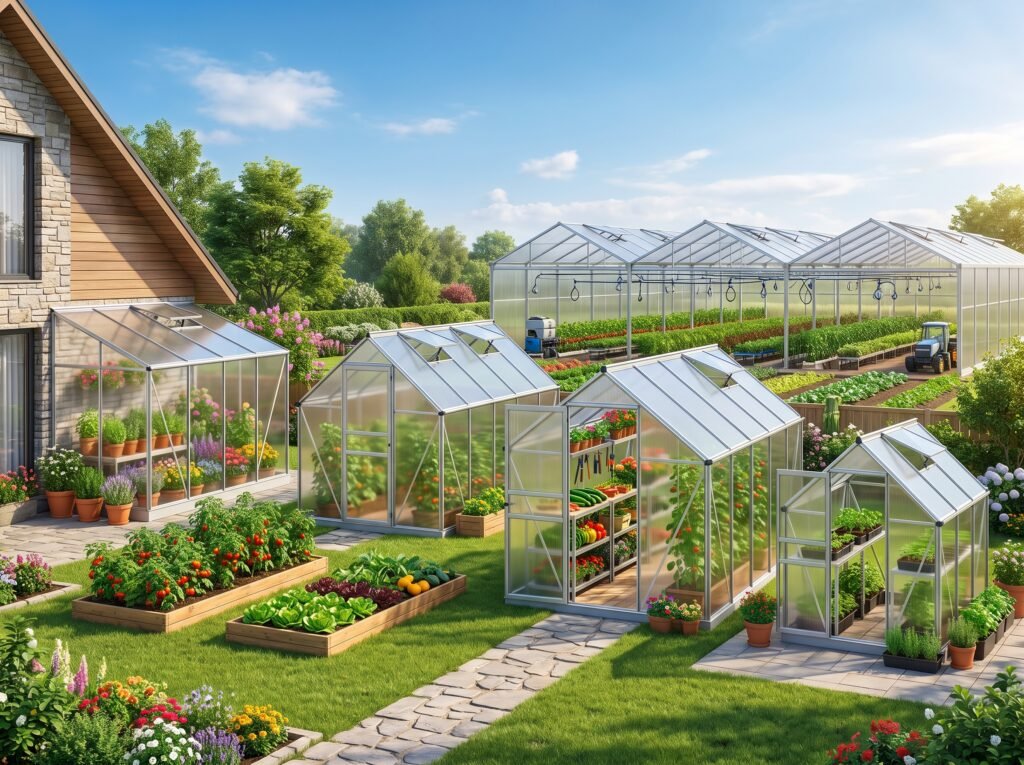
Choosing the right greenhouse begins with understanding the different styles available. Each design offers unique benefits depending on your available space and gardening objectives.
Lean-To Polycarbonate Greenhouses
Lean-to greenhouses attach directly to an existing wall, garage, or home. Because one wall is already provided by the building, these greenhouses often cost less while benefiting from additional warmth.
They work exceptionally well for homeowners with limited backyard space and are ideal for growing herbs, vegetables, and ornamental plants.
Freestanding Polycarbonate Greenhouses
Freestanding greenhouses remain the most versatile option. Positioned anywhere with sufficient sunlight, they provide access from all sides and maximize airflow throughout the structure.
These greenhouses range from compact hobby models to expansive commercial buildings.
Walk-In Greenhouses
Walk-in greenhouses provide enough interior space for shelving, benches, workstations, and comfortable movement. They are ideal for gardeners who maintain large collections of plants or enjoy spending extended time caring for their crops.
Mini Polycarbonate Greenhouses
Mini greenhouses serve beginners and apartment gardeners with limited outdoor space. They protect seedlings, herbs, and flowers while requiring minimal maintenance and investment.
Commercial Polycarbonate Greenhouses
Designed for professional production, commercial models include reinforced frames, advanced climate control options, irrigation systems, automated ventilation, and large growing capacities.
Understanding Polycarbonate Panel Types
Not every polycarbonate panel performs the same way. Understanding panel construction helps buyers make better decisions.
Single-Wall Polycarbonate
Single-wall panels are lightweight and affordable. They work well in mild climates where insulation requirements are relatively low.
Although inexpensive, they retain less heat than thicker alternatives.
Twin-Wall Polycarbonate
Twin-wall panels remain the most popular option for residential greenhouses.
Their two-layer construction traps insulating air between the sheets, helping regulate interior temperatures while reducing heating costs.
They also provide excellent durability without significantly increasing weight.
Triple-Wall Polycarbonate
Triple-wall panels improve insulation even further. They perform exceptionally well in colder climates where maintaining consistent temperatures becomes more challenging.
These panels often reduce energy consumption during winter.
Multi-Wall Polycarbonate
Premium commercial greenhouses frequently use multi-wall panels featuring multiple insulating chambers.
These offer maximum energy efficiency, excellent light diffusion, superior strength, and long service life, making them suitable for year-round production.
Important Features to Look for Before Buying
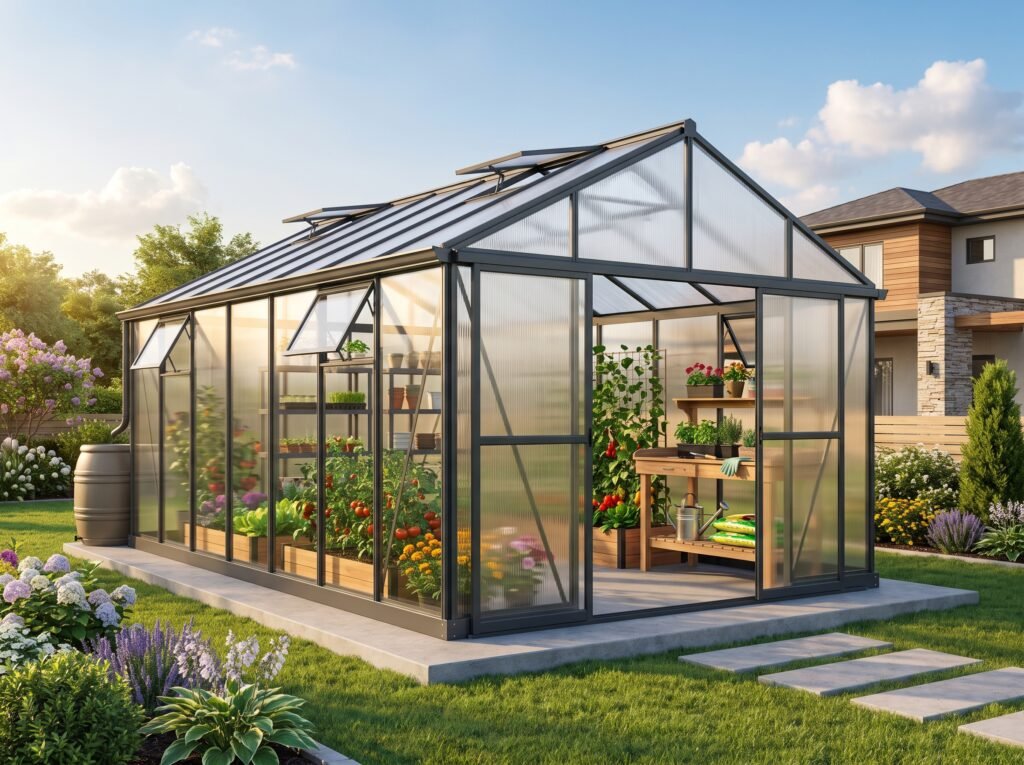
A greenhouse may appear attractive online, but several technical features determine its long-term performance.
Frame construction is one of the first considerations. Powder-coated aluminum frames resist corrosion, require little maintenance, and remain lightweight while providing excellent structural strength.
Galvanized steel frames offer even greater durability and are often preferred for larger commercial installations.
Ventilation should never be overlooked. Roof vents, side vents, automatic vent openers, and circulation fans prevent overheating while maintaining healthy airflow.
Door design also matters. Wide sliding doors improve accessibility for wheelbarrows, garden carts, and larger equipment.
Anchoring systems increase structural stability during strong winds.
Drainage systems protect foundations from standing water.
Finally, check manufacturer warranties carefully. Reputable companies frequently provide warranties ranging from 10 to 20 years on polycarbonate panels and structural components.
Choosing the Right Size Greenhouse
One of the biggest mistakes new buyers make is purchasing a greenhouse that’s too small. Gardening collections tend to expand over time, and limited space quickly becomes frustrating.
A compact 6×4-foot greenhouse may accommodate seedlings and herbs but can become overcrowded within a single growing season.
An 8×10-foot greenhouse suits most home gardeners by offering enough room for shelving, vegetables, flowers, and a central walkway.
Larger families or serious hobbyists often benefit from 10×12-foot or even larger structures that allow crop rotation and improved organization.
Commercial growers should evaluate production goals, available land, local regulations, and future expansion before selecting greenhouse dimensions.
Whenever possible, buy slightly larger than your current needs. The additional space will likely prove valuable as your gardening experience grows.
Best Plants to Grow in Polycarbonate Greenhouses
One of the biggest advantages of owning a polycarbonate greenhouse is the ability to grow an incredible variety of plants throughout much of the year. Vegetables such as tomatoes, cucumbers, peppers, lettuce, spinach, carrots, and leafy greens thrive in the controlled environment. Herbs including basil, parsley, cilantro, rosemary, thyme, oregano, and mint also flourish with consistent temperatures and adequate ventilation.
Fruit-bearing plants like strawberries, dwarf citrus trees, and even some grape varieties can produce excellent harvests inside larger greenhouses. Flower enthusiasts can successfully cultivate orchids, roses, geraniums, chrysanthemums, lilies, begonias, and countless seasonal blooms without exposing them to damaging weather conditions.
For gardeners who enjoy experimenting, polycarbonate greenhouses also create ideal conditions for tropical plants, succulents, bonsai trees, and rare ornamental species that might otherwise struggle outdoors. With proper climate management, your greenhouse can become a productive growing space regardless of the season.
Where to Find the Best Polycarbonate Greenhouses for Sale
Once you’ve decided that a polycarbonate greenhouse is the right investment, the next step is choosing a reliable place to purchase one. While there are countless retailers offering greenhouses, not all products provide the same quality, warranty, or customer support. Taking the time to compare brands and sellers can save you money and ensure you receive a greenhouse that lasts for many years.
Buying directly from greenhouse manufacturers is often one of the safest options. Manufacturers typically offer the newest models, detailed product specifications, replacement parts, and comprehensive warranties. Purchasing directly also gives you access to knowledgeable customer support that can answer installation questions and recommend accessories designed specifically for your greenhouse.
Home improvement stores also stock a wide range of polycarbonate greenhouses, particularly during spring and summer. These retailers often carry models suitable for beginners and homeowners who want a practical greenhouse without investing in commercial-grade equipment.
Online marketplaces have become increasingly popular because they allow shoppers to compare hundreds of greenhouse models in one place. Detailed customer reviews, photographs, and product comparisons make it easier to evaluate quality before making a purchase. However, always verify warranty information, shipping costs, and return policies before placing an order.
Garden centers and local greenhouse suppliers can also be excellent choices. Visiting a showroom allows you to inspect construction quality, panel thickness, frame materials, and available accessories in person. This hands-on experience often helps buyers make more confident decisions.
How Much Do Polycarbonate Greenhouses Cost?
The price of a polycarbonate greenhouse varies depending on size, frame material, panel thickness, brand, and additional features. Understanding these price ranges can help you establish a realistic budget before shopping.
Small hobby greenhouses designed for patios or compact gardens generally offer the most affordable entry point. These models are ideal for beginners who want to protect seedlings, herbs, and a few vegetable plants without making a large investment.
Medium-sized walk-in greenhouses represent the most popular category for homeowners. They provide enough room for multiple planting beds, shelving, and comfortable walkways while remaining reasonably priced. These greenhouses offer an excellent balance between growing capacity and affordability.
Large premium greenhouses cost more because they incorporate stronger aluminum or galvanized steel frames, thicker twin-wall or multi-wall polycarbonate panels, larger doors, roof vents, and higher snow or wind load ratings. Their superior construction makes them suitable for year-round gardening.
Commercial greenhouses represent the highest investment. These structures are designed for intensive agricultural production and often include advanced climate-control systems, irrigation equipment, automated ventilation, and reinforced foundations. Although the initial cost is higher, commercial growers often recover their investment through increased crop production and improved efficiency.
When comparing prices, remember that the cheapest greenhouse isn’t always the best value. Spending slightly more on durable materials, quality hardware, and a longer warranty often results in lower maintenance costs and a much longer service life.
Factors That Affect Greenhouse Prices
Several factors influence the overall cost of a polycarbonate greenhouse.
The thickness of the polycarbonate panels plays a major role. Thicker twin-wall and multi-wall panels provide better insulation, increased durability, and improved energy efficiency, which naturally increases the purchase price.
Frame construction also impacts cost. Lightweight aluminum frames resist corrosion and require little maintenance, while galvanized steel frames offer exceptional strength for larger structures.
Ventilation systems add value as well. Roof vents, automatic vent openers, exhaust fans, and side vents improve airflow, helping maintain healthy growing conditions.
Additional features such as shelving, staging benches, rainwater collection systems, integrated gutters, reinforced foundations, and lockable doors also contribute to the final price.
Finally, shipping and installation costs should always be included when calculating your total investment. Larger greenhouses may require professional installation, especially if local building codes or challenging site conditions are involved.
How to Choose the Right Polycarbonate Greenhouse
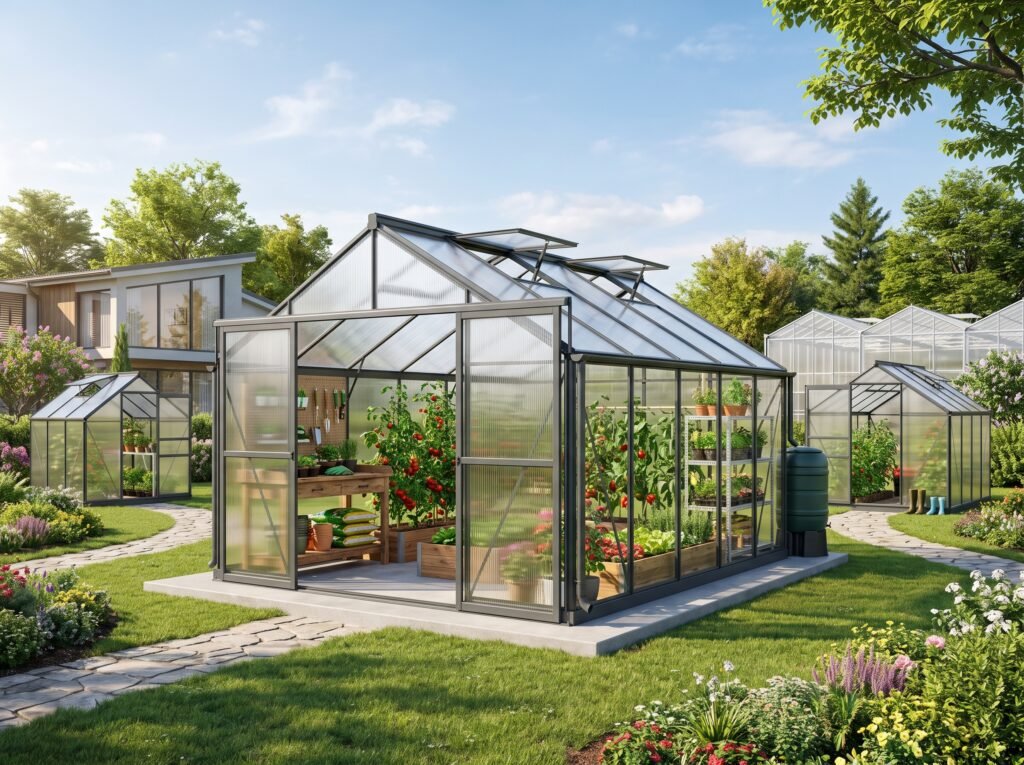
Choosing the right greenhouse involves more than simply selecting the largest model within your budget. A thoughtful decision begins with understanding your gardening goals.
If you primarily want to start seedlings or grow herbs, a compact greenhouse may provide all the space you need. On the other hand, gardeners who plan to grow tomatoes, cucumbers, peppers, fruit trees, and flowers throughout the year should consider investing in a larger walk-in model that allows room for expansion.
Climate also plays an important role. Gardeners living in colder regions benefit from thicker twin-wall or multi-wall polycarbonate panels because they retain heat more effectively. In warmer climates, ventilation becomes even more important, making roof vents and automatic ventilation systems valuable additions.
Sunlight exposure should influence greenhouse placement. Select a location that receives several hours of direct sunlight daily while remaining protected from strong prevailing winds whenever possible.
Future growth is another important consideration. Many gardeners quickly discover they need additional growing space after just one or two seasons. Purchasing a slightly larger greenhouse initially often proves more economical than replacing a smaller one later.
DIY Installation vs. Professional Installation
Many homeowners successfully assemble polycarbonate greenhouses themselves, especially smaller hobby models that include detailed instructions and pre-drilled components.
DIY installation offers significant cost savings while providing the satisfaction of building your own greenhouse. Most manufacturers design residential greenhouses so that two people with basic tools can complete assembly over a weekend.
Before beginning installation, prepare a level foundation using concrete, treated timber, gravel, or paving stones. A solid foundation increases structural stability and extends the greenhouse’s lifespan.
Professional installation may be worthwhile for larger greenhouses or commercial structures. Experienced installers ensure the greenhouse is properly anchored, square, weatherproof, and compliant with local building regulations.
Although professional installation increases the initial cost, it reduces the risk of assembly errors that could compromise structural integrity or shorten the greenhouse’s lifespan.
Heating and Cooling Your Greenhouse
Temperature control is essential for maintaining healthy plants throughout the year. Even the highest-quality polycarbonate greenhouse benefits from proper heating and cooling systems.
Electric greenhouse heaters remain one of the most convenient options because they provide reliable warmth and precise thermostat control. Many gardeners choose energy-efficient heaters that automatically maintain the desired temperature.
Passive solar heating also contributes significantly during sunny winter days. Black water barrels, thermal mass flooring, and insulated north walls can help store daytime heat and release it gradually after sunset.
During summer, overheating becomes the primary concern. Roof vents, side vents, circulation fans, and shade cloth all help regulate temperatures while reducing plant stress.
Automatic vent openers are especially useful because they respond to rising temperatures without requiring electricity, opening and closing vents as needed throughout the day.
Combining proper insulation with effective ventilation creates a stable growing environment that supports healthy plant development year-round.
Maintaining a Polycarbonate Greenhouse
One reason gardeners appreciate polycarbonate greenhouses is their relatively low maintenance requirements. Nevertheless, regular care helps preserve both appearance and performance.
Clean the polycarbonate panels several times each year using warm water, a soft sponge, and mild soap. Avoid abrasive cleaners or rough brushes that could scratch the protective UV coating.
Inspect roof panels, doors, and vents regularly for loose hardware or damaged seals. Tightening fasteners and replacing worn weatherstripping prevents drafts and water leaks.
Keep gutters free from leaves and debris to ensure proper drainage during heavy rainfall.
Check ventilation systems, automatic vent openers, and fans before each growing season to verify they operate correctly.
Maintaining a clean interior also reduces the risk of fungal diseases, mold, algae growth, and insect infestations. Remove dead leaves, disinfect benches when necessary, and keep walkways free from weeds.
With consistent maintenance, a quality polycarbonate greenhouse can provide decades of reliable service.
Common Mistakes Buyers Should Avoid
Many first-time greenhouse buyers make avoidable mistakes that reduce long-term satisfaction.
One of the most common errors is purchasing a greenhouse based solely on price. Extremely inexpensive models may use thin frames, lower-quality panels, or weak hardware that deteriorates quickly.
Another mistake involves selecting a greenhouse that’s too small. Plants grow rapidly, gardening collections expand, and limited space often becomes frustrating after only one season.
Ignoring ventilation is another frequent oversight. Without proper airflow, excessive humidity encourages mold, mildew, and plant diseases.
Poor site selection also creates problems. Installing a greenhouse beneath large trees increases shade while exposing the roof to falling branches and debris.
Finally, neglecting foundation preparation can reduce structural stability. A properly leveled and anchored foundation improves safety, prevents shifting, and extends the greenhouse’s lifespan.
Accessories That Improve Greenhouse Performance
The right accessories can significantly improve both convenience and plant health.
Shelving systems maximize vertical growing space while keeping seedlings organized.
Potting benches create dedicated work areas for transplanting and maintenance.
Automatic irrigation systems simplify watering while reducing labor.
Thermometers and hygrometers help monitor environmental conditions.
Shade cloth protects sensitive plants during intense summer sunlight.
Grow lights extend daylight hours during winter and support seed starting.
Rainwater collection systems reduce water costs while providing naturally soft irrigation water.
These accessories transform a basic greenhouse into a highly productive growing environment.
Why Polycarbonate Is Better Than Traditional Plastic Film
Some gardeners wonder whether a rigid polycarbonate greenhouse is worth the additional investment compared with inexpensive plastic film tunnels.
While plastic film costs less initially, it generally requires replacement every few years because it degrades under sunlight and weather exposure.
Polycarbonate panels maintain their strength and clarity for many years while offering substantially better insulation.
Rigid polycarbonate structures also resist wind, hail, snow, and accidental impacts much better than plastic coverings.
For gardeners planning long-term use, polycarbonate almost always delivers greater value despite the higher upfront investment.
Frequently Asked Questions
Are polycarbonate greenhouses better than glass?
Yes. Polycarbonate is more impact-resistant, lighter, safer, and provides better insulation than traditional glass. It also diffuses sunlight more evenly, reducing the risk of plant scorching.
How long do polycarbonate greenhouses last?
A high-quality polycarbonate greenhouse can last 15 to 25 years or more with proper maintenance. Premium panels with UV protection often remain clear and durable for decades.
Can a polycarbonate greenhouse stay outside all year?
Absolutely. Quality models are designed for year-round outdoor use and can withstand rain, snow, wind, and varying temperatures when properly anchored.
Do polycarbonate panels block sunlight?
No. High-quality panels allow excellent light transmission while diffusing sunlight evenly throughout the greenhouse. This creates ideal growing conditions for most plants.
Is a polycarbonate greenhouse suitable for beginners?
Yes. Their durability, insulation, and low maintenance requirements make them one of the best choices for first-time greenhouse owners.
Final Thoughts
Searching for polycarbonate greenhouses for sale is the first step toward creating a productive gardening space that can serve you for many years. Whether you want to grow fresh vegetables for your family, protect delicate flowers, start seedlings earlier in the season, or operate a commercial growing business, a high-quality polycarbonate greenhouse provides the ideal environment.
By carefully considering greenhouse size, panel thickness, frame quality, ventilation, insulation, and future expansion, you’ll be able to select a greenhouse that matches your gardening goals and budget. While the initial investment may be higher than some alternatives, the durability, energy efficiency, and superior plant protection offered by polycarbonate make it one of the smartest long-term gardening investments available.
Instead of limiting your harvest to a few months each year, you can enjoy healthier plants, extended growing seasons, and greater gardening success regardless of the weather outside.
Ready to Buy the Best Polycarbonate Greenhouse?
Don’t wait for another growing season to pass. Compare the latest polycarbonate greenhouses for sale, evaluate trusted brands, and choose a model that fits your space and budget. A quality greenhouse is more than just a gardening structure—it’s an investment in fresh food, beautiful plants, year-round growing, and lasting enjoyment. Start your greenhouse journey today and experience the benefits of gardening in every season.